Bottom line
Carbetocin is a synthetic long-acting oxytocin receptor agonist approved in the EU, UK, Canada, Australia, and many other countries for prevention of postpartum hemorrhage (PPH) after cesarean section or vaginal delivery. Not FDA approved in the United States. Its longer The time for the amount of a substance in the body to fall by half. 定義の出典: Neutral gloss; usage context: Routes, devices, and absorption primer · 用語集 allows a single dose compared to oxytocin continuous infusion. Route varies by jurisdiction and delivery mode: Administered into a vein. 定義の出典: Neutral gloss; usage context: Routes, devices, and absorption primer · 用語集 only after cesarean section under spinal/epidural anesthesia (UK Pabal SmPC); IV or Administered into a muscle. 定義の出典: Neutral gloss; usage context: Routes, devices, and absorption primer · 用語集 after vaginal delivery.
Identity and composition
| Field | Verified information |
|---|---|
| Preferred name | Carbetocin |
| Key aliases | Durato, Pabal, 1-deamino-1-monocarba-2-(O-methyltyrosine)-oxytocin, long-acting oxytocin analog |
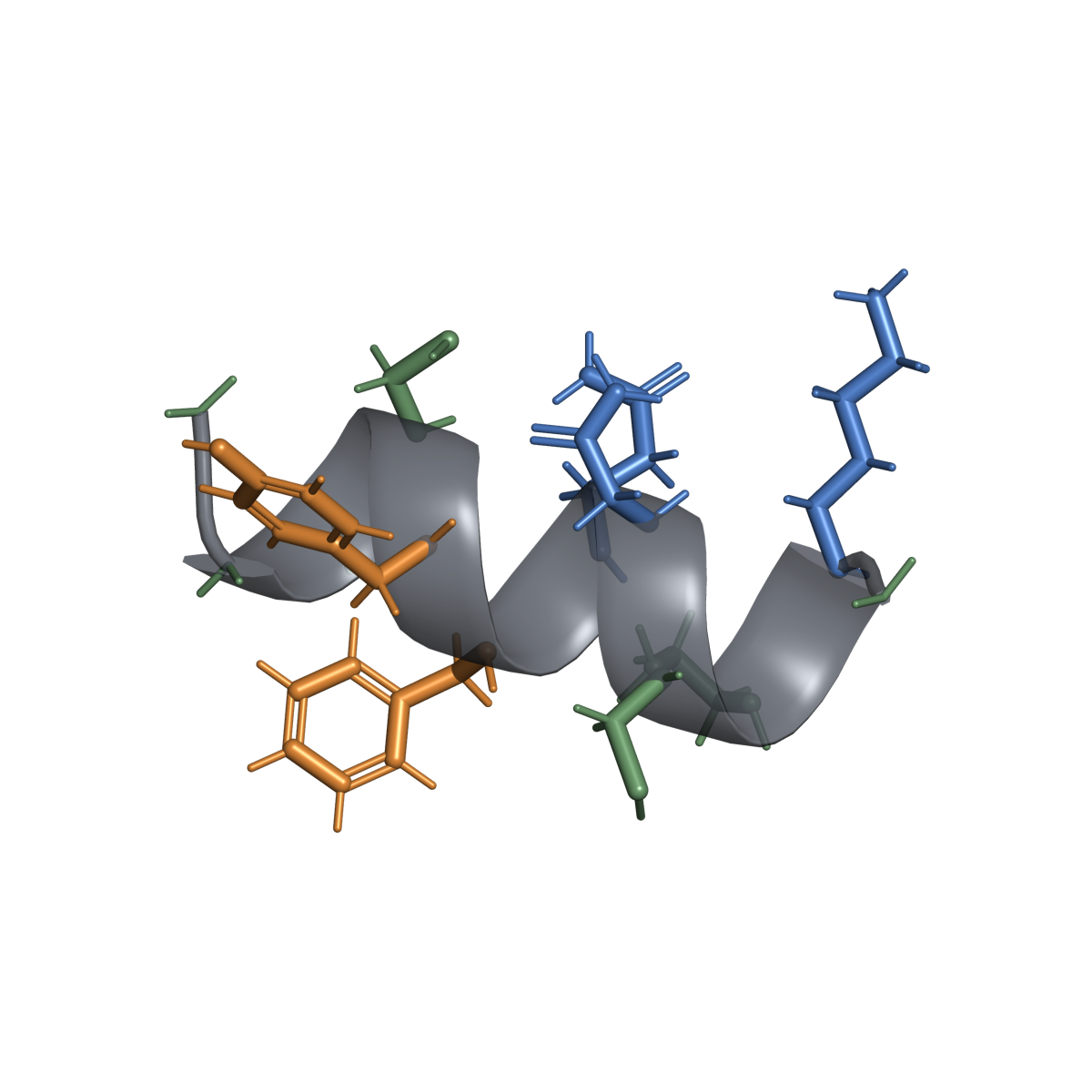
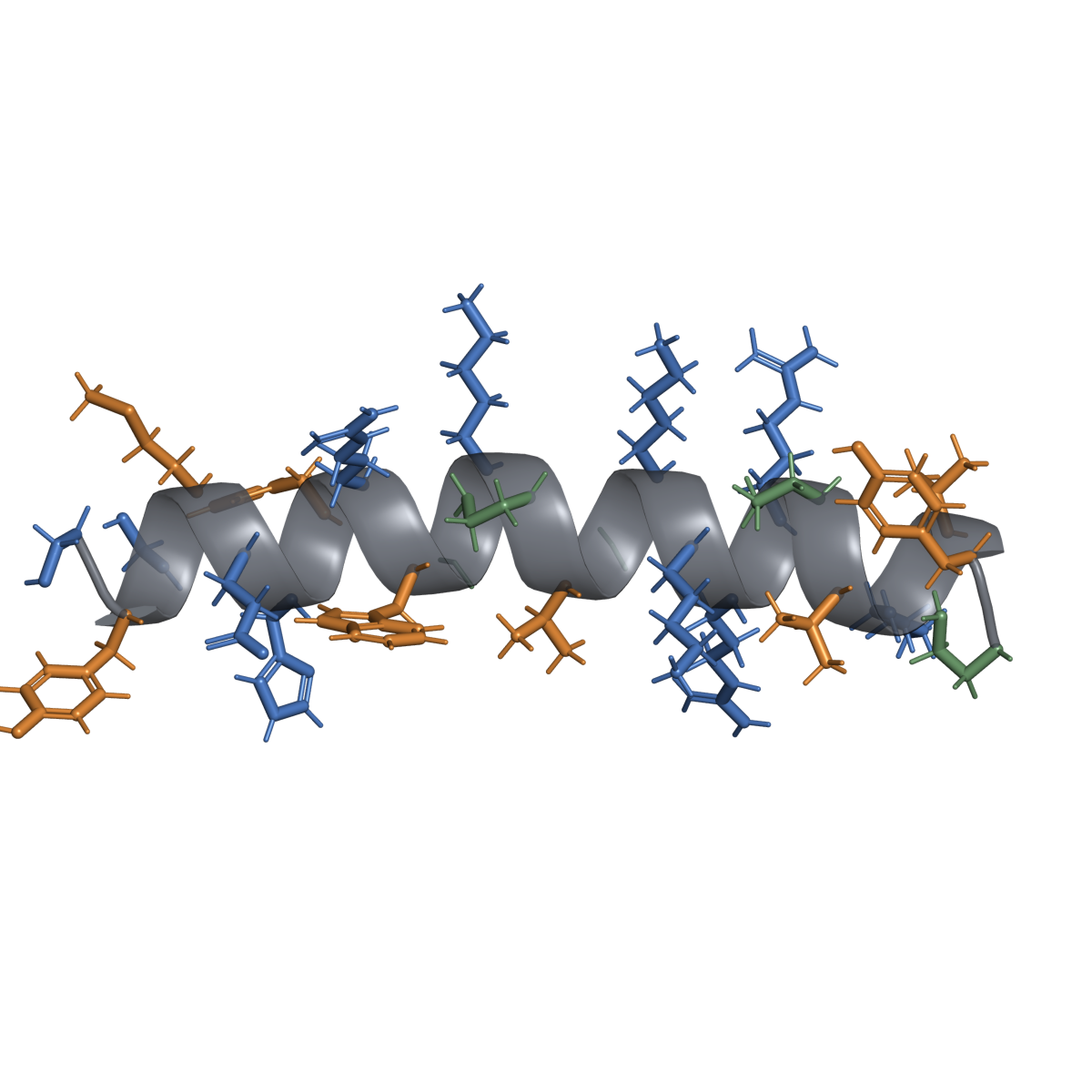
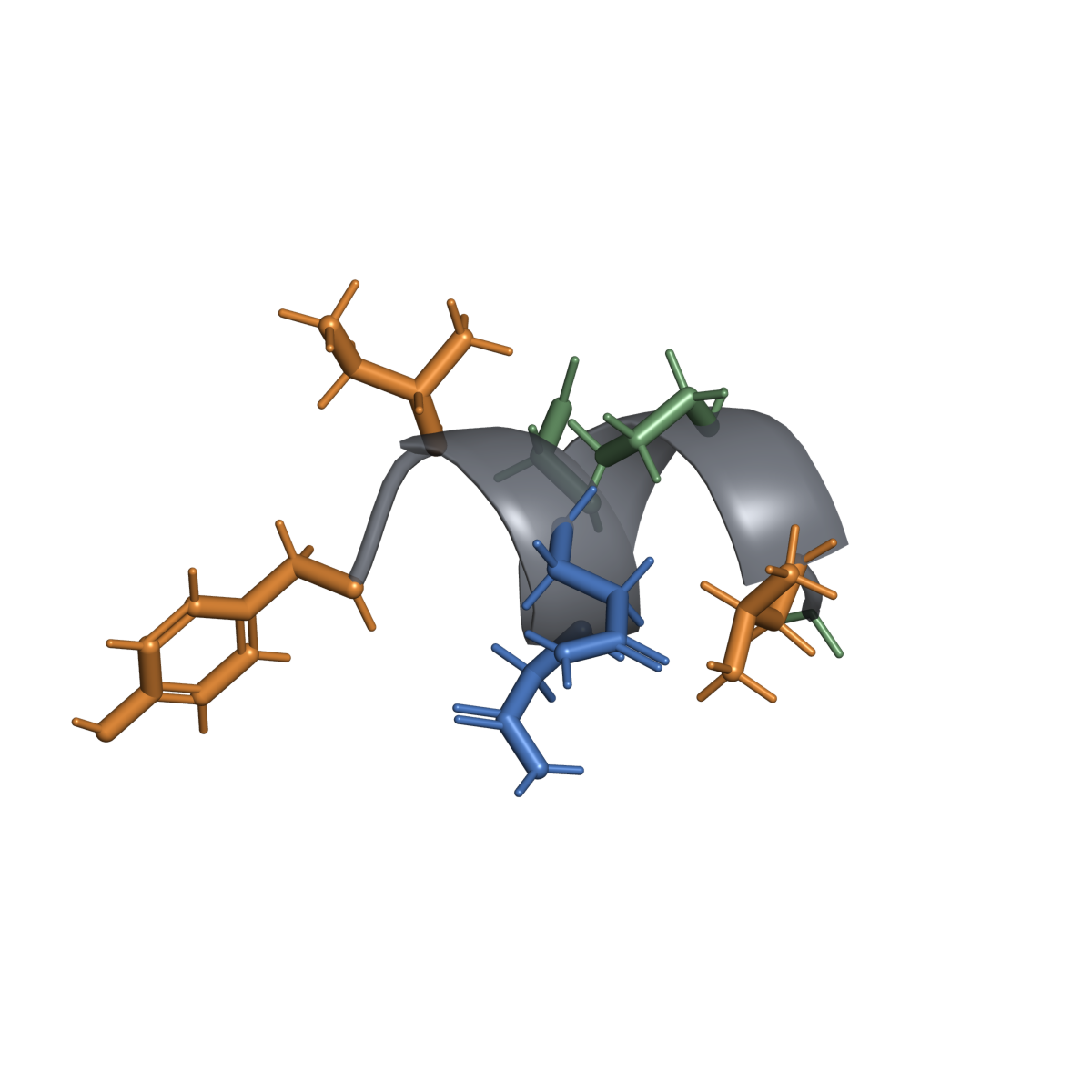
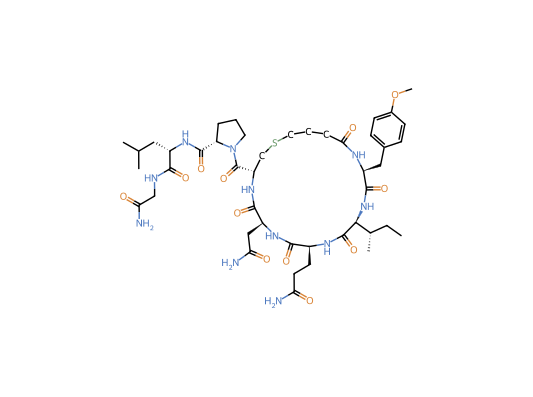
| Molecular/sequence identity | 1-deamino-1-monocarba-2-(O-methyltyrosine)-oxytocin: N-(4-mercapto-1-oxobutyl)-Tyr(OMe)-Ile-Gln-Asn-Cys-Pro-Leu-Gly-NH2. The nonreducible thioether joins the position-1 monocarba group to Cys6 in oxytocin numbering (the FDA GSRS systematic acyl-residue name reports the same closure as cyclic (1→5)-thioether). |
| Modifications/form | Oxytocin analog in which the native Cys1 amino group is removed, the Cys1-Cys6 disulfide is replaced by a nonreducible monocarba thioether, and Tyr2 is O-methylated; marketed as an injectable solution. Its formula, C45H69N11O12S, contains one sulfur atom: the molecule has a thioether, not a disulfide. |
| Stable identifiers | UNII: 88TWF8015Y; The record number of a compound in PubChem, the atlas's primary structure-asset source. A registry record or depiction does not authenticate a commercial sample. 定義の出典: Identity and structure assets methodology · 用語集: 16681432; CAS: 37025-55-1 (base); DrugBank: DB01282 |
| Identity caveats | Structurally distinct from oxytocin — desamino and O-methyl modifications confer longer The time for the amount of a substance in the body to fall by half. 定義の出典: Neutral gloss; usage context: Routes, devices, and absorption primer · 用語集 and enhanced metabolic stability. |
Development and approval status
| Jurisdiction | Status and indication | Product/source | As of |
|---|---|---|---|
| US (FDA) | Not approved | — | 2026 |
| EU/EEA (EMA) | Approved: PPH prevention after cesarean section under spinal/epidural anesthesia | Pabal (Ferring) | 2007 |
| UK (MHRA) | Approved: PPH prevention (cesarean section) | Pabal | 2007 |
| Canada (Health Canada) | Approved: PPH prevention after cesarean/vaginal delivery | Durato | — |
| Australia (TGA) | Approved: PPH prevention | Pabal | — |
- UNITED STATES
- US (FDA): Not approved
- EU/EEA
- EU/EEA (EMA): Approved: PPH prevention after cesarean section under spinal/epidural anesthesia
- UNITED KINGDOM
- UK (MHRA): Approved: PPH prevention (cesarean section)
- OTHER DOCUMENTED
- Canada (Health Canada): Approved: PPH prevention after cesarean/vaginal delivery; Australia (TGA): Approved: PPH prevention
Sport status: WADA: carbetocin was not identified by exact name in the 2026 Prohibited List, and this review did not identify a matching prohibited class. Therapeutic purpose does not itself create an exemption from a prohibition; athletes should verify the exact product and current status.
Mechanism and pharmacology
Oxytocin receptor agonist. Binds to uterine oxytocin receptors, stimulating rhythmic contractions of the uterine smooth muscle. The desamino and O-methyl modifications increase metabolic stability compared to oxytocin, providing a longer duration of action. Single-dose therapy sufficient for PPH prevention.
Evidence by claim
| Claim/indication | Stage | Grade | Best human evidence | Main result | Important limitations |
|---|---|---|---|---|---|
| PPH prevention after cesarean section | Approved (EU, CN, AU) | A | A study in which participants are assigned to the study material or a comparator by chance. 定義の出典: Neutral gloss; usage context: Evidence grading methodology · 用語集 and meta-analyses (Su LL, et al. BJOG. 2012;119:5–12. PMID: 22017979) | Single dose carbetocin non-inferior or superior to oxytocin infusion for PPH (need for additional uterotonics reduced) | Distinguished in specific settings; effect size modest |
| PPH prevention after vaginal delivery | Approved (Canada, AU) | B | RCTs | Comparable to oxytocin; possibly fewer additional uterotonics | Less studied for vaginal delivery |
- AグレードA: 特定の表示使用に対して確立
- BグレードB: 中等度のヒトエビデンス
- CグレードC: 予備的ヒトエビデンス
- DグレードD: 前臨床のみ
- EグレードE: 逸話的/マーケティング主張
- XグレードX: エビデンスが主張と矛盾するか、支持しない
Text alternative for the claim-evidence diagram. Each grade is defined below:
- A — Established for a specific labeled use
- 1 claim: PPH prevention after cesarean section
- B — Moderate human evidence
- 1 claim: PPH prevention after vaginal delivery
- C — Preliminary human evidence
- 0 claims
- D — Preclinical only
- 0 claims
- E — Anecdotal/marketing claim
- 0 claims
- X — Evidence contradicts or does not support the claim
- 0 claims
Key studies
| Study | Design/population | Exposure studied | Endpoints and result | Limitations |
|---|---|---|---|---|
| CHAMPION (Widmer M, et al. Lancet. 2018;392:1361–9. PMID: 30322456) | A study in which participants are assigned to the study material or a comparator by chance. 定義の出典: Neutral gloss; usage context: Evidence grading methodology · 用語集, N=29,645, vaginal delivery (heat-stable carbetocin, 10 countries) | Heat-stable carbetocin 100 mcg Administered into a muscle. 定義の出典: Neutral gloss; usage context: Routes, devices, and absorption primer · 用語集 vs oxytocin 10 IU IM | Blood loss ≥500 mL: 14.5% vs 14.4% (non-inferior) | Heat-stable formulation; resource-variable settings |
Dose and administration evidence
Approved labeled regimen
The label summary below is product-, indication-, and jurisdiction-specific; consult the full current label and a licensed clinician/pharmacist.
PPH prevention after cesarean section (UK Pabal SmPC): 100 mcg (1 mL) Administered into a vein. 定義の出典: Neutral gloss; usage context: Routes, devices, and absorption primer · 用語集 only, as single dose after delivery of the infant, under spinal/epidural anesthesia. Administer slowly IV over 1 minute. PPH prevention after vaginal delivery: 100 mcg (1 mL) IV or Administered into a muscle. 定義の出典: Neutral gloss; usage context: Routes, devices, and absorption primer · 用語集 as single dose.
Studied regimens (not recommendations)
CHAMPION: 100 mcg IM heat-stable carbetocin after vaginal delivery.
Standard carbetocin: 100 mcg IV/IM single dose.
What is not established
Treatment of established PPH (only prevention is labeled).
Repeat dosing (not studied for continued hemorrhage).
No established or recommended human dose for unapproved indications.
Safety
Established label risks
Uterine hyperstimulation: Transient; similar to oxytocin.
Cardiovascular: Hypotension, tachycardia, flushing (less than oxytocin).
GI: Nausea, vomiting, abdominal pain.
Water intoxication: Less risk than oxytocin (less antidiuretic effect).
Hypersensitivity: Rare.
Human-study signals
CHAMPION: similar safety profile to oxytocin; no new signals.
Unknowns and product-quality risks
No data on use in third trimester of pregnancy before delivery.
Research-grade vials not equivalent to pharmaceutical carbetocin.
Interactions and special populations
Prostaglandins: additive uterotonic effect (monitor).
Vasopressors: additive pressor effect.
Contraindicated in hepatic disease, renal disease, and serious cardiovascular disorders (per UK Pabal SmPC).
Caution in preeclampsia, cardiovascular disease.
Regulatory, compounding, and sport notes
The World Anti-Doping Agency; its Prohibited List classifies many peptides as prohibited substances in sport. 定義の出典: WADA and sport regulation brief · 用語集: carbetocin was not identified by exact name in the 2026 Prohibited List, and this review did not identify a matching prohibited class. Therapeutic purpose does not itself create an exemption from a prohibition; athletes should verify the exact product and current status.
Not scheduled under US CSA.
Not FDA approved; any US-sourced vial is unapproved.
Evidence gaps
Comparative efficacy vs oxytocin for PPH treatment (not prevention).
Optimal storage conditions for non-heat-stable formulations.
Efficacy in high-risk PPH populations.
Search notes
Databases and registries: EMA, TGA, PubMed, ClinicalTrials.gov
Search terms: carbetocin, Durato, Pabal, postpartum hemorrhage, oxytocin analog
Last searched: 2026-08-06
Inclusion emphasis: Regulatory status, pivotal trials, meta-analyses
Sources
UK electronic Medicines Compendium. Pabal 100 micrograms in 1ml solution for injection (SmPC). https://www.medicines.org.uk/emc/product/172/smpc
Widmer M, et al. Heat-stable carbetocin vs oxytocin for PPH prevention (CHAMPION). Lancet. 2018;392(10152):1361–9. PMID: 30322456.
Su LL, et al. Carbetocin for preventing PPH (meta-analysis). BJOG. 2012;119(1):5–12. PMID: 22017979.
DrugBank. Carbetocin. https://go.drugbank.com/drugs/DB01282
PubChem. Carbetocin. https://pubchem.ncbi.nlm.nih.gov/compound/16681432
World Anti-Doping Agency. 2026 Prohibited List. https://www.wada-ama.org/sites/default/files/2025-09/2026list_en_final_clean_september_2025.pdf
FDA GSRS. Carbetocin (UNII 88TWF8015Y): the systematic acyl-residue name reports cyclic (1→5)-thioether, corresponding to the position-1-to-Cys6 closure in oxytocin numbering; the formula contains one sulfur atom. https://precision.fda.gov/uniisearch/srs?search=88TWF8015Y