Executive summary
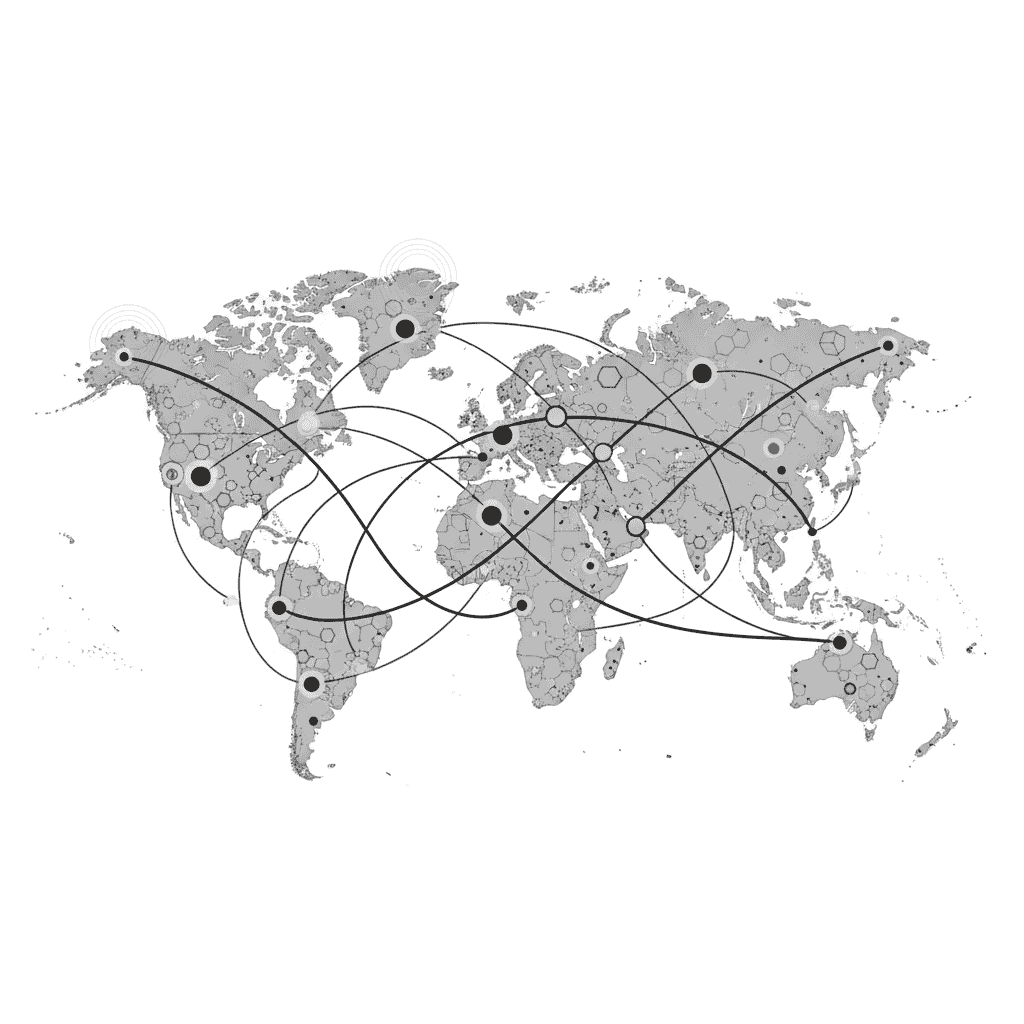
No single global regulatory regime governs peptides. Each jurisdiction classifies peptides by composition, intended use, claims, route, and the role of the actor (supplier, prescriber, compounder, consumer). The legal status of the same substance can differ radically across borders. This atlas maps 16 regulatory zones; the present document links them and flags cross-cutting themes.
Overarching principle: classification by intended use
Classification
Nearly all drug laws define a "medicinal product" or "drug" by reference to:
Presentational limb: what claims are made (treatment, prevention, mitigation, diagnosis of disease);
Functional limb: what effect the substance exerts on physiology (pharmacological, immunological, or metabolic action).
A peptide that a vendor sells "for research use only" can nevertheless be a drug if the surrounding marketing implies human therapeutic use. This is the central tension in the global "research peptide" market.
Ask what the product is claimed and intended to do, identify whether it is an approved medicine, investigational product, compounded preparation, research-use-only material, cosmetic, or food or supplement, then apply jurisdiction-specific law. A package disclaimer does not override objective intended-use evidence.
Common regulatory categories for peptides
Market access
| Category | Defining feature | What must be verified | Key limitation |
|---|---|---|---|
| Approved medicine | A drug evaluated for quality, safety, and efficacy | The product, indication, prescription status, and current jurisdictional record | Approval or access status does not transfer between products or markets |
| Investigational product | A peptide studied under regulatory authorization | The IND, CTA, CTN, trial population, and authorized protocol | Access is restricted to the authorized research context |
| Compounded preparation | A pharmacy preparation made under a jurisdiction-specific exemption | Patient, prescriber, compounder, ingredient, quality, and applicable exemption | It is not the same status as an approved manufactured product |
| Research-use-only material | Material presented for laboratory research | Claims, intended use, presentation, supply conduct, and national law | Research wording is not a safe harbour for objective human-use evidence |
| Cosmetic | A product presented for appearance-related use | Exact ingredient identity, claims, and the local cosmetic/medicine boundary | A physiological or therapeutic claim can change classification |
| Food or supplement | A peptide, hydrolysate, or ingredient presented under food law | Novel-food or supplement status, claims, composition, and jurisdiction | Food status cannot be inferred from the ingredient name alone |
Approved examples include Expansion of the abbreviation used in the monographs: glucagon-like peptide-1 receptor agonist. The atlas does not define the pharmacology of this class; see the monograph for what is documented about a specific compound. Definition source: Neutral gloss; the abbreviation is printed on the tirzepatide monograph but the atlas does not define the class pharmacology · Glossary, insulins, GnRH analogues, somatostatin analogues, calcitonin, and teriparatide. A clinical-stage candidate with scientific or public relevance. Investigation is not approval, and a studied exposure is not a recommendation. Definition source: Scope and selection methodology · Glossary products remain restricted to trial participants under approved protocols. For compounding, the jurisdiction-specific questions include whether bulk drug substances can be used, whether the preparation is essentially a copy of an approved product, which sterility and quality standards apply, and who may prescribe and prepare it.
Cosmetic examples include acetyl hexapeptide-8 and palmitoyl tripeptide-1. The EU Cosmetics Regulation (EC) No 1223/2009 and equivalent national laws apply where the cosmetic classification is supported. Short peptides, protein hydrolysates, and collagen peptides may instead engage novel-food or food- supplement rules, including the EU Novel Food Regulation or US GRAS notification. Claims and physiological effect remain central to both boundaries.
Across the jurisdictions reviewed, research-use-only wording was not identified as a safe harbour when surrounding facts show human-use claims, dosing guidance, or indications.
International organisations that shape peptide regulation
Enforcement
WHO / PAHO
WHO Prequalification Programme evaluates medicines (including some peptide therapeutics) for UN procurement; not a substitute for national marketing authorisation.
PAHO (Pan American Health Organization) supports regulatory harmonisation in the Americas through the PANDRH network.
WHO Member State Mechanism on substandard/spurious/falsified medical products coordinates information sharing.
Source: https://www.who.int/teams/regulation-prequalification
The World Anti-Doping Agency; its Prohibited List classifies many peptides as prohibited substances in sport. Definition source: WADA and sport regulation brief · Glossary
The World Anti-Doping Agency maintains the Prohibited List that covers peptide hormones, growth factors, and related substances. See WADA and sport.
INTERPOL
Operation Pangea: annual international week of action targeting the online sale of illicit medicines and medical devices. Peptide vendors are routinely among the targets.
Source: https://www.interpol.int/en/Crimes/Illicit-goods/Pharmaceutical-crime-operations
World Customs Organization (WCO)
Customs authorities in some member states screen postal and courier shipments for unapproved medicines, including peptides. Product labelling as "research chemical" or "not for human use" does not necessarily prevent detention or seizure, but screening intensity varies by jurisdiction.
ICANN
Domain registration records for peptide vendor websites are subject to Uniform Domain-Name Dispute-Resolution Policy (UDRP) challenges when they infringe trademarks. WHOIS privacy registrations can complicate enforcement.
Universal Postal Union (UPU)
The UPU Postal Security Group works with customs authorities to detect illicit shipments of medicines in the postal stream.
Cross-border supply
See dedicated page Cross-border and online supply.
Overarching uncertainties
"Research peptide" grey market: hundreds of websites sell unapproved peptide products globally, labelled "not for human use", to individual consumers. Enforcement is uneven.
Compounding of GLP-1 peptides: the global shortage of approved GLP-1 receptor agonists has driven a surge in compounded versions. Regulatory responses range from active tolerance to explicit prohibition.
Novel peptide analogues: minor structural modifications to known peptides can create substances that fall outside existing regulatory definitions, especially in anti-doping and controlled-substance law.
E-commerce platform liability: some regulators have taken action against platforms hosting illegal medicine listings (e.g., INTERPOL Operation Pangea targets including platform-linked vendors). The extent of platform liability varies by jurisdiction and is not uniform globally.
Practical interpretation limits
This is general regulatory research, not legal advice. Classification can turn on composition, claims, intended use, route, supplier role, and facts not captured by a product name.
Country and region guides
United States · EU and EEA · United Kingdom · Canada · Australia and New Zealand · Japan · China · India · Brazil · Mexico · Argentina, Colombia, and Chile · Latin America · Middle East and Africa. See also cross-border supply and WADA and sport.
Primary sources
WHO Medicines Prequalification. https://www.who.int/teams/regulation-prequalification
The World Anti-Doping Agency; its Prohibited List classifies many peptides as prohibited substances in sport. Definition source: WADA and sport regulation brief · Glossary Prohibited List. https://www.wada-ama.org/en/prohibited-list
INTERPOL — Pharmaceutical crime operations. https://www.interpol.int/en/Crimes/Illicit-goods/Pharmaceutical-crime-operations
PAHO — PANDRH. https://www.paho.org/en/pan-american-network-drug-regulatory-harmonization-pandrh
AU — African Medicines Agency Treaty. https://au.int/en/treaties/treaty-establishment-african-medicines-agency-ama