Bottom line
AOD-9604 is a synthetic 16-amino-acid peptide corresponding to the C-terminal region (hGH 177-191 with an N-terminal tyrosine for stability) of human growth hormone, designed to retain GH's lipolytic activity without its diabetogenic and growth-promoting effects. The compound failed its pivotal Phase IIb obesity trial and the clinical development program was terminated in 2007. It is not FDA-approved as a drug. AOD-9604 has no FDA GRAS designation. Evidence from in vitro or animal studies with no adequate human efficacy evidence — the atlas Grade D lane. Fonte da definição: Evidence grading methodology · Glossário interest has shifted to cartilage repair, but no human clinical data support this use.
Identity and composition
| Field | Verified information |
|---|---|
| Preferred name | AOD-9604 |
| Key aliases | HGH Fragment 176-191, Anti-Obesity Drug 9604 |
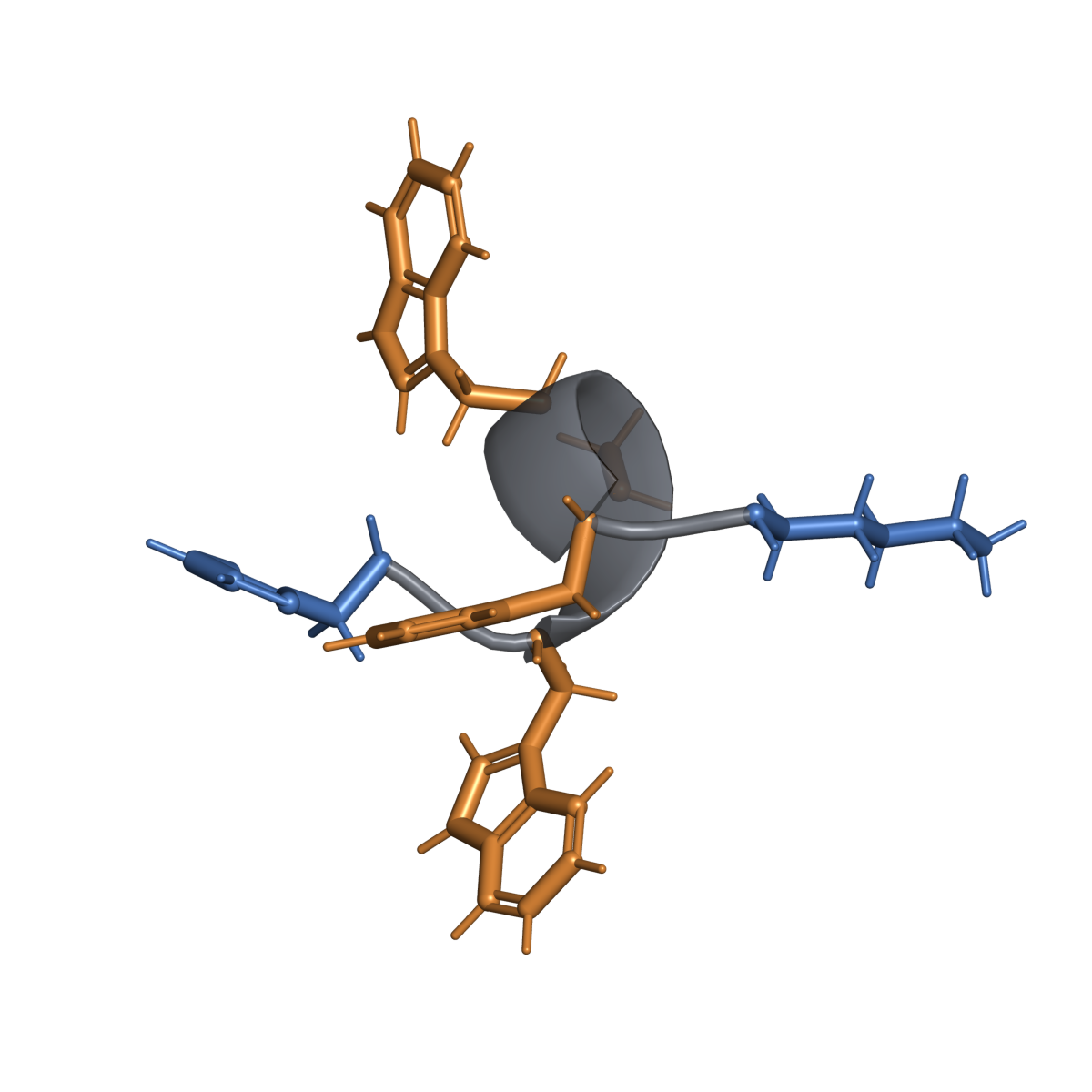
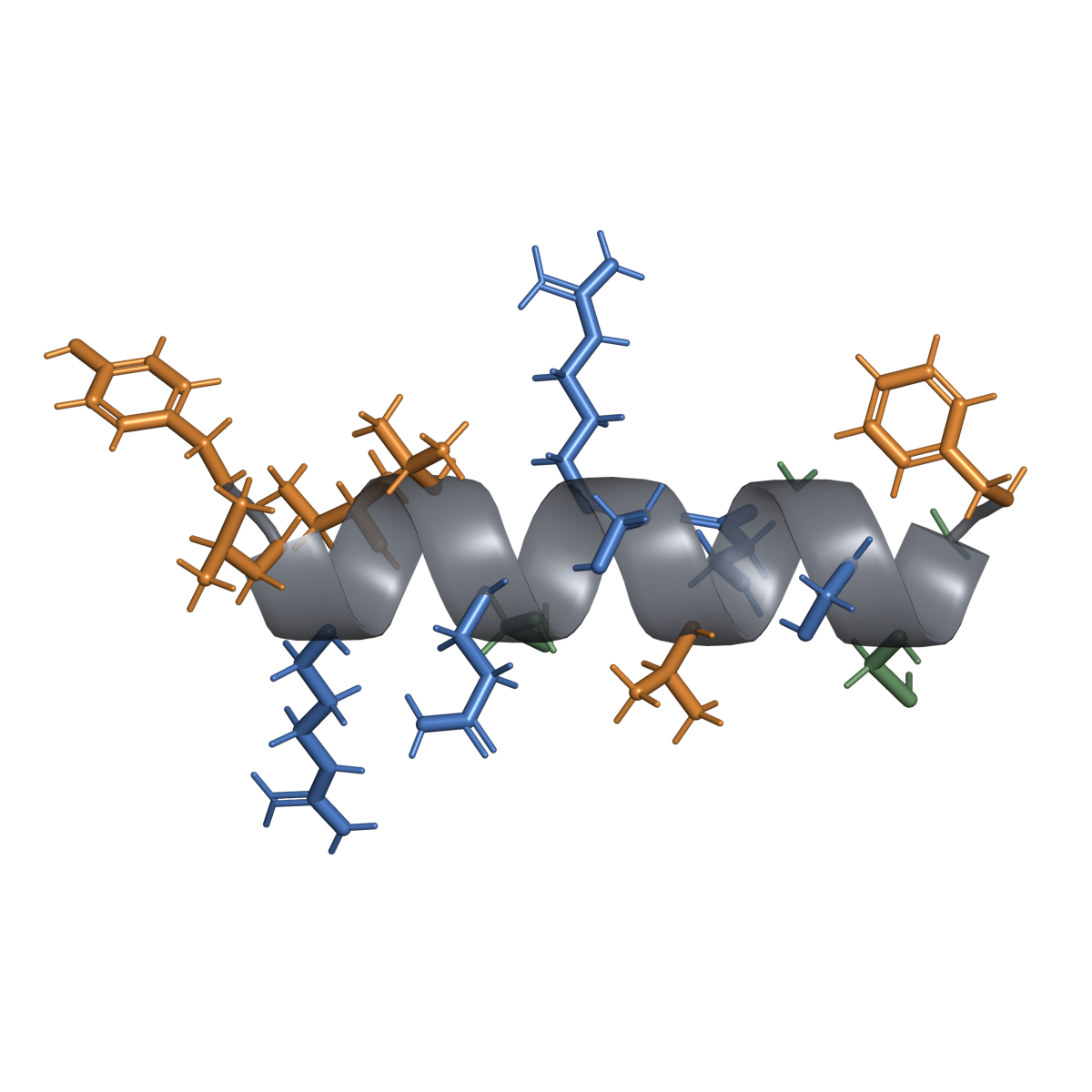
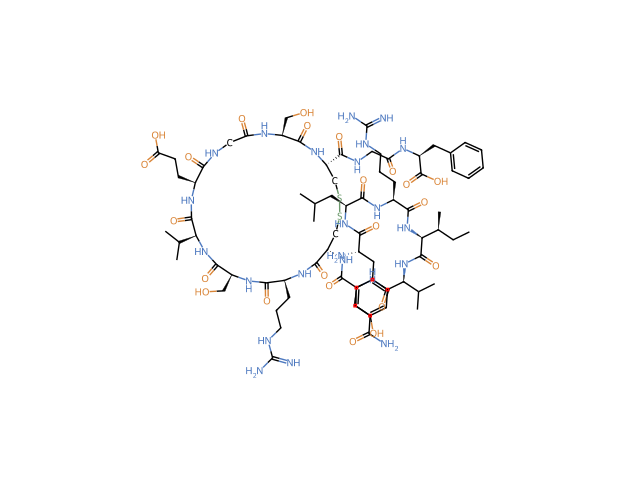
| Molecular/sequence identity | 16-residue peptide: Tyr-Leu-Arg-Ile-Val-Gln-Cys-Arg-Ser-Val-Glu-Gly-Ser-Cys-Gly-Phe; one intramolecular disulfide bond (Cys⁷-Cys¹⁴) |
| Modifications/form | C-terminal fragment of hGH (residues 177–191) with added N-terminal Tyr for stability; not full-length GH |
| Stable identifiers | The record number of a compound in PubChem, the atlas's primary structure-asset source. A registry record or depiction does not authenticate a commercial sample. Fonte da definição: Identity and structure assets methodology · Glossário: 71300630; CAS: 221231-10-3; MW ~1815 Da |
| Identity caveats | AOD-9604 is NOT human growth hormone and lacks the GH receptor-binding domain. It does not stimulate IGF-1 production. The "176-191" numbering includes the added Tyr as position 176; the actual GH sequence is 177-191. |
Development and approval status
| Jurisdiction | Status and indication | Product/source | As of |
|---|---|---|---|
| US (FDA) | No drug approval for any indication | — | 2026-08-06 |
| Australia | Phase IIb obesity trial completed; development terminated (2007) | Metabolic Pharmaceuticals | 2026-08-06 |
| EU (EMA) | No marketing authorization | — | 2026-08-06 |
- UNITED STATES
- US (FDA): No drug approval for any indication
- EU/EEA
- EU (EMA): No marketing authorization
- UNITED KINGDOM
- No UNITED KINGDOM row is present in the source status table
- OTHER DOCUMENTED
- Australia: Phase IIb obesity trial completed; development terminated (2007)
Sport status: AOD-9604 falls under WADA S2.2.3 (growth hormone fragments), as it is a synthetic fragment of human growth hormone (hGH 177-191). Detection methods for the specific fragment exist (Orlovius et al., Drug Test Anal 2013; PMID: 24124033).
Mechanism and pharmacology
AOD-9604 was designed to isolate the lipolytic activity of human GH from its other effects. Unlike GH, which signals through the GH receptor, AOD-9604 appears to signal through beta-3 adrenergic receptors on adipocytes, stimulating lipolysis and fat oxidation without activating the GH receptor, without elevating IGF-1, and without impairing insulin sensitivity in rodent models. The precise receptor mechanism in humans has not been definitively established.
Evidence by claim
| Claim/indication | Stage | Grade | Best human evidence | Main result | Important limitations |
|---|---|---|---|---|---|
| Obesity/weight loss | Phase IIb (failed) | X | 24-week A study in which participants are assigned to the study material or a comparator by chance. Fonte da definição: Neutral gloss; usage context: Evidence grading methodology · Glossário, n=536; Metabolic Pharmaceuticals 2007 | No significant weight loss vs An inactive comparator used in a controlled study. Fonte da definição: Neutral gloss; usage context: Evidence grading methodology · Glossário | Failed primary endpoint; program terminated |
| Cartilage repair/osteoarthritis | Evidence from in vitro or animal studies with no adequate human efficacy evidence — the atlas Grade D lane. Fonte da definição: Evidence grading methodology · Glossário | D | Rabbit OA study, 2015; intra-articular injection | Reduced cartilage degeneration in rabbits | Animal model only; no human data |
| Fat oxidation (preclinical) | Preclinical [1] | D | Heffernan et al., Endocrinology 2001; rodent models | Reduced weight gain; increased fat oxidation | Rodent data; mechanism may not translate to humans |
| Body composition | Marketing | E | No controlled human trials | No adequate evidence | Marketing extrapolation from preclinical rodent data |
- AGrau A: Estabelecido para um uso rotulado específico
- BGrau B: Evidência humana moderada
- CGrau C: Evidência humana preliminar
- DGrau D: Apenas pré-clínico
- EGrau E: Alegação anedótica/de marketing
- XGrau X: A evidência contradiz ou não apoia a alegação
Text alternative for the claim-evidence diagram. Each grade is defined below:
- A — Established for a specific labeled use
- 0 claims
- B — Moderate human evidence
- 0 claims
- C — Preliminary human evidence
- 0 claims
- D — Preclinical only
- 2 claims: Cartilage repair/osteoarthritis; Fat oxidation (preclinical)
- E — Anecdotal/marketing claim
- 1 claim: Body composition
- X — Evidence contradicts or does not support the claim
- 1 claim: Obesity/weight loss
Key studies
| Study | Design/population | Exposure studied | Endpoints and result | Limitations |
|---|---|---|---|---|
| Metabolic Pharmaceuticals Phase IIb, 2007 | 24-week A study in which participants are assigned to the study material or a comparator by chance. Fonte da definição: Neutral gloss; usage context: Evidence grading methodology · Glossário; 536 obese adults | AOD-9604 1 mg/day oral | No significant weight loss vs An inactive comparator used in a controlled study. Fonte da definição: Neutral gloss; usage context: Evidence grading methodology · Glossário; ~0.8 kg difference | Failed primary endpoint; never fully published in peer-reviewed journal |
| Heffernan et al., Am J Physiol 2000; PMID: 10950816 | Evidence from in vitro or animal studies with no adequate human efficacy evidence — the atlas Grade D lane. Fonte da definição: Evidence grading methodology · Glossário; obese and lean mice [1] | Oral AOD-9604 | Reduced weight gain; increased fat oxidation | Rodent model only; not humans |
| Heffernan et al., Endocrinology 2001; PMID: 11713213 | Preclinical; beta-3 AR knockout mice [1] | IP AOD-9604 | Lipolytic activity independent of GH receptor | Rodent mechanism data |
| Ng et al., 1993 (foundational); PMID: 8358331 | In vitro; rat adipocytes | hGH fragment 177-191 | Reproduced GH antilipogenic activity | Cell-based; rat tissue |
Dose and administration evidence
Approved labeled regimen
Not applicable as an approved drug.
Studied regimens (not recommendations)
No established or recommended human dose. The Phase IIb trial used 1 mg/day orally. No injectable formulation has been studied in adequate human trials.
What is not established
Effective therapeutic dose for any indication
Safety beyond 24 weeks
Any dose for injectable use
Dose for cartilage repair
Safety
Established label risks
No drug label exists.
Human-study signals
The Phase IIb trial reported no change in IGF-1, blood glucose, or insulin sensitivity — consistent with the intended mechanism. Adverse events were not significantly different from An inactive comparator used in a controlled study. Fonte da definição: Neutral gloss; usage context: Evidence grading methodology · Glossário.
Unknowns and product-quality risks
No chronic toxicology data, reproductive toxicity studies, or long-term human safety data exist. Research-grade injectable AOD-9604 from unregulated sources may have unknown purity, sterility, and identity.
Interactions and special populations
No human drug-interaction data exist. Theoretical contraindications include pregnancy and lactation.
Regulatory, compounding, and sport notes
AOD-9604 falls under The World Anti-Doping Agency; its Prohibited List classifies many peptides as prohibited substances in sport. Fonte da definição: WADA and sport regulation brief · Glossário S2.2.3 (growth hormone fragments), as it is a synthetic fragment of human growth hormone (hGH 177-191). Detection methods for the specific fragment exist (Orlovius et al., Drug Test Anal 2013; PMID: 24124033).
Evidence gaps
The only adequately powered human trial (Phase IIb, n=536) was negative
No peer-reviewed full publication of the Phase IIb results
No human data for any indication other than obesity
No long-term safety data
The mechanism of action in humans is not established
No data comparing the oral formulation studied in the trial to injectable material sold in the gray market
Search notes
Databases and registries: PubMed, ClinicalTrials.gov, PubChem
Search terms: "AOD-9604", "hGH fragment 176-191", "Metabolic Pharmaceuticals", "AOD9604"
Last searched: 2026-08-06
Inclusion emphasis: Primary peer-reviewed human data; regulatory documents; Evidence from in vitro or animal studies with no adequate human efficacy evidence — the atlas Grade D lane. Fonte da definição: Evidence grading methodology · Glossário origin
Sources
Heffernan MA et al. Increase of fat oxidation and weight loss in obese mice by hGH or AOD9604. Int J Obes. 2001;25(5):635-641. https://pubmed.ncbi.nlm.nih.gov/11713213/
Heffernan MA et al. Oral administration of a synthetic hGH fragment reduces weight gain in obese animals. Am J Physiol. 2000;279(6):E1317-E1323. https://pubmed.ncbi.nlm.nih.gov/10950816/
Inpharma Weekly. Obesity drug development terminated. 2005;1514(1):10. https://doi.org/10.2165/00128413-200514690-00010
Misra M. Obesity pharmacotherapy: current perspectives. Curr Cardiol Rev. 2013;9(4). https://pubmed.ncbi.nlm.nih.gov/23092275/
PubChem CID 71300630 (AOD-9604). https://pubchem.ncbi.nlm.nih.gov/compound/71300630
Mendias CL, Awan TM. Unapproved peptides in sports medicine. Sports Med. 2026. https://pubmed.ncbi.nlm.nih.gov/41966639/
Orlovius AK et al. AOD-9604 detection by hGH isoform immunoassay. Drug Test Anal. 2013. https://pubmed.ncbi.nlm.nih.gov/24124033/