Bottom line
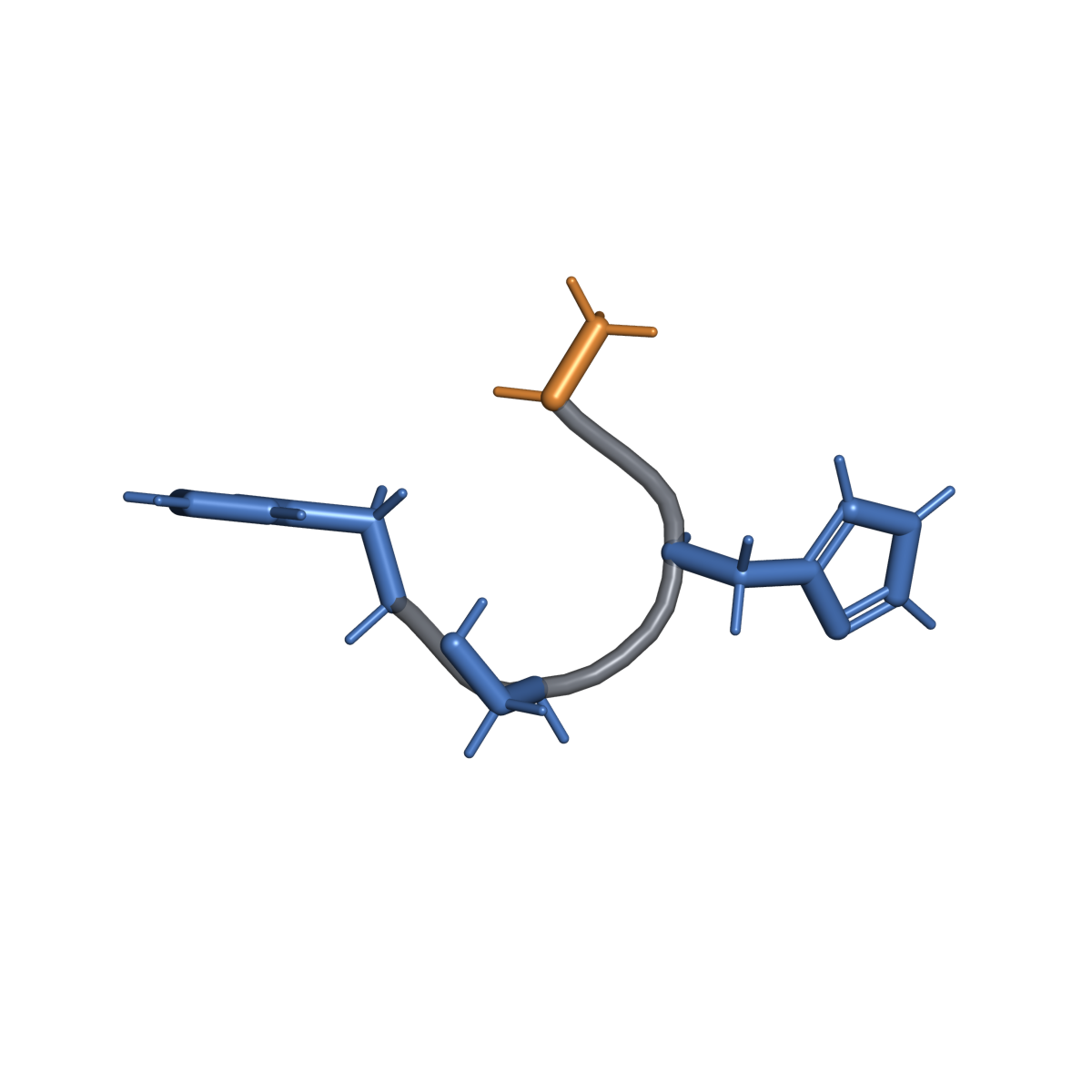
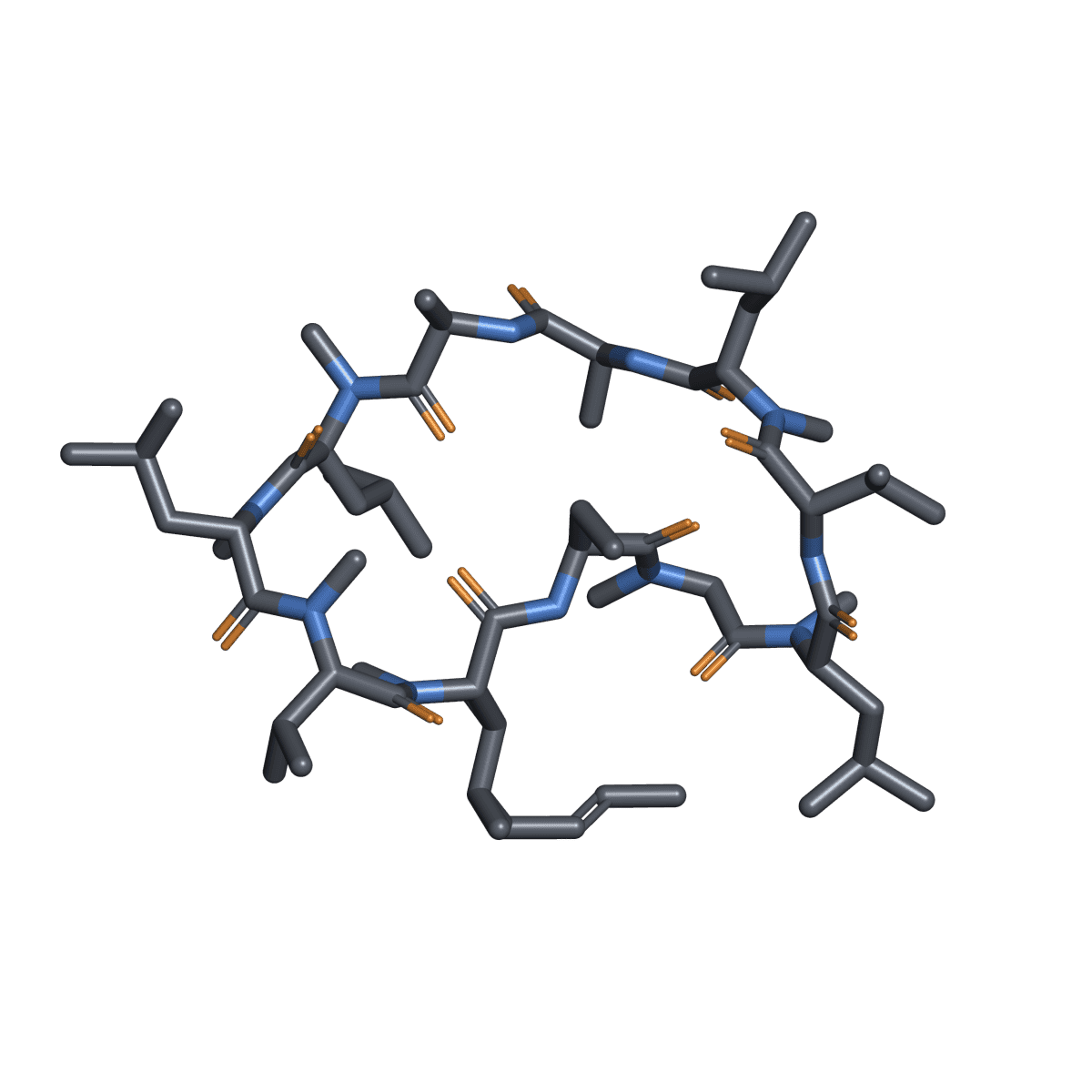
Glatiramer acetate (GA) is a complex, heterogeneous mixture of synthetic polypeptides composed of four amino acids (L-alanine, L-lysine, L-glutamic acid, L-tyrosine) in defined average molar fractions, with an average molecular weight of 5-9 kDa. It is not a single peptide with a defined sequence, making it a boundary case in a peptide atlas. FDA-approved in 1996 (Copaxone 20 mg/mL) and 2014 (40 mg/mL triweekly) for relapsing forms of MS. Its mechanism involves immune modulation through induction of GA-specific regulatory T cells. Multiple An inactive comparator used in a controlled study. Definition source: Neutral gloss; usage context: Evidence grading methodology · Glossary-controlled trials demonstrate reduced relapse rates and MRI lesion activity.
Identity and composition
| Field | Verified information |
|---|---|
| Preferred name | Glatiramer acetate |
| Key aliases | Copaxone, Glatopa, Copolymer-1 (COP-1) |
| Molecular/sequence identity | Heterogeneous mixture of random copolymers with FDA-labeled average molar fractions: L-alanine 0.427, L-lysine 0.338, L-glutamic acid 0.141, and L-tyrosine 0.095; average molecular weight 5-9 kDa; no single defined sequence |
| Modifications/form | Acetate salt; supplied as sterile Freeze-drying: water is removed by sublimation under reduced pressure, which can improve the stability of peptides and yield a porous dry matrix. Water removal does not sterilize a product, prove its quality, or define how it should later be handled. Definition source: Lyophilization, formulation, and stability primer · Glossary powder or solution for Administered into the tissue layer under the skin. Definition source: Neutral gloss; usage context: Routes, devices, and absorption primer · Glossary injection |
| Stable identifiers | CAS 28704-27-0; DrugBank DB05259; The record number of a compound in PubChem, the atlas's primary structure-asset source. A registry record or depiction does not authenticate a commercial sample. Definition source: Identity and structure assets methodology · Glossary not applicable (mixture) |
| Identity caveats | Glatiramer acetate is a heterogeneous copolymer mixture with no defined primary sequence. Classified by the FDA as a complex drug mixture manufactured by chemical synthesis, not a biotechnology-derived protein. |
Development and approval status
| Jurisdiction | Status and indication | Product/source | As of |
|---|---|---|---|
| US (FDA) | Approved for relapsing forms of MS (CIS, RRMS, active SPMS) | Copaxone (20 mg/mL daily, 40 mg/mL 3x/week) | 2025 label |
| US (FDA) | First generic MS DMT approved 2015 | Glatopa (Sandoz) | 2015 |
| EU (EMA) | Approved for relapsing-remitting MS | Copaxone | 2026-08-06 |
- UNITED STATES
- US (FDA): Approved for relapsing forms of MS (CIS, RRMS, active SPMS); US (FDA): First generic MS DMT approved 2015
- EU/EEA
- EU (EMA): Approved for relapsing-remitting MS
- UNITED KINGDOM
- No UNITED KINGDOM row is present in the source status table
- OTHER DOCUMENTED
- No OTHER DOCUMENTED row is present in the source status table
Sport status: WADA: glatiramer acetate was not identified by exact name in the 2026 Prohibited List, and this review did not identify a matching prohibited class. An unsupported assumption about performance effect is not a basis for classification; athletes should verify the exact product and current status.
Mechanism and pharmacology
GA binds promiscuously to MHC class II molecules, competing with myelin antigens for presentation. GA-reactive T cells are induced and polarized toward a Th2 phenotype, secreting anti-inflammatory cytokines (IL-4, IL-10, TGF-beta). These cells migrate to the CNS and produce bystander suppression. The exact mechanism in humans is not fully elucidated. The FDA label states the mechanism is "not fully understood."
Evidence by claim
| Claim/indication | Stage | Grade | Best human evidence | Main result | Important limitations |
|---|---|---|---|---|---|
| Relapse reduction in RRMS | Approved | A | Two Neither participants nor investigators know who receives the study material or the comparator. Definition source: Neutral gloss; usage context: Evidence grading methodology · Glossary An inactive comparator used in a controlled study. Definition source: Neutral gloss; usage context: Evidence grading methodology · Glossary-controlled trials (N=50 and N=251); later 40 mg triweekly trial (N=1404) | ~29% reduction in annualized relapse rate; reduced MRI gadolinium-enhancing lesions | Effect on disability progression less consistent |
| Delay of conversion from CIS to CDMS | Approved | A | PreCISe trial (N=481) | 45% risk reduction for conversion to CDMS over 3 years | A study in which participants and investigators know what is administered. Definition source: Neutral gloss; usage context: Evidence grading methodology · Glossary extension |
- AGrade A: Established for a specific labeled use
- BGrade B: Moderate human evidence
- CGrade C: Preliminary human evidence
- DGrade D: Preclinical only
- EGrade E: Anecdotal/marketing claim
- XGrade X: Evidence contradicts or does not support the claim
Text alternative for the claim-evidence diagram. Each grade is defined below:
- A — Established for a specific labeled use
- 2 claims: Relapse reduction in RRMS; Delay of conversion from CIS to CDMS
- B — Moderate human evidence
- 0 claims
- C — Preliminary human evidence
- 0 claims
- D — Preclinical only
- 0 claims
- E — Anecdotal/marketing claim
- 0 claims
- X — Evidence contradicts or does not support the claim
- 0 claims
Key studies
| Study | Design/population | Exposure studied | Endpoints and result | Limitations |
|---|---|---|---|---|
| Johnson et al. 1995 (pivotal trial) | Multicenter, DBPC, N=251, RRMS | GA 20 mg Administered into the tissue layer under the skin. Definition source: Neutral gloss; usage context: Routes, devices, and absorption primer · Glossary daily vs An inactive comparator used in a controlled study. Definition source: Neutral gloss; usage context: Evidence grading methodology · Glossary, 24 months | Relapse rate: 1.19 vs 1.68 (p=0.007); 29% reduction | Modified ITT analysis |
| Comi et al. 2001 (European/Canadian MRI trial) | DBPC, N=239, RRMS | GA 20 mg SC daily vs placebo, 9 months | MRI total Gd-enhancing lesions: RR 0.74 (p=0.004) | Short duration, MRI as primary |
| Khan et al. 2013 (GALA trial) | DBPC, N=1404, RRMS | GA 40 mg SC 3x/week vs placebo, 12 months | ARR: 0.33 vs 0.47 (p<0.001); 34% reduction | High placebo rate suggests mild disease |
Dose and administration evidence
Approved labeled regimen
Copaxone label (FDA). The label summary below is product-, indication-, and jurisdiction-specific; consult the full current label and a licensed clinician/pharmacist.
20 mg/mL: administer once daily subcutaneously via single-dose prefilled syringe.
40 mg/mL: administer three times per week (at least 48 hours apart) subcutaneously via single-dose prefilled syringe.
Both strengths are supplied as ready-to-use single-dose prefilled syringes; the Freeze-drying: water is removed by sublimation under reduced pressure, which can improve the stability of peptides and yield a porous dry matrix. Water removal does not sterilize a product, prove its quality, or define how it should later be handled. Definition source: Lyophilization, formulation, and stability primer · Glossary formulation was discontinued.
Only for Administered into the tissue layer under the skin. Definition source: Neutral gloss; usage context: Routes, devices, and absorption primer · Glossary use; not for Administered into a vein. Definition source: Neutral gloss; usage context: Routes, devices, and absorption primer · Glossary or Administered into a muscle. Definition source: Neutral gloss; usage context: Routes, devices, and absorption primer · Glossary administration.
Studied regimens (not recommendations)
Other schedules for A clinical-stage candidate with scientific or public relevance. Investigation is not approval, and a studied exposure is not a recommendation. Definition source: Scope and selection methodology · Glossary use have been described; no alternative regimen has been approved.
What is not established
No alternative labeled regimen is established. Safety and efficacy in pediatric patients are not established.
Safety
Established label risks
Boxed warning (2025): Anaphylaxis, including fatal reactions, has been reported with glatiramer acetate. Anaphylaxis can occur at any time after administration, including the first dose or months to years after initiation. Epinephrine should be readily available. Patients should be advised to seek immediate medical attention if they experience symptoms of anaphylaxis.
Injection site reactions (very common): pain, erythema, inflammation, pruritus.
Immediate post-injection reaction (IPIR): flushing, chest pain, palpitations, anxiety, dyspnea; typically self-limiting, occurs minutes after injection.
Vasodilation, rash, dyspnea, transient chest pain.
Hypersensitivity reactions (contraindicated if known allergy).
Hepatotoxicity (hepatic failure, autoimmune hepatitis) — post-marketing reports.
Human-study signals
No new safety signals beyond label findings in long-term follow-up.
Unknowns and product-quality risks
Products sold as "research peptide" labeled glatiramer acetate are unregulated and likely misrepresented given the complex manufacturing process required for pharmaceutical-grade material.
Interactions and special populations
No formal drug interaction studies.
Pregnancy Category B (animal studies no fetal harm; no adequate human studies).
Elderly: insufficient data.
Regulatory, compounding, and sport notes
FDA and EMA approved as prescription drug.
The World Anti-Doping Agency; its Prohibited List classifies many peptides as prohibited substances in sport. Definition source: WADA and sport regulation brief · Glossary: glatiramer acetate was not identified by exact name in the 2026 Prohibited List, and this review did not identify a matching prohibited class. An unsupported assumption about performance effect is not a basis for classification; athletes should verify the exact product and current status.
First generic (Glatopa) approved via ANDA pathway, confirming classification as complex drug mixture rather than biologic.
Evidence gaps
Mechanism of action still not fully defined despite decades of use.
Comparative effectiveness vs newer oral DMTs limited.
Biomarkers for treatment response are lacking.
Search notes
Databases and registries: PubMed, FDA label, ClinicalTrials.gov
Search terms: "glatiramer acetate", "Copaxone", "copolymer-1", "multiple sclerosis"
Last searched: 2026-08-06
Inclusion emphasis: FDA label, pivotal trials, regulatory documents
Sources
FDA. Copaxone (glatiramer acetate) prescribing information. https://www.accessdata.fda.gov/drugsatfda_docs/label/2025/020622s118s119lbl.pdf
Johnson KP, et al. Extended use of glatiramer acetate (Copaxone) is well tolerated. Neurology. 1998;50(3):701-708.
Comi G, et al. European/Canadian multicenter, double-blind, randomized, placebo-controlled study of GA on MRI. Ann Neurol. 2001;49(3):290-297.
Khan O, et al. Three times weekly GA in RRMS: results of the GALA phase 3 trial. Neurology. 2013;80(21):1940-1947.
Bell C, et al. Development of Glatopa. J Pharm Pract. 2018;31(5):474-482.
DrugBank. Glatiramer acetate (DB05259). https://go.drugbank.com/
World Anti-Doping Agency. 2026 Prohibited List. https://www.wada-ama.org/sites/default/files/2025-09/2026list_en_final_clean_september_2025.pdf