Bottom line
GHRP-6 is a synthetic hexapeptide GH secretagogue developed by Cyril Bowers and colleagues. Acute human studies show dose-related GH release and, at the highest exposure in one study, increases in cortisol and prolactin. A central-administration rat experiment reported increased feeding, but the sources reviewed here do not establish a human appetite effect. Despite Evidence from in vitro or animal studies with no adequate human efficacy evidence — the atlas Grade D lane. Fuente de la definición: Evidence grading methodology · Glosario characterization and a small Phase I safety report in Cuba (CIGB-500), no FDA-approved product or EMA-authorized medicine was identified as of 2026-08-06.
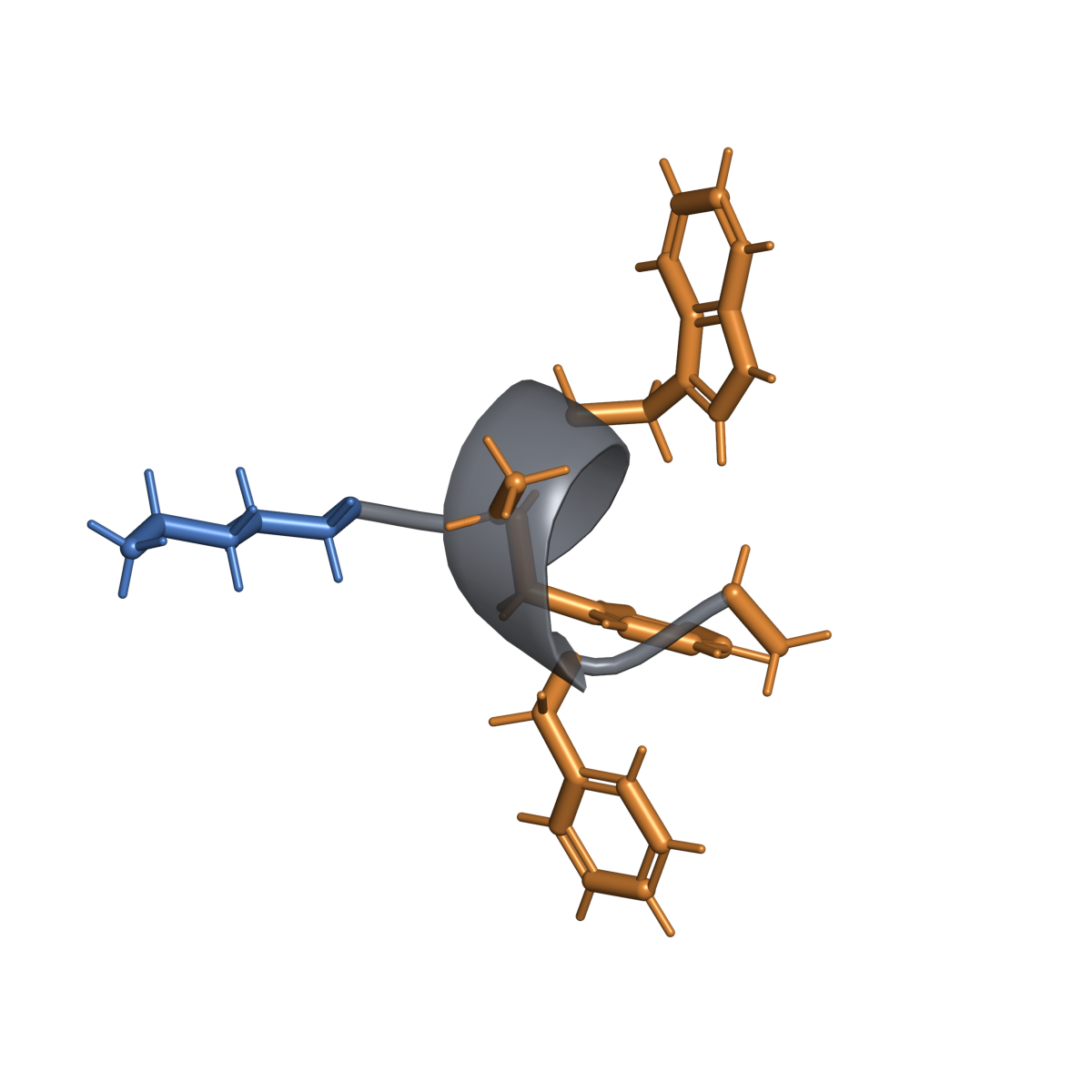
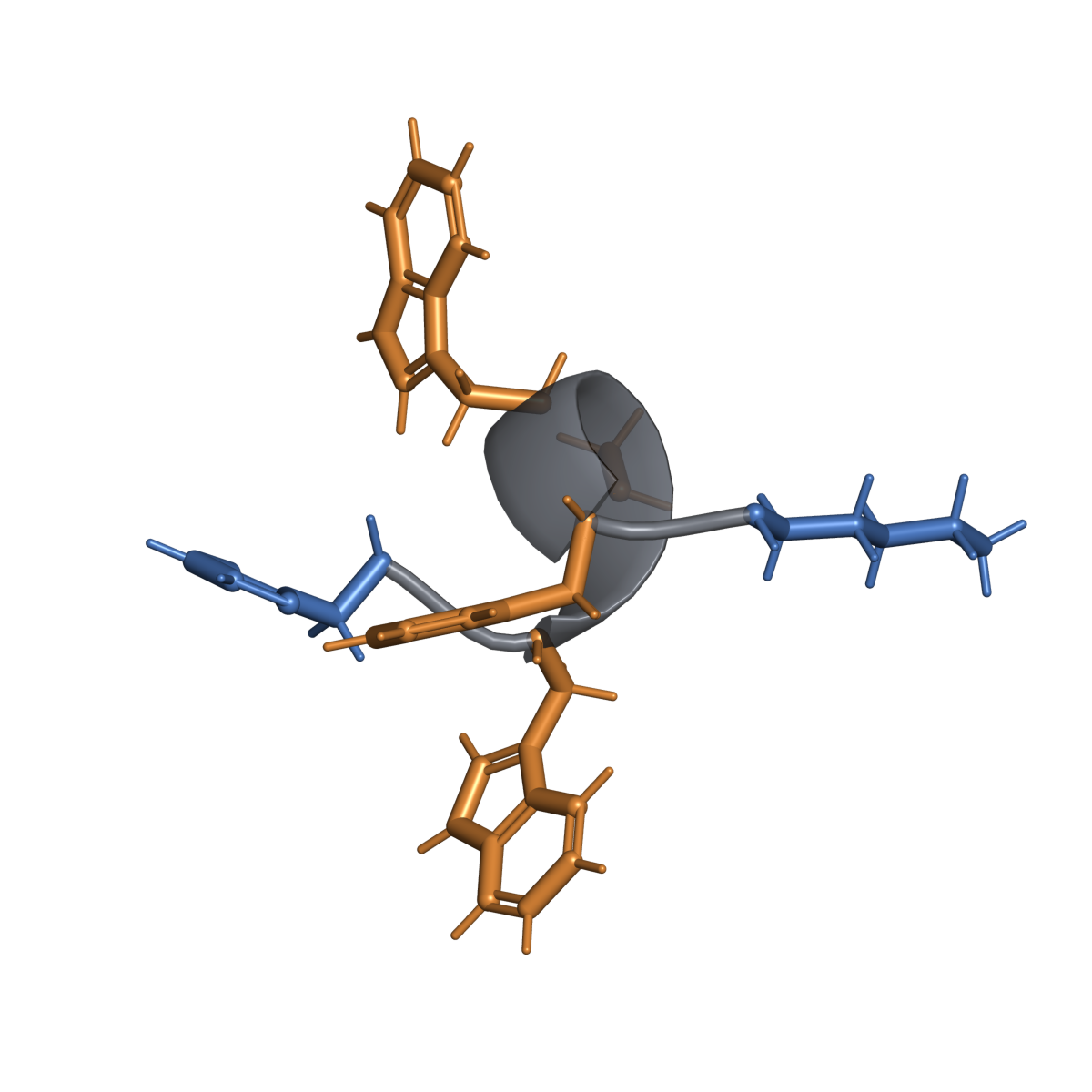
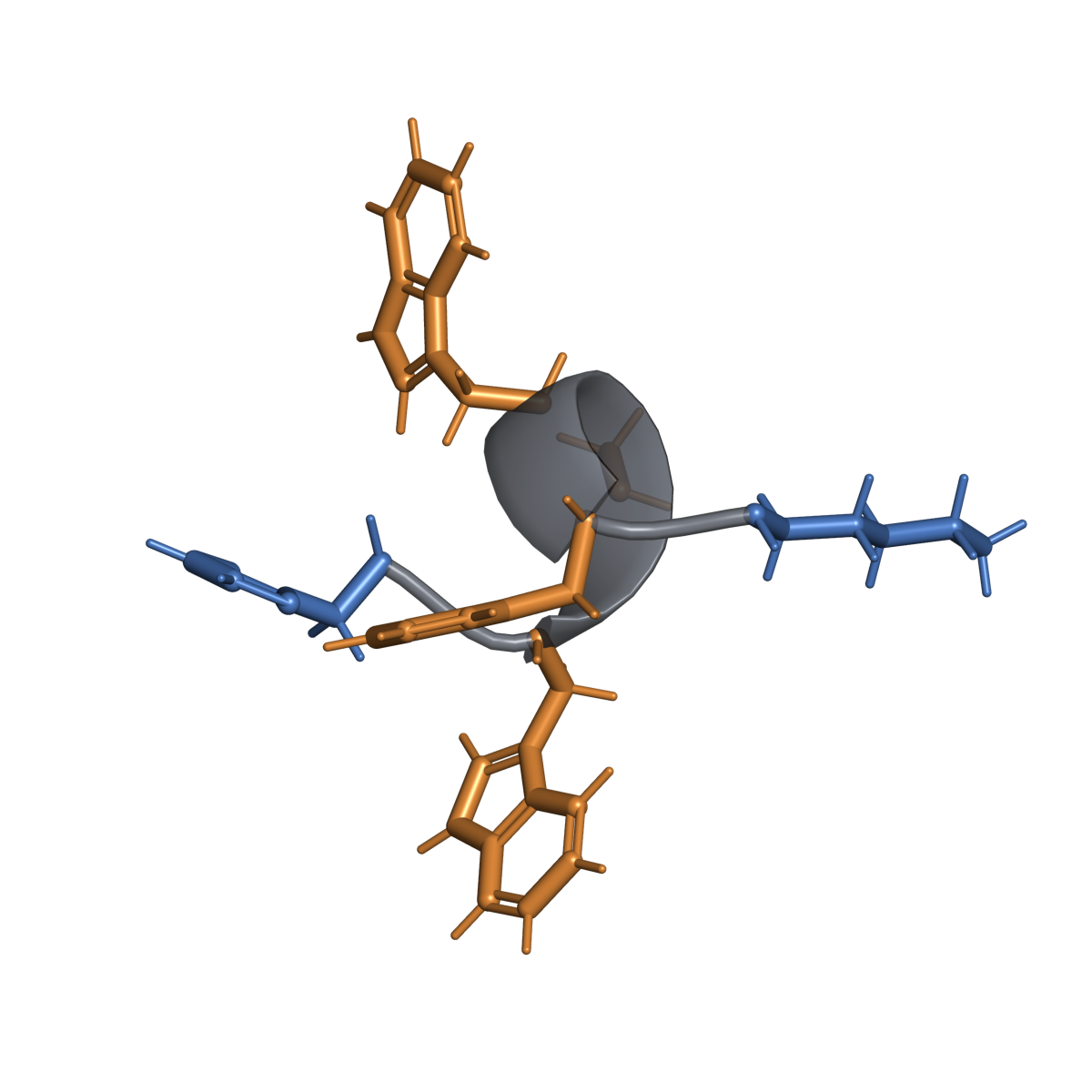
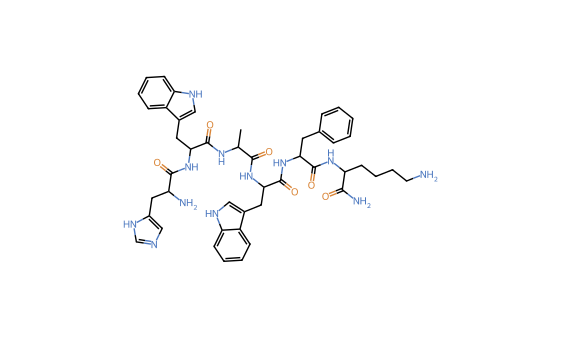
Identity and composition
| Field | Verified information |
|---|---|
| Preferred name | GHRP-6 |
| Key aliases | Growth Hormone Releasing Peptide-6, SKF-110679, CIGB-500, His-D-Trp-Ala-Trp-D-Phe-Lys-NH2 |
| Molecular/sequence identity | Hexapeptide: His-D-Trp-Ala-Trp-D-Phe-Lys-NH2 |
| Modifications/form | D-amino acids at positions 2 and 5 confer proteolytic stability; C-terminal amidation |
| Stable identifiers | The record number of a compound in PubChem, the atlas's primary structure-asset source. A registry record or depiction does not authenticate a commercial sample. Fuente de la definición: Identity and structure assets methodology · Glosario: 4345065; CAS: 87616-84-0; MW ~873 Da |
| Identity caveats | Distinguished from GHRP-2 (D-Ala-D-2-Nal-Ala-Trp-D-Phe-Lys-NH2, MW ~818 Da); evidence from one GHRP cannot be transferred to the other. |
Development and approval status
| Jurisdiction | Status and indication | Product/source | As of |
|---|---|---|---|
| US (FDA) | No approved indication | — | 2026-08-06 |
| EU (EMA) | No marketing authorization | — | 2026-08-06 |
| Cuba (CECMED) | Phase I completed for cardioprotection (CIGB-500); no approval | Center for Genetic Engineering and Biotechnology | 2026-08-06 |
- UNITED STATES
- US (FDA): No approved indication
- EU/EEA
- EU (EMA): No marketing authorization
- UNITED KINGDOM
- No UNITED KINGDOM row is present in the source status table
- OTHER DOCUMENTED
- Cuba (CECMED): Phase I completed for cardioprotection (CIGB-500); no approval
Sport status: GHRP-6 is explicitly listed under WADA section S2.2.4 as a GH-releasing peptide and is prohibited at all times. Detection claims depend on the validated method, specimen and target analyte and are not generalized here.
Mechanism and pharmacology
GHRP-6 is an agonist at GHS-R1a (the ghrelin receptor). Acute human Administered into a vein. Fuente de la definición: Neutral gloss; usage context: Routes, devices, and absorption primer · Glosario studies reported dose-related GH release; Bowers et al. also reported approximately twofold prolactin and cortisol increases at the highest GHRP-6 exposure, while the lower exposures did not show that effect. A rat intracerebroventricular experiment supports a central feeding-response mechanism, but does not establish a human appetite effect. Evidence from in vitro or animal studies with no adequate human efficacy evidence — the atlas Grade D lane. Fuente de la definición: Evidence grading methodology · Glosario work also investigates CD36-mediated cardioprotective signaling.
Evidence by claim
| Claim/indication | Stage | Grade | Best human evidence | Main result | Important limitations |
|---|---|---|---|---|---|
| GH release (acute pharmacology) | Phase I | C | Multiple early-phase human studies | Dose-related GH elevation across the acute exposures studied | Pharmacology only; no efficacy endpoints and no established saturation threshold |
| Cardioprotection | Phase I (Cuba) | D | Selman-Housein et al., 2014; Phase I safety (n=18, Administered into a vein. Fuente de la definición: Neutral gloss; usage context: Routes, devices, and absorption primer · Glosario 1–400 mcg/kg) | Acceptable safety; biphasic PK; no serious AEs | Phase I safety only; no efficacy data; small N |
| Myocardial ischemia | Evidence from in vitro or animal studies with no adequate human efficacy evidence — the atlas Grade D lane. Fuente de la definición: Evidence grading methodology · Glosario | D | Animal models (rat ischemia-reperfusion) | Reduced infarct size | Animal data only; no human translation |
| Appetite stimulation | Preclinical | D | Lawrence et al., 2002; intracerebroventricular rat experiment | Increased feeding and activation of hypothalamic appetite centers | Animal route and model; does not establish a human effect or regimen |
- AGrado A: Establecido para un uso etiquetado específico
- BGrado B: Evidencia humana moderada
- CGrado C: Evidencia humana preliminar
- DGrado D: Solo preclínico
- EGrado E: Afirmación anecdótica/de marketing
- XGrado X: La evidencia contradice o no respalda la afirmación
Text alternative for the claim-evidence diagram. Each grade is defined below:
- A — Established for a specific labeled use
- 0 claims
- B — Moderate human evidence
- 0 claims
- C — Preliminary human evidence
- 1 claim: GH release (acute pharmacology)
- D — Preclinical only
- 3 claims: Cardioprotection; Myocardial ischemia; Appetite stimulation
- E — Anecdotal/marketing claim
- 0 claims
- X — Evidence contradicts or does not support the claim
- 0 claims
Key studies
| Study | Design/population | Exposure studied | Endpoints and result | Limitations |
|---|---|---|---|---|
| Selman-Housein et al., Invest Medicoquir 2014 (Cuban Phase I) | Phase I dose escalation; 18 apparently healthy adults | Administered into a vein. Fuente de la definición: Neutral gloss; usage context: Routes, devices, and absorption primer · Glosario 1–400 mcg/kg single dose | No serious AEs; biphasic PK; 23 mild AEs in 12 subjects | Small N; single dose; no efficacy endpoints; accessible abstract does not report sex distribution |
| Ilson et al., 1989 | Dose-escalation pharmacology; 17 healthy men, with eight saline-control infusions | 30-minute IV infusions of 0.05–2.5 mcg/kg | Dose-related GH release, peaking at 45 minutes | Acute endocrine endpoint; small male-only sample; no therapeutic outcome |
| Bowers et al., 1990 | Acute pharmacology; 18 healthy men | IV bolus GHRP-6 at 0.1, 0.3 or 1 mcg/kg, alone or with GHRH 1 mcg/kg | Dose-related GH release; synergistic responses at the two lower combination exposures; approximately twofold prolactin/cortisol increases only at 1 mcg/kg GHRP-6 | Acute endocrine endpoints; small male-only sample; no therapeutic outcome |
Dose and administration evidence
Approved labeled regimen
Not applicable.
Studied regimens (not recommendations)
No established or recommended human dose. Human acute-pharmacology studies examined 30-minute Administered into a vein. Fuente de la definición: Neutral gloss; usage context: Routes, devices, and absorption primer · Glosario infusions of 0.05–2.5 mcg/kg and IV boluses of 0.1–1 mcg/kg; a separate small dose-escalation safety report studied single IV exposures of 1–400 mcg/kg. These are experimental exposures, not therapeutic regimens.
What is not established
Effective therapeutic dose for any indication
Safety of chronic daily administration
Dose for body composition or performance use
Administered into the tissue layer under the skin. Fuente de la definición: Neutral gloss; usage context: Routes, devices, and absorption primer · Glosario The fraction of an administered amount that reaches systemic circulation; for the intravenous route the atlas notes bioavailability is defined as complete. Fuente de la definición: Neutral gloss; usage context: Routes, devices, and absorption primer · Glosario at various doses
Safety
Established label risks
No approved label exists.
Human-study signals
In acute human pharmacology, the highest tested 1 mcg/kg Administered into a vein. Fuente de la definición: Neutral gloss; usage context: Routes, devices, and absorption primer · Glosario bolus in Bowers et al. produced approximately twofold prolactin and cortisol increases. The small Cuban dose-escalation report recorded 23 adverse events in 12 of 18 participants and no serious adverse event. Appetite stimulation is supported here only by a rat experiment and should not be presented as an established human effect.
Unknowns and product-quality risks
Long-term safety is not established. GH/IGF-1 pathway activation carries theoretical neoplastic risk. Research-grade material is of unverified quality. Whether the feeding response observed after central administration in rats translates to humans is unknown.
Interactions and special populations
No formal drug-interaction studies exist. Acute human pharmacology showed synergistic GH release when GHRP-6 was combined with GHRH, but this does not establish a therapeutic combination. Safety in pregnancy, active malignancy and other special populations has not been established.
Regulatory, compounding, and sport notes
GHRP-6 is explicitly listed under The World Anti-Doping Agency; its Prohibited List classifies many peptides as prohibited substances in sport. Fuente de la definición: WADA and sport regulation brief · Glosario section S2.2.4 as a GH-releasing peptide and is prohibited at all times. Detection claims depend on the validated method, specimen and target analyte and are not generalized here.
Evidence gaps
No Phase II or III therapeutic efficacy trial for any indication
No long-term safety data
No adequate human data for body composition, muscle growth, or anti-aging claims
No dose-finding for Administered into the tissue layer under the skin. Fuente de la definición: Neutral gloss; usage context: Routes, devices, and absorption primer · Glosario chronic administration
No cardioprotection efficacy trial in humans
Search notes
Databases and registries: PubMed, ClinicalTrials.gov, FDA Drugs@FDA
Search terms: "GHRP-6", "growth hormone releasing peptide 6", "CIGB-500", "SKF-110679"
Last searched: 2026-08-06
Inclusion emphasis: Human studies; primary peer-reviewed data; Phase I safety trial
Sources
Ilson BE, et al. Effect of a new synthetic hexapeptide to selectively stimulate growth hormone release in healthy human subjects. J Clin Endocrinol Metab. 1989;69(1):212-214. PMID 2543692. https://pubmed.ncbi.nlm.nih.gov/2543692/
Selman-Housein KH et al. Clinical safety of GHRP-6 in healthy volunteers. Invest Medicoquir. 2014;6(1):81-91. https://www.medigraphic.com/cgi-bin/new/resumen.cgi?IDARTICULO=50887
Bowers CY, et al. Growth hormone (GH)-releasing peptide stimulates GH release in normal men and acts synergistically with GH-releasing hormone. J Clin Endocrinol Metab. 1990;70(4):975-982. PMID 2108187. https://pubmed.ncbi.nlm.nih.gov/2108187/
Lawrence CB, et al. Acute central ghrelin and GH secretagogues induce feeding and activate brain appetite centers. Endocrinology. 2002;143(1):155-162. PMID 11751604. https://pubmed.ncbi.nlm.nih.gov/11751604/
WADA. 2026 Prohibited List. https://www.wada-ama.org/en/resources/world-anti-doping-program/prohibited-list
PubChem CID 4345065. GHRP-6. https://pubchem.ncbi.nlm.nih.gov/compound/4345065