Bottom line
Daptomycin is a cyclic lipopeptide antibiotic derived from Streptomyces roseosporus with rapid, concentration-dependent bactericidal activity against Gram-positive bacteria including MRSA and VRE. It is a first-line agent for MRSA bacteremia and right-sided infective endocarditis. Not effective for pneumonia (inactivated by pulmonary surfactant). Requires monitoring of creatine phosphokinase (CPK) due to potential skeletal muscle toxicity.
Identity and composition
| Field | Verified information |
|---|---|
| Preferred name | Daptomycin |
| Key aliases | Cubicin, LY146032, daptomycin for injection |
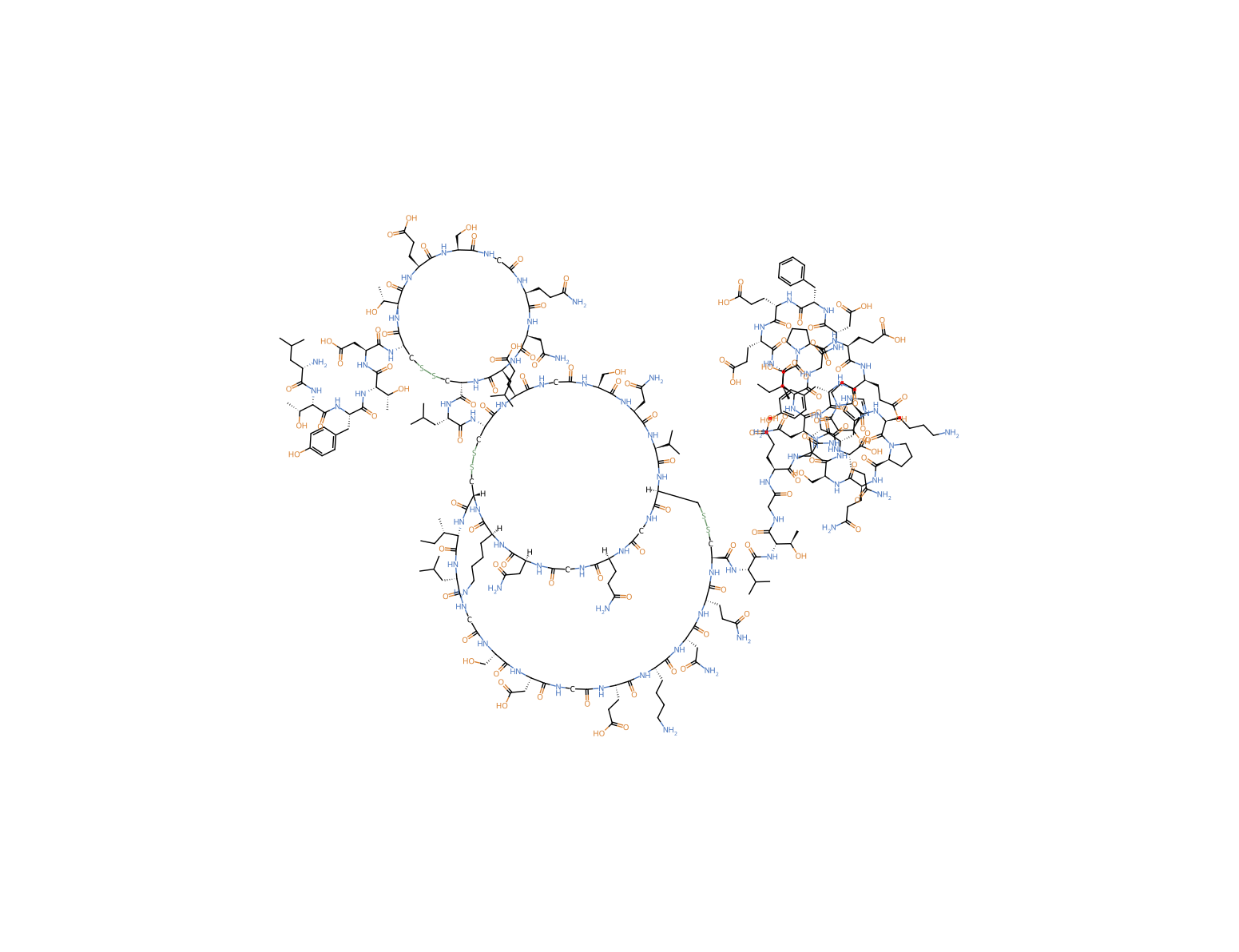
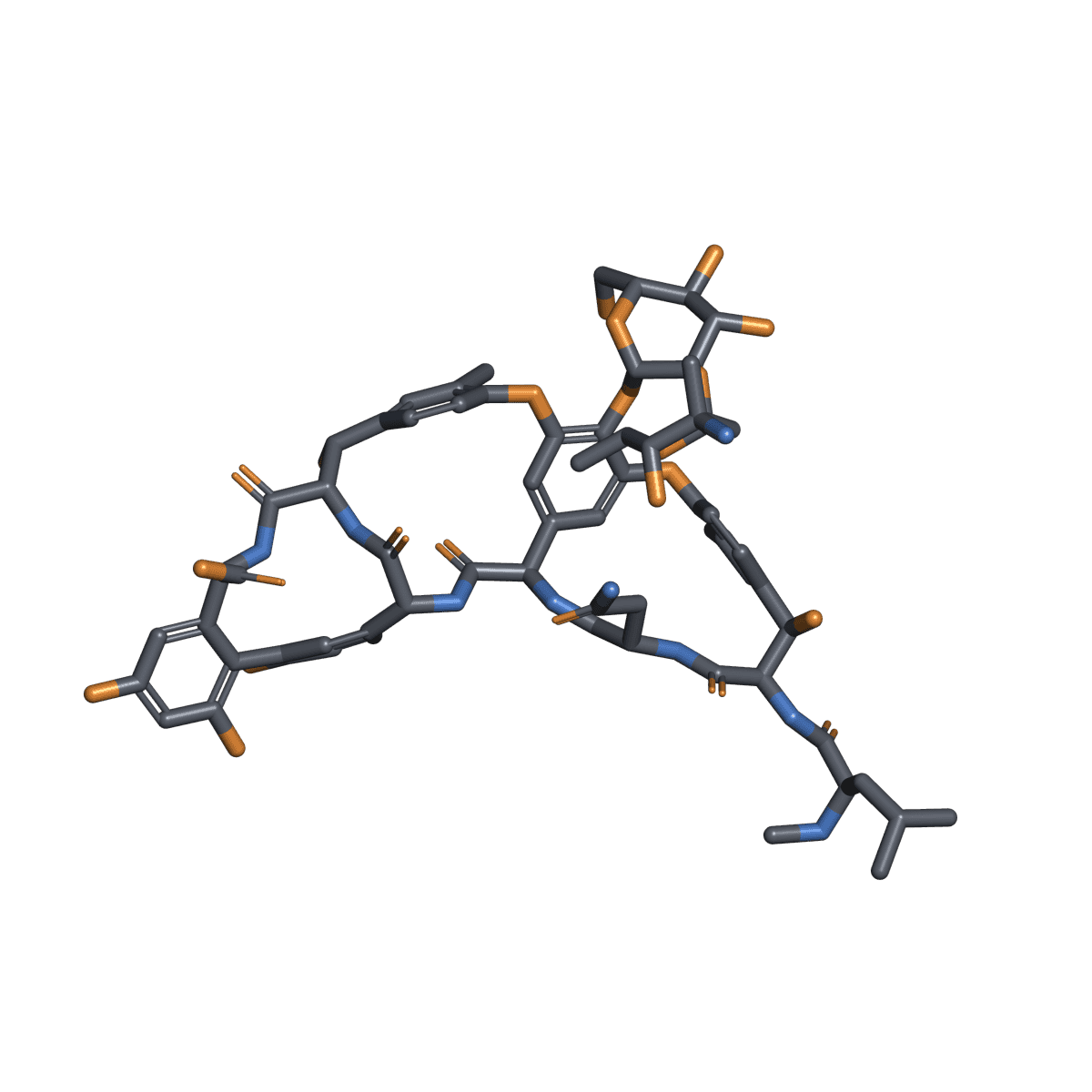
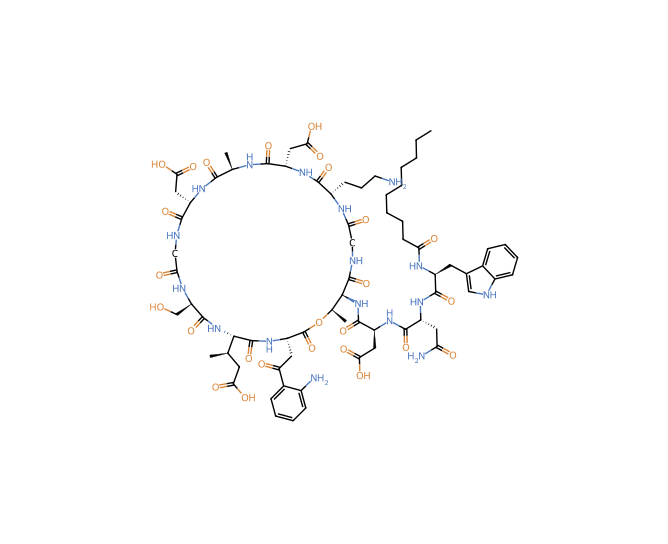
| Molecular/sequence identity | Cyclic 13-residue lipopeptide with a decanoyl (C10) fatty-acyl tail. Linear-order identity: N-decanoyl-L-Trp-D-Asn-L-Asp-L-Thr-Gly-L-Orn-L-Asp-D-Ala-L-Asp-Gly-D-Ser-threo-3-methyl-L-Glu-Kyn, where terminal Kyn is 3-anthraniloyl-L-alanine. |
| Modifications/form | N-terminal decanoyl acylation; macrocyclic ε1-lactone between the Thr4 side-chain hydroxyl and the terminal Kyn13 carboxyl; contains ornithine, D-Asn2, D-Ala8, D-Ser11, threo-3-methyl-Glu12, and Kyn13; Freeze-drying: water is removed by sublimation under reduced pressure, which can improve the stability of peptides and yield a porous dry matrix. Water removal does not sterilize a product, prove its quality, or define how it should later be handled. 定义来源: Lyophilization, formulation, and stability primer · 术语表 powder for Administered into a vein. 定义来源: Neutral gloss; usage context: Routes, devices, and absorption primer · 术语表 infusion |
| Stable identifiers | The record number of a compound in PubChem, the atlas's primary structure-asset source. A registry record or depiction does not authenticate a commercial sample. 定义来源: Identity and structure assets methodology · 术语表: 21585658; DrugBank: DB00080; ChEBI: CHEBI:600103; CAS: 103060-53-3 |
| Identity caveats | Fermentation-derived product; not a linear peptide. Contains unusual amino acids (ornithine, 3-methyl-glutamic acid). |
Development and approval status
| Jurisdiction | Status and indication | Product/source | As of |
|---|---|---|---|
| USA (FDA) | Approved — cSSSI (adults and pediatrics 1-17 y); S. aureus bacteremia (adults and pediatrics 1-17 y), including right-sided IE | Cubicin (Cubist/Merck) | 2003 |
| EU (EMA) | Approved — complicated skin and soft-tissue infections (cSSTI); right-sided IE due to S. aureus; S. aureus bacteremia | Cubicin | 2006 |
- UNITED STATES
- USA (FDA): Approved — cSSSI (adults and pediatrics 1-17 y); S. aureus bacteremia (adults and pediatrics 1-17 y), including right-sided IE
- EU/EEA
- EU (EMA): Approved — complicated skin and soft-tissue infections (cSSTI); right-sided IE due to S. aureus; S. aureus bacteremia
- UNITED KINGDOM
- No UNITED KINGDOM row is present in the source status table
- OTHER DOCUMENTED
- No OTHER DOCUMENTED row is present in the source status table
Sport status: WADA status: not prohibited. No US federal CSA scheduling was identified as of 2026-08-06; state law and other jurisdictions were not assessed. US generic availability and approved routes are product-specific.
Mechanism and pharmacology
Daptomycin exerts bactericidal activity via calcium-dependent binding to the bacterial cell membrane, insertion of the lipophilic tail, and oligomerization that disrupts membrane potential. This causes rapid depolarization, inhibition of DNA, RNA, and protein synthesis, and cell death. Recent evidence also suggests binding to lipid II and phosphatidylglycerol, inhibiting cell wall synthesis.
How a substance is absorbed, distributed, metabolized, and eliminated by the body; atlas pages report pharmacokinetic data such as half-life, metabolism, and clearance. 定义来源: Neutral gloss; usage context: Routes, devices, and absorption primer · 术语表: Administered into a vein. 定义来源: Neutral gloss; usage context: Routes, devices, and absorption primer · 术语表 administration; The time for the amount of a substance in the body to fall by half. 定义来源: Neutral gloss; usage context: Routes, devices, and absorption primer · 术语表 ~8-9 h; highly protein-bound (~92%); primarily renal excretion (unchanged); CPK elevation risk with muscular strain.
Evidence by claim
| Claim/indication | Stage | Grade | Best human evidence | Main result | Important limitations |
|---|---|---|---|---|---|
| cSSSI (adults) | Approved | A | Two pooled phase 3 A study in which participants are assigned to the study material or a comparator by chance. 定义来源: Neutral gloss; usage context: Evidence grading methodology · 术语表 (N=1,092); daptomycin 4 mg/kg Administered into a vein. 定义来源: Neutral gloss; usage context: Routes, devices, and absorption primer · 术语表 QD vs vancomycin or semisynthetic penicillin | Clinical success 62.5% vs 61.2% (ITT) — met non-inferiority | cSSSI trials predated current ABSSSI endpoints; many patients with CLCR less than 50 had lower success |
| S. aureus bacteremia / right-sided IE (adults) | Approved | A | One phase 3 RCT (N=246); daptomycin 6 mg/kg IV QD vs comparator (nafcillin/vancomycin + gentamicin) | Clinical success 44.2% vs 41.8% (adjudicated) — met non-inferiority | Small sample; limited left-sided IE data; 6/120 daptomycin pts had CPK greater than 500 U/L |
Text alternative for the claim-evidence diagram. Each grade is defined below:
- A — Established for a specific labeled use
- 2 claims: cSSSI (adults); S. aureus bacteremia / right-sided IE (adults)
- B — Moderate human evidence
- 0 claims
- C — Preliminary human evidence
- 0 claims
- D — Preclinical only
- 0 claims
- E — Anecdotal/marketing claim
- 0 claims
- X — Evidence contradicts or does not support the claim
- 0 claims
Key studies
| Study | Design/population | Exposure studied | Endpoints and result | Limitations |
|---|---|---|---|---|
| cSSSI trials (Arbeit et al., 2004) | Two DB/A study in which participants are assigned to the study material or a comparator by chance. 定义来源: Neutral gloss; usage context: Evidence grading methodology · 术语表; N=1,092; adults with cSSSI | Daptomycin 4 mg/kg Administered into a vein. 定义来源: Neutral gloss; usage context: Routes, devices, and absorption primer · 术语表 QD vs comparator (vancomycin or anti-staphylococcal penicillin) | Clinical success: daptomycin 62.5% vs comparator 61.2% (ITT); 80.4% vs 80.5% (clinically evaluable) | Per-protocol primary analysis; many exclusions for renal impairment |
| S. aureus bacteremia/endocarditis trial (Fowler et al., 2006) | RCT; DB; N=246; adults with S. aureus bacteremia (± IE) | Daptomycin 6 mg/kg IV QD vs nafcillin/vancomycin + gentamicin | Clinical success: 44.2% vs 41.8% (adjudicated); 11/120 daptomycin (9.2%) had CPK greater than 500 U/L | Left-sided IE outcomes poor; small; gentamicin-related toxicity in comparator arm |
Dose and administration evidence
Approved labeled regimen
The label summary below is product-, indication-, and jurisdiction-specific; consult the full current label and a licensed clinician/pharmacist.
cSSSI: 4 mg/kg Administered into a vein. 定义来源: Neutral gloss; usage context: Routes, devices, and absorption primer · 术语表 QD for 7-14 days. S. aureus bacteremia/right-sided IE: 6 mg/kg IV QD. Pediatric (1-17 y): age-dependent (10 mg/kg for 1 to less than 2 y; 9 mg/kg for 2-6 y; 7 mg/kg for 7-11 y; 5 mg/kg for 12-17 y for cSSSI; higher for bacteremia). Administer IV over 30 min (adults) or 30-60 min (pediatric). No dose adjustment needed for mild-moderate hepatic impairment.
Studied regimens (not recommendations)
Higher doses (8-12 mg/kg) studied in some settings (e.g., IE, VRE) but not FDA-approved; associated with increased CPK elevation risk.
What is not established
Pneumonia (not indicated — inactivated by surfactant).
Left-sided infective endocarditis (not indicated; poor outcomes in trial).
Prosthetic valve endocarditis (not studied).
Pediatric patients less than 1 year: not recommended based on animal toxicity studies; risks of muscular, neuromuscular, and nervous system effects outweigh potential benefit.
Safety
Established label risks
Skeletal muscle toxicity (CPK elevation): 9.2% in bacteremia trial at 6 mg/kg. Monitor CPK at baseline and weekly. Discontinue if CPK greater than 2,000 U/L or greater than 1,000 U/L with symptoms.
Eosinophilic pneumonia (rare but known post-marketing signal).
Peripheral neuropathy (rare).
Gastrointestinal effects (nausea, vomiting, diarrhea).
Not recommended in pediatric patients <12 months — potential for muscular, neuromuscular, and nervous system effects observed in neonatal animal studies.
Human-study signals
CPK elevation more frequent with 6 mg/kg vs 4 mg/kg; risk increased with concomitant statins.
Creatinine phosphokinase monitoring is mandatory.
Unknowns and product-quality risks
Reserve for infections proven or strongly suspected to be caused by susceptible organisms to reduce resistance development.
Daptomycin-nonsusceptible MRSA strains are emerging.
Interactions and special populations
HMG-CoA reductase inhibitors (statins): consider suspending during daptomycin therapy. No significant CYP interactions. Renal impairment: interval adjustment to Q48h for CLCR <30 mL/min. No adequate studies in pregnancy; use only if clearly needed.
Regulatory, compounding, and sport notes
The World Anti-Doping Agency; its Prohibited List classifies many peptides as prohibited substances in sport. 定义来源: WADA and sport regulation brief · 术语表 status: not prohibited. No US federal CSA scheduling was identified as of 2026-08-06; state law and other jurisdictions were not assessed. US generic availability and approved routes are product-specific.
Evidence gaps
Optimal dosing for VRE infections (not FDA-approved; off-label use common).
Daptomycin + fosfomycin or other combination therapy for refractory MRSA/IE.
Comparative effectiveness vs ceftaroline for MRSA bacteremia.
Resistance mechanisms and incidence of daptomycin-nonsusceptible strains.
Search notes
Databases and registries: FDA label (accessdata.fda.gov), DailyMed, EMA EPAR, PubMed, ClinicalTrials.gov
Search terms: daptomycin, Cubicin, MRSA, bacteremia, infective endocarditis, lipopeptide
Last searched: 2026-08-06
Inclusion emphasis: FDA/EMA labels, phase 3 A study in which participants are assigned to the study material or a comparator by chance. 定义来源: Neutral gloss; usage context: Evidence grading methodology · 术语表
Sources
FDA prescribing information: CUBICIN (daptomycin for injection). Available at: https://www.accessdata.fda.gov/drugsatfda_docs/label/2025/021572s069lbl.pdf (accessed 2026-08-06).
Arbeit RD, et al. The safety and efficacy of daptomycin for the treatment of complicated skin and skin-structure infections. Clin Infect Dis. 2004;38(12):1673-81. DOI: 10.1086/420818.
Fowler VG, et al. Daptomycin versus standard therapy for bacteremia and endocarditis caused by Staphylococcus aureus. N Engl J Med. 2006;355(7):653-65. DOI: 10.1056/NEJMoa053783.
EMA: Cubicin EPAR. Available at: https://www.ema.europa.eu/en/medicines/human/EPAR/cubicin (accessed 2026-08-06).
DailyMed: CUBICIN RF. Available at: https://dailymed.nlm.nih.gov/dailymed/drugInfo.cfm?setid=0b1a8885-2198-4a0e-8105-0c76c1cba6c2 (accessed 2026-08-06).
ChEBI. Daptomycin (CHEBI:600103), including the 3-anthraniloylalanine/Kyn terminal residue and Thr lactone linkage. https://www.ebi.ac.uk/chebi/searchId.do?chebiId=600103 (accessed 2026-08-06).