Bottom line
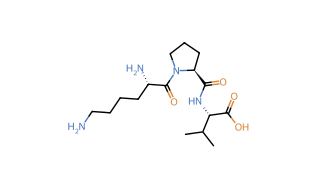
KPV (Lys-Pro-Val) is a 3-amino-acid peptide corresponding to the C-terminal tripeptide of alpha-melanocyte-stimulating hormone (alpha-MSH). Evidence from in vitro or animal studies with no adequate human efficacy evidence — the atlas Grade D lane. Fonte da definição: Evidence grading methodology · Glossário models, particularly mouse colitis, show anti-inflammatory effects mediated through PepT1 transporter uptake and NF-κB pathway inhibition. No completed human A study in which participants are assigned to the study material or a comparator by chance. Fonte da definição: Neutral gloss; usage context: Evidence grading methodology · Glossário of KPV as a single-ingredient drug exists. The FDA has stated it lacks human exposure data and important safety information for KPV.
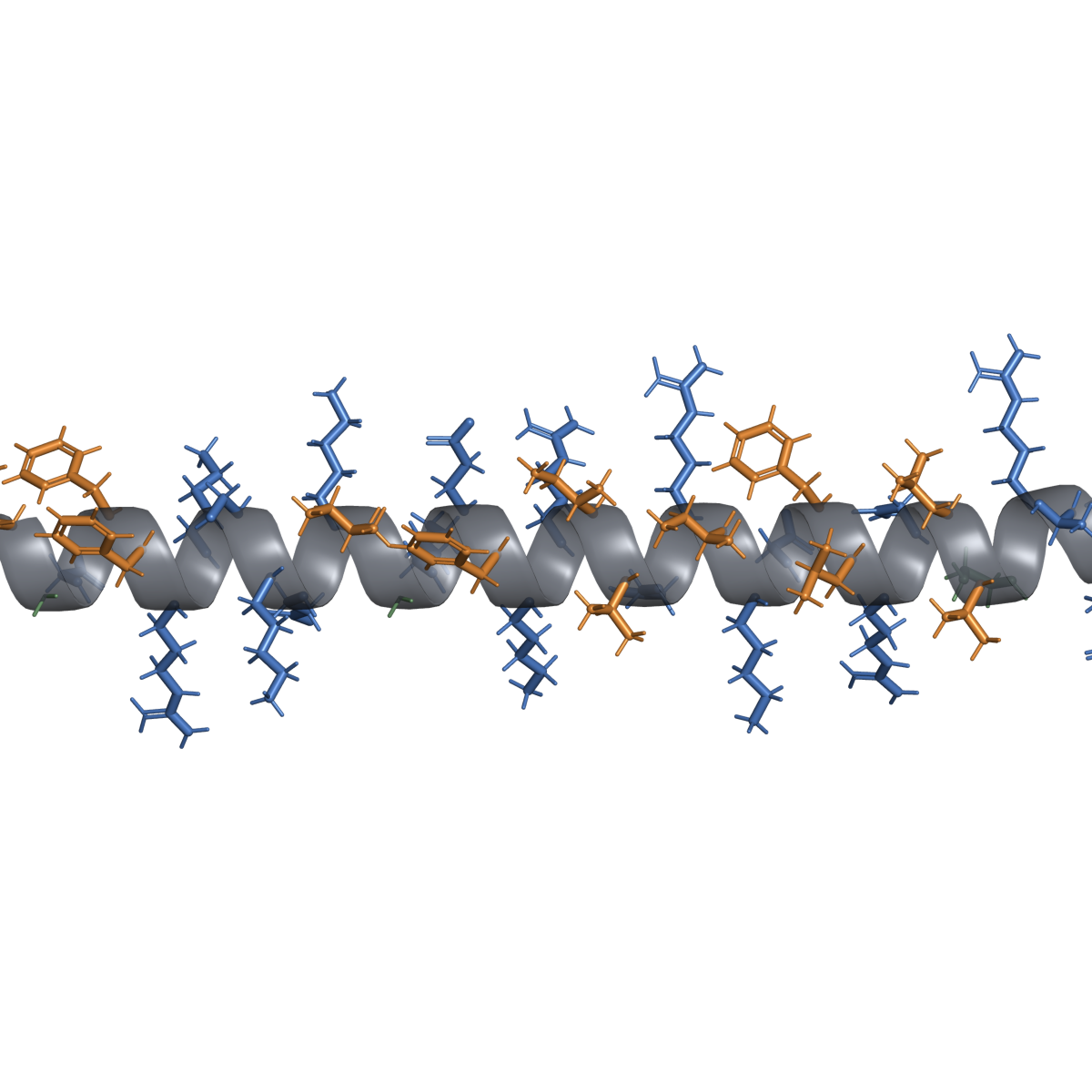
Identity and composition
| Field | Verified information |
|---|---|
| Preferred name | KPV |
| Key aliases | Lys-Pro-Val, alpha-MSH(11-13), C-terminal alpha-MSH tripeptide, lysine-proline-valine |
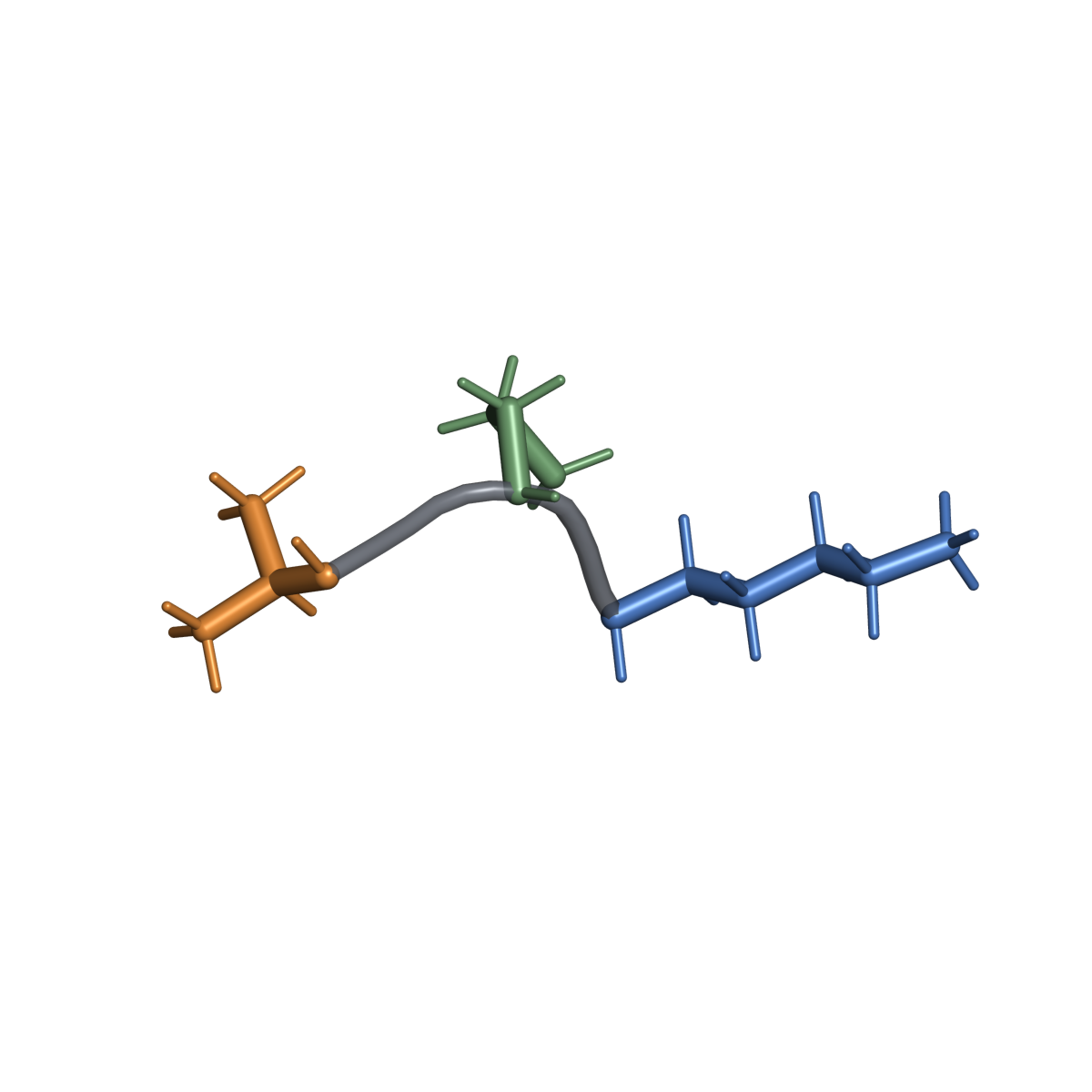
| Molecular/sequence identity | Tripeptide: Lys-Pro-Val (KPV); amidated C-terminus in context of parent alpha-MSH |
| Modifications/form | Linear tripeptide; MW ~342 Da |
| Stable identifiers | No The record number of a compound in PubChem, the atlas's primary structure-asset source. A registry record or depiction does not authenticate a commercial sample. Fonte da definição: Identity and structure assets methodology · Glossário specific to KPV as a discrete entity; part of alpha-MSH sequence |
| Identity caveats | "KVP" (Lys-Val-Pro) is a distinct sequence — not a misspelling of KPV. The free base (Lys-Pro-Val) and acetate salt are chemically distinct forms. K(D)PT is a related analog, not the same molecule. Not interchangeable with full alpha-MSH. |
Development and approval status
| Jurisdiction | Status and indication | Product/source | As of |
|---|---|---|---|
| United States (FDA) | Not approved for any indication. On July 23, 2026, PCAC separately voted 8 yes, 6 no, and 1 abstention to recommend KPV free base and KPV acetate for Sections of the US Food, Drug, and Cosmetic Act covering traditional compounding exemptions (503A) and outsourcing-facility compounding (503B). Under 503A, qualification conditions include a patient-specific prescription requirement; under 503B, conditions cover facility registration and bulk-substance eligibility. Fonte da definição: United States regulation brief · Glossário Bulks List inclusion. The advisory recommendations were nonbinding and did not add either form to the list. | FDA PCAC | 2026-08-06 |
| European Union (EMA) | No marketing authorization | N/A | 2026-08-06 |
| Other jurisdictions | Status not established here; requires current national-register review | — | 2026-08-06 |
- UNITED STATES
- United States (FDA): Not approved for any indication. On July 23, 2026, PCAC separately voted 8 yes, 6 no, and 1 abstention to recommend KPV free base and KPV acetate for 503A Bulks List inclusion. The advisory recommendations were nonbinding and did not add either form to the list.
- EU/EEA
- European Union (EMA): No marketing authorization
- UNITED KINGDOM
- No UNITED KINGDOM row is present in the source status table
- OTHER DOCUMENTED
- Other jurisdictions: Status not established here; requires current national-register review
Sport status: WADA: KPV is not explicitly named in the 2026 List. S0 would prohibit it at all times only if both conditions in S0 are met: KPV is not addressed by a later section of the List and it has no current approval by any governmental regulatory health authority for human therapeutic use.
Mechanism and pharmacology
KPV is transported into cells via the proton-coupled oligopeptide transporter PepT1 (SLC15A1), which is upregulated on inflamed colonic epithelium. Once internalized, it inhibits NF-κB signaling by preventing IκB degradation and reducing p65 nuclear translocation, thereby suppressing pro-inflammatory cytokines (TNF-α, IL-1β, IL-6, IL-8). Unlike its parent alpha-MSH, KPV does not bind to melanocortin receptors (MC1R-MC5R) and does not cause pigmentation. This receptor-independent mechanism provides tissue selectivity through PepT1 upregulation at inflammation sites.
Evidence by claim
| Claim/indication | Stage | Grade | Best human evidence | Main result | Important limitations |
|---|---|---|---|---|---|
| Inflammatory bowel disease/colitis | Evidence from in vitro or animal studies with no adequate human efficacy evidence — the atlas Grade D lane. Fonte da definição: Evidence grading methodology · Glossário | D | None (human) | Mouse DSS and TNBS colitis models: reduced inflammation, weight loss, tissue damage | No human trial; animal models only |
| Wound healing | Preclinical | D | None (human) | Rabbit corneal wound model: faster epithelial closure | Animal model only |
| Antimicrobial | Preclinical | D | None | In vitro activity against S. aureus and C. albicans | In vitro only; no in vivo confirmation |
| Anti-inflammatory (general) | Preclinical | D | None | Human cell models: NF-κB inhibition | Cell-based assays; no clinical translation |
- AGrau A: Estabelecido para um uso rotulado específico
- BGrau B: Evidência humana moderada
- CGrau C: Evidência humana preliminar
- DGrau D: Apenas pré-clínico
- EGrau E: Alegação anedótica/de marketing
- XGrau X: A evidência contradiz ou não apoia a alegação
Text alternative for the claim-evidence diagram. Each grade is defined below:
- A — Established for a specific labeled use
- 0 claims
- B — Moderate human evidence
- 0 claims
- C — Preliminary human evidence
- 0 claims
- D — Preclinical only
- 4 claims: Inflammatory bowel disease/colitis; Wound healing; Antimicrobial; Anti-inflammatory (general)
- E — Anecdotal/marketing claim
- 0 claims
- X — Evidence contradicts or does not support the claim
- 0 claims
Key studies
| Study | Design/population | Exposure studied | Endpoints and result | Limitations |
|---|---|---|---|---|
| Dalmasso et al. 2008 (Gastroenterology) | In vitro and mouse colitis models [1] | Oral KPV via drinking water | Reduced inflammation in DSS and TNBS colitis; PepT1-dependent mechanism identified | Evidence from in vitro or animal studies with no adequate human efficacy evidence — the atlas Grade D lane. Fonte da definição: Evidence grading methodology · Glossário only |
| Kannengiesser et al. 2008 | Mouse colitis models [1] | KPV in DSS, TNBS, and transfer colitis | Anti-inflammatory effect independent of MC1R signaling | Preclinical; animal models |
| Xiao et al. 2017 | Mouse colitis + nanoparticle delivery [1] | Oral KPV nanoparticles | Reduced colitis severity at doses below standard oral KPV | Preclinical; novel delivery system |
| Bonfiglio et al. 2006 | Rabbit corneal wound | Topical KPV | Improved epithelial wound closure vs controls | Animal model |
Dose and administration evidence
Approved labeled regimen
None.
Studied regimens (not recommendations)
Mouse studies: oral KPV via drinking water at ~mg/kg range. No human dose-finding trial has been conducted.
What is not established
No established or recommended human dose.
Safety
Established label risks
None — no approved label.
Human-study signals
No human exposure data exist for KPV drug products administered by any route. FDA states it "lacks important information regarding any safety issues raised by KPV, including whether it would cause harm if administered to humans."
Unknowns and product-quality risks
Zero human safety data.
Regulatory status remains unresolved: the July 2026 PCAC recommendations were advisory, and neither reviewed form was thereby added to the Sections of the US Food, Drug, and Cosmetic Act covering traditional compounding exemptions (503A) and outsourcing-facility compounding (503B). Under 503A, qualification conditions include a patient-specific prescription requirement; under 503B, conditions cover facility registration and bulk-substance eligibility. Fonte da definição: United States regulation brief · Glossário Bulks List.
Products marketed as research chemicals have no quality assurance.
Theoretical risk of immune modulation in autoimmune conditions is uncharacterized.
Interactions and special populations
No data available. No human studies for any population.
Regulatory, compounding, and sport notes
FDA: Not approved. On July 23, 2026, PCAC separately voted 8-6 with one abstention to recommend KPV free base and KPV acetate for the Sections of the US Food, Drug, and Cosmetic Act covering traditional compounding exemptions (503A) and outsourcing-facility compounding (503B). Under 503A, qualification conditions include a patient-specific prescription requirement; under 503B, conditions cover facility registration and bulk-substance eligibility. Fonte da definição: United States regulation brief · Glossário Bulks List. PCAC recommendations are nonbinding; they are not marketing approval and do not themselves place a substance on the list.
The World Anti-Doping Agency; its Prohibited List classifies many peptides as prohibited substances in sport. Fonte da definição: WADA and sport regulation brief · Glossário: KPV is not explicitly named in the 2026 List. WADA Prohibited List class S0 (non-approved substances): pharmacological substances not addressed elsewhere in the list and with no current approval by any governmental regulatory health authority for human therapeutic use. Fonte da definição: WADA and sport regulation brief · Glossário would prohibit it at all times only if both conditions in S0 are met: KPV is not addressed by a later section of the List and it has no current approval by any governmental regulatory health authority for human therapeutic use.
No FDA-approved product or EMA-authorized medicine was identified as of 2026-08-06; status elsewhere requires a current national-register check.
K(D)PT (a related analog) has one human UC trial; this does not constitute KPV safety or efficacy data.
Evidence gaps
No completed human clinical trial of KPV as a single-ingredient drug.
No How a substance is absorbed, distributed, metabolized, and eliminated by the body; atlas pages report pharmacokinetic data such as half-life, metabolism, and clearance. Fonte da definição: Neutral gloss; usage context: Routes, devices, and absorption primer · Glossário, dose-finding, or safety study in humans.
Translational relevance of mouse colitis models to human IBD is unconfirmed.
A final FDA regulatory determination following the July 2026 advisory votes was not identified as of 2026-08-06.
All anti-inflammatory claims rely on Evidence from in vitro or animal studies with no adequate human efficacy evidence — the atlas Grade D lane. Fonte da definição: Evidence grading methodology · Glossário data.
Search notes
Databases and registries: PubMed, ClinicalTrials.gov, FDA Federal Register, FDA PCAC materials
Search terms: KPV, Lys-Pro-Val, alpha-MSH 11-13, KPV colitis
Last searched: 2026-08-06
Inclusion emphasis: Human evidence prioritized; clear distinction from K(D)PT analog
Sources
https://pubmed.ncbi.nlm.nih.gov/18061177/ (Dalmasso et al. 2008 — PepT1-mediated KPV uptake, mouse colitis)
https://pubmed.ncbi.nlm.nih.gov/18092346/ (Kannengiesser et al. 2008 — anti-inflammatory in murine IBD models)
https://pmc.ncbi.nlm.nih.gov/articles/PMC2095288/ (Brzoska et al. 2008 — α-MSH related tripeptides review)
https://pubmed.ncbi.nlm.nih.gov/12750433/ (Getting et al. 2003 — KPV anti-inflammatory effect core vs C-terminal)
https://pubmed.ncbi.nlm.nih.gov/28143741/ (Xiao et al. 2017 — oral KPV nanoparticles for UC)
https://pubmed.ncbi.nlm.nih.gov/18612139/ (Brzoska et al. 2008 — α-MSH tripeptides biochemistry review)
https://pmc.ncbi.nlm.nih.gov/articles/PMC3403564/ (Mechanism of KPV action — NF-κB nuclear import inhibition)
FDA. July 23-24, 2026 Pharmacy Compounding Advisory Committee meeting page, agenda, materials, and official webcast links. https://www.fda.gov/advisory-committees/advisory-committee-calendar/july-23-24-2026-meeting-pharmacy-compounding-advisory-committee-07232026 Official July 23 webcast: https://www.youtube.com/watch?v=DhDC0DAYdBI
WADA. 2026 Prohibited List, section S0. https://www.wada-ama.org/sites/default/files/2025-09/2026list_en_final_clean_september_2025.pdf