Bottom line
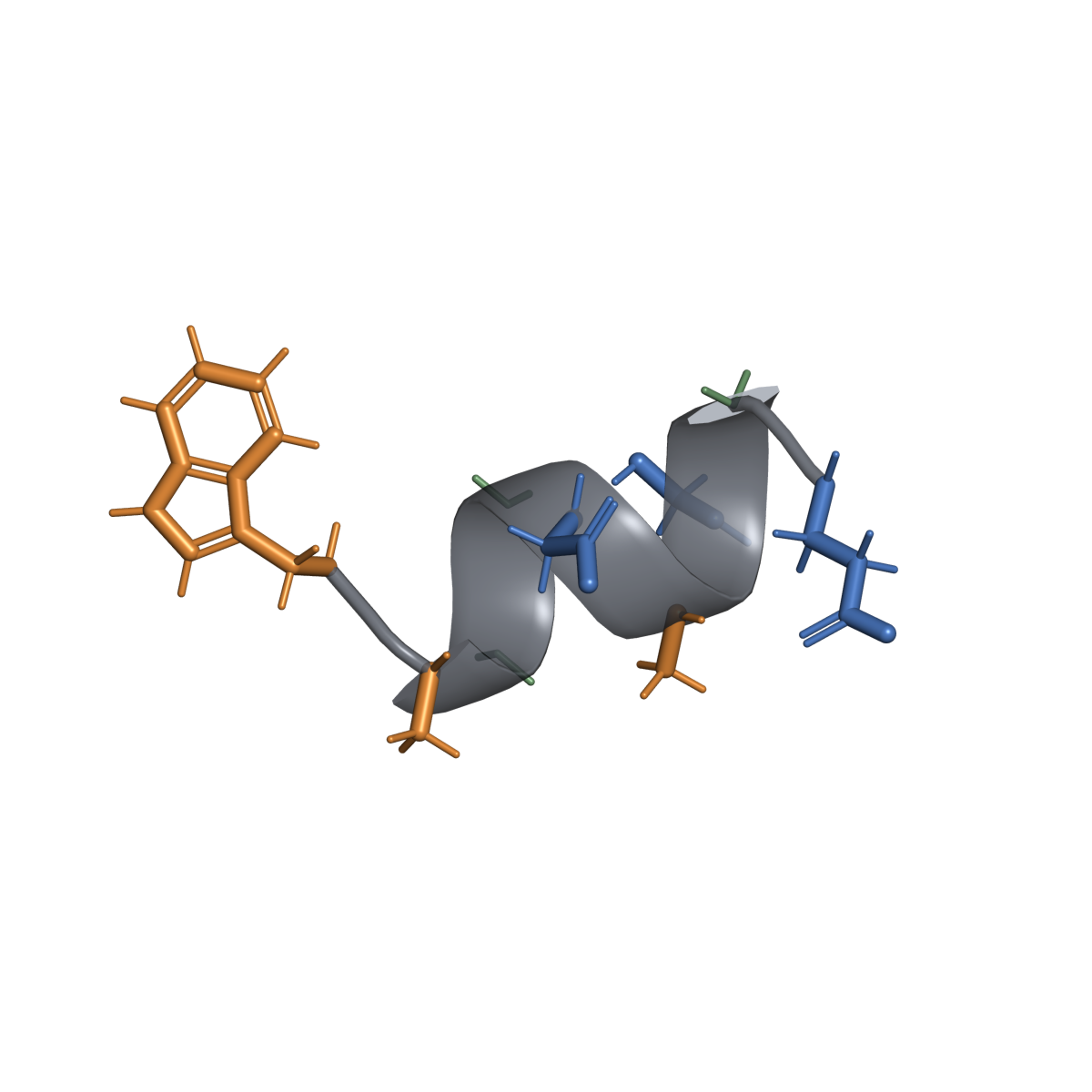
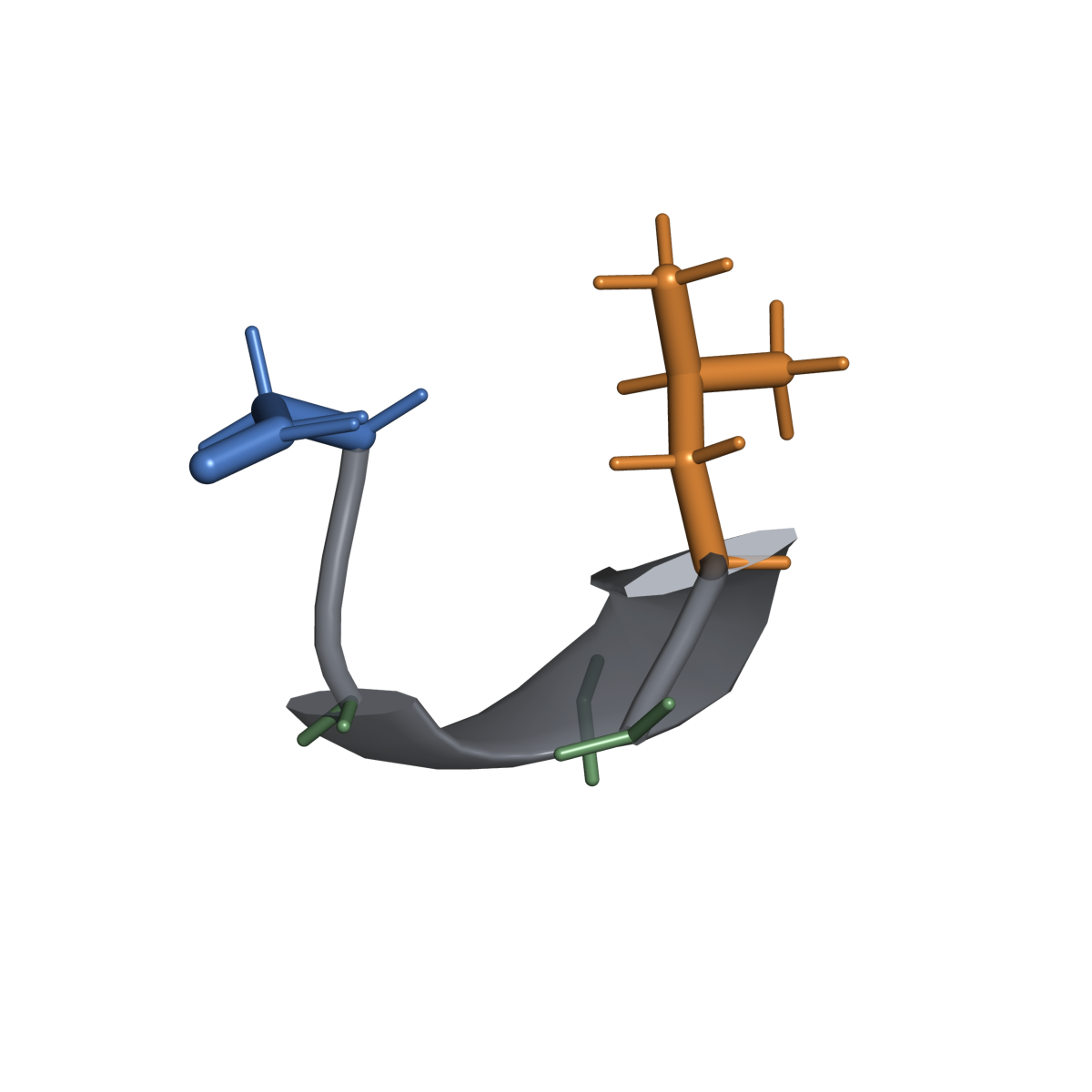
Dihexa is a synthetic peptidomimetic — not a peptide — with a modified tripeptide core (hexanoyl-Tyr-Ile-Ahx-NH₂) developed at Washington State University. It has never been tested in a human clinical trial. The foundational mechanism paper (Benoist et al. 2014) was retracted in April 2025 following a research misconduct investigation at WSU. The prodrug fosgonimeton (ATH-1017, Athira Pharma) failed its Phase 2/3 LIFT-AD trial in September 2024. Despite this, Dihexa continues to be marketed as a "research peptide" with unvalidated dosing claims.
Identity and composition
| Field | Verified information |
|---|---|
| Preferred name | Dihexa |
| Key aliases | PNB-0408, N-hexanoic-Tyr-Ile-(6)aminohexanoic amide |
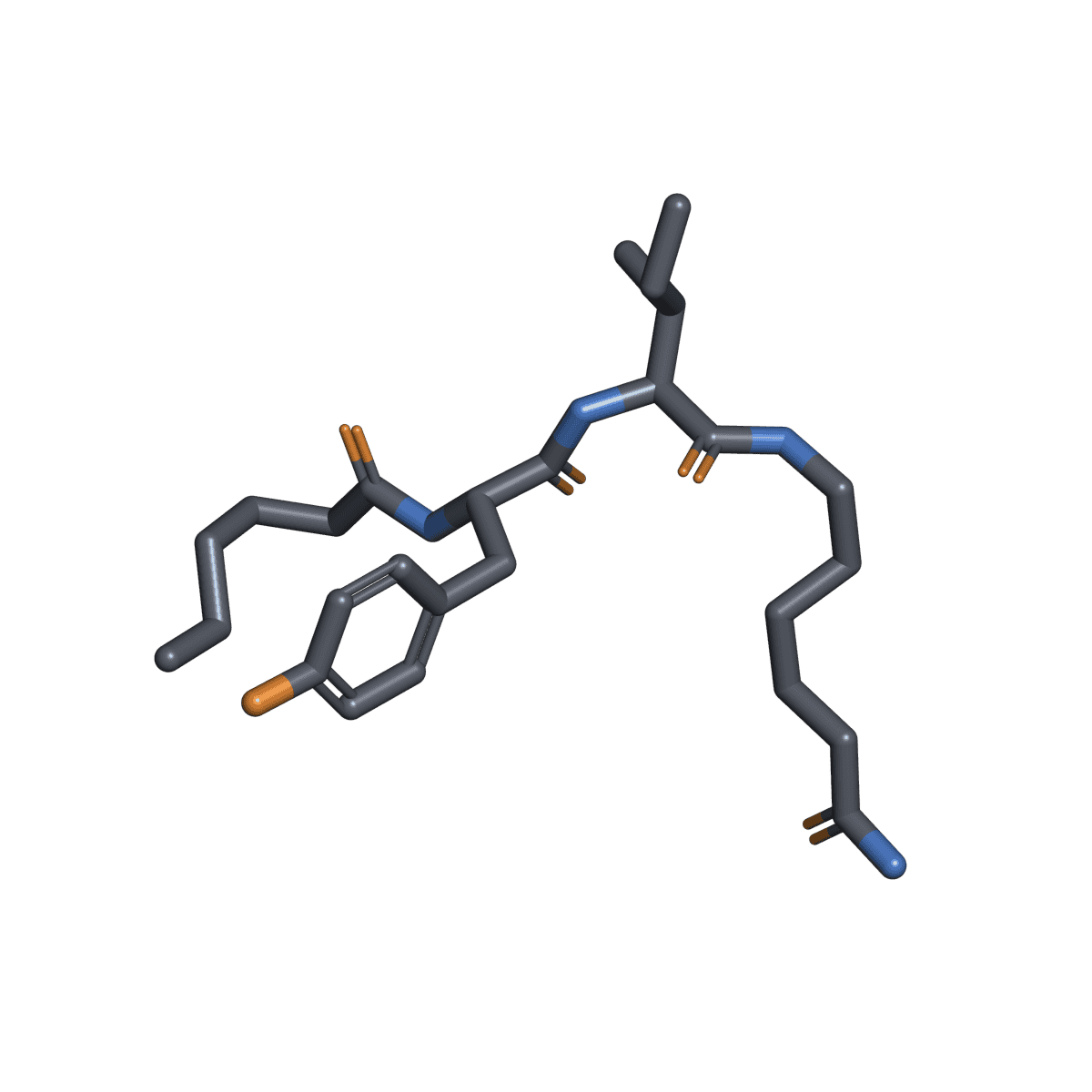
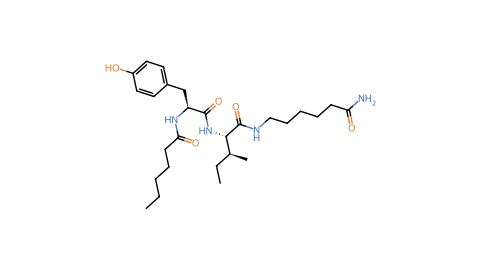
| Molecular/sequence identity | C₂₇H₄₄N₄O₅; MW 504.67; IUPAC: 6-[(2S,3S)-2-[(2S)-2-hexanamido-3-(4-hydroxyphenyl)propanamido]-3-methylpentanamido]hexanamide |
| Modifications/form | N-terminal hexanoyl cap; C-terminal 6-aminohexanoic amide cap; core = Tyr-Ile dipeptide |
| Stable identifiers | CAS 1401708-83-5; The record number of a compound in PubChem, the atlas's primary structure-asset source. A registry record or depiction does not authenticate a commercial sample. Fonte da definição: Identity and structure assets methodology · Glossário 129010512; UNII 9WYX65A5C2; ChemSpider 57582587 |
| Identity caveats | NOT a peptide — better described as a modified dipeptide mimetic with two C6 (hexanoic/hexanoyl) caps; the "hexa" in the name refers to C6 modifications, not six amino acids; routinely miscategorised as a peptide in commercial catalogs |
Development and approval status
| Jurisdiction | Status and indication | Product/source | As of |
|---|---|---|---|
| Registers reviewed | No FDA-approved product or EMA-authorized medicine identified; status elsewhere requires a current national-register check | — | 2026-08 |
- UNITED STATES
- No UNITED STATES row is present in the source status table
- EU/EEA
- No EU/EEA row is present in the source status table
- UNITED KINGDOM
- No UNITED KINGDOM row is present in the source status table
- OTHER DOCUMENTED
- Registers reviewed: No FDA-approved product or EMA-authorized medicine identified; status elsewhere requires a current national-register check
Sport status: WADA: not specifically listed; may be prohibited under S0 — athletes should verify
Mechanism and pharmacology
Dihexa was reported as a positive allosteric modulator of HGF/c-Met signalling, binding HGF with reported Kd of 65 pM and augmenting c-Met phosphorylation to drive PI3K/Akt/mTOR synaptogenesis signalling. The widely cited claim of being "10 million times more potent than BDNF" derives from one in vitro hippocampal spine assay. However, the mechanism paper (Benoist et al. 2014) was retracted in April 2025 due to confirmed figure manipulation in a WSU misconduct investigation. Earlier work (McCoy et al. 2013) carries an Expression of Concern. An independent 2025 behavioural replication (Martino et al., Rowan University) partially supported HGF/c-Met involvement but has not resolved the data-integrity concerns.
Evidence by claim
| Claim/indication | Stage | Grade | Best human evidence | Main result | Important limitations |
|---|---|---|---|---|---|
| Cognitive enhancement (rodent) | Evidence from in vitro or animal studies with no adequate human efficacy evidence — the atlas Grade D lane. Fonte da definição: Evidence grading methodology · Glossário | D | McCoy 2013 (PMID 23055539, EoC) | Oral activity in rodent cognition tests | Single lab; EoC issued; compromised data |
| HGF/c-Met binding | Preclinical | D | Benoist 2014 (RETRACTED) | Reported 65 pM binding | Paper retracted April 2025 |
| Human cognition | None | E | Fosgonimeton Phase 2/3 (LIFT-AD) | Failed primary endpoint Sep 2024 | Prodrug, not dihexa itself |
| "10M× BDNF potency" | In vitro | D | Single culture assay | Spine induction in culture | Not in vivo comparison; compromised |
- AGrau A: Estabelecido para um uso rotulado específico
- BGrau B: Evidência humana moderada
- CGrau C: Evidência humana preliminar
- DGrau D: Apenas pré-clínico
- EGrau E: Alegação anedótica/de marketing
- XGrau X: A evidência contradiz ou não apoia a alegação
Text alternative for the claim-evidence diagram. Each grade is defined below:
- A — Established for a specific labeled use
- 0 claims
- B — Moderate human evidence
- 0 claims
- C — Preliminary human evidence
- 0 claims
- D — Preclinical only
- 3 claims: Cognitive enhancement (rodent); HGF/c-Met binding; "10M× BDNF potency"
- E — Anecdotal/marketing claim
- 1 claim: Human cognition
- X — Evidence contradicts or does not support the claim
- 0 claims
Key studies
| Study | Design/population | Exposure studied | Endpoints and result | Limitations |
|---|---|---|---|---|
| McCoy et al. 2013 | Rodent cognition (Morris water maze, novel object recognition) | ~2 mg/kg oral | Cognitive improvement in aged/lesioned rats | Single lab; Expression of Concern; PMID 23055539 |
| Benoist et al. 2014 | In vitro HGF/c-Met binding and signalling | Dihexa in culture | Reported HGF binding at 65 pM | RETRACTED April 2025; PMID 25187433 |
| LIFT-AD (NCT04491006) | Phase 2/3, mild-moderate AD (n≈420) | Fosgonimeton Administered into the tissue layer under the skin. Fonte da definição: Neutral gloss; usage context: Routes, devices, and absorption primer · Glossário 40 mg/day | Failed primary endpoint (ADAS-Cog11, ADCS-ADL) | Prodrug, not dihexa; announces Sep 2024 |
Dose and administration evidence
No approved labeled regimen
No established or recommended human dose.
Studied regimens (not recommendations)
The only published human PK data are for the prodrug fosgonimeton (Administered into the tissue layer under the skin. Fonte da definição: Neutral gloss; usage context: Routes, devices, and absorption primer · Glossário 2–90 mg). No human data exist for Dihexa itself. Rodent studies used approximately 2 mg/kg oral.
What is not established
Any safe or effective human dose
Human How a substance is absorbed, distributed, metabolized, and eliminated by the body; atlas pages report pharmacokinetic data such as half-life, metabolism, and clearance. Fonte da definição: Neutral gloss; usage context: Routes, devices, and absorption primer · Glossário (The time for the amount of a substance in the body to fall by half. Fonte da definição: Neutral gloss; usage context: Routes, devices, and absorption primer · Glossário, The fraction of an administered amount that reaches systemic circulation; for the intravenous route the atlas notes bioavailability is defined as complete. Fonte da definição: Neutral gloss; usage context: Routes, devices, and absorption primer · Glossário, distribution, clearance)
Correlation between animal and human dosing
Dose for any route of administration
Safety
Established label risks
No regulatory safety assessment exists.
Human-study signals
The fosgonimeton Phase 1 study (n=88, Administered into the tissue layer under the skin. Fonte da definição: Neutral gloss; usage context: Routes, devices, and absorption primer · Glossário 2–90 mg) reported the prodrug was generally well tolerated. This does not establish safety for Dihexa itself.
Unknowns and product-quality risks
Tumour risk: HGF/c-Met pathway activation promotes cell proliferation; approved oncology drugs target this pathway for inhibition. Theoretically concerning.
Extremely long The time for the amount of a substance in the body to fall by half. Fonte da definição: Neutral gloss; usage context: Routes, devices, and absorption primer · Glossário in rodents: 12.7 days Administered into a vein. Fonte da definição: Neutral gloss; usage context: Routes, devices, and absorption primer · Glossário, 8.83 days IP in rats. Human half-life unknown; accumulation risk is real.
No chronic toxicology in any species
No mutagenicity, carcinogenicity, or reproductive toxicity studies
Foundational data integrity compromised; entire evidence base is in question
Research chemical products lack identity, purity, sterility, and dose-content verification
Interactions and special populations
No data exist. All dimensions are unknown.
Regulatory, compounding, and sport notes
The World Anti-Doping Agency; its Prohibited List classifies many peptides as prohibited substances in sport. Fonte da definição: WADA and sport regulation brief · Glossário: not specifically listed; may be prohibited under WADA Prohibited List class S0 (non-approved substances): pharmacological substances not addressed elsewhere in the list and with no current approval by any governmental regulatory health authority for human therapeutic use. Fonte da definição: WADA and sport regulation brief · Glossário — athletes should verify
US DEA: not scheduled
Not on FDA Sections of the US Food, Drug, and Cosmetic Act covering traditional compounding exemptions (503A) and outsourcing-facility compounding (503B). Under 503A, qualification conditions include a patient-specific prescription requirement; under 503B, conditions cover facility registration and bulk-substance eligibility. Fonte da definição: United States regulation brief · Glossário bulks list
No pharmaceutical product, no registered manufacturer
Evidence gaps
Zero human clinical trials of Dihexa itself
Foundational mechanism paper retracted; data integrity concerns unresolved
Single research group origin with limited independent replication
No How a substance is absorbed, distributed, metabolized, and eliminated by the body; atlas pages report pharmacokinetic data such as half-life, metabolism, and clearance. Fonte da definição: Neutral gloss; usage context: Routes, devices, and absorption primer · Glossário data in humans
No long-term safety data in any species
Theoretical carcinogenicity risk from HGF/c-Met agonism unassessed
Fosgonimeton failure does not disprove Dihexa's effects but is the strongest human test of the pharmacophore to date
Search notes
Databases and registries: PubMed, PubChem, CAS, ChemSpider, ClinicalTrials.gov, Retraction Watch
Search terms: Dihexa, PNB-0408, 1401708-83-5, Benoist retraction, McCoy Expression of Concern
Last searched: 2026-08-06
Inclusion emphasis: human trials, retractions, regulatory records, identity databases
Sources
PubChem CID 129010512. https://pubchem.ncbi.nlm.nih.gov/compound/129010512
McCoy AT et al. (2013) J Alzheimers Dis. PMID 23055539 (Expression of Concern issued)
Benoist CC et al. (2014) J Biol Chem — RETRACTED. PMID 25187433
Athira Pharma press release (Sep 2024): LIFT-AD Phase 2/3 top-line results
ChemSpider 57582587. https://www.chemspider.com/
UNII 9WYX65A5C2. https://gsrs.ncats.nih.gov/