Bottom line
Sermorelin is the C-terminally amidated 29-amino-acid N-terminal active fragment of human growth-hormone-releasing hormone (GHRH). Product-specific Geref presentations were historically FDA-approved for pediatric growth-hormone deficiency and diagnostic testing, but are now listed as discontinued. In 2013 FDA determined that the discontinued presentations were not withdrawn for reasons of safety or effectiveness. Compounded sermorelin products are not FDA-approved, and no adequate controlled trial establishes use for age-related GH decline.
Identity and composition
| Field | Verified information |
|---|---|
| Preferred name | Sermorelin |
| Key aliases | GHRH(1-29)NH2, GRF(1-29), Geref, Geref Diagnostic |
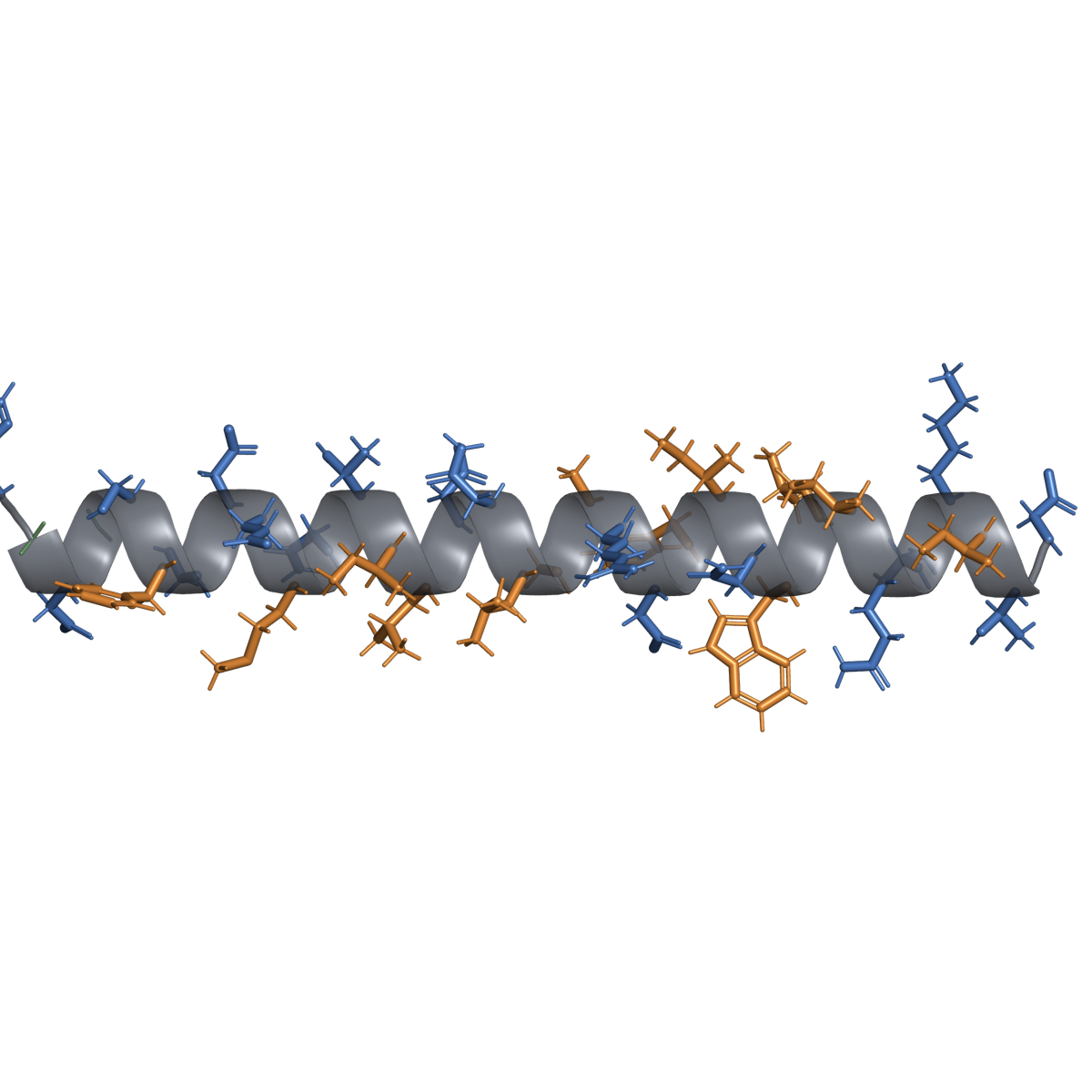
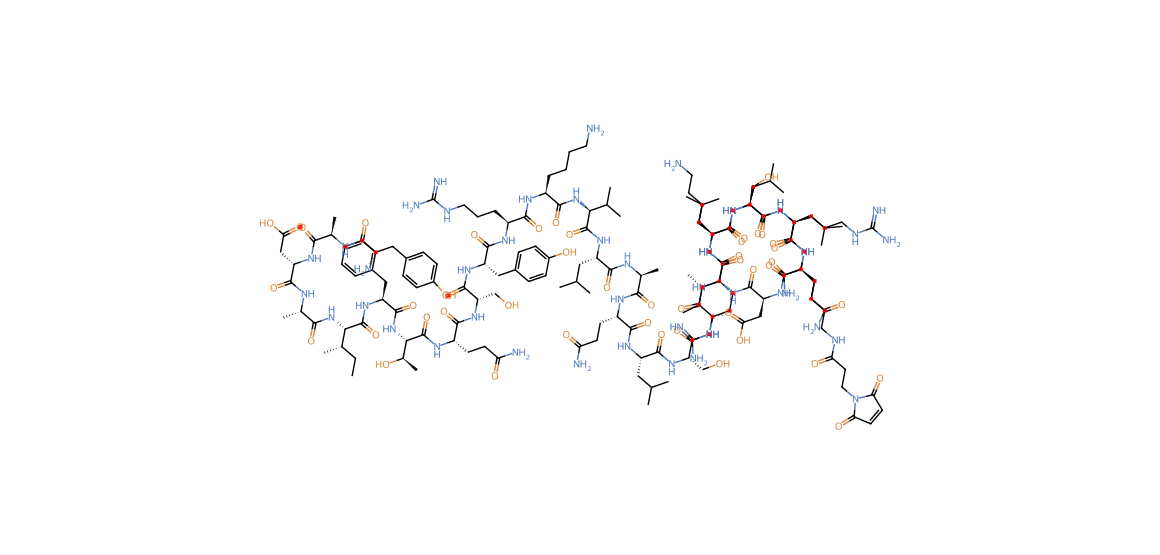
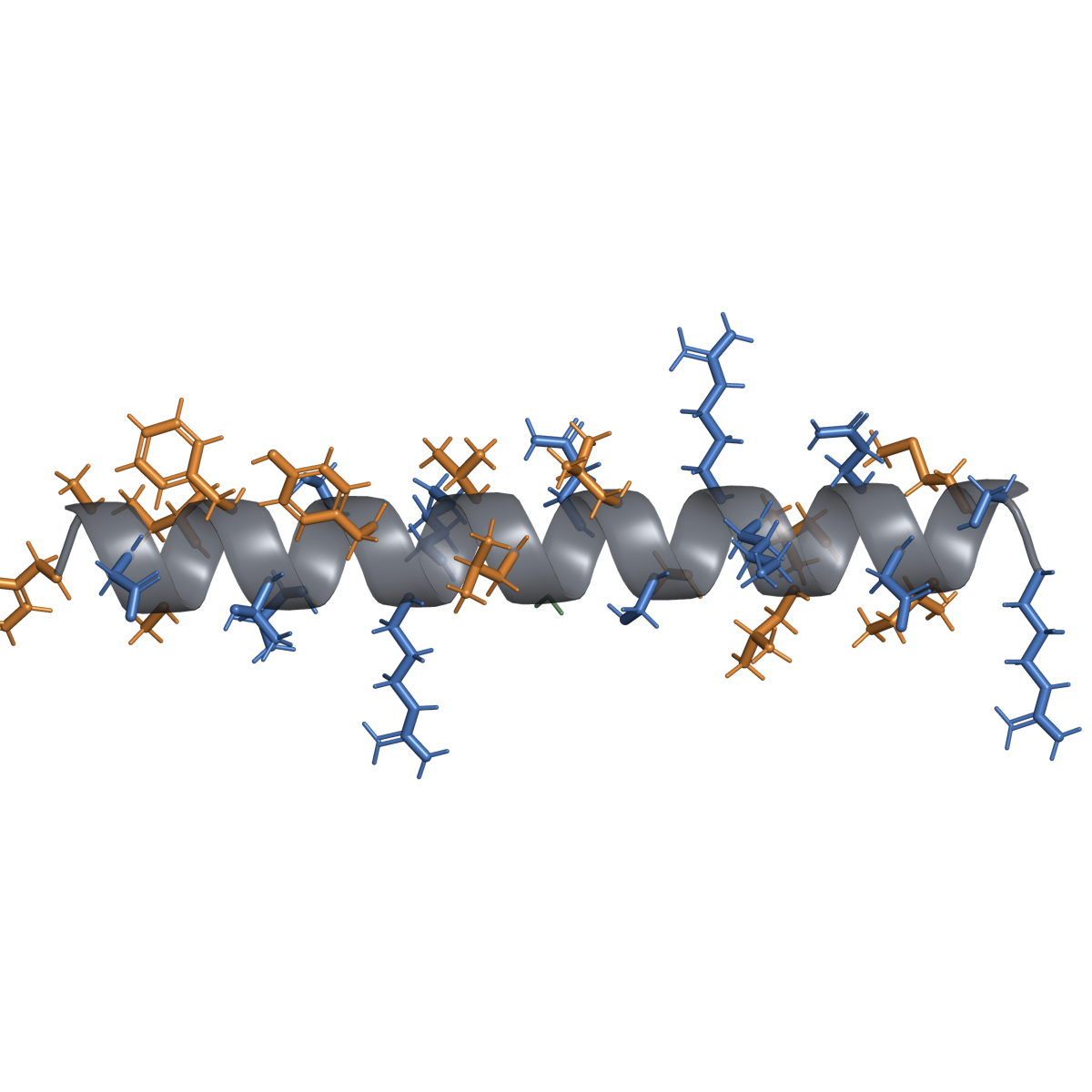
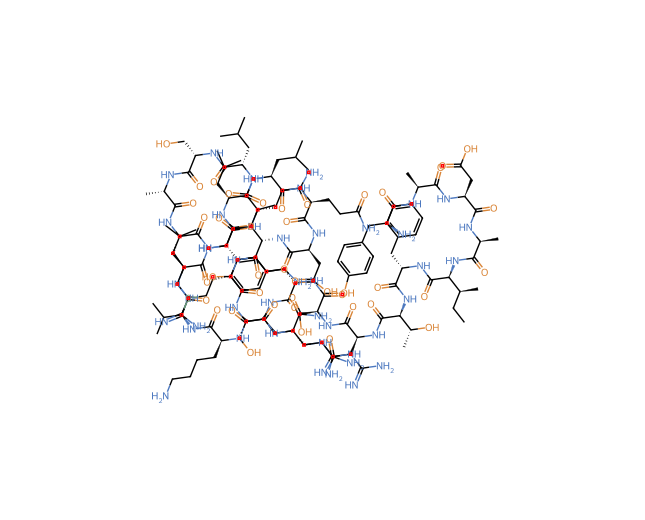
| Molecular/sequence identity | Synthetic acetate salt of the first 29 amino acids of human GHRH: Tyr-Ala-Asp-Ala-Ile-Phe-Thr-Asn-Ser-Tyr-Arg-Lys-Val-Leu-Gly-Gln-Leu-Ser-Ala-Arg-Lys-Leu-Leu-Gln-Asp-Ile-Met-Ser-Arg-NH2 |
| Modifications/form | C-terminal amidation; no D-amino-acid or stabilizing residue substitutions; acetate salt. It is a truncated active fragment, not the full 44-residue An entry with substantial scientific visibility or identity value. Biological rationale and non-human evidence do not establish patient benefit. Definition source: Scope and selection methodology · Glossary hormone. |
| Stable identifiers | The record number of a compound in PubChem, the atlas's primary structure-asset source. A registry record or depiction does not authenticate a commercial sample. Definition source: Identity and structure assets methodology · Glossary: 16132413; CAS: 129515-43-3 (sermorelin acetate); DrugBank: DB00010 |
| Identity caveats | Distinguish from tesamorelin (trans-3-hexenoic acid-modified GHRH[1-44], FDA-approved as Egrifta); distinguish from Modified GRF(1-29)/CJC-1295 without DAC (tetrasubstituted DPP-IV-resistant analog). Vendor products labeled "sermorelin" may actually be Modified GRF(1-29). |
Development and approval status
| Jurisdiction | Status and indication | Product/source | As of |
|---|---|---|---|
| US (FDA) | Historically approved in distinct treatment and diagnostic presentations; all are listed as discontinued, and FDA determined they were not withdrawn for safety or effectiveness | Geref, NDA 19-863; Geref Diagnostic, NDA 20-604 | 2026-08-06 |
| US (compounding) | Compounded products are not FDA-approved. Whether a preparation qualifies for sections Sections of the US Food, Drug, and Cosmetic Act covering traditional compounding exemptions (503A) and outsourcing-facility compounding (503B). Under 503A, qualification conditions include a patient-specific prescription requirement; under 503B, conditions cover facility registration and bulk-substance eligibility. Definition source: United States regulation brief · Glossary or 503B depends on the statutory conditions, bulk-substance basis, prescription/clinical-need context, and current FDA policy | Product-specific assessment required | 2026-08-06 |
| EU (EMA) | Not currently authorized for marketing | — | 2026-08-06 |
- UNITED STATES
- US (FDA): Historically approved in distinct treatment and diagnostic presentations; all are listed as discontinued, and FDA determined they were not withdrawn for safety or effectiveness; US (compounding): Compounded products are not FDA-approved. Whether a preparation qualifies for sections 503A or 503B depends on the statutory conditions, bulk-substance basis, prescription/clinical-need context, and current FDA policy
- EU/EEA
- EU (EMA): Not currently authorized for marketing
- UNITED KINGDOM
- No UNITED KINGDOM row is present in the source status table
- OTHER DOCUMENTED
- No OTHER DOCUMENTED row is present in the source status table
Sport status: Sermorelin is explicitly listed under WADA section S2.2.4 as a GHRH analogue and is prohibited at all times. Analytical detectability depends on the validated method, specimen and target analyte.
Mechanism and pharmacology
Sermorelin binds the GHRH receptor on pituitary somatotroph cells, activating adenylyl cyclase and cAMP-dependent signaling, which stimulates synthesis and pulsatile release of An entry with substantial scientific visibility or identity value. Biological rationale and non-human evidence do not establish patient benefit. Definition source: Scope and selection methodology · Glossary growth hormone. Unlike exogenous GH, it preserves the endogenous negative-feedback loop via somatostatin and IGF-1. The unmodified peptide is rapidly cleaved by dipeptidyl peptidase-4 (DPP-IV) at the Ala²-Asp³ bond, resulting in a plasma The time for the amount of a substance in the body to fall by half. Definition source: Neutral gloss; usage context: Routes, devices, and absorption primer · Glossary of approximately 10–20 minutes (Vance, 1990; Frohman et al., J Clin Invest 1989).
Evidence by claim
| Claim/indication | Stage | Grade | Best human evidence | Main result | Important limitations |
|---|---|---|---|---|---|
| Diagnosis of GHD in children | Approved | A | Multicenter pediatric studies supporting NDA | Reliable GH stimulation after Administered into a vein. Definition source: Neutral gloss; usage context: Routes, devices, and absorption primer · Glossary bolus | Superseded by recombinant GH stimulation protocols |
| Treatment of idiopathic GHD in children | Approved (discontinued product) [1] | B | Thorner et al., 1996; Geref International Study Group; multicenter A study in which participants and investigators know what is administered. Definition source: Neutral gloss; usage context: Evidence grading methodology · Glossary study, n=110 enrolled | Mean height velocity increased from 4.1 cm/yr at baseline to 8.0 at 6 months and 7.2 at 12 months | 86/110 eligible for efficacy analysis; open-label; no comparator; historical product-specific evidence |
| Adult GH deficiency / age-related GH decline | Off-label [1] | C | Vittone et al., 1997; uncontrolled before-after study in healthy older men | Nocturnal GH measures increased, but IGF-I and body composition did not; only selected strength/endurance measures improved | N=11; six weeks; no control group; no long-term clinical endpoint |
| Anti-aging / body composition | Off-label | E | No controlled trials | No adequate human evidence | Marketing-driven use only |
- AGrade A: Established for a specific labeled use
- BGrade B: Moderate human evidence
- CGrade C: Preliminary human evidence
- DGrade D: Preclinical only
- EGrade E: Anecdotal/marketing claim
- XGrade X: Evidence contradicts or does not support the claim
Text alternative for the claim-evidence diagram. Each grade is defined below:
- A — Established for a specific labeled use
- 1 claim: Diagnosis of GHD in children
- B — Moderate human evidence
- 1 claim: Treatment of idiopathic GHD in children
- C — Preliminary human evidence
- 1 claim: Adult GH deficiency / age-related GH decline
- D — Preclinical only
- 0 claims
- E — Anecdotal/marketing claim
- 1 claim: Anti-aging / body composition
- X — Evidence contradicts or does not support the claim
- 0 claims
Key studies
| Study | Design/population | Exposure studied | Endpoints and result | Limitations |
|---|---|---|---|---|
| Thorner et al., 1996; PMID 8772599 | Multicenter A study in which participants and investigators know what is administered. Definition source: Neutral gloss; usage context: Evidence grading methodology · Glossary; 110 previously untreated prepubertal GH-deficient children, 86 eligible for efficacy analysis [1] | GHRH(1-29) 30 mcg/kg Administered into the tissue layer under the skin. Definition source: Neutral gloss; usage context: Routes, devices, and absorption primer · Glossary once daily at bedtime for up to 12 months | Mean height velocity 4.1 cm/yr at baseline, 8.0 at 6 months, and 7.2 at 12 months; 74% classified as good responders at 6 months | Open-label; no comparator; attrition from enrolled to efficacy population; historical product-specific evidence |
| Vittone et al., Metabolism 1997; PMID: 9005976 | Uncontrolled before-after study; 11 healthy men aged 64–76 [1] | GHRH(1-29) 2 mg SC nightly for 6 weeks | Nocturnal GH release increased; IGF-I and body composition did not change; two of six strength measures and one endurance measure improved | N=11; no comparator; multiple endpoints; short follow-up |
| Vance, Clin Endocrinol 1990; PMID: 2115388 | Review of GHRH pharmacology | Various doses Administered into a vein. Definition source: Neutral gloss; usage context: Routes, devices, and absorption primer · Glossary and SC | Defined How a substance is absorbed, distributed, metabolized, and eliminated by the body; atlas pages report pharmacokinetic data such as half-life, metabolism, and clearance. Definition source: Neutral gloss; usage context: Routes, devices, and absorption primer · Glossary and GH response profile | Historical pharmacology summary |
Dose and administration evidence
Approved labeled regimen
Historical US labeling described a Geref pediatric treatment regimen of 30 mcg/kg subcutaneously at bedtime and a distinct Geref Diagnostic exposure of 1 mcg/kg intravenously. These are archived, product-specific label facts for discontinued products, not current prescribing recommendations.
Studied regimens (not recommendations)
No established or recommended human dose. Compounded adult “anti-aging” regimens are market practice rather than an FDA-reviewed dose and are not reproduced here.
What is not established
No adequate human trials exist for body composition, frailty, cognitive, or sports recovery claims. The optimal adult dose, treatment duration, and long-term safety profile are not established.
Safety
Established label risks
In the pediatric clinical trial program, injection-site reactions occurred in up to 16.5% of children. Facial flushing, headache, dizziness, and transient nausea were also reported.
Human-study signals
Short-term administration in adults has been associated with mild injection-site erythema, transient flushing, and headache. No serious adverse events have been reported in the small published adult studies, but these are underpowered to detect rare or late-emerging events.
Unknowns and product-quality risks
Long-term safety of sermorelin in adults has not been studied. Compounded products are not subject to FDA premarket approval; purity, potency, sterility, and endotoxin content vary by pharmacy. The theoretical risk of IGF-1 elevation promoting neoplasia applies to any GH-axis stimulant.
Interactions and special populations
There is no current FDA-approved sermorelin label from which to generalize contraindications or interaction management to compounded adult use. Historical product information and protocol-specific studies do not establish safety in pregnancy, lactation, active malignancy, or other special populations.
Regulatory, compounding, and sport notes
Sermorelin is explicitly listed under The World Anti-Doping Agency; its Prohibited List classifies many peptides as prohibited substances in sport. Definition source: WADA and sport regulation brief · Glossary section S2.2.4 as a GHRH analogue and is prohibited at all times. Analytical detectability depends on the validated method, specimen and target analyte.
Evidence gaps
No An inactive comparator used in a controlled study. Definition source: Neutral gloss; usage context: Evidence grading methodology · Glossary-controlled A study in which participants are assigned to the study material or a comparator by chance. Definition source: Neutral gloss; usage context: Evidence grading methodology · Glossary of sermorelin for age-related GH decline
No long-term safety data in adults beyond 6 weeks
No data on fracture, body composition, or functional outcomes in healthy adults
No studies comparing compounded sermorelin to the originally approved product
No reproductive or developmental toxicity studies in humans
Search notes
Databases and registries: PubMed, FDA Drugs@FDA, ClinicalTrials.gov, PubChem
Search terms: "sermorelin", "GHRH(1-29)", "Geref", "GRF(1-29)", "sermorelin acetate"
Last searched: 2026-08-06
Inclusion emphasis: Primary peer-reviewed studies, FDA labeling documents, review articles for pharmacology
Sources
Thorner MO et al.; Geref International Study Group. Once daily subcutaneous growth hormone-releasing hormone therapy accelerates growth in growth hormone-deficient children during the first year of therapy. J Clin Endocrinol Metab. 1996;81(3):1189-1196. PMID 8772599. https://pubmed.ncbi.nlm.nih.gov/8772599/
Frohman LA et al. Dipeptidylpeptidase IV and trypsin-like enzymatic degradation of human GHRH in plasma. J Clin Invest. 1989;83(5):1533-1540. https://pubmed.ncbi.nlm.nih.gov/2565333/
Vittone J et al. Effects of single nightly injections of growth hormone-releasing hormone (GHRH 1-29) in healthy elderly men. Metabolism. 1997;46(1):89-96. PMID 9005976. DOI 10.1016/S0026-0495(97)90174-8. https://pubmed.ncbi.nlm.nih.gov/9005976/
FDA. Geref (sermorelin acetate) NDA 19-863 approval package. https://www.accessdata.fda.gov/drugsatfda_docs/nda/pre96/019863_S001_GEREF.pdf
FDA. Determination that Geref and Geref Diagnostic were not withdrawn for reasons of safety or effectiveness. Federal Register. 2013. https://public-inspection.federalregister.gov/2013-04827.pdf
FDA. Bulk drug substances used in compounding under sections 503A and 503B. https://www.fda.gov/drugs/human-drug-compounding/bulk-drug-substances-used-compounding
WADA Prohibited List 2026. S2 Peptide Hormones, Growth Factors, Related Substances. https://www.wada-ama.org/en/prohibited-list
PubChem. Sermorelin (CID 16132413). https://pubchem.ncbi.nlm.nih.gov/compound/16132413
UniProt. Somatoliberin precursor, human (P01286). https://www.uniprot.org/uniprotkb/P01286/entry