Bottom line
Pentagastrin (Peptavlon) is a synthetic pentapeptide analog of the C-terminal active fragment of gastrin. It was FDA-approved in 1982 (NDA 017048) as a diagnostic aid for evaluating gastric acid secretory function and for diagnosis of Zollinger-Ellison syndrome. It also holds an FDA orphan drug designation for medullary thyroid carcinoma (calcitonin stimulation test) — this is a designation, not an approved indication. Marketing has been discontinued in the US, but pentagastrin remains in use as a research tool and in some international diagnostic settings. Its binding to the cholecystokinin-B (CCK-B) receptor also makes it relevant to neuropsychiatric research.
Identity and composition
| Field | Verified information |
|---|---|
| Preferred name | Pentagastrin |
| Key aliases | Peptavlon, ICI 50,123, AY-6608 |
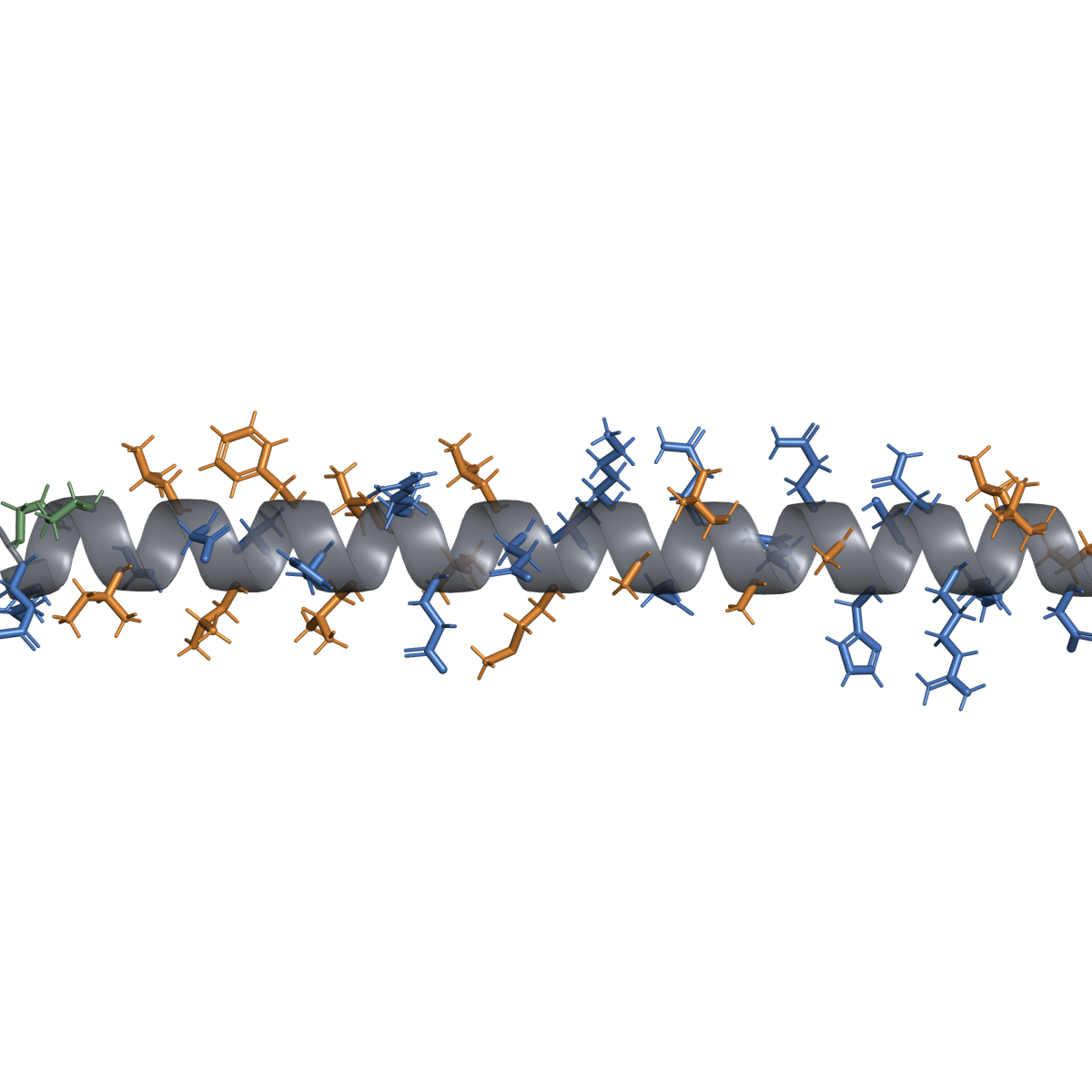
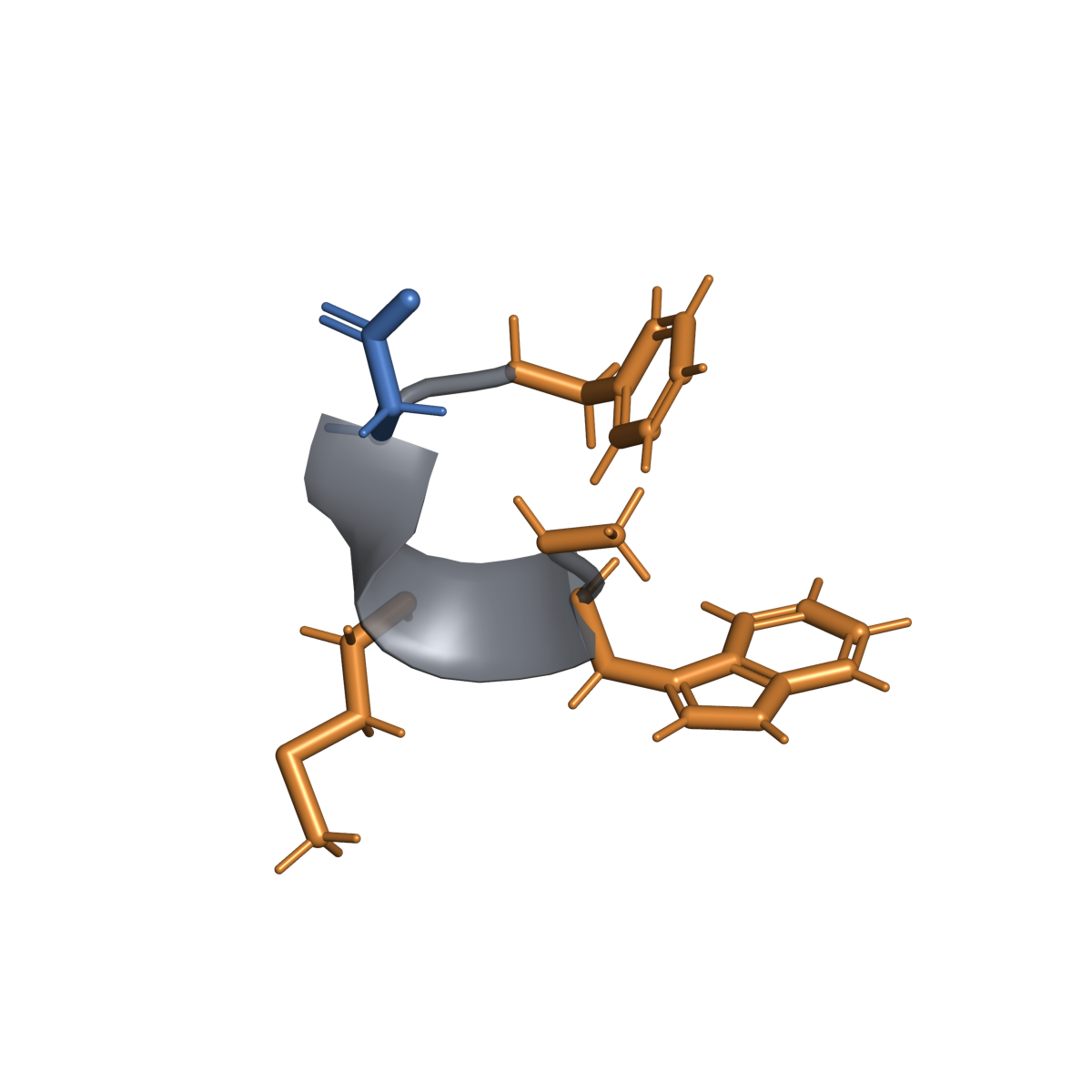
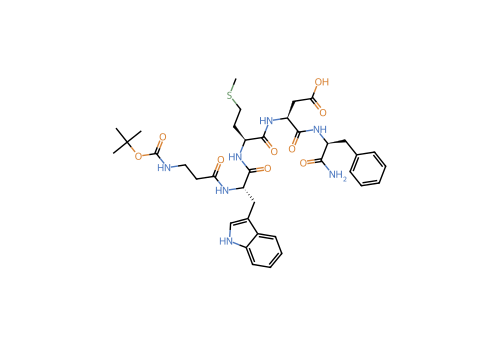
| Molecular/sequence identity | N-(tert-butoxycarbonyl)-beta-alanyl-L-tryptophyl-L-methionyl-L-alpha-aspartyl-L-phenylalaninamide. Sequence: Boc-beta-Ala-Trp-Met-Asp-Phe-NH2 |
| Modifications/form | Boc-protected N-terminus; C-terminal amidation; pentapeptide (5 amino acids) of MW 767.9 g/mol |
| Stable identifiers | CAS 5534-95-2; The record number of a compound in PubChem, the atlas's primary structure-asset source. A registry record or depiction does not authenticate a commercial sample. Definition source: Identity and structure assets methodology · Glossary 9853654; DrugBank DB00183; UNII EF0NX91490; ATC V04CG04 |
| Identity caveats | Not a full-length gastrin; contains only the C-terminal active tetrapeptide sequence (Trp-Met-Asp-Phe-NH2) plus a Boc-beta-Ala cap. |
Development and approval status
| Jurisdiction | Status and indication | Product/source | As of |
|---|---|---|---|
| US (FDA) | Approved (NDA 017048): gastric acid secretory function testing; Zollinger-Ellison syndrome diagnosis | Peptavlon | Approved 1982; marketing discontinued |
| US (FDA) | Orphan Drug designation (NOT an FDA-approved indication): diagnostic agent for medullary thyroid carcinoma (calcitonin stimulation test) | Pentagastrin (designation only) | Orphan designation; public sources do not establish whether a confidential NDA/BLA was filed |
| Markets reviewed | Historical products were discontinued; current status elsewhere requires a national-register check | Various | ~2010-2012 |
- UNITED STATES
- US (FDA): Approved (NDA 017048): gastric acid secretory function testing; Zollinger-Ellison syndrome diagnosis; US (FDA): Orphan Drug designation (NOT an FDA-approved indication): diagnostic agent for medullary thyroid carcinoma (calcitonin stimulation test)
- EU/EEA
- No EU/EEA row is present in the source status table
- UNITED KINGDOM
- No UNITED KINGDOM row is present in the source status table
- OTHER DOCUMENTED
- Markets reviewed: Historical products were discontinued; current status elsewhere requires a national-register check
Sport status: WADA: pentagastrin was not identified by exact name in the 2026 Prohibited List, and this review did not identify a matching prohibited class. An unsupported assumption about performance effect is not a basis for classification; athletes should verify the exact product and current status.
Mechanism and pharmacology
Pentagastrin binds to the cholecystokinin-B (CCK-B) receptor (also termed gastrin/CCK-B receptor) on gastric parietal cells, stimulating acid secretion. It also stimulates pepsin and intrinsic factor secretion. In the thyroid, it stimulates calcitonin release from parafollicular C cells. In the CNS, CCK-B receptor activation can induce anxiety-like effects and panic symptoms.
Evidence by claim
| Claim/indication | Stage | Grade | Best human evidence | Main result | Important limitations |
|---|---|---|---|---|---|
| Gastric acid secretory testing | Approved (discontinued) | A | Multiple trials supporting diagnostic accuracy compared to histamine/betazole | Stimulates maximal acid output (MAO); comparable to gastrin | No longer commercially available as marketed product |
| Medullary thyroid carcinoma diagnosis (calcitonin stimulation) | Orphan designation only (not FDA-approved) | C | Controlled diagnostic studies | Stimulated calcitonin measurement improves detection of MTC and residual disease | Not an FDA-approved indication; orphan designation does not constitute approval; no longer commercially available |
- AGrade A: Established for a specific labeled use
- BGrade B: Moderate human evidence
- CGrade C: Preliminary human evidence
- DGrade D: Preclinical only
- EGrade E: Anecdotal/marketing claim
- XGrade X: Evidence contradicts or does not support the claim
Text alternative for the claim-evidence diagram. Each grade is defined below:
- A — Established for a specific labeled use
- 1 claim: Gastric acid secretory testing
- B — Moderate human evidence
- 0 claims
- C — Preliminary human evidence
- 1 claim: Medullary thyroid carcinoma diagnosis (calcitonin stimulation)
- D — Preclinical only
- 0 claims
- E — Anecdotal/marketing claim
- 0 claims
- X — Evidence contradicts or does not support the claim
- 0 claims
Key studies
| Study | Design/population | Exposure studied | Endpoints and result | Limitations |
|---|---|---|---|---|
| Historical gastric acid studies (1970s-1980s) | Comparative diagnostic studies | 6 mcg/kg Administered into the tissue layer under the skin. Definition source: Neutral gloss; usage context: Routes, devices, and absorption primer · Glossary pentagastrin | Figure: reproducibility and correlation with gastrin-stimulated acid output | Historical literature; pentagastrin no longer marketed |
Dose and administration evidence
Approved labeled regimen
The label summary below is product-, indication-, and jurisdiction-specific; consult the full current label and a licensed clinician/pharmacist.
This is a historical US label summary; pentagastrin is no longer actively marketed in the US.
Gastric acid test: 6 mcg/kg subcutaneously (or 1.5-6 mcg/kg Administered into a vein. Definition source: Neutral gloss; usage context: Routes, devices, and absorption primer · Glossary depending on protocol).
Calcitonin test: 0.5 mcg/kg IV bolus.
Blood samples for acid output (gastric) or calcitonin (serum) at defined intervals.
Studied regimens (not recommendations)
A clinical-stage candidate with scientific or public relevance. Investigation is not approval, and a studied exposure is not a recommendation. Definition source: Scope and selection methodology · Glossary use in panic-anxiety research: IV bolus 0.6 mcg/kg in neuropsychiatric challenge studies (off-label, research only).
What is not established
No established or recommended human dose beyond the diagnostic context.
Safety
Established label risks
Nausea, abdominal cramps, urge to defecate (common).
Flushing, tachycardia, dizziness.
Bronchospasm (rare).
Panic symptoms (dose-dependent).
Human-study signals
Research challenge studies demonstrate reliable panic induction in susceptible individuals; used as a panic-provocation tool.
Unknowns and product-quality risks
Compounded pentagastrin for research use carries potency and sterility risks. No FDA-approved product currently marketed.
Interactions and special populations
Anticholinergics, H2-receptor antagonists, and PPIs reduce gastric acid response.
Proglumide (CCK receptor antagonist) blocks pentagastrin effects.
Pregnancy: no adequate studies.
Regulatory, compounding, and sport notes
The FDA-approved product was discontinued. Current US compounding eligibility and availability were not established; research-supplier listings do not establish an authorized medicine.
The World Anti-Doping Agency; its Prohibited List classifies many peptides as prohibited substances in sport. Definition source: WADA and sport regulation brief · Glossary: pentagastrin was not identified by exact name in the 2026 Prohibited List, and this review did not identify a matching prohibited class. An unsupported assumption about performance effect is not a basis for classification; athletes should verify the exact product and current status.
Used as a research tool in panic-disorder provocation studies.
Evidence gaps
Modern formulations and stability data for research supply.
Clinical utility in era of endoscopy and non-invasive testing.
Search notes
Databases and registries: FDA, PubMed, DrugBank, PubChem
Search terms: "pentagastrin", "Peptavlon", "gastric acid test", "calcitonin stimulation"
Last searched: 2026-08-06
Inclusion emphasis: FDA NDA/Orphan Drug designation records, NIH National Library of Medicine, peer-reviewed historical studies
Sources
FDA. NDA 017048: Peptavlon (pentagastrin) approval letter, 1982. Retrieved from FDA Orange Book (NDA 017048, discontinued). https://www.accessdata.fda.gov/scripts/cder/ob/ (accessed 2026-08-06).
DrugBank. Pentagastrin (DB00183). https://go.drugbank.com/drugs/DB00183
PubChem. Pentagastrin (CID 9853654). https://pubchem.ncbi.nlm.nih.gov/compound/9853654
FDA. Orphan Drug Designations and Approvals: pentagastrin for medullary thyroid carcinoma (Designation no. 83-136). https://www.accessdata.fda.gov/scripts/opdlisting/oopd/ (accessed 2026-08-06).
World Anti-Doping Agency. 2026 Prohibited List. https://www.wada-ama.org/sites/default/files/2025-09/2026list_en_final_clean_september_2025.pdf