Bottom line
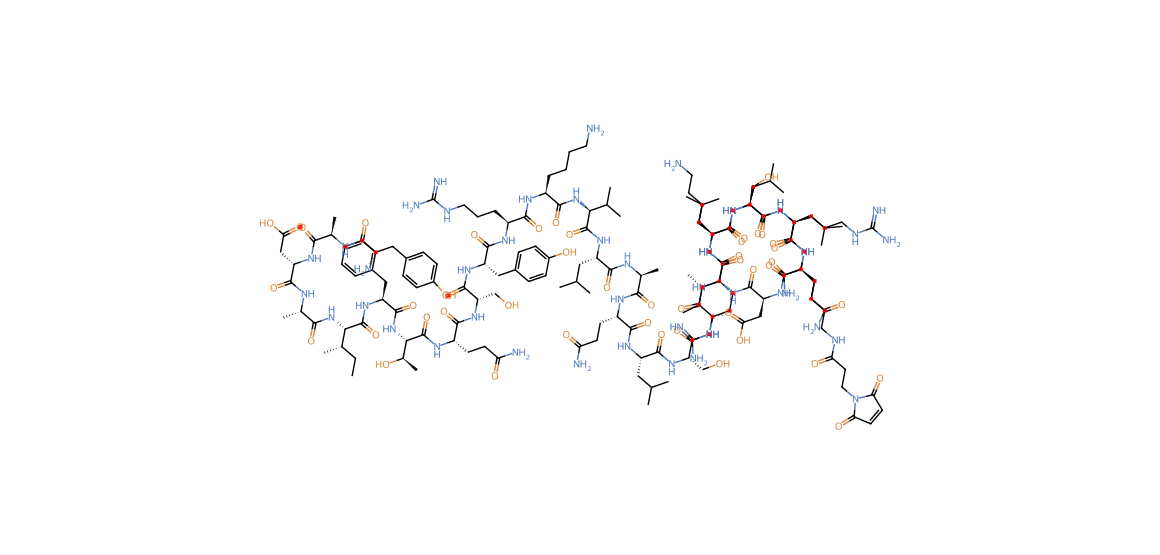
Modified GRF(1-29) is a synthetic 29-amino-acid GHRH analog with four amino-acid substitutions (D-Ala², Gln⁸, Ala¹⁵, Leu²⁷) designed to reduce enzymatic degradation. It is the core peptide sequence of CJC-1295 but lacks the Drug Affinity Complex (DAC) albumin-binding modification. No published human study has evaluated this specific non-DAC variant, and its human How a substance is absorbed, distributed, metabolized, and eliminated by the body; atlas pages report pharmacokinetic data such as half-life, metabolism, and clearance. Definition source: Neutral gloss; usage context: Routes, devices, and absorption primer · Glossary have not been established. The approximately 6–8-day The time for the amount of a substance in the body to fall by half. Definition source: Neutral gloss; usage context: Routes, devices, and absorption primer · Glossary reported for DAC-conjugated CJC-1295 must not be transferred to the non-DAC substance. No approved human drug product or clinical trial of this distinct variant was identified.
Identity and composition
| Field | Verified information |
|---|---|
| Preferred name | Modified GRF(1-29) |
| Key aliases | CJC-1295 without DAC, Mod GRF(1-29), tetrasubstituted GRF(1-29), CJC-1295 no DAC |
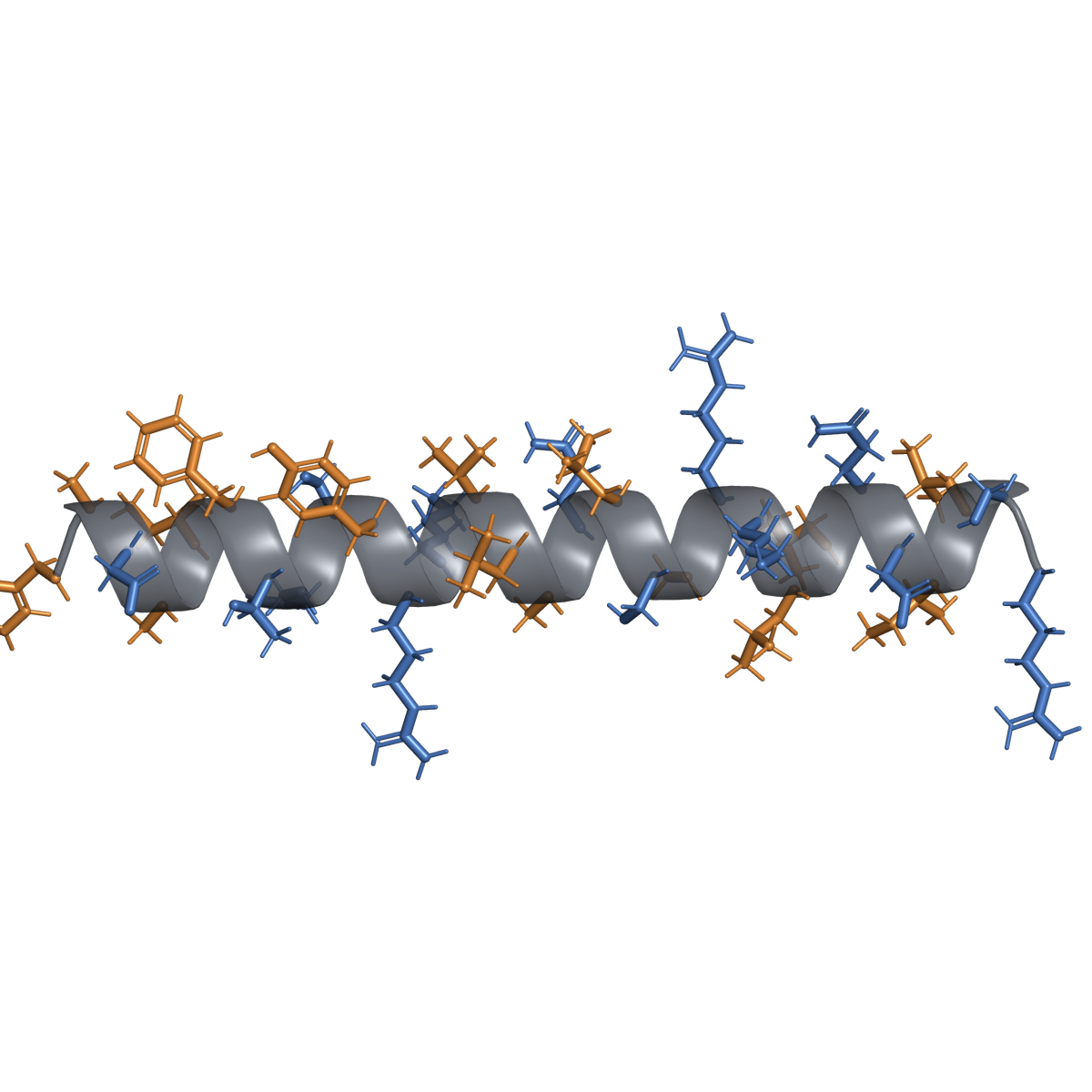
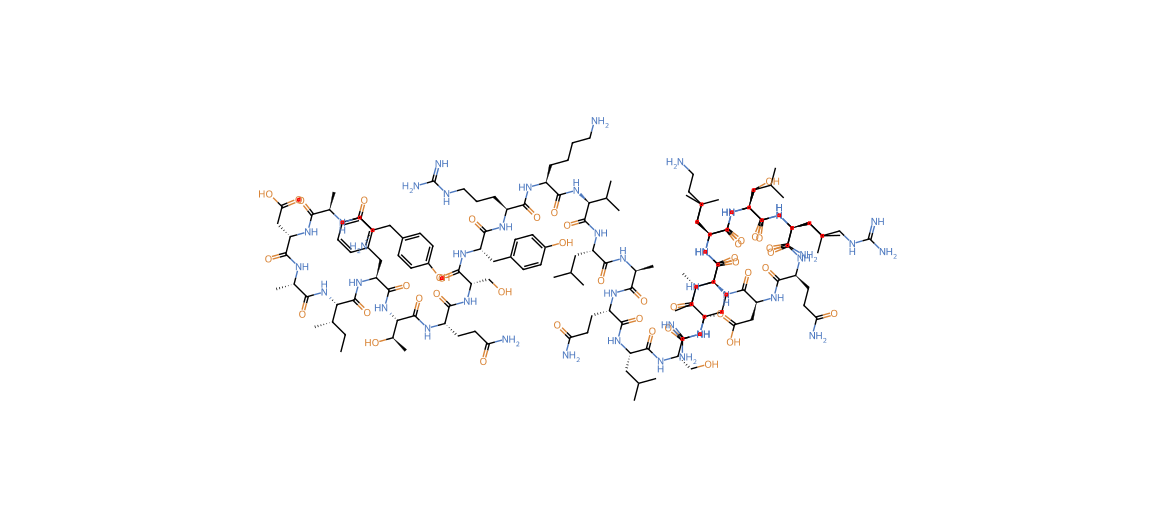
| Molecular/sequence identity | 29-residue synthetic peptide: Tyr-D-Ala-Asp-Ala-Ile-Phe-Thr-Gln-Ser-Tyr-Arg-Lys-Val-Leu-Ala-Gln-Leu-Ser-Ala-Arg-Lys-Leu-Leu-Gln-Asp-Ile-Leu-Ser-Arg-NH2 |
| Modifications/form | Four substitutions vs. native GHRH(1-29): D-Ala² (L→D isomer), Gln⁸ (Asn→Gln), Ala¹⁵ (Gly→Ala), Leu²⁷ (Met→Leu); C-terminal amidation |
| Stable identifiers | The record number of a compound in PubChem, the atlas's primary structure-asset source. A registry record or depiction does not authenticate a commercial sample. Definition source: Identity and structure assets methodology · Glossary: 56841945; CAS: 863288-34-0 (free base); MW ~3368 Da |
| Identity caveats | Commonly misrepresented. Marketed as "CJC-1295" with no DAC qualifier, leading purchasers to falsely attribute the 6–8 day The time for the amount of a substance in the body to fall by half. Definition source: Neutral gloss; usage context: Routes, devices, and absorption primer · Glossary from Teichman et al. (DAC form) to this compound. No published human data exist for this specific variant. The sequence is identical to the backbone of CJC-1295 without the C-terminal Lys-maleimide DAC handle. PubChem CID 56841945 is manually cited in this monograph but excluded from the automatic single-compound asset resolver because the name "Modified GRF (1-29)" is ambiguous with the CJC-1295 DAC form. The systematic title at PubChem (L-Tyr-D-Ala-L-Asp-L-Ala-...) confirms the sequence. No automatic structure asset. |
Development and approval status
| Jurisdiction | Status and indication | Product/source | As of |
|---|---|---|---|
| US (FDA) | No regulatory status; sold as research chemical | — | 2026-08-06 |
| Any jurisdiction | No clinical development or approval | — | 2026-08-06 |
- UNITED STATES
- US (FDA): No regulatory status; sold as research chemical
- EU/EEA
- No EU/EEA row is present in the source status table
- UNITED KINGDOM
- No UNITED KINGDOM row is present in the source status table
- OTHER DOCUMENTED
- Any jurisdiction: No clinical development or approval
Sport status: Modified GRF(1-29) is structurally a GHRH analog and falls within WADA's prohibited category S2 (Peptide Hormones, Growth Factors, Related Substances and Mimetics). It is detectable by LC-MS/MS if the specific sequence is targeted.
Mechanism and pharmacology
By sequence and peptide class, Modified GRF(1-29) is expected to act as a GHRH-receptor agonist and stimulate GH release through cAMP-dependent signaling. The substitutions were intended to reduce known degradation pathways, including N-terminal DPP-IV cleavage. These properties are mechanistic inferences for the standalone non-DAC substance, not results from a human pharmacology study of it. Jetté et al. studied three albumin-binding maleimido hGRF derivatives, including CJC-1295, in rat pituitary cells and rats; they did not separately administer the standalone non-DAC free base. FDA's 2024 review likewise found no pharmacology, How a substance is absorbed, distributed, metabolized, and eliminated by the body; atlas pages report pharmacokinetic data such as half-life, metabolism, and clearance. Definition source: Neutral gloss; usage context: Routes, devices, and absorption primer · Glossary, or toxicokinetic study of the CJC-1295 free-base or acetate forms. A defensible human The time for the amount of a substance in the body to fall by half. Definition source: Neutral gloss; usage context: Routes, devices, and absorption primer · Glossary for Modified GRF(1-29) therefore cannot be stated from the published CJC-1295 DAC evidence.
Evidence by claim
| Claim/indication | Stage | Grade | Best human evidence | Main result | Important limitations |
|---|---|---|---|---|---|
| GH release (any formulation) | Evidence from in vitro or animal studies with no adequate human efficacy evidence — the atlas Grade D lane. Definition source: Evidence grading methodology · Glossary | D | No human data for this exact variant | No adequate human evidence | All human data for the DAC conjugate; backbone variant never studied in humans |
| Body composition | Marketing | E | No evidence | No adequate human evidence | Claims extrapolated from DAC study or from other GHRH analogs |
| Synergy with GHRPs | Marketing | E | No evidence | No adequate human evidence | Community practice without clinical support |
- AGrade A: Established for a specific labeled use
- BGrade B: Moderate human evidence
- CGrade C: Preliminary human evidence
- DGrade D: Preclinical only
- EGrade E: Anecdotal/marketing claim
- XGrade X: Evidence contradicts or does not support the claim
Text alternative for the claim-evidence diagram. Each grade is defined below:
- A — Established for a specific labeled use
- 0 claims
- B — Moderate human evidence
- 0 claims
- C — Preliminary human evidence
- 0 claims
- D — Preclinical only
- 1 claim: GH release (any formulation)
- E — Anecdotal/marketing claim
- 2 claims: Body composition; Synergy with GHRPs
- X — Evidence contradicts or does not support the claim
- 0 claims
Key studies
| Study | Design/population | Exposure studied | Endpoints and result | Limitations |
|---|---|---|---|---|
| Jetté et al., Endocrinology 2005; PMID: 15817669 | Evidence from in vitro or animal studies with no adequate human efficacy evidence — the atlas Grade D lane. Definition source: Evidence grading methodology · Glossary experiments in rat anterior-pituitary cells and normal male Sprague-Dawley rats [1] | Three maleimido hGRF derivatives designed to conjugate to albumin; CJC-1295 was given once Administered into the tissue layer under the skin. Definition source: Neutral gloss; usage context: Routes, devices, and absorption primer · Glossary at 1 micromol/kg in the rat experiment | CJC-1295 produced an approximately fourfold greater GH AUC than native hGRF over 2 hours, remained detectable in plasma beyond 72 hours, and generated albumin-bound species detected from 15 minutes to beyond 24 hours | Tested the DAC-containing derivative; it did not isolate or establish PK, safety, or efficacy for standalone Modified GRF(1-29) |
No human study has administered the non-DAC tetrasubstituted GRF(1-29) as a distinct compound.
Dose and administration evidence
Approved labeled regimen
Not applicable.
Studied regimens (not recommendations)
No established or recommended human dose. No human study has established a dose for this specific variant.
What is not established
No human How a substance is absorbed, distributed, metabolized, and eliminated by the body; atlas pages report pharmacokinetic data such as half-life, metabolism, and clearance. Definition source: Neutral gloss; usage context: Routes, devices, and absorption primer · Glossary data
No effective dose range
No safety data
No efficacy data
Safety
No human safety data exist for this compound. Theoretical risks are similar to those of other GHRH analogs: injection-site reactions, transient GH/IGF-1 elevation effects, and the theoretical risk of sustained IGF-1 elevation promoting neoplasia. Research-grade material is of unverified purity and identity.
Unknowns and product-quality risks
All safety, How a substance is absorbed, distributed, metabolized, and eliminated by the body; atlas pages report pharmacokinetic data such as half-life, metabolism, and clearance. Definition source: Neutral gloss; usage context: Routes, devices, and absorption primer · Glossary, and efficacy parameters are unknown. Products sold as "CJC-1295 without DAC" or "Modified GRF(1-29)" cannot be assumed to match a characterized clinical material. Vendor certificates do not establish regulator-reviewed identity, sterility, potency, or suitability for human use.
Interactions and special populations
No human data exist.
Regulatory, compounding, and sport notes
Modified GRF(1-29) is structurally a GHRH analog and falls within The World Anti-Doping Agency; its Prohibited List classifies many peptides as prohibited substances in sport. Definition source: WADA and sport regulation brief · Glossary's prohibited category WADA Prohibited List class S2 (peptide hormones, growth factors, related substances and mimetics): prohibited at all times, with subsections of materially different scope. Definition source: WADA and sport regulation brief · Glossary (Peptide Hormones, Growth Factors, Related Substances and Mimetics). It is detectable by LC-MS/MS if the specific sequence is targeted.
Evidence gaps
No published human study of any kind
No direct How a substance is absorbed, distributed, metabolized, and eliminated by the body; atlas pages report pharmacokinetic data such as half-life, metabolism, and clearance. Definition source: Neutral gloss; usage context: Routes, devices, and absorption primer · Glossary data identified for the non-DAC variant alone
No toxicology data
No regulatory dossier
The compound exists almost entirely in the gray market without published scientific support for its isolated use
Search notes
Databases and registries: PubMed, ClinicalTrials.gov, Google Scholar
Search terms: "modified GRF 1-29", "tetrasubstituted GRF", "CJC-1293", "CJC-1295 without DAC"
Last searched: 2026-08-06
Inclusion emphasis: Any peer-reviewed primary data for this specific variant
Sources
Jetté L et al. Identification of CJC-1295 as a long-lasting GRF analogue. Endocrinology. 2005;146(7):3052-3058. https://pubmed.ncbi.nlm.nih.gov/15817669/
PubChem CID 56841945. Modified GRF(1-29). https://pubchem.ncbi.nlm.nih.gov/compound/56841945
Teichman SL et al. Prolonged stimulation of GH and IGF-I by CJC-1295 (DAC form). J Clin Endocrinol Metab. 2006. https://pubmed.ncbi.nlm.nih.gov/16352683/ (Background only — does not apply to non-DAC variant.)
WADA Prohibited List 2026. https://www.wada-ama.org/en/prohibited-list
FDA. Pharmacy Compounding Advisory Committee briefing document: CJC-1295-related bulk drug substances. 2024. https://www.fda.gov/media/183819/download