Bottom line
Enfuvirtide is a synthetic 36-amino-acid peptide HIV-1 fusion inhibitor that blocks gp41-mediated viral entry. It was approved by the FDA in 2003 under accelerated approval (Subpart H) for treatment-experienced patients with ongoing viral replication despite antiretroviral therapy. Twice-daily Administered into the tissue layer under the skin. Definition source: Neutral gloss; usage context: Routes, devices, and absorption primer · Glossary injection and near-universal injection-site reactions limited its uptake. Current HIV guidelines reserve enfuvirtide for exceptional circumstances in multidrug-resistant HIV.
Identity and composition
| Field | Verified information |
|---|---|
| Preferred name | Enfuvirtide |
| Key aliases | Fuzeon, T-20, pentafuside |
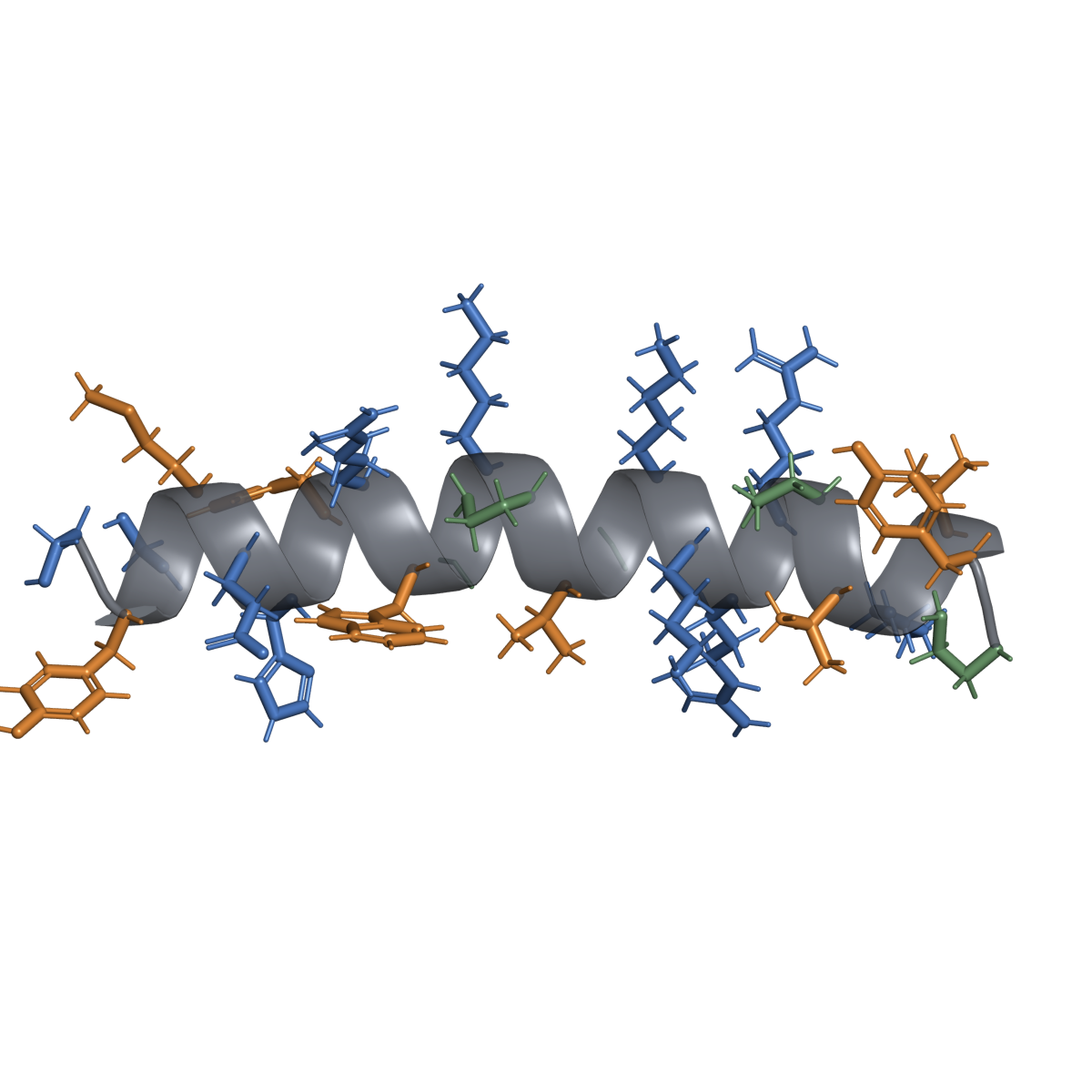
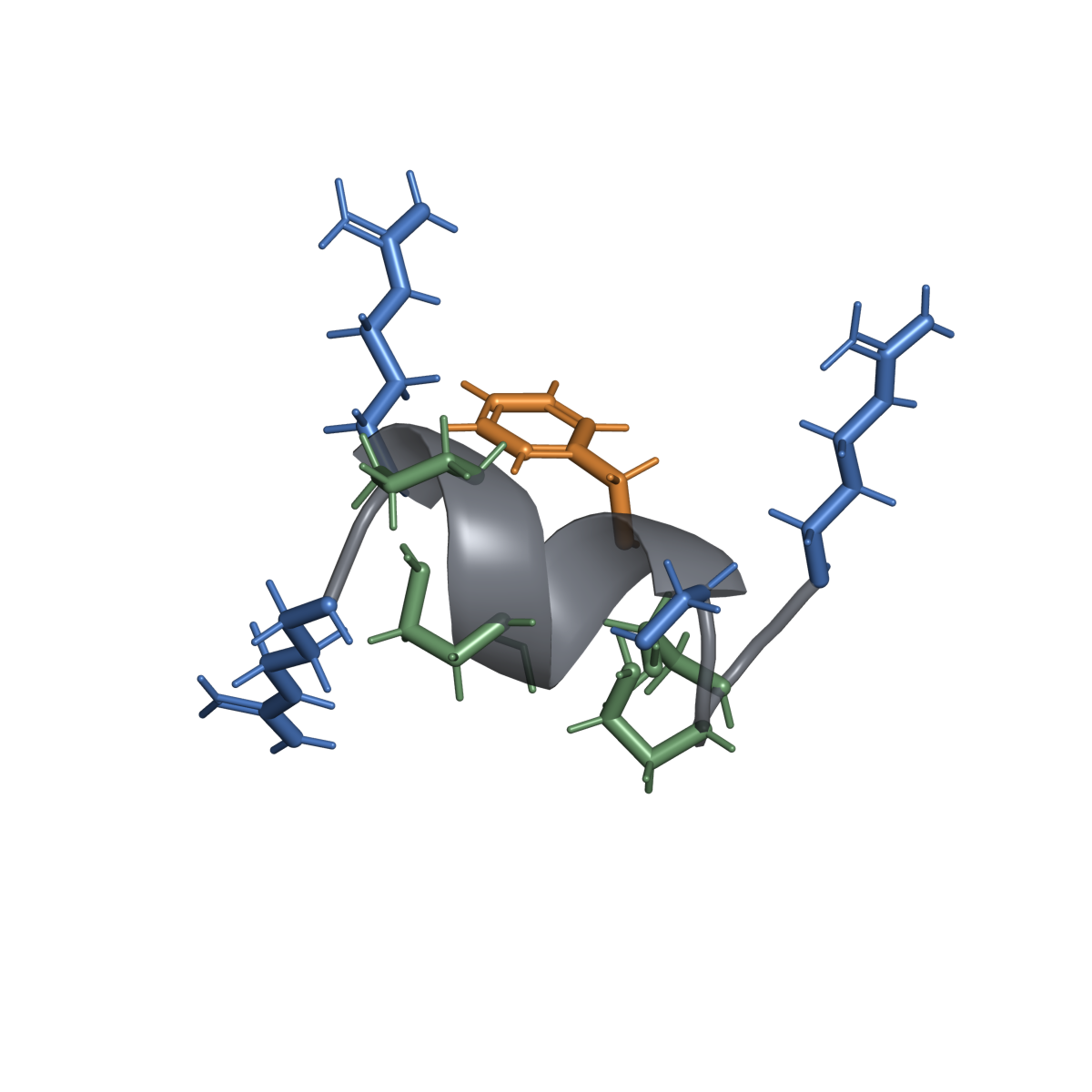
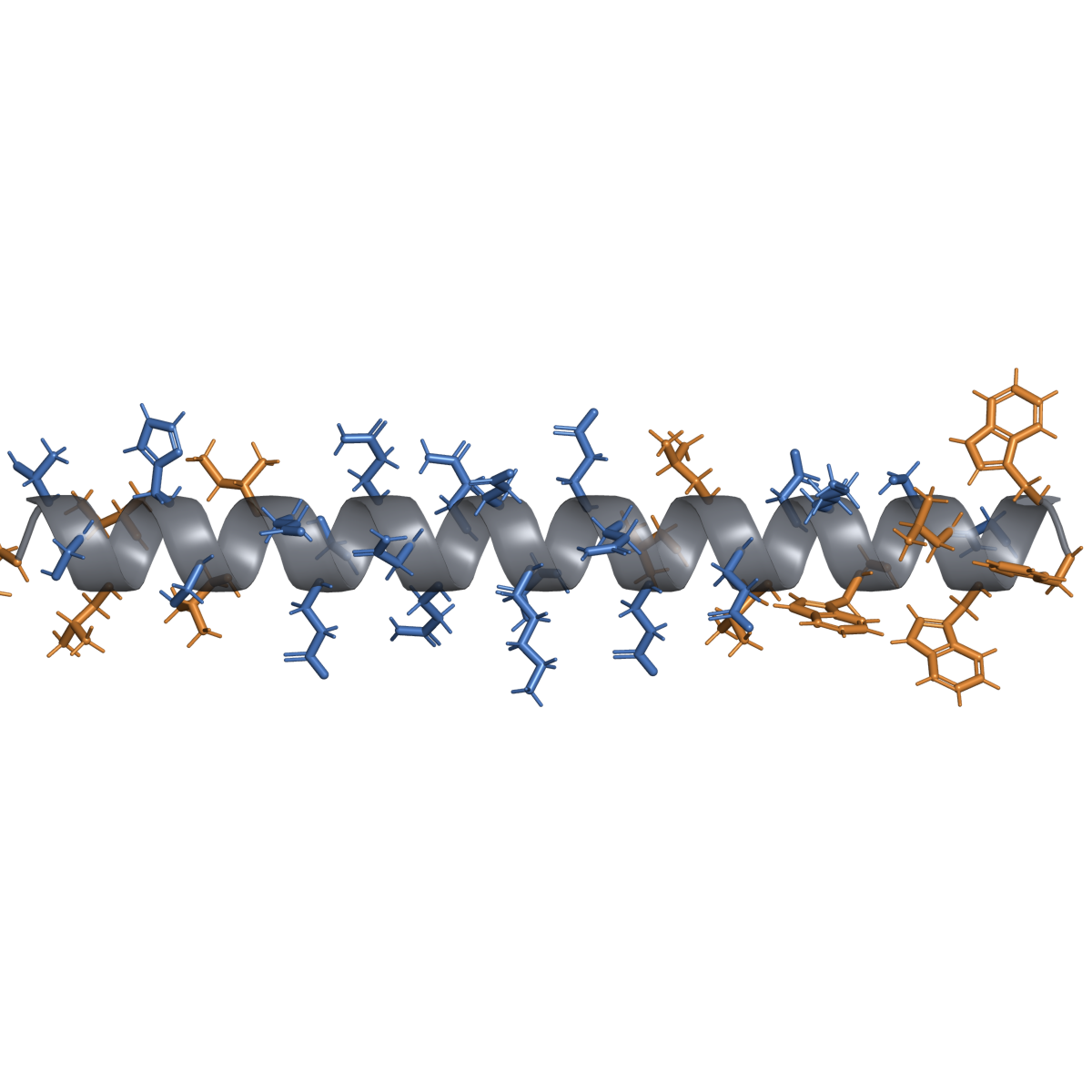
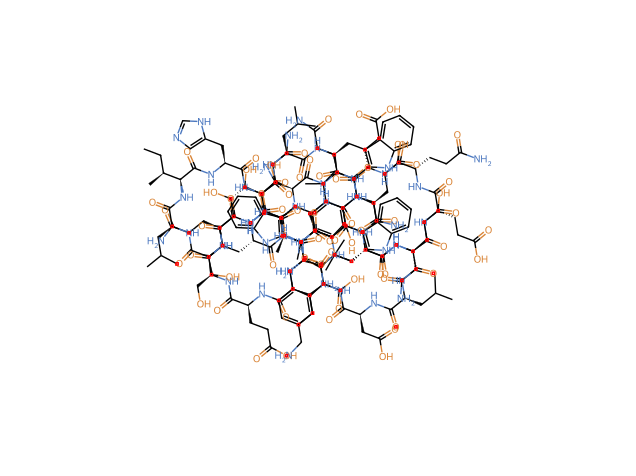
| Molecular/sequence identity | 36-amino-acid linear peptide; sequence: Ac-Tyr-Thr-Ser-Leu-Ile-His-Ser-Leu-Ile-Glu-Glu-Ser-Gln-Asn-Gln-Gln-Glu-Lys-Asn-Glu-Gln-Glu-Leu-Leu-Glu-Leu-Asp-Lys-Trp-Ala-Ser-Leu-Trp-Asn-Trp-Phe-NH2 |
| Modifications/form | N-terminal acetylation; C-terminal carboxamide; Freeze-drying: water is removed by sublimation under reduced pressure, which can improve the stability of peptides and yield a porous dry matrix. Water removal does not sterilize a product, prove its quality, or define how it should later be handled. Definition source: Lyophilization, formulation, and stability primer · Glossary powder for Administered into the tissue layer under the skin. Definition source: Neutral gloss; usage context: Routes, devices, and absorption primer · Glossary injection after The product-specific pharmaceutical process by which a lyophilized (freeze-dried) solid returns to a liquid dispersion. It is not evidence that the resulting material is suitable for administration. Definition source: What reconstitution means primer · Glossary |
| Stable identifiers | The record number of a compound in PubChem, the atlas's primary structure-asset source. A registry record or depiction does not authenticate a commercial sample. Definition source: Identity and structure assets methodology · Glossary: 16130199; DrugBank: DB00109; ChEBI: CHEBI:608828; CAS: 159519-65-0 |
| Identity caveats | None |
Development and approval status
| Jurisdiction | Status and indication | Product/source | As of |
|---|---|---|---|
| USA (FDA) | Approved — treatment-experienced HIV-1 infection with ongoing replication despite ART | Fuzeon (Roche/Genentech) | 2003 |
| EU (EMA) | Approved — same indication | Fuzeon | 2003 |
| UK (MHRA) | Approved (historic); marketing discontinued | Fuzeon | 2012 (discontinued) |
- UNITED STATES
- USA (FDA): Approved — treatment-experienced HIV-1 infection with ongoing replication despite ART
- EU/EEA
- EU (EMA): Approved — same indication
- UNITED KINGDOM
- UK (MHRA): Approved (historic); marketing discontinued
- OTHER DOCUMENTED
- No OTHER DOCUMENTED row is present in the source status table
Sport status: WADA status: not prohibited. No US federal CSA scheduling was identified as of 2026-08-06; state law and other jurisdictions were not assessed. Marketing status varies by product and jurisdiction; the reviewed UK record is historical, and current availability requires a national-register check.
Mechanism and pharmacology
Enfuvirtide is a gp41 fusion inhibitor. It binds to the first heptad-repeat (HR1) domain of the HIV-1 gp41 envelope glycoprotein, preventing the conformational change required for viral and cellular membrane fusion. This mechanism is distinct from all other antiretroviral classes (NRTI, NNRTI, PI, integrase inhibitor, CCR5 antagonist).
How a substance is absorbed, distributed, metabolized, and eliminated by the body; atlas pages report pharmacokinetic data such as half-life, metabolism, and clearance. Definition source: Neutral gloss; usage context: Routes, devices, and absorption primer · Glossary: Administered into the tissue layer under the skin. Definition source: Neutral gloss; usage context: Routes, devices, and absorption primer · Glossary administration; The time for the amount of a substance in the body to fall by half. Definition source: Neutral gloss; usage context: Routes, devices, and absorption primer · Glossary ~3.8 h; 92% plasma protein-bound; catabolized by peptidases/proteinases; no hepatic or renal dose adjustment established in the label.
Evidence by claim
| Claim/indication | Stage | Grade | Best human evidence | Main result | Important limitations |
|---|---|---|---|---|---|
| HIV-1 infection (treatment-experienced) | Approved | A | TORO 1 (N=501) and TORO 2 (N=504), randomized, controlled, A study in which participants and investigators know what is administered. Definition source: Neutral gloss; usage context: Evidence grading methodology · Glossary, phase 3 trials | Mean viral load reduction -1.48 log10 (enfuvirtide+OBR) vs -0.63 (OBR alone) at 48 weeks; CD4 +91 vs +45 cells/mm³ | Open-label design; injection-site reactions in 98%; increased pneumonia |
- AGrade A: Established for a specific labeled use
- BGrade B: Moderate human evidence
- CGrade C: Preliminary human evidence
- DGrade D: Preclinical only
- EGrade E: Anecdotal/marketing claim
- XGrade X: Evidence contradicts or does not support the claim
Text alternative for the claim-evidence diagram. Each grade is defined below:
- A — Established for a specific labeled use
- 1 claim: HIV-1 infection (treatment-experienced)
- B — Moderate human evidence
- 0 claims
- C — Preliminary human evidence
- 0 claims
- D — Preclinical only
- 0 claims
- E — Anecdotal/marketing claim
- 0 claims
- X — Evidence contradicts or does not support the claim
- 0 claims
Key studies
| Study | Design/population | Exposure studied | Endpoints and result | Limitations |
|---|---|---|---|---|
| TORO 1 (T20-301) | Phase 3, A study in which participants and investigators know what is administered. Definition source: Neutral gloss; usage context: Evidence grading methodology · Glossary, A study in which participants are assigned to the study material or a comparator by chance. Definition source: Neutral gloss; usage context: Evidence grading methodology · Glossary; 48 sites in Americas; N=501; treatment-experienced adults with HIV-1 RNA ≥5000 copies/mL | Enfuvirtide 90 mg Administered into the tissue layer under the skin. Definition source: Neutral gloss; usage context: Routes, devices, and absorption primer · Glossary BID + OBR vs OBR alone | Mean HIV-1 RNA change at 24 wks: -1.70 vs -0.76 log10 (p<0.001) | Open-label; short follow-up for initial endpoint |
| TORO 2 (T20-302) | Phase 3, open-label, RCT; EU/Australia; N=504; same eligibility | Same regimen | Mean HIV-1 RNA change at 24 wks: -1.43 vs -0.65 log10 (p<0.001) | Same limitations as TORO 1 |
| Pooled 48-week TORO analysis | Pre-planned pooled analysis; N=995 | Same | -1.48 vs -0.63 log10; CD4 +91 vs +45 cells/mm³ (p<0.001) | 25% discontinuation rate by week 48 |
Dose and administration evidence
Approved labeled regimen
The label summary below is product-, indication-, and jurisdiction-specific; consult the full current label and a licensed clinician/pharmacist.
Adults: 90 mg Administered into the tissue layer under the skin. Definition source: Neutral gloss; usage context: Routes, devices, and absorption primer · Glossary BID injected into the upper arm, anterior thigh, or abdomen. Each injection at a different site.
Pediatric patients (weighing at least 11 kg): 2 mg/kg SC twice daily, maximum 90 mg twice daily, injected subcutaneously into the upper arm, anterior thigh, or abdomen. Weight should be monitored periodically and dose adjusted accordingly. Safety and effectiveness are not established below age 6 years.
Studied regimens (not recommendations)
Alternative dosing strategies for pediatric patients studied in A study in which participants and investigators know what is administered. Definition source: Neutral gloss; usage context: Evidence grading methodology · Glossary trials T20-204 (ages 6–12) and T20-310 (ages 5 and older).
What is not established
Safety/efficacy in antiretroviral-naive patients (not studied).
Effect on clinical progression of HIV (surrogate-marker endpoint only).
Optimal dose in renal or hepatic impairment (no adequate data).
Safety
Established label risks
Injection-site reactions (98% of patients): pain, erythema, induration, nodules, pruritus, ecchymosis.
Pneumonia: increased incidence in enfuvirtide-treated patients in TORO trials (4.4 vs 0.6 events/100 patient-years).
Hypersensitivity reactions: rash, fever, nausea, vomiting, chills, rigors, hypotension — may require discontinuation.
Eosinophilia and laboratory abnormalities (amylase, lipase, CPK, LFTs).
Human-study signals
Peripheral neuropathy, insomnia, fatigue reported more frequently with enfuvirtide.
Unknowns and product-quality risks
No Administered into a muscle. Definition source: Neutral gloss; usage context: Routes, devices, and absorption primer · Glossary or Administered into a vein. Definition source: Neutral gloss; usage context: Routes, devices, and absorption primer · Glossary administration studied.
Must be The product-specific pharmaceutical process by which a lyophilized (freeze-dried) solid returns to a liquid dispersion. It is not evidence that the resulting material is suitable for administration. Definition source: What reconstitution means primer · Glossary and injected within 24 h of preparation; no preservative.
Interactions and special populations
No clinically significant CYP-mediated drug interactions because enfuvirtide is not metabolized by CYP450. No dose adjustment for age or sex. Women <50 kg should be monitored (higher exposure).
Regulatory, compounding, and sport notes
The World Anti-Doping Agency; its Prohibited List classifies many peptides as prohibited substances in sport. Definition source: WADA and sport regulation brief · Glossary status: not prohibited. No US federal CSA scheduling was identified as of 2026-08-06; state law and other jurisdictions were not assessed. Marketing status varies by product and jurisdiction; the reviewed UK record is historical, and current availability requires a national-register check.
Evidence gaps
No controlled trial data on clinical (rather than virologic/surrogate) outcomes.
No modern comparative data vs integrase-strand-transfer-inhibitor-based regimens.
Limited pediatric and pregnancy data.
Search notes
Databases and registries: FDA label (accessdata.fda.gov), DailyMed, PubMed, ClinicalTrials.gov
Search terms: enfuvirtide, Fuzeon, T-20, TORO trial, HIV fusion inhibitor
Last searched: 2026-08-06
Inclusion emphasis: FDA label, phase 3 trials, major reviews
Sources
FDA prescribing information: FUZEON (enfuvirtide) for injection. Available at: https://www.accessdata.fda.gov/drugsatfda_docs/label/2018/021481s032lbl.pdf (accessed 2026-08-06).
Lalezari JP, et al. Enfuvirtide, an HIV-1 fusion inhibitor, for drug-resistant HIV infection in North and South America. N Engl J Med. 2003;348(22):2175-85. DOI: 10.1056/NEJMoa035026. https://doi.org/10.1056/NEJMoa035026
Lazzarin A, et al. Efficacy of enfuvirtide in patients infected with drug-resistant HIV-1 in Europe and Australia. N Engl J Med. 2003;348(22):2186-95. DOI: 10.1056/NEJMoa035211. https://doi.org/10.1056/NEJMoa035211
Hardy H, Skolnik PR. Enfuvirtide: a fusion inhibitor for the treatment of HIV infection. Clin Infect Dis. 2004;38(6):841-9. DOI: 10.1086/381747. https://doi.org/10.1086/381747
Nelson M, et al. Durable efficacy of enfuvirtide over 48 weeks in heavily treatment-experienced HIV-1-infected patients in the T-20 versus optimized background regimen only (TORO) studies. J Acquir Immune Defic Syndr. 2005;40(4):404-12. DOI: 10.1097/01.qai.0000185314.56556.c3. https://doi.org/10.1097/01.qai.0000185314.56556.c3
FDA archived prescribing information. FUZEON (enfuvirtide) for injection. https://www.accessdata.fda.gov/drugsatfda_docs/label/2018/021481s032lbl.pdf (accessed 2026-08-06).