Bottom line
Colistin (polymyxin E) is a cationic polypeptide antibiotic with bactericidal activity against most aerobic Gram-negative bacilli. It is administered as the inactive prodrug colistimethate sodium (CMS) for Administered into a vein. Definition source: Neutral gloss; usage context: Routes, devices, and absorption primer · Glossary/Administered into a muscle. Definition source: Neutral gloss; usage context: Routes, devices, and absorption primer · Glossary use, which is hydrolyzed in vivo to colistin. Colistin sulfate is used topically and orally (gut decontamination). A last-resort antibiotic for carbapenem-resistant Acinetobacter, Pseudomonas, and Enterobacteriaceae. Nephrotoxicity and neurotoxicity are dose-limiting.
Identity and composition
| Field | Verified information |
|---|---|
| Preferred name | Colistin |
| Key aliases | Polymyxin E; Colistimethate sodium (CMS, prodrug); Coly-Mycin M; Colomycin; colistin sulfate |
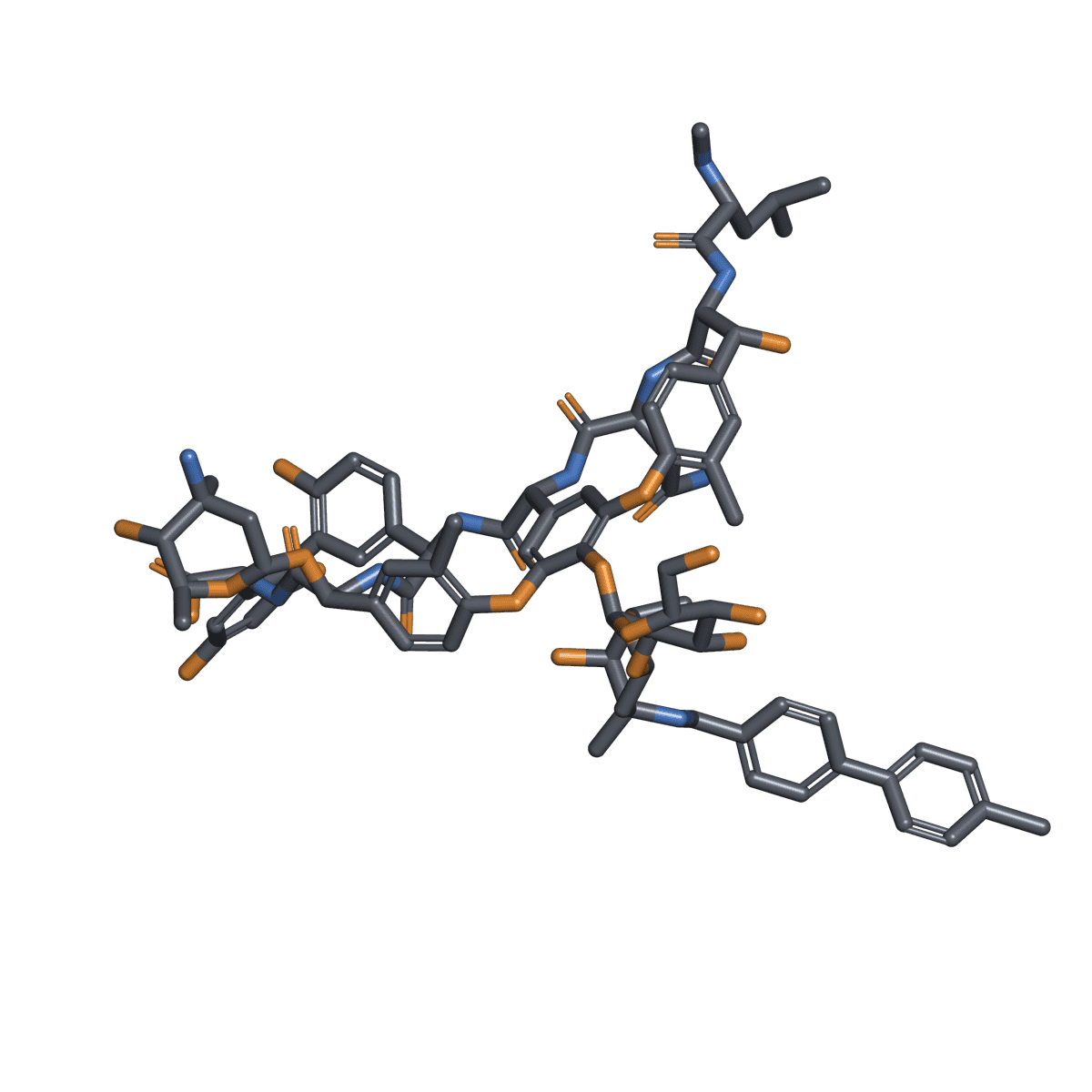
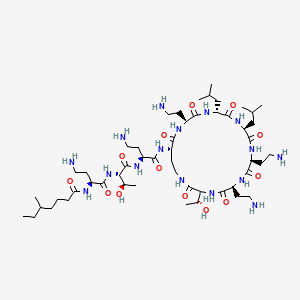
| Molecular/sequence identity | Colistin is a mixture of polymyxins E1 and E2 — cyclic decapeptides with a tripeptide side chain and a fatty acid tail. Contains the unusual amino acid 2,4-diaminobutyric acid (Dab). Colistimethate sodium is a sulfomethylated derivative with lower toxicity. |
| Modifications/form | Two forms: (1) Colistin sulfate — active drug, used topically/orally; (2) Colistimethate sodium (CMS) — inactive prodrug, used Administered into a vein. Definition source: Neutral gloss; usage context: Routes, devices, and absorption primer · Glossary/Administered into a muscle. Definition source: Neutral gloss; usage context: Routes, devices, and absorption primer · Glossary. CMS is pentasodium colistinmethanesulfonate. |
| Stable identifiers | Colistin — The record number of a compound in PubChem, the atlas's primary structure-asset source. A registry record or depiction does not authenticate a commercial sample. Definition source: Identity and structure assets methodology · Glossary: 5311054; DrugBank: DB00803; ChEBI: CHEBI:59200; CAS: 1066-17-7. Colistimethate sodium — PubChem CID: 23667755; CAS: 8068-28-8 |
| Identity caveats | Colistin and colistimethate are NOT interchangeable. CMS is dosed in "colistin base activity" (CBA), not CMS weight. Confusion has caused fatal overdoses. Colistin differs from polymyxin B by a single amino acid (Leu vs Phe at position 6 in the ring). |
Development and approval status
| Jurisdiction | Status and indication | Product/source | As of |
|---|---|---|---|
| USA (FDA) | Approved — serious infections due to susceptible Gram-negative bacilli (especially Pseudomonas). Used Administered into a vein. Definition source: Neutral gloss; usage context: Routes, devices, and absorption primer · Glossary/Administered into a muscle. Definition source: Neutral gloss; usage context: Routes, devices, and absorption primer · Glossary (CMS). | Coly-Mycin M Parenteral (CMS) | 1959 |
| EU (EMA) | Approved — same, various national approvals. Colomycin (UK) labeled in IU. | Colomycin, various generics | 1950s-60s |
| WHO | Listed on WHO Essential Medicines List (as last-resort for MDR Gram-negative) | Current |
Colistin was never subjected to modern drug-approval standards. Available evidence is from older literature, recent PK/PD studies, and observational cohorts.
- UNITED STATES
- USA (FDA): Approved — serious infections due to susceptible Gram-negative bacilli (especially Pseudomonas). Used IV/IM (CMS).
- EU/EEA
- EU (EMA): Approved — same, various national approvals. Colomycin (UK) labeled in IU.
- UNITED KINGDOM
- No UNITED KINGDOM row is present in the source status table
- OTHER DOCUMENTED
- WHO: Listed on WHO Essential Medicines List (as last-resort for MDR Gram-negative)
Sport status: WADA status: not prohibited. No US federal CSA scheduling was identified as of 2026-08-06; state law and other jurisdictions were not assessed. Veterinary-use restrictions and human product availability vary by jurisdiction. CMS is on the WHO Essential Medicines List as a last-resort antibiotic.
Mechanism and pharmacology
Colistin binds to lipid A of lipopolysaccharide (LPS) in the outer membrane of Gram-negative bacteria, displacing divalent cations (Ca²⁺, Mg²⁺) and disrupting membrane integrity. This causes leakage of cytoplasmic contents and bacterial death. The mechanism is shared with polymyxin B.
Colistimethate (CMS) elimination: ~70% of CMS excreted renally unchanged; ~20-25% converted to colistin in vivo. Colistin is then largely reabsorbed and cleared non-renally. This "prodrug" How a substance is absorbed, distributed, metabolized, and eliminated by the body; atlas pages report pharmacokinetic data such as half-life, metabolism, and clearance. Definition source: Neutral gloss; usage context: Routes, devices, and absorption primer · Glossary means CMS-to-colistin conversion is slow and incomplete, leading to low colistin levels initially and a delay to steady state.
Colistin sulfate (oral/topical): not absorbed systemically.
Colistin vs colistimethate vs polymyxin B — key distinctions
| Feature | Colistin (active) | Colistimethate/CMS (prodrug) | Polymyxin B |
|---|---|---|---|
| Route | Topical, oral (decontamination) | Administered into a vein. Definition source: Neutral gloss; usage context: Routes, devices, and absorption primer · Glossary, Administered into a muscle. Definition source: Neutral gloss; usage context: Routes, devices, and absorption primer · Glossary, inhaled | IV, IM, intrathecal, topical, ophthalmic |
| Active form | Yes (in formulation) | No — hydrolyzed to colistin in vivo | Yes (administered directly as sulfate) |
| Nephrotoxicity | Higher | Lower (prodrug temporarily masks toxicity) | Comparable to colistin |
| Dosing unit | mg of colistin base | mg colistin base activity (CBA) or IU | Units (1 mg = 10,000 U) |
| Preferred for systemic MDR infections | Not used parenterally | Used (but slow conversion limits efficacy) | Preferred (faster, more predictable PK) |
Evidence by claim
| Claim/indication | Stage | Grade | Best human evidence | Main result | Important limitations |
|---|---|---|---|---|---|
| MDR Gram-negative infections (systemic) | Approved | ? | Multiple observational studies and small A study in which participants are assigned to the study material or a comparator by chance. Definition source: Neutral gloss; usage context: Evidence grading methodology · Glossary. ATOLL trial (colistin vs meropenem for VAP, N=99) and PROGRESS observational registry (N=495+) | Clinical cure rates 65-80% in observational studies; non-inferiority to meropenem suggested but not robustly confirmed | No adequately powered RCT vs modern comparators (e.g., cefiderocol, ceftazidime-avibactam) for carbapenem-resistant infections |
- AGrade A: Established for a specific labeled use
- BGrade B: Moderate human evidence
- CGrade C: Preliminary human evidence
- DGrade D: Preclinical only
- EGrade E: Anecdotal/marketing claim
- XGrade X: Evidence contradicts or does not support the claim
Text alternative for the claim-evidence diagram. Each grade is defined below:
- A — Established for a specific labeled use
- 0 claims
- B — Moderate human evidence
- 0 claims
- C — Preliminary human evidence
- 1 claim: MDR Gram-negative infections (systemic)
- D — Preclinical only
- 0 claims
- E — Anecdotal/marketing claim
- 0 claims
- X — Evidence contradicts or does not support the claim
- 0 claims
Key studies
| Study | Design/population | Exposure studied | Endpoints and result | Limitations |
|---|---|---|---|---|
| ATOLL (2011) | A study in which participants are assigned to the study material or a comparator by chance. Definition source: Neutral gloss; usage context: Evidence grading methodology · Glossary; N=99; VAP due to MDR A. baumannii | Administered into a vein. Definition source: Neutral gloss; usage context: Routes, devices, and absorption primer · Glossary colistin (CMS) vs meropenem | Clinical cure: 75% vs 66.7% (p=0.43) | Small; monotherapy in many patients; colistin arm received suboptimal dosing by modern standards |
| Paul et al. (2018) — AIDA trial | A study in which participants and investigators know what is administered. Definition source: Neutral gloss; usage context: Evidence grading methodology · Glossary RCT; N=406; carbapenem-resistant Gram-negative infections (77% A. baumannii) | IV colistin alone vs colistin + meropenem | Clinical failure at 14 days: 79% vs 73% (RR 0.93, 95% CI 0.83–1.03) | Open-label; unpowered for non-Acinetobacter; PMID 29456043 |
| Eljaaly et al. (2021) — meta-analysis | Systematic review; 5 RCTs (N=377); colistin vs β-lactam regimens | Colistin-based therapy | Nephrotoxicity: RR 2.40 (95% CI 1.47–3.91; I²=0%) vs comparators | All pneumonia/ICU studies; excludes aminoglycoside comparators; PMID 33623807 |
Dose and administration evidence
Approved labeled regimen
The label summary below is product-, indication-, and jurisdiction-specific; consult the full current label and a licensed clinician/pharmacist.
CMS Administered into a vein. Definition source: Neutral gloss; usage context: Routes, devices, and absorption primer · Glossary (Coly-Mycin M Parenteral): 2.5-5 mg/kg/day colistin base activity divided q8-12h. The vial is labeled as 150 mg colistin base activity (CBA) per vial.
Critical dosing safety note: In the US, CMS vials are labeled as "150 mg colistin base activity." In Europe (Colomycin), vials are labeled in International Units (1 MU = 80 mg CMS = 30 mg CBA). This difference has caused fatal medication errors.
Studied regimens (not recommendations)
A loading dose of 300 mg CBA (approximately 9 MU), followed by maintenance dosing, is recommended in international consensus guidelines (Tsuji et al. 2019, endorsed by IDSA/SCCM/ACCP/SIDP) to achieve therapeutic colistin concentrations more rapidly in critically ill patients. This is a consensus recommendation, not a labeled regimen.
What is not established
Optimal dosing for critically ill patients (loading dose is guideline-based, not prospectively validated in an A study in which participants are assigned to the study material or a comparator by chance. Definition source: Neutral gloss; usage context: Evidence grading methodology · Glossary vs no-loading approach).
Inhaled colistin (used as adjunctive therapy for VAP or for cystic fibrosis, but not FDA-labeled for these indications).
Monotherapy for bloodstream infections (combination therapy generally recommended).
Safety
Established label risks
Nephrotoxicity (most common dose-limiting toxicity; 30-60% in observational series; acute kidney injury via tubular damage; usually reversible).
Neurotoxicity (paresthesias, vertigo, ataxia, slurred speech, neuromuscular blockade with respiratory depression — less common now with better fluid management).
Neuromuscular blockade (potentiated by aminoglycosides, curariform muscle relaxants, ether).
Human-study signals
Nephrotoxicity significantly higher vs comparator antibiotics in meta-analyses (RR ~2).
Nephrotoxicity risk factors: higher daily dose, longer treatment, baseline renal impairment, concomitant nephrotoxins.
Polymyxin B is generally preferred over CMS for systemic therapy because the PK are more predictable and there is less delay in achieving therapeutic concentrations.
Unknowns and product-quality risks
Colistin resistance (plasmid-mediated mcr-1 gene: first reported in China 2015; now global).
CMS hydrolysis in solution: must be used promptly after The product-specific pharmaceutical process by which a lyophilized (freeze-dried) solid returns to a liquid dispersion. It is not evidence that the resulting material is suitable for administration. Definition source: What reconstitution means primer · Glossary to minimize colistin formation (and associated toxicity) prior to administration.
Interactions and special populations
Do not co-administer with other nephrotoxic drugs (aminoglycosides, cyclosporine, vancomycin, contrast) without careful renal monitoring. Neuromuscular blockers are potentiated. Renal impairment: dose adjustment required. Pregnancy: limited data; use only if clearly needed.
Regulatory, compounding, and sport notes
The World Anti-Doping Agency; its Prohibited List classifies many peptides as prohibited substances in sport. Definition source: WADA and sport regulation brief · Glossary status: not prohibited. No US federal CSA scheduling was identified as of 2026-08-06; state law and other jurisdictions were not assessed. Veterinary-use restrictions and human product availability vary by jurisdiction. CMS is on the WHO Essential Medicines List as a last-resort antibiotic.
Evidence gaps
Loading-dose strategy for CMS (modern consensus recommendation, but not prospectively validated vs no-loading approach).
CMS vs polymyxin B for carbapenem-resistant Acinetobacter baumannii.
Clinical significance of mcr-mediated colistin resistance.
Optimal combination therapy for XDR Gram-negative infections.
Search notes
Databases and registries: FDA label (accessdata.fda.gov), DailyMed, WHO EML, PubMed, ClinicalTrials.gov
Search terms: colistin, colistimethate, polymyxin E, CMS, MDR Gram-negative, Acinetobacter, Pseudomonas, nephrotoxicity, mcr-1
Last searched: 2026-08-06
Inclusion emphasis: FDA labels, international consensus PK/PD guidelines, systematic reviews
Sources
FDA prescribing information: Coly-Mycin M Parenteral (colistimethate for injection). Available at: https://www.accessdata.fda.gov/drugsatfda_docs/label/2017/050108s033lbl.pdf (accessed 2026-08-06).
DailyMed: COLY-MYCIN M. Available at: https://dailymed.nlm.nih.gov/dailymed/lookup.cfm?setid=6d6e13e2-dc33-4b7b-84d0-66146a57c552 (accessed 2026-08-06).
Nation RL, et al. Updated US and European dose recommendations for intravenous colistin: how do they differ? Clin Infect Dis. 2016;62(5):552-8. DOI: 10.1093/cid/civ964.
Paul M, et al. Colistin alone versus colistin plus meropenem for the treatment of carbapenem-resistant Acinetobacter baumannii: a multicentre, open-label, randomised, controlled trial (AIDA). Lancet Infect Dis. 2018;18(4):391-400. DOI: 10.1016/S1473-3099(18)30099-9.
Poirel L, et al. Polymyxins: antibacterial activity, susceptibility testing, and resistance mechanisms encoded by plasmids or chromosomes. Clin Microbiol Rev. 2017;30(2):557-96. DOI: 10.1128/CMR.00064-16.