Bottom line
Cerebrolysin is a complex hydrolysate of porcine brain proteins containing low-molecular-weight peptides (<10 kDa), amino acids, and neurotrophic-like fragments. It has no single defined sequence or active ingredient. It is marketed in multiple countries for neurologic indications but has never been approved by the FDA. Current local authorization and labeled indications must be checked in the relevant national registry. A 2023 Cochrane review found little or no effect on mortality or total serious adverse events in acute ischemic stroke, whereas a 2025 meta-analysis reported a modest NIHSS signal; heterogeneity and differences in outcome selection limit reconciliation of those conclusions.
Identity and composition
| Field | Verified information |
|---|---|
| Preferred name | Cerebrolysin |
| Key aliases | FPF-1070, Cerebrolysinum, brain-derived peptide hydrolysate |
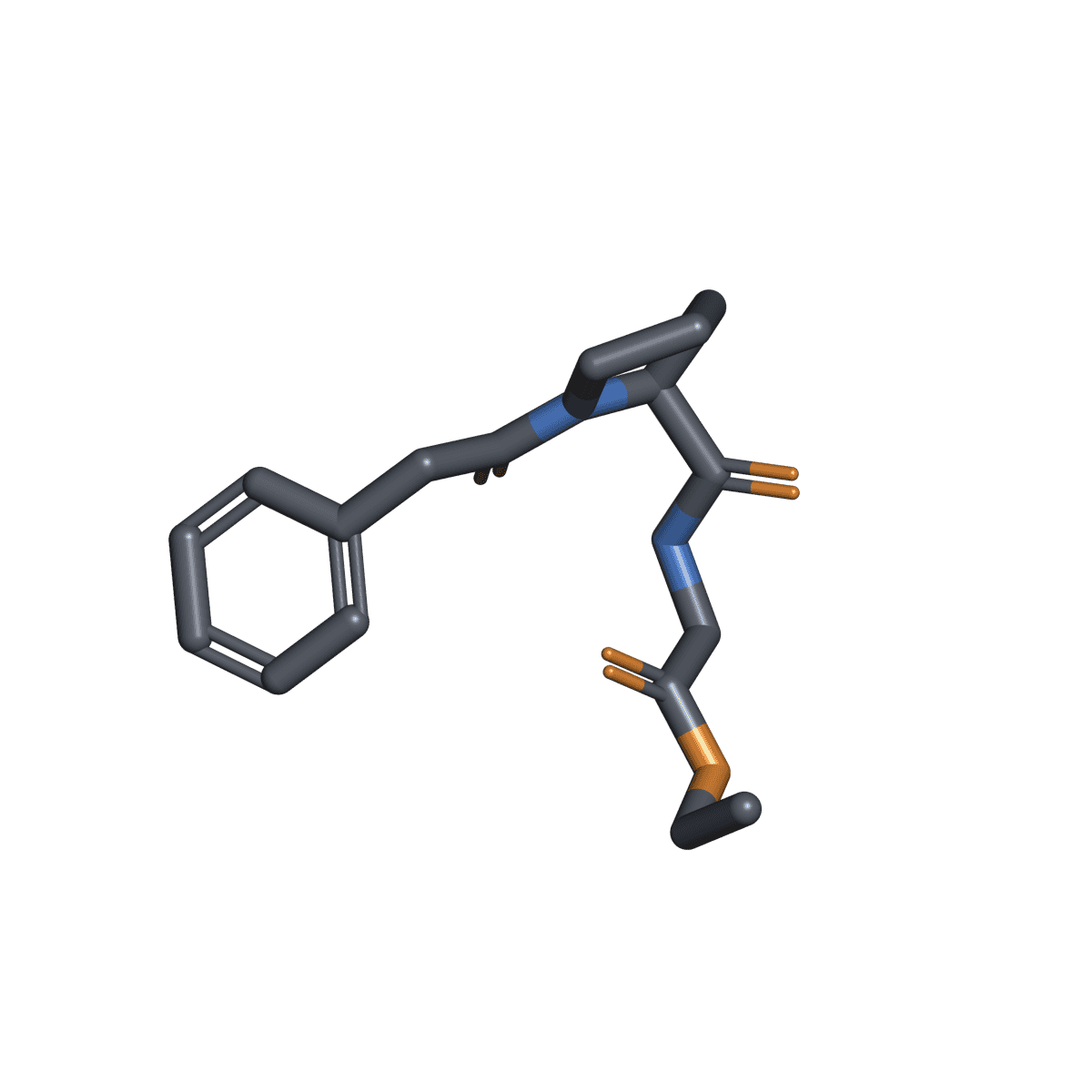
| Molecular/sequence identity | Complex mixture of porcine brain-derived peptides <10 kDa; no single active ingredient identified; contains amino acids and peptide fragments with neurotrophic-like activity |
| Modifications/form | Sterile solution for injection (Administered into a muscle. Definition source: Neutral gloss; usage context: Routes, devices, and absorption primer · Glossary/Administered into a vein. Definition source: Neutral gloss; usage context: Routes, devices, and absorption primer · Glossary) |
| Stable identifiers | CAS 105771-63-1 (as substance); no The record number of a compound in PubChem, the atlas's primary structure-asset source. A registry record or depiction does not authenticate a commercial sample. Definition source: Identity and structure assets methodology · Glossary (mixture); UNII assignment varies by jurisdiction |
| Identity caveats | NOT a single peptide sequence — classification is boundary case (biological/biotechnological product, not a defined peptide active substance); composition varies between batches and manufacturers; active moieties not fully characterised; Ever Pharma is the primary manufacturer for the registered product |
Development and approval status
| Jurisdiction | Status and indication | Product/source | As of |
|---|---|---|---|
| Selected non-US markets | Manufacturer and published literature report marketing for neurologic indications in parts of Eastern Europe, Asia, and post-Soviet states; indication and current authorization vary | Cerebrolysin-branded products; verify in the relevant national registry | 2026-08-06 |
| EU/EEA | No centralized EMA marketing authorization identified; national status must not be inferred from availability in another country | — | 2026-08-06 |
| FDA (US) | Not approved | — | 2026-08 |
| MHRA (UK) | Not approved | — | 2026-08 |
| Health Canada | Not approved | — | 2026-08 |
- UNITED STATES
- Selected non-US markets: Manufacturer and published literature report marketing for neurologic indications in parts of Eastern Europe, Asia, and post-Soviet states; indication and current authorization vary; FDA (US): Not approved
- EU/EEA
- EU/EEA: No centralized EMA marketing authorization identified; national status must not be inferred from availability in another country
- UNITED KINGDOM
- MHRA (UK): Not approved
- OTHER DOCUMENTED
- Health Canada: Not approved
Sport status: WADA: Cerebrolysin was not identified by exact name in the 2026 Prohibited List, and this review did not identify a matching prohibited class for the characterized product. Mixture status and an assumed lack of performance effect do not themselves determine classification; athletes should verify the exact product composition and current status.
Mechanism and pharmacology
Cerebrolysin has neurotrophic-like activity attributed to its peptide mixture, which includes fragments functionally resembling neurotrophins (NGF, BDNF, CNTF, GDNF). It is reported to cross the BBB to a limited extent. Proposed mechanisms include: reduction of excitotoxicity and free-radical damage, modulation of amyloid precursor protein processing, enhancement of CREB signalling, and promotion of hippocampal neurogenesis. The mechanistic evidence is primarily from in vitro and animal studies; precise contributions of individual peptide fragments to any clinical effect are unknown.
Evidence by claim
| Claim/indication | Stage | Grade | Best human evidence | Main result | Important limitations |
|---|---|---|---|---|---|
| Ischaemic stroke recovery | Studied; locally marketed status varies | C | 2025 meta-analysis, 14 A study in which participants are assigned to the study material or a comparator by chance. Definition source: Neutral gloss; usage context: Evidence grading methodology · Glossary (N=2,884), plus 2023 Cochrane review | Meta-analysis reported a modest NIHSS change; Cochrane found little or no effect on mortality or total serious adverse events | Different outcome selection; heterogeneity; clustered evidence base; no FDA approval |
| Vascular dementia | Studied; locally marketed status varies | D | 2019 Cochrane review, 6 RCTs (N=597) | Possible cognition/global-function signals | Very-low-certainty evidence; high risk of bias; effects may be too small to be clinically meaningful |
| Traumatic brain injury | Studied [1] | C | CAPTAIN II and other small RCTs | Some multidimensional or secondary endpoints favored Cerebrolysin | Small and geographically limited studies; not an FDA-approved indication |
| Parkinson's disease | Off-label/studied | D | No adequate RCTs | Insufficient evidence | Evidence from in vitro or animal studies with no adequate human efficacy evidence — the atlas Grade D lane. Definition source: Evidence grading methodology · Glossary only |
- AGrade A: Established for a specific labeled use
- BGrade B: Moderate human evidence
- CGrade C: Preliminary human evidence
- DGrade D: Preclinical only
- EGrade E: Anecdotal/marketing claim
- XGrade X: Evidence contradicts or does not support the claim
Text alternative for the claim-evidence diagram. Each grade is defined below:
- A — Established for a specific labeled use
- 0 claims
- B — Moderate human evidence
- 0 claims
- C — Preliminary human evidence
- 2 claims: Ischaemic stroke recovery; Traumatic brain injury
- D — Preclinical only
- 2 claims: Vascular dementia; Parkinson's disease
- E — Anecdotal/marketing claim
- 0 claims
- X — Evidence contradicts or does not support the claim
- 0 claims
Key studies
| Study | Design/population | Exposure studied | Endpoints and result | Limitations |
|---|---|---|---|---|
| 2025 stroke meta-analysis; PMID 41018475 | Systematic review/meta-analysis, 14 A study in which participants are assigned to the study material or a comparator by chance. Definition source: Neutral gloss; usage context: Evidence grading methodology · Glossary (N=2,884) [1] | Protocols varied across included trials | NIHSS change favored Cerebrolysin by 1.39 points (95% CI 0.53–2.25) | Heterogeneity and possible publication bias; functional-independence estimate was imprecise |
| Ziganshina et al. 2023 Cochrane review | Systematic review of acute ischemic stroke trials | Protocols varied | Little or no effect on all-cause death or total number of people with serious adverse events | Does not support routine clinical benefit; evidence base has reporting limitations |
| Cui et al. 2019; PMID 31710397 | Cochrane review, 6 vascular-dementia RCTs (N=597) [1] | Doses and durations varied | Possible cognition and global-function signals | Very-low-certainty evidence; high risk of bias; no newly eligible trials since 2013 review |
| CAPTAIN II; PMID 31897941 | Randomized, Neither participants nor investigators know who receives the study material or the comparator. Definition source: Neutral gloss; usage context: Evidence grading methodology · Glossary, An inactive comparator used in a controlled study. Definition source: Neutral gloss; usage context: Evidence grading methodology · Glossary-controlled moderate/severe TBI trial [1] | Protocol-specific adjunctive treatment | Multidimensional and selected secondary outcomes were reported | Single-center study; not confirmation of a generally effective regimen |
Dose and administration evidence
Approved labeled regimen
No single labeled regimen is summarized here because current labels and authorized indications vary by product and national regulator, and an exact current primary label was not established for every market discussed. Consult the applicable national product information; one country's label must not be transferred to another jurisdiction or indication.
Studied regimens (not recommendations)
The studies listed above used protocol-specific parenteral exposures under research oversight. Their dose, duration, and number of courses varied and do not establish a generally applicable regimen.
No established or recommended human dose.
What is not established
Optimal dose, duration, or interval for any indication
Comparative effectiveness against specific active therapies
Benefit in mild cognitive impairment or prevention
Safety of repeated or prolonged courses
Safety
Established label risks
There is no FDA label. Contraindications and warnings must be taken from the current, locally authorized product information rather than generalized across markets. Published trials report events including headache, dizziness, gastrointestinal symptoms, and administration-site reactions, but the corpus does not establish a comprehensive cross-jurisdiction label-risk list.
Human-study signals
The 2023 Cochrane review found little or no difference in the total number of people with serious adverse events, with confidence intervals that did not exclude harm or benefit. Earlier review versions raised concern about non-fatal serious adverse events in selected multicenter studies. This is not equivalent to establishing safety.
Unknowns and product-quality risks
Theoretical risk of prion transmission from porcine brain-derived material (manufacturing processes are intended to remove/inactivate prions; no confirmed cases reported)
Batch-to-batch consistency not established to pharmaceutical-grade purity standards expected for a single-peptide drug
No FDA review means no US-standard manufacturing quality assessment
Risk of Blood-Brain Barrier disruption in some administration contexts (speculative)
Interactions with thrombolytics, anticoagulants, or antiepileptics not systematically studied
Interactions and special populations
Caution with concurrent anticoagulants (bleeding risk in stroke population)
Renal impairment and pregnancy: use restrictions vary by local label; this atlas does not extrapolate one market's product information globally
Paediatric: no established safety or dose
Regulatory, compounding, and sport notes
The World Anti-Doping Agency; its Prohibited List classifies many peptides as prohibited substances in sport. Definition source: WADA and sport regulation brief · Glossary: Cerebrolysin was not identified by exact name in the 2026 Prohibited List, and this review did not identify a matching prohibited class for the characterized product. Mixture status and an assumed lack of performance effect do not themselves determine classification; athletes should verify the exact product composition and current status.
US DEA: not scheduled
US status: no FDA-approved Cerebrolysin product was identified; import and A clinical-stage candidate with scientific or public relevance. Investigation is not approval, and a studied exposure is not a recommendation. Definition source: Scope and selection methodology · Glossary-access questions require case-specific current legal review
No FDA compounding pathway exists for this product as a defined peptide
Product is a registered pharmaceutical in many markets, not a compounding raw material
Evidence gaps
No FDA- or EMA-standard pivotal A study in which participants are assigned to the study material or a comparator by chance. Definition source: Neutral gloss; usage context: Evidence grading methodology · Glossary with well-defined active comparator
Optimum dose, duration, and course schedule unestablished
Patient subpopulations most likely to benefit unknown
Long-term efficacy beyond short treatment windows uncharacterised
Mechanistic basis of clinical effect remains inferential
Active moiety(ies) not identified or isolated
Most trials from China, Russia, and Eastern Europe; limited Western data
Search notes
Databases and registries: PubMed, Cochrane Library, ClinicalTrials.gov, FDA registration, Russian state registry
Search terms: Cerebrolysin, FPF-1070, stroke, dementia, TBI, Cochrane, meta-analysis
Last searched: 2026-08-06
Inclusion emphasis: systematic reviews, meta-analyses, regulatory records, A study in which participants are assigned to the study material or a comparator by chance. Definition source: Neutral gloss; usage context: Evidence grading methodology · Glossary
Sources
Ziganshina LE, et al. Cerebrolysin for acute ischaemic stroke. Cochrane Database Syst Rev. 2023; DOI 10.1002/14651858.CD007026.pub7. https://doi.org/10.1002/14651858.CD007026.pub7
Safety and Efficacy of Cerebrolysin for Neurorecovery After Acute Ischemic Stroke: a systematic review and meta-analysis of 14 randomized trials. PMID 41018475. https://pubmed.ncbi.nlm.nih.gov/41018475/
Cui S, et al. Cerebrolysin for vascular dementia. Cochrane Database Syst Rev. 2019; PMID 31710397; DOI 10.1002/14651858.CD008900.pub3. https://pubmed.ncbi.nlm.nih.gov/31710397/
Muresanu DF, et al. Efficacy and safety of Cerebrolysin for neurorecovery after moderate-severe traumatic brain injury: CAPTAIN II. PMID 31897941. https://pubmed.ncbi.nlm.nih.gov/31897941/
Chen CC, et al. Cerebrolysin and cognitive recovery after mild traumatic brain injury: randomized pilot study. PMID 23656173. https://pubmed.ncbi.nlm.nih.gov/23656173/
US Food and Drug Administration. Drugs@FDA database. https://www.accessdata.fda.gov/scripts/cder/daf/
World Anti-Doping Agency. 2026 Prohibited List. https://www.wada-ama.org/sites/default/files/2025-09/2026list_en_final_clean_september_2025.pdf