Bottom line
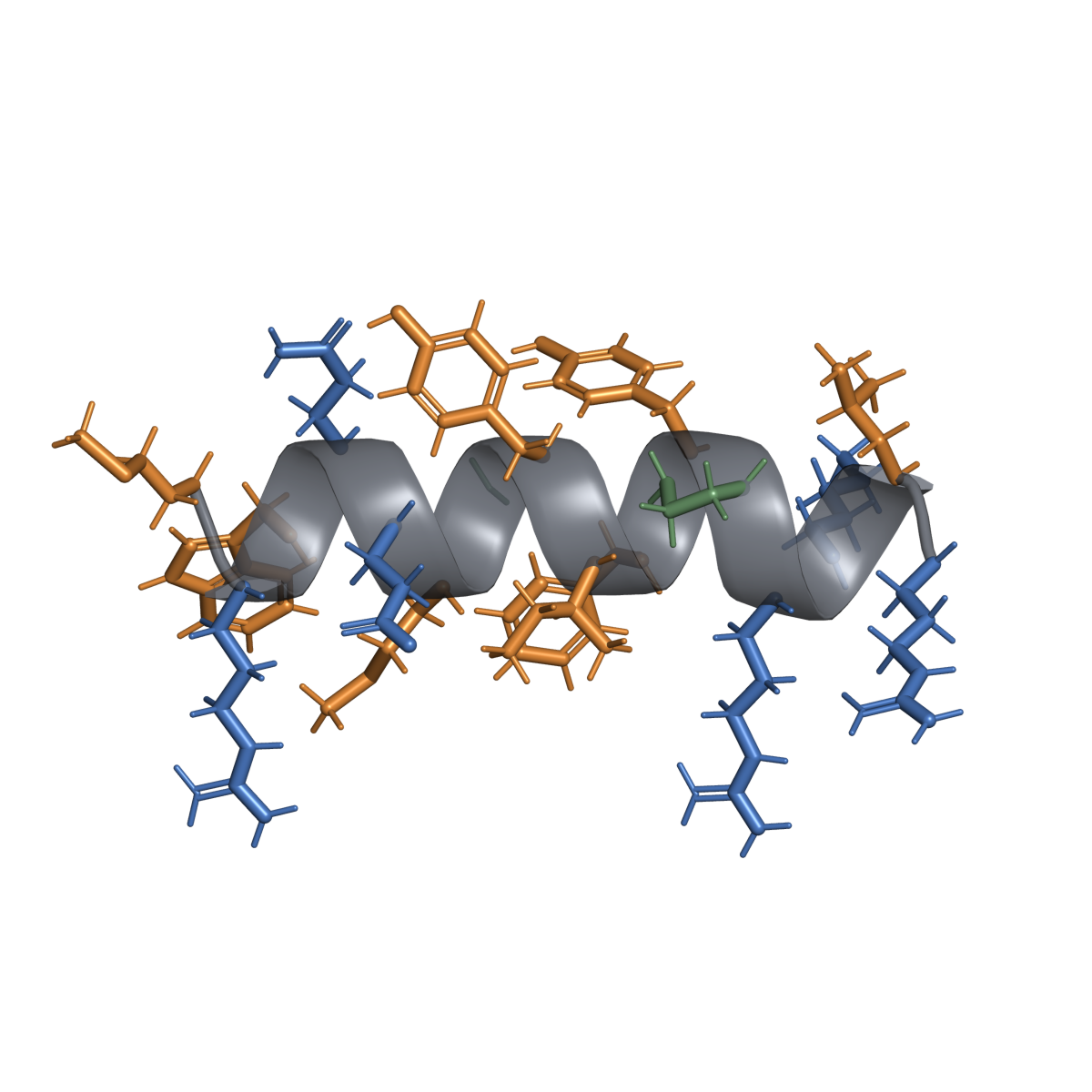
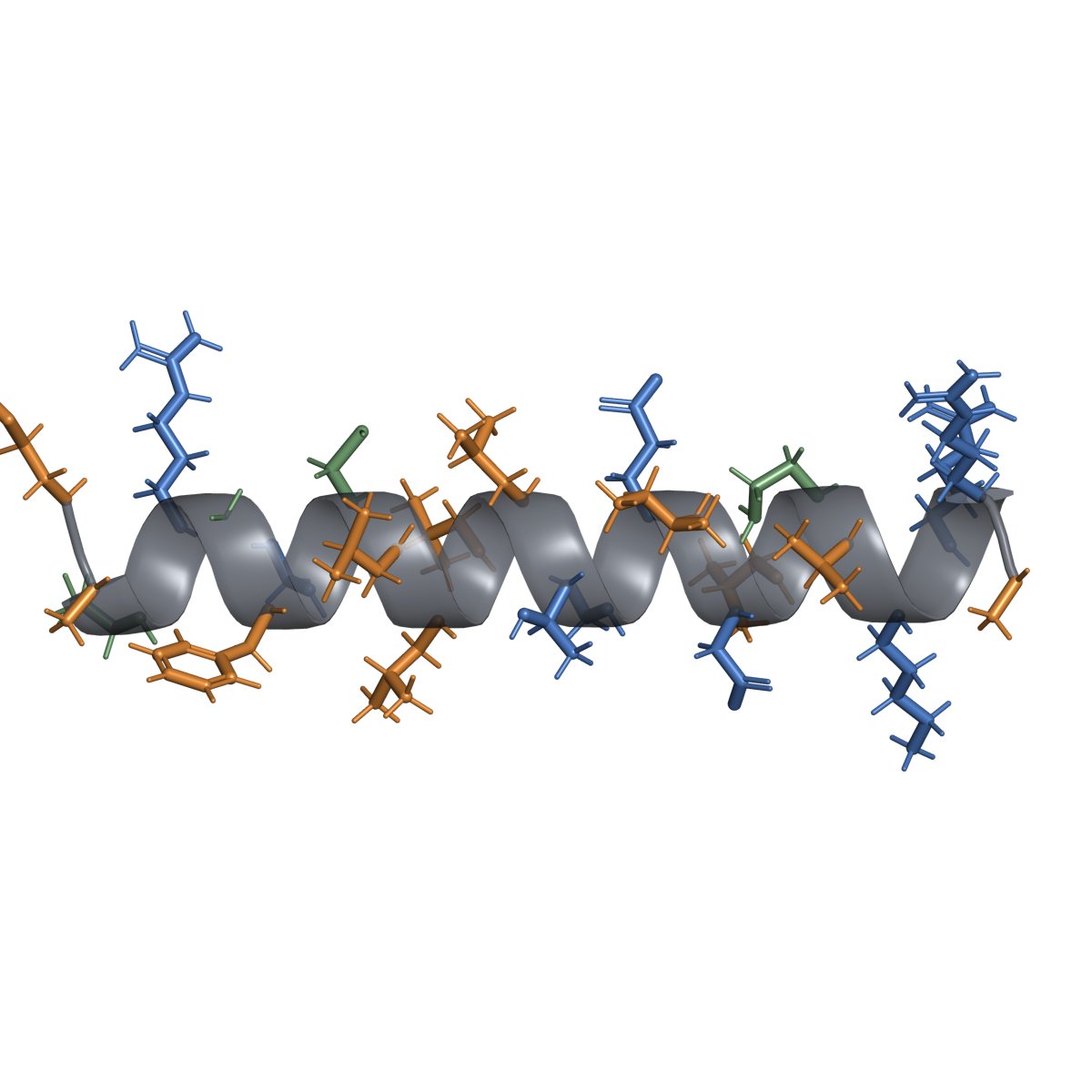
Humanin is a 24-amino-acid peptide encoded in the mitochondrial 16S rRNA gene (MT-RNR2). It was the first mitochondrial-derived peptide (MDP) identified and has extensive Evidence from in vitro or animal studies with no adequate human efficacy evidence — the atlas Grade D lane. 定義の出典: Evidence grading methodology · 用語集 evidence for cytoprotective, neuroprotective, and metabolic effects. Despite 25 years of research, no human interventional trial of exogenous humanin or its potent analog HNG (S14G-humanin) has been published. No FDA-approved product or EMA-authorized medicine was identified as of 2026-08-06; status elsewhere requires a current national-register check.
Identity and composition
| Field | Verified information |
|---|---|
| Preferred name | Humanin |
| Key aliases | HN, HNG (S14G-humanin, ~1000× more potent), [Gly14]-Humanin, Colivelin (ADNF-HN hybrid) |
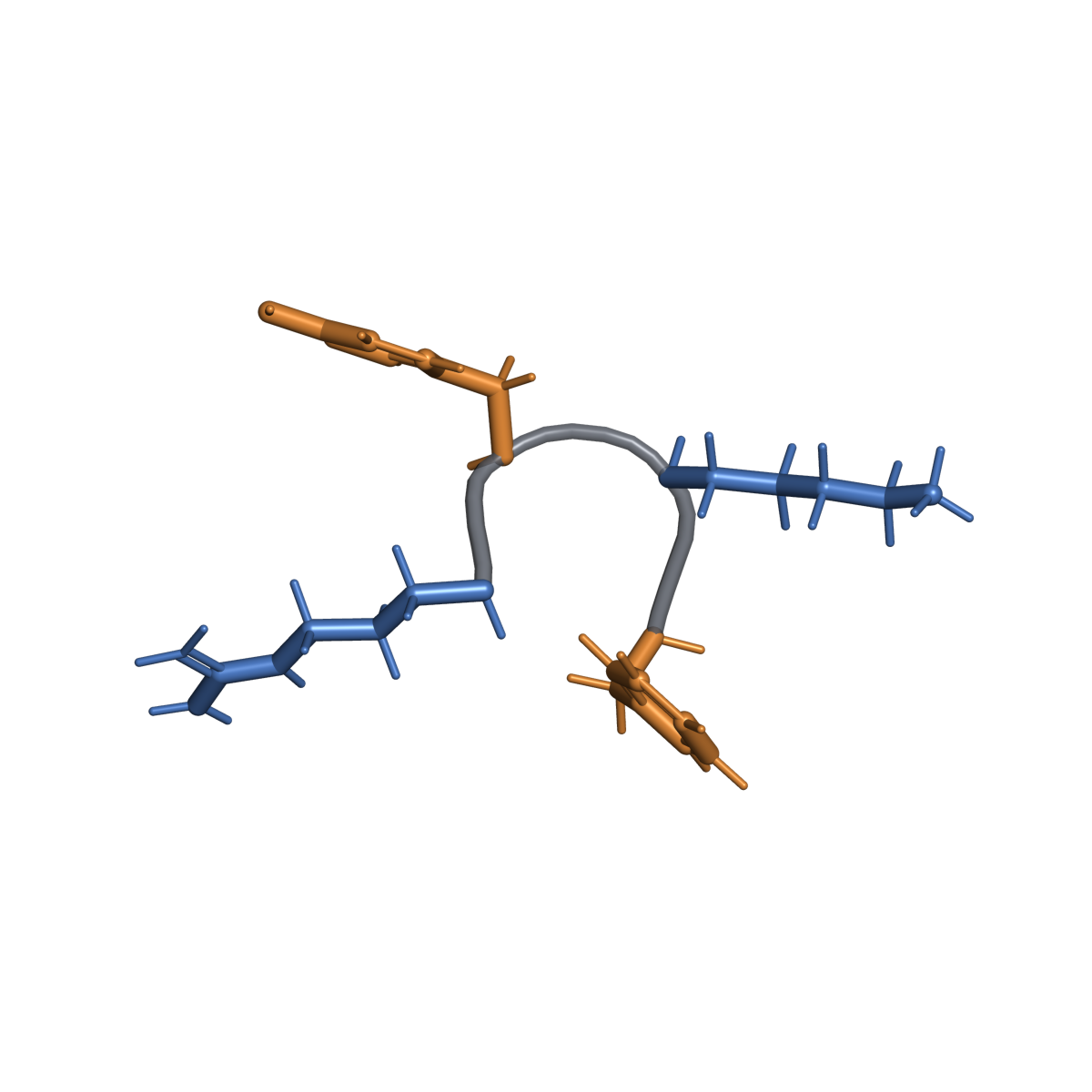
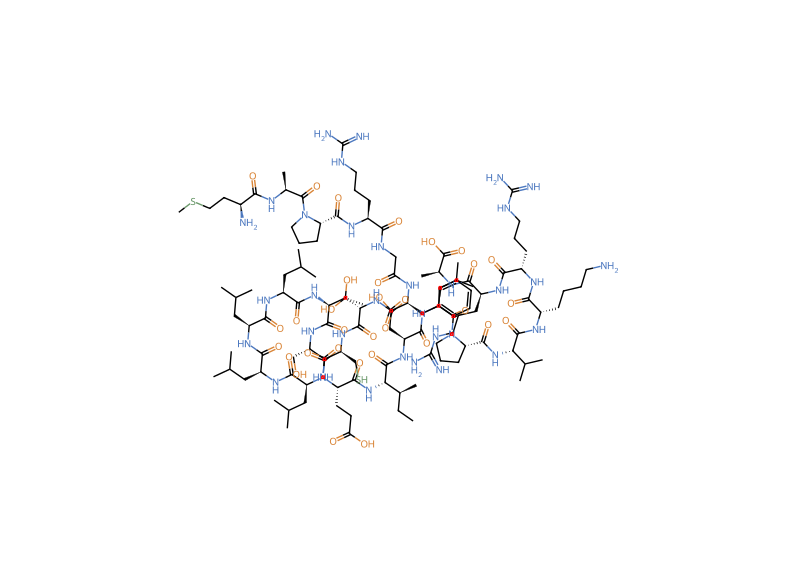
| Molecular/sequence identity | 24-amino-acid peptide: MAPRGFSCLLLLTSEIDLPVKRRA (free C-terminus in native HN; amidated in some analogs) |
| Modifications/form | Linear peptide with a single Cys8 (native sequence contains one cysteine; no disulfide is possible in the native sequence); HNG has Ser14→Gly substitution; MW ~2,687 Da |
| Stable identifiers | The record number of a compound in PubChem, the atlas's primary structure-asset source. A registry record or depiction does not authenticate a commercial sample. 定義の出典: Identity and structure assets methodology · 用語集 16131438 (humanin, amidated); discovered by Hashimoto et al. 2001 (PMID 11371646) |
| Identity caveats | Encoded within the 16S rRNA gene, not by a conventional nuclear gene. The potent analog HNG (S14G) is more commonly used in research than native humanin. Colivelin is a hybrid not identical to humanin. |
Development and approval status
| Jurisdiction | Status and indication | Product/source | As of |
|---|---|---|---|
| United States (FDA) | No approved product identified; not found on the reviewed Sections of the US Food, Drug, and Cosmetic Act covering traditional compounding exemptions (503A) and outsourcing-facility compounding (503B). Under 503A, qualification conditions include a patient-specific prescription requirement; under 503B, conditions cover facility registration and bulk-substance eligibility. 定義の出典: United States regulation brief · 用語集 bulks list. Public sources do not establish whether a confidential IND, NDA, or BLA was filed | N/A | 2026-08-06 |
| European Union (EMA) | No marketing authorization | N/A | 2026-08-06 |
| Other jurisdictions | Status requires a current national-register check | N/A | 2026-08-06 |
- UNITED STATES
- United States (FDA): No approved product identified; not found on the reviewed 503A bulks list. Public sources do not establish whether a confidential IND, NDA, or BLA was filed
- EU/EEA
- European Union (EMA): No marketing authorization
- UNITED KINGDOM
- No UNITED KINGDOM row is present in the source status table
- OTHER DOCUMENTED
- Other jurisdictions: Status requires a current national-register check
Sport status: WADA: humanin was not identified by exact name in the 2026 Prohibited List. Exact-name absence does not resolve S0: this review did not identify a current governmental approval for human therapeutic use, so athletes need a current, case-specific classification of the material and intended use.
Mechanism and pharmacology
Humanin has both extracellular and intracellular mechanisms. Extracellularly, it signals through the CNTFR/WSX-1/gp130 complex and also through FPR2/FPRL1, activating JAK2/STAT3, ERK1/2, and Akt survival pathways. Intracellularly, it binds to and inhibits pro-apoptotic proteins BAX, Bid/Bim, and IGFBP-3. It suppresses apoptosis, reduces oxidative stress, improves mitochondrial function, and modulates insulin/IGF-1 signaling. The HNG analog has ~1,000-fold greater potency in neuroprotection assays.
Evidence by claim
| Claim/indication | Stage | Grade | Best human evidence | Main result | Important limitations |
|---|---|---|---|---|---|
| Neuroprotection (Alzheimer's) | Evidence from in vitro or animal studies with no adequate human efficacy evidence — the atlas Grade D lane. 定義の出典: Evidence grading methodology · 用語集 | D | Observational only: plasma humanin lower in AD patients; centenarians have higher levels | Rodent models: HNG improved cognitive deficits and reduced amyloid pathology | No human interventional trial |
| Metabolic/insulin sensitivity | Preclinical | D | Observational: humanin levels correlate with insulin sensitivity in some studies | Mouse models: HNG improved glucose tolerance and reduced visceral fat | No human interventional data |
| Cardiovascular protection | Preclinical | D | None | Mouse models: reduced cardiac fibrosis | No human data |
| Longevity | Preclinical | D | Observational: centenarians have higher circulating humanin levels | Association between MT-RNR2 variants and longevity in some cohorts | Correlation, not causation; no intervention |
- AグレードA: 特定の表示使用に対して確立
- BグレードB: 中等度のヒトエビデンス
- CグレードC: 予備的ヒトエビデンス
- DグレードD: 前臨床のみ
- EグレードE: 逸話的/マーケティング主張
- XグレードX: エビデンスが主張と矛盾するか、支持しない
Text alternative for the claim-evidence diagram. Each grade is defined below:
- A — Established for a specific labeled use
- 0 claims
- B — Moderate human evidence
- 0 claims
- C — Preliminary human evidence
- 0 claims
- D — Preclinical only
- 4 claims: Neuroprotection (Alzheimer's); Metabolic/insulin sensitivity; Cardiovascular protection; Longevity
- E — Anecdotal/marketing claim
- 0 claims
- X — Evidence contradicts or does not support the claim
- 0 claims
Key studies
| Study | Design/population | Exposure studied | Endpoints and result | Limitations |
|---|---|---|---|---|
| Hashimoto et al. 2001 (PMID 11371646) | Functional screen; cell culture [1] | Humanin cDNA transfection | Protected neurons from AD-related toxicity | Discovery paper; in vitro |
| Yen et al. 2018 | Evidence from in vitro or animal studies with no adequate human efficacy evidence — the atlas Grade D lane. 定義の出典: Evidence grading methodology · 用語集, n=24-47 mice | HNG 4 mg/kg IP twice weekly × 6 months in 18-month-old mice | Improved motor coordination, spatial memory; extended healthspan | Rodent model; not yet translated to humans |
| Muzumdar et al. 2009 | Mouse model | HNG in aged mice | Improved insulin sensitivity, reduced visceral fat | Preclinical |
| Observational human studies | Cross-sectional, n=693 (ages 21-113) | An entry with substantial scientific visibility or identity value. Biological rationale and non-human evidence do not establish patient benefit. 定義の出典: Scope and selection methodology · 用語集 plasma humanin levels | Circulating levels decline with age; centenarians have higher levels; lower in AD | Observational; no intervention |
Dose and administration evidence
Approved labeled regimen
None.
Studied regimens (not recommendations)
Evidence from in vitro or animal studies with no adequate human efficacy evidence — the atlas Grade D lane. 定義の出典: Evidence grading methodology · 用語集 only: HNG 4 mg/kg IP twice weekly in mice (the most common reference protocol). No human dose has been established.
What is not established
No established or recommended human dose.
Safety
Established label risks
None — no approved label.
Human-study signals
No human safety data exist for exogenous humanin or HNG. The six humanin references in ClinicalTrials.gov are observational biomarker studies that do not administer exogenous humanin.
Unknowns and product-quality risks
Theoretical concern: humanin's anti-apoptotic mechanism could theoretically protect cancer cells. A 2020 study found humanin helped triple-negative breast cancer cells survive.
Growth-axis interactions: humanin engages IGFBP-3 and IGF-1 signaling pathways; long-term effects are uncharacterized.
No human safety study has been conducted at any dose.
Absence from the reviewed FDA Sections of the US Food, Drug, and Cosmetic Act covering traditional compounding exemptions (503A) and outsourcing-facility compounding (503B). Under 503A, qualification conditions include a patient-specific prescription requirement; under 503B, conditions cover facility registration and bulk-substance eligibility. 定義の出典: United States regulation brief · 用語集 bulks list does not itself establish whether a particular preparation satisfies sections 503A or 503B.
Research-grade products are unregulated.
Interactions and special populations
No data. No studies in any special population.
Regulatory, compounding, and sport notes
FDA: no approved product was identified. Humanin was not found on the reviewed Sections of the US Food, Drug, and Cosmetic Act covering traditional compounding exemptions (503A) and outsourcing-facility compounding (503B). Under 503A, qualification conditions include a patient-specific prescription requirement; under 503B, conditions cover facility registration and bulk-substance eligibility. 定義の出典: United States regulation brief · 用語集 bulks list or PCAC agenda as of 2026; public sources do not establish whether a confidential IND, NDA, or BLA was filed.
The World Anti-Doping Agency; its Prohibited List classifies many peptides as prohibited substances in sport. 定義の出典: WADA and sport regulation brief · 用語集: humanin was not identified by exact name in the 2026 Prohibited List. Exact-name absence does not resolve WADA Prohibited List class S0 (non-approved substances): pharmacological substances not addressed elsewhere in the list and with no current approval by any governmental regulatory health authority for human therapeutic use. 定義の出典: WADA and sport regulation brief · 用語集: this review did not identify a current governmental approval for human therapeutic use, so athletes need a current, case-specific classification of the material and intended use.
No approved product or active human-development pathway was identified in the regulator and trial databases reviewed.
No publicly documented sponsor development program was identified despite 25 years of Evidence from in vitro or animal studies with no adequate human efficacy evidence — the atlas Grade D lane. 定義の出典: Evidence grading methodology · 用語集 research.
Absence from the current FDA 503A bulks list does not itself resolve every compounding question; any US preparation requires a current, fact-specific analysis under sections 503A or 503B.
Evidence gaps
No human interventional trial of exogenous humanin or HNG has ever been conducted.
No safety, How a substance is absorbed, distributed, metabolized, and eliminated by the body; atlas pages report pharmacokinetic data such as half-life, metabolism, and clearance. 定義の出典: Neutral gloss; usage context: Routes, devices, and absorption primer · 用語集, or dose-finding study in humans.
No public evidence establishing an IND application or sponsor development program was identified; confidential submission status is unknown.
The cancer safety signal (TNBC study) has not been adequately addressed.
Observational centenarian studies do not establish therapeutic efficacy.
The relationship between An entry with substantial scientific visibility or identity value. Biological rationale and non-human evidence do not establish patient benefit. 定義の出典: Scope and selection methodology · 用語集 levels and exogenous supplementation is unknown.
Search notes
Databases and registries: PubMed, ClinicalTrials.gov, FDA Drugs@FDA, PubChem
Search terms: humanin, HNG, S14G-humanin, mitochondrial-derived peptide, colivelin
Last searched: 2026-08-06
Inclusion emphasis: Interventional human trials (none identified); distinction from analogs
Sources
https://pubmed.ncbi.nlm.nih.gov/11371646/ (Hashimoto et al. 2001 — humanin discovery)
https://pmc.ncbi.nlm.nih.gov/articles/PMC7778388/ (Miller et al. 2020 — MDP genomic/biological review)
https://pubmed.ncbi.nlm.nih.gov/33130077/ (Zapala et al. 2020 — humanin apoptosis review)
https://pubmed.ncbi.nlm.nih.gov/21098860/ (Veenstra & Bodaghi 2010 — humanin neuroprotective review)
https://pmc.ncbi.nlm.nih.gov/articles/PMC3641182/ (Lee et al. 2013 — humanin harbinger review)
https://pubmed.ncbi.nlm.nih.gov/23239898/ (Yen et al. 2013 — emerging role of mitochondrial-derived peptides)
https://pubmed.ncbi.nlm.nih.gov/25738459/ (Lee et al. 2015 — discovery of MOTS-c, contextualizing MDP field)
World Anti-Doping Agency. 2026 Prohibited List. https://www.wada-ama.org/sites/default/files/2025-09/2026list_en_final_clean_september_2025.pdf