Bottom line
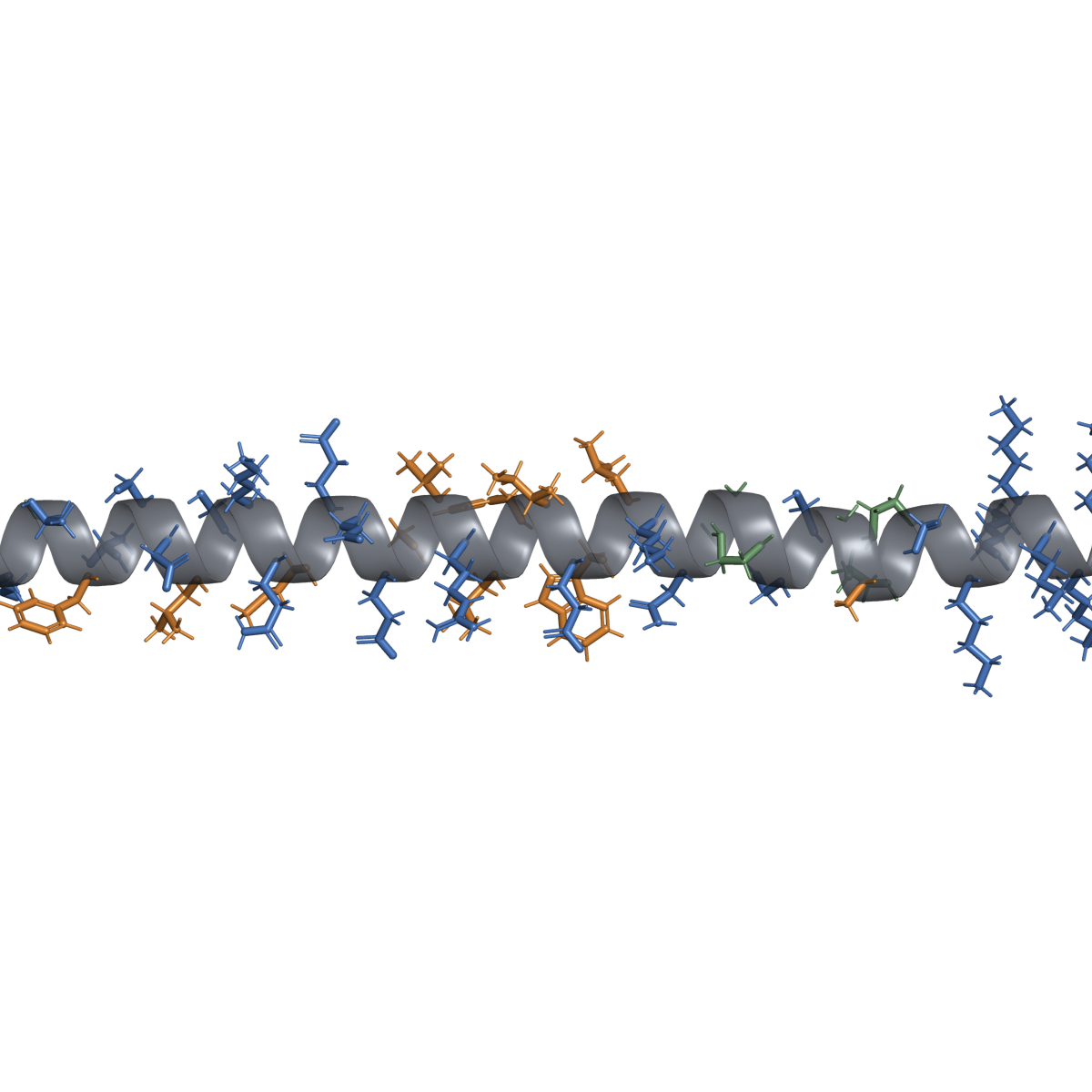
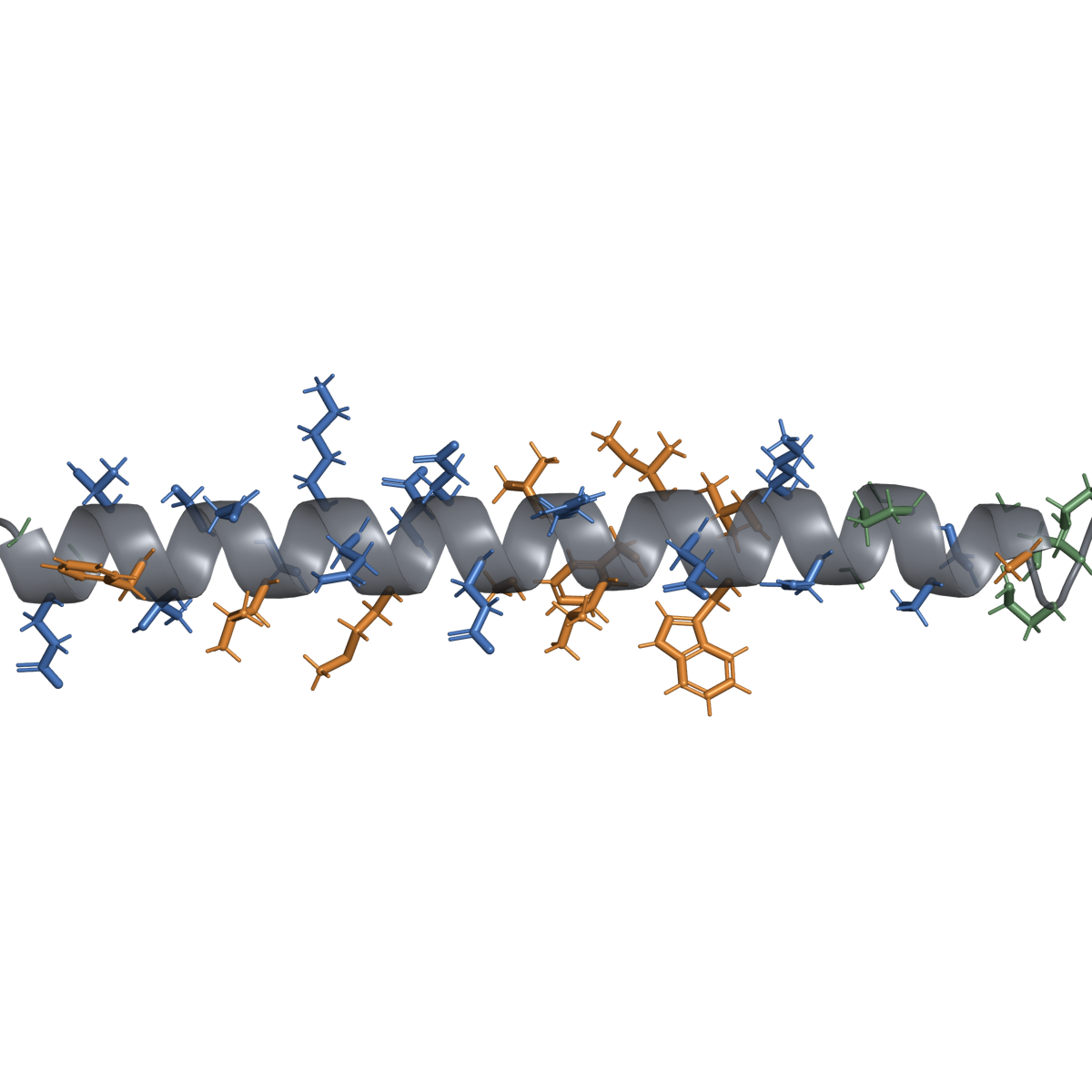
Exenatide is a synthetic version of exendin-4, a 39-amino-acid peptide originally isolated from the venom of the Gila monster (Heloderma suspectum). It was the first Expansion of the abbreviation used in the monographs: glucagon-like peptide-1 receptor agonist. The atlas does not define the pharmacology of this class; see the monograph for what is documented about a specific compound. 定義の出典: Neutral gloss; the abbreviation is printed on the tirzepatide monograph but the atlas does not define the class pharmacology · 用語集 approved by the FDA (2005, Byetta BID; 2012, Bydureon QW) and established the class safety and efficacy profile. Exenatide has only 53% sequence homology to human GLP-1 and is naturally resistant to DPP-IV cleavage. Byetta has no boxed warning for thyroid C-cell tumors; Bydureon carries the class boxed warning. Both US formulations were discontinued by AstraZeneca in 2024 for commercial reasons.
Identity and composition
| Field | Verified information |
|---|---|
| Preferred name | Exenatide |
| Key aliases | Exendin-4, Byetta, Bydureon, AC 2993 |
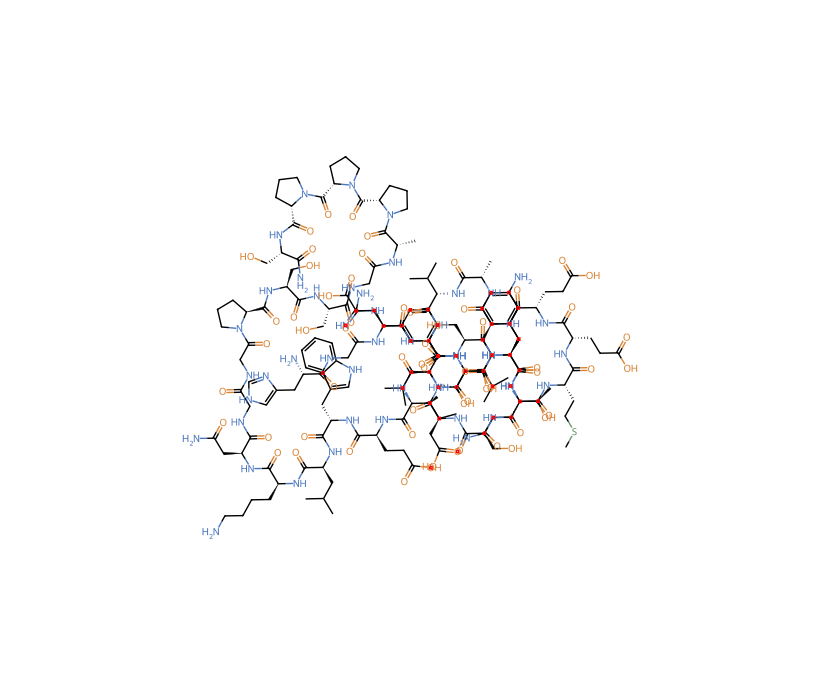
| Molecular/sequence identity | 39-amino-acid synthetic exendin-4: H-His-Gly-Glu-Gly-Thr-Phe-Thr-Ser-Asp-Leu-Ser-Lys-Gln-Met-Glu-Glu-Glu-Ala-Val-Arg-Leu-Phe-Ile-Glu-Trp-Leu-Lys-Asn-Gly-Gly-Pro-Ser-Ser-Gly-Ala-Pro-Pro-Pro-Ser-NH₂ |
| Modifications/form | Non-human sequence; no DPP-IV cleavage site; C-terminal amidation; available as an immediate-release formulation (Byetta, in prefilled pens) and an extended-release PLGA microsphere formulation (Bydureon, for once-weekly injection); also available in a single-dose autoinjector (Bydureon BCise) |
| Stable identifiers | The record number of a compound in PubChem, the atlas's primary structure-asset source. A registry record or depiction does not authenticate a commercial sample. 定義の出典: Identity and structure assets methodology · 用語集: 45588096; CAS: 141758-74-9 (exenatide free base); 141758-76-1 (exenatide synthetic); DrugBank: DB01276; UNII: 9P1872D4OL |
| Identity caveats | Distinguish from exenatide synthetic (identical to exendin-4); not a human GLP-1 analog or modification thereof. Bydureon microspheres require The product-specific pharmaceutical process by which a lyophilized (freeze-dried) solid returns to a liquid dispersion. It is not evidence that the resulting material is suitable for administration. 定義の出典: What reconstitution means primer · 用語集; Bydureon BCise is a prefilled injector |
Development and approval status
| Jurisdiction | Status and indication | Product/source | As of |
|---|---|---|---|
| US (FDA) | Approved Apr 2005 for T2D glycemic control (BID); discontinued US market 2024 | Byetta (NDA 021773) | 2026-08-06 |
| US (FDA) | Approved Jan 2012 for T2D glycemic control (QW); discontinued US market 2024 | Bydureon (NDA 022200) | 2026-08-06 |
| EU (EMA) | Approved Nov 2006 (Byetta); Jun 2011 (Bydureon); market status varies by member state | Byetta, Bydureon | 2026-08-06 |
| US (FDA) | No approved weight management indication | — | 2026-08-06 |
| US (FDA) | Pediatric review completed 2021 — insufficient evidence to support pediatric T2D indication | — | 2026-08-06 |
- UNITED STATES
- US (FDA): Approved Apr 2005 for T2D glycemic control (BID); discontinued US market 2024; US (FDA): Approved Jan 2012 for T2D glycemic control (QW); discontinued US market 2024; US (FDA): No approved weight management indication; US (FDA): Pediatric review completed 2021 — insufficient evidence to support pediatric T2D indication
- EU/EEA
- EU (EMA): Approved Nov 2006 (Byetta); Jun 2011 (Bydureon); market status varies by member state
- UNITED KINGDOM
- No UNITED KINGDOM row is present in the source status table
- OTHER DOCUMENTED
- No OTHER DOCUMENTED row is present in the source status table
Sport status: WADA: GLP-1 receptor agonists are not prohibited. Not listed on the WADA Prohibited List.
Mechanism and pharmacology
Exenatide is an exendin-4 analog with 53% sequence homology to native human GLP-1. It acts as a potent Expansion of the abbreviation used in the monographs: glucagon-like peptide-1 receptor agonist. The atlas does not define the pharmacology of this class; see the monograph for what is documented about a specific compound. 定義の出典: Neutral gloss; the abbreviation is printed on the tirzepatide monograph but the atlas does not define the class pharmacology · 用語集 but is resistant to DPP-4-mediated cleavage due to its unique N-terminal sequence (His-Gly-, not His-Ala- or His-Aib-), resulting in a plasma The time for the amount of a substance in the body to fall by half. 定義の出典: Neutral gloss; usage context: Routes, devices, and absorption primer · 用語集 of 2.4 hours for Byetta (BID dosing) and approximately 2 weeks for Bydureon (via PLGA microsphere technology). Exenatide stimulates glucose-dependent insulin secretion, suppresses glucagon secretion, slows gastric emptying, and reduces caloric intake through central GLP-1 receptor signaling. Unlike GLP-1, it is partially cleared by renal filtration and glomerular filtration, with minimal plasma degradation (Copley et al., Regul Pept 2002; Drucker, Cell Metab 2018).
Evidence by claim
| Claim/indication | Stage | Grade | Best human evidence | Main result | Important limitations |
|---|---|---|---|---|---|
| Glycemic control (T2D) | Approved [1] | A | AMIGO program (Includes 3 phase 3 trials; N=1,446) | HbA1c reduction 0.8–1.1% with Byetta BID; Bydureon QW similar | Primarily add-on to metformin/SUs; A study in which participants and investigators know what is administered. 定義の出典: Neutral gloss; usage context: Evidence grading methodology · 用語集 extensions |
| CV safety | Not approved (neutral) [1] | B | EXSCEL (N=14,752; median 3.2 yr extension) | MACE HR 0.91 (0.83–1.00); noninferior but not statistically superior | Open-label; included pure primary prevention; effect driven by lower-risk group |
| Weight management | Not approved [1] | C | Pooled AMIGO data | Mean weight loss 2–3 kg with BID; no dedicated obesity trials | Modest effect; GI tolerability limiting |
- AグレードA: 特定の表示使用に対して確立
- BグレードB: 中等度のヒトエビデンス
- CグレードC: 予備的ヒトエビデンス
- DグレードD: 前臨床のみ
- EグレードE: 逸話的/マーケティング主張
- XグレードX: エビデンスが主張と矛盾するか、支持しない
Text alternative for the claim-evidence diagram. Each grade is defined below:
- A — Established for a specific labeled use
- 1 claim: Glycemic control (T2D)
- B — Moderate human evidence
- 1 claim: CV safety
- C — Preliminary human evidence
- 1 claim: Weight management
- D — Preclinical only
- 0 claims
- E — Anecdotal/marketing claim
- 0 claims
- X — Evidence contradicts or does not support the claim
- 0 claims
Key studies
| Study | Design/population | Exposure studied | Endpoints and result | Limitations |
|---|---|---|---|---|
| AMIGO trials (3); DeFronzo et al., Diabetes Care 2005; PMID: 15983106 | A study in which participants are assigned to the study material or a comparator by chance. 定義の出典: Neutral gloss; usage context: Evidence grading methodology · 用語集; N=336 T2D on metformin; 30 wk [1] | Exenatide 5/10 mcg BID vs An inactive comparator used in a controlled study. 定義の出典: Neutral gloss; usage context: Evidence grading methodology · 用語集 | HbA1c Δ −0.8%/−0.8% vs +0.1%; 34%/40% achieved <7%; weight −2.9 kg | Short duration (30 wk); all as add-on to metformin |
| DURATION-1; Drucker et al., Lancet 2008; PMID: 18346806 | RCT A study in which participants and investigators know what is administered. 定義の出典: Neutral gloss; usage context: Evidence grading methodology · 用語集; N=295 T2D; 30 wk [1] | Bydureon 2 mg QW vs Byetta 10 mcg BID | QW: HbA1c Δ −1.9% vs BID −1.5%; more nausea with BID | Open-label; difference in AE profile by formulation |
| EXSCEL; Holman et al., NEJM 2017; PMID: 28591522 | CVOT; N=14,752 T2D (73% prior CVD); median 3.2 yr [1] | Bydureon 2 mg QW vs placebo | MACE HR 0.91 (0.83–1.00); CV death 0.88 (0.76–1.02); all-cause death 0.86 (0.77–0.97) | Median follow-up 3.2 yr — relatively short; open-label; cross-over permitted; CV benefit not statistically significant per hierarchical testing |
Dose and administration evidence
Approved labeled regimen
The label summary below is product-, indication-, and jurisdiction-specific; consult the full current label and a licensed clinician/pharmacist.
The entries summarize the cited US FDA labels for the named exenatide products and type 2 diabetes indications.
Byetta: Initiate 5 mcg Administered into the tissue layer under the skin. 定義の出典: Neutral gloss; usage context: Routes, devices, and absorption primer · 用語集 BID within 60 min before morning and evening meals (≥6 h apart). Increase to 10 mcg BID after 1 month. Subcutaneous injection in abdomen, thigh, or upper arm.
Bydureon: 2 mg SC once weekly, any time of day, with or without meals. Reconstitute microspheres in diluent before injection. Bydureon BCise autoinjector (same dose, prefilled).
Studied regimens (not recommendations)
Studies evaluated Bydureon 0.8, 2.0 mg QW; only 2.0 mg was approved.
No studied regimen exceeded 10 mcg BID for Byetta or 2 mg QW for Bydureon.
What is not established
No established or recommended human dose for weight management in the absence of T2D.
Safety and efficacy of exenatide as monotherapy (all phase 3 trials were add-on).
Pediatric dosing after FDA review (2021) found insufficient evidence.
Efficacy after market discontinuation (2024); availability is limited to existing supply or international procurement.
Safety
Established label risks
Byetta: No boxed warning for thyroid C-cell tumors (FDA exemption granted based on the AMIGO program data and the pre-2010 approval date preceding the class-wide boxed warning).
Bydureon: Boxed warning for thyroid C-cell tumors (added to satisfy class-wide labeling requirements post-2010).
Gastrointestinal: Nausea (40–50%), vomiting (10–15%), diarrhea. More nausea with BID formulation vs QW.
Pancreatitis: Postmarketing reports of acute pancreatitis (including fatal/hemorrhagic cases). Label instructs discontinuation if suspected.
Acute kidney injury: Multiple postmarketing reports; label recommends caution in moderate/severe renal impairment (CrCl 30–50 mL/min) and discontinuation if CrCl <30.
Hypoglycemia: Common with SU coadministration (19–31% with Byetta + SU vs 3% with Byetta + metformin).
Injection-site reactions: More frequent with Bydureon (10–18%) due to microsphere formulation (may present as nodules or induration).
Immunogenicity: Anti-exenatide antibodies in 30–45% (Byetta) and 45–74% of Bydureon recipients; generally low-titer with minimal effect on efficacy, but ~6% developed high-titer antibodies that attenuated HbA1c response (Bydureon).
Human-study signals
EXSCEL: No increase in pancreatic cancer; numerically fewer deaths with exenatide.
EXSCEL: Gallbladder disease increased (similar to other Expansion of the abbreviation used in the monographs: glucagon-like peptide-1 receptor agonist. The atlas does not define the pharmacology of this class; see the monograph for what is documented about a specific compound. 定義の出典: Neutral gloss; the abbreviation is printed on the tirzepatide monograph but the atlas does not define the class pharmacology · 用語集).
No thyroid malignancy signal in clinical trials despite class warning.
Unknowns and product-quality risks
Post-discontinuation (2024): Product in circulation may be expired or counterfeit; compounded exenatide carries risk of impurity and degradation.
Higher immunogenicity than human-sequence GLP-1 analogs; long-term clinical significance of anti-exenatide antibodies is incompletely characterized.
FDA determined in 2021 that pediatric data were insufficient for approval; no other regulatory actions.
Interactions and special populations
Slows gastric emptying, which may affect absorption of other oral medications (especially antibiotics, oral contraceptives — take at least 1 h before exenatide).
Insulin and sulfonylurea: Increased hypoglycemia risk.
Renal impairment: Contraindicated in CrCl <30 mL/min (Byetta); caution in CrCl 30–50.
Warfarin: Case reports of increased INR; recommend INR monitoring upon initiation or dose change.
Pregnancy: Animal studies show fetal harm; label recommends use only if benefit clearly outweighs risk.
Regulatory, compounding, and sport notes
Byetta and Bydureon were discontinued in the US by AstraZeneca in 2024 for commercial reasons (not safety). Limited supply internationally continues (some EU markets).
Byetta exemption from the thyroid C-cell boxed warning persists in labeling for existing supply.
Expiration dating of remaining stock should be verified; Bydureon microsphere formulation has limited stability after The product-specific pharmaceutical process by which a lyophilized (freeze-dried) solid returns to a liquid dispersion. It is not evidence that the resulting material is suitable for administration. 定義の出典: What reconstitution means primer · 用語集.
The World Anti-Doping Agency; its Prohibited List classifies many peptides as prohibited substances in sport. 定義の出典: WADA and sport regulation brief · 用語集: Expansion of the abbreviation used in the monographs: glucagon-like peptide-1 receptor agonist. The atlas does not define the pharmacology of this class; see the monograph for what is documented about a specific compound. 定義の出典: Neutral gloss; the abbreviation is printed on the tirzepatide monograph but the atlas does not define the class pharmacology · 用語集 are not prohibited. Not listed on the WADA Prohibited List.
Evidence gaps
No dedicated CV outcome trial in patients without T2D
No obesity indication despite modest weight loss signal
No long-term safety data beyond 3.2 years (EXSCEL median)
Pediatric data gap addressed but not resolved (FDA finding of insufficient evidence)
Clinical significance of high immunogenicity relative to newer Expansion of the abbreviation used in the monographs: glucagon-like peptide-1 receptor agonist. The atlas does not define the pharmacology of this class; see the monograph for what is documented about a specific compound. 定義の出典: Neutral gloss; the abbreviation is printed on the tirzepatide monograph but the atlas does not define the class pharmacology · 用語集 not defined
Post-discontinuation pharmacovigilance gap
Search notes
Databases and registries: PubMed, FDA Drugs@FDA, ClinicalTrials.gov, DailyMed, EMA EPAR
Search terms: "exenatide", "exendin-4", "Byetta", "Bydureon", "AMIGO", "EXSCEL", "DURATION", "Gila monster"
Last searched: 2026-08-06
Inclusion emphasis: Registration trials, CVOT, FDA labeling documents, immunogenicity analyses
Sources
DeFronzo RA et al. Effects of exenatide (exendin-4) on glycemic control and weight over 30 weeks in metformin-treated T2D (AMIGO). Diabetes Care. 2005;28(5):1092-1100. PMID: 15983106. https://doi.org/10.2337/diacare.28.5.1092
Drucker DJ et al. Exenatide once weekly vs twice daily (DURATION-1). Lancet. 2008;372(9645):1240-1250. PMID: 18346806. https://doi.org/10.1016/S0140-6736(08)61206-4
Holman RR et al. Effects of once-weekly exenatide on cardiovascular outcomes in type 2 diabetes (EXSCEL). N Engl J Med. 2017;377(13):1228-1239. PMID: 28591522. https://doi.org/10.1056/NEJMoa1612917
FDA. Byetta (exenatide) injection label. NDA 021773. DailyMed. Accessed 2026-08-06. https://dailymed.nlm.nih.gov/dailymed/drugInfo.cfm?setid=53d03c03-ebf7-418d-88a8-533eabd2ee4f
FDA. Bydureon BCISE (exenatide extended-release) injection label. NDA 209210. Drugs@FDA. Revised 2022. https://www.accessdata.fda.gov/drugsatfda_docs/label/2022/209210s021lbl.pdf
Copley K et al. Exenatide pharmacology and pharmacokinetics. Regul Pept. 2002;113(1-3):149-156.
Drucker DJ. Mechanisms of action and therapeutic application of GLP-1 and GIP receptor agonists. Cell Metab. 2018;27(4):740-756. PMID: 29617641. https://doi.org/10.1016/j.cmet.2018.03.001