Bottom line
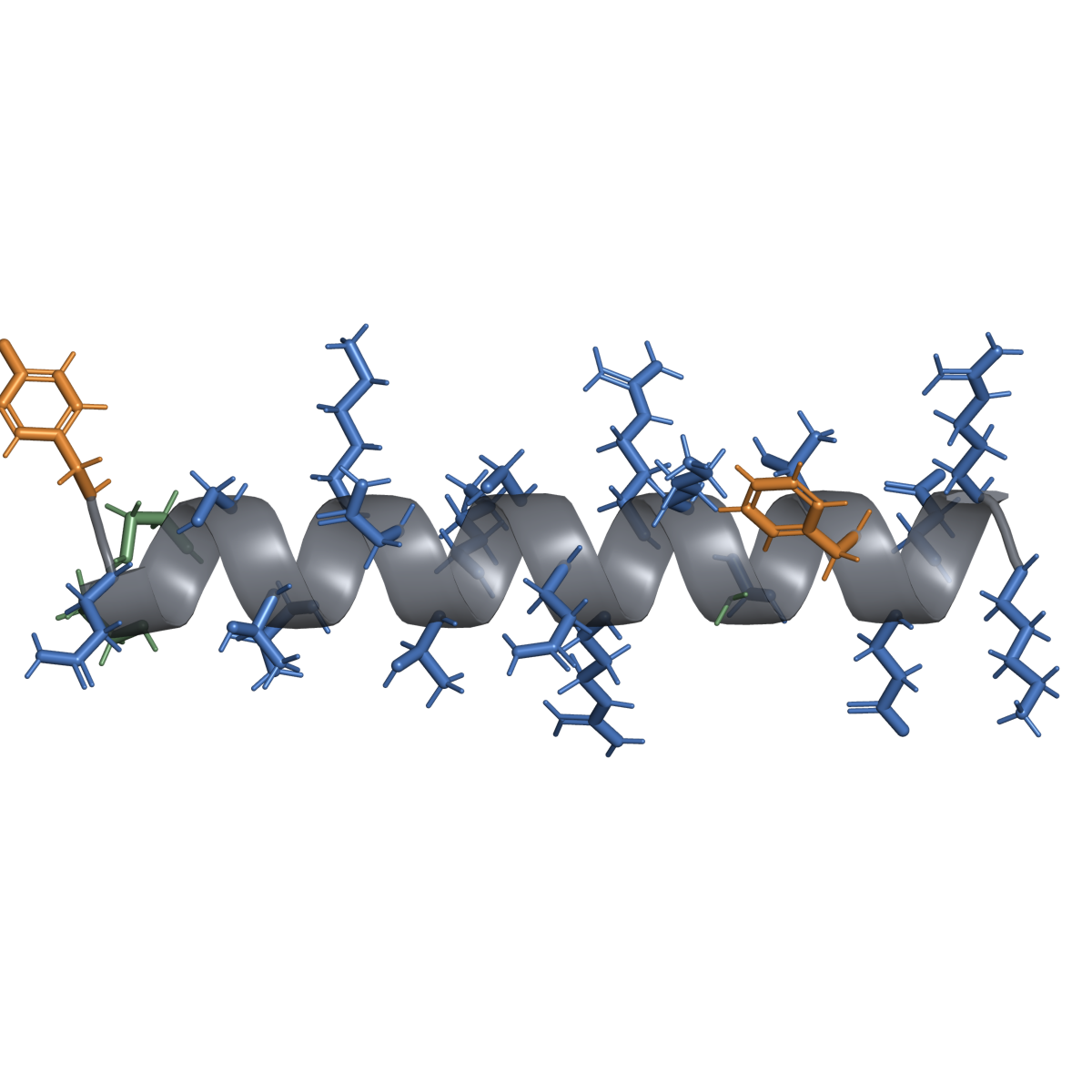
Des(1-3) IGF-1 is a truncated variant of human IGF-1 lacking the N-terminal tripeptide Gly-Pro-Glu (residues 1-3), resulting in a 67-amino-acid peptide. The truncation removes a key IGFBP-binding domain, reducing sequestration by IGF-binding proteins and thereby increasing free peptide available to activate the IGF-1 receptor. In cell assays it is approximately 7–10 times more potent than native IGF-1, and in rodent models approximately 2.5 times more potent. However, this enhanced potency reflects reduced IGFBP binding, not stronger receptor affinity. There are no controlled human trials; the entire evidence base is Evidence from in vitro or animal studies with no adequate human efficacy evidence — the atlas Grade D lane. 定義の出典: Evidence grading methodology · 用語集.
Identity and composition
| Field | Verified information |
|---|---|
| Preferred name | Des(1-3) IGF-1 |
| Key aliases | IGF-1 DES, destripeptide IGF-1, Delta-3 IGF-1, truncated IGF-1 |
| Molecular/sequence identity | 67-amino-acid truncated version of human IGF-1; sequence same as native IGF-1(4-70) |
| Modifications/form | Removal of N-terminal Gly-Pro-Glu tripeptide; three disulfide bonds |
| Stable identifiers | CAS: 112603-35-7; MW ~7365 Da |
| Identity caveats | Not mecasermin. Des(1-3) IGF-1 is explicitly distinct from the FDA-approved drug mecasermin (full-length rhIGF-1). The approval of mecasermin does not apply to this truncated variant. The enhanced potency is an availability effect, not stronger receptor binding. |
Development and approval status
| Jurisdiction | Status and indication | Product/source | As of |
|---|---|---|---|
| US (FDA) | No regulatory status; research use only | — | 2026-08-06 |
| Registers reviewed | No FDA-approved product or EMA-authorized medicine identified; status elsewhere requires a current national-register check | — | 2026-08-06 |
- UNITED STATES
- US (FDA): No regulatory status; research use only
- EU/EEA
- No EU/EEA row is present in the source status table
- UNITED KINGDOM
- No UNITED KINGDOM row is present in the source status table
- OTHER DOCUMENTED
- Registers reviewed: No FDA-approved product or EMA-authorized medicine identified; status elsewhere requires a current national-register check
Sport status: Des(1-3) IGF-1 is an IGF-1 analog and falls within WADA S2 prohibition. No authorized human medicinal product was identified in the jurisdictions and regulator databases reviewed; that finding is not a universal legal opinion.
Mechanism and pharmacology
Des(1-3) IGF-1 binds the IGF-1 receptor with comparable or slightly reduced affinity compared to native IGF-1. Its enhanced potency arises from dramatically reduced affinity for IGFBPs (especially IGFBP-3), which normally sequester >95% of circulating IGF-1. By evading IGFBP binding, a greater proportion remains in the free, bioactive form. This is an availability effect, not a super-agonist mechanism. The peptide was first identified in bovine colostrum and human brain tissue as a naturally occurring truncated form.
Evidence by claim
| Claim/indication | Stage | Grade | Best human evidence | Main result | Important limitations |
|---|---|---|---|---|---|
| Anabolic (rodent) | Evidence from in vitro or animal studies with no adequate human efficacy evidence — the atlas Grade D lane. 定義の出典: Evidence grading methodology · 用語集 [1] | D | Lemmey et al., Am J Physiol 1991; rat gut resection model | Increased weight gain, nitrogen retention, muscle protein synthesis vs IGF-1 | Animal only; no human data |
| Cell proliferation (in vitro) | Preclinical | ? | Ballard et al., multiple 1990s in vitro studies | 7-10× potency vs native IGF-1 in cell bioassays | In vitro only; does not predict human in vivo effects |
| Human therapeutic use | None | X | No human studies | No evidence | No human safety or efficacy data exist |
- AグレードA: 特定の表示使用に対して確立
- BグレードB: 中等度のヒトエビデンス
- CグレードC: 予備的ヒトエビデンス
- DグレードD: 前臨床のみ
- EグレードE: 逸話的/マーケティング主張
- XグレードX: エビデンスが主張と矛盾するか、支持しない
Text alternative for the claim-evidence diagram. Each grade is defined below:
- A — Established for a specific labeled use
- 0 claims
- B — Moderate human evidence
- 0 claims
- C — Preliminary human evidence
- 0 claims
- D — Preclinical only
- 1 claim: Anabolic (rodent)
- E — Anecdotal/marketing claim
- 0 claims
- X — Evidence contradicts or does not support the claim
- 1 claim: Human therapeutic use
Key studies
| Study | Design/population | Exposure studied | Endpoints and result | Limitations |
|---|---|---|---|---|
| Lemmey et al., Am J Physiol 1991; PMID: 1996625 | Rat gut resection model [1] | Administered into the tissue layer under the skin. 定義の出典: Neutral gloss; usage context: Routes, devices, and absorption primer · 用語集 infusion, 0.96 mg/kg/day | Increased weight gain and nitrogen retention; ~2.5× potency vs native IGF-1 | Rodent model; acute exposure only |
| Ballard et al., Prog Growth Factor Res 1991 | Cell-based bioassays | In vitro | 7-10× increased potency vs native IGF-1 | In vitro; does not predict in vivo human response |
| Francis et al., J Mol Endocrinol 1992 | Structural characterization | In vitro | Reduced IGFBP binding confirmed | Evidence from in vitro or animal studies with no adequate human efficacy evidence — the atlas Grade D lane. 定義の出典: Evidence grading methodology · 用語集 characterization only |
Dose and administration evidence
Approved labeled regimen
Not applicable.
Studied regimens (not recommendations)
No established or recommended human dose. In rodent studies, ~1–2 mg/kg/day by Administered into the tissue layer under the skin. 定義の出典: Neutral gloss; usage context: Routes, devices, and absorption primer · 用語集 infusion.
What is not established
No human How a substance is absorbed, distributed, metabolized, and eliminated by the body; atlas pages report pharmacokinetic data such as half-life, metabolism, and clearance. 定義の出典: Neutral gloss; usage context: Routes, devices, and absorption primer · 用語集 parameters
No human safety data
No human efficacy data
No validated dose for any human use
Any human microgram figure circulating in community sources is not derived from published clinical evidence
Safety
No human safety data exist. Theoretical risks are as for any IGF-1 analog: hypoglycemia (insulin-like activity), mitogenic effects, and unknown effects of reduced IGFBP binding on growth factor signaling dynamics. Research-grade material identity, purity, and bioactivity are not independently verified for this atlas.
Unknowns and product-quality risks
All safety, How a substance is absorbed, distributed, metabolized, and eliminated by the body; atlas pages report pharmacokinetic data such as half-life, metabolism, and clearance. 定義の出典: Neutral gloss; usage context: Routes, devices, and absorption primer · 用語集, and efficacy parameters are unknown in humans. Gray-market IGF-1 DES may be improperly synthesized, contain truncation variants other than the intended des(1-3), or have unknown degradation profiles.
Interactions and special populations
No data exist.
Regulatory, compounding, and sport notes
Des(1-3) IGF-1 is an IGF-1 analog and falls within The World Anti-Doping Agency; its Prohibited List classifies many peptides as prohibited substances in sport. 定義の出典: WADA and sport regulation brief · 用語集 WADA Prohibited List class S2 (peptide hormones, growth factors, related substances and mimetics): prohibited at all times, with subsections of materially different scope. 定義の出典: WADA and sport regulation brief · 用語集 prohibition. No authorized human medicinal product was identified in the jurisdictions and regulator databases reviewed; that finding is not a universal legal opinion.
Evidence gaps
No human study of any kind published
No toxicology or safety pharmacology data
No How a substance is absorbed, distributed, metabolized, and eliminated by the body; atlas pages report pharmacokinetic data such as half-life, metabolism, and clearance. 定義の出典: Neutral gloss; usage context: Routes, devices, and absorption primer · 用語集 data in humans
No regulatory submissions or clinical trial registrations
The entire evidence base consists of cell-culture bioassays and rodent studies from the late 1980s and early 1990s
Search notes
Databases and registries: PubMed, PubChem, FDA Drugs@FDA
Search terms: "des(1-3)IGF-1", "IGF-1 DES", "destripeptide IGF-1", "truncated IGF-1"
Last searched: 2026-08-06
Inclusion emphasis: Primary peer-reviewed primary data for the specific truncated variant
Sources
Lemmey AB et al. IGF-I and des-(1-3)IGF-I enhance growth in rats after gut resection. Am J Physiol. 1991;260(2 Pt 1):E213-E219. https://pubmed.ncbi.nlm.nih.gov/1996625/
Ballard FJ et al. Des(1-3)IGF-I: a truncated form of IGF-I. Prog Growth Factor Res. 1991;3(1):35-43.
Francis GL et al. Biological activity of des(1-3)IGF-I. J Mol Endocrinol. 1992;8(3):213-223.
WADA Prohibited List 2026. https://www.wada-ama.org/en/prohibited-list