
Bottom line
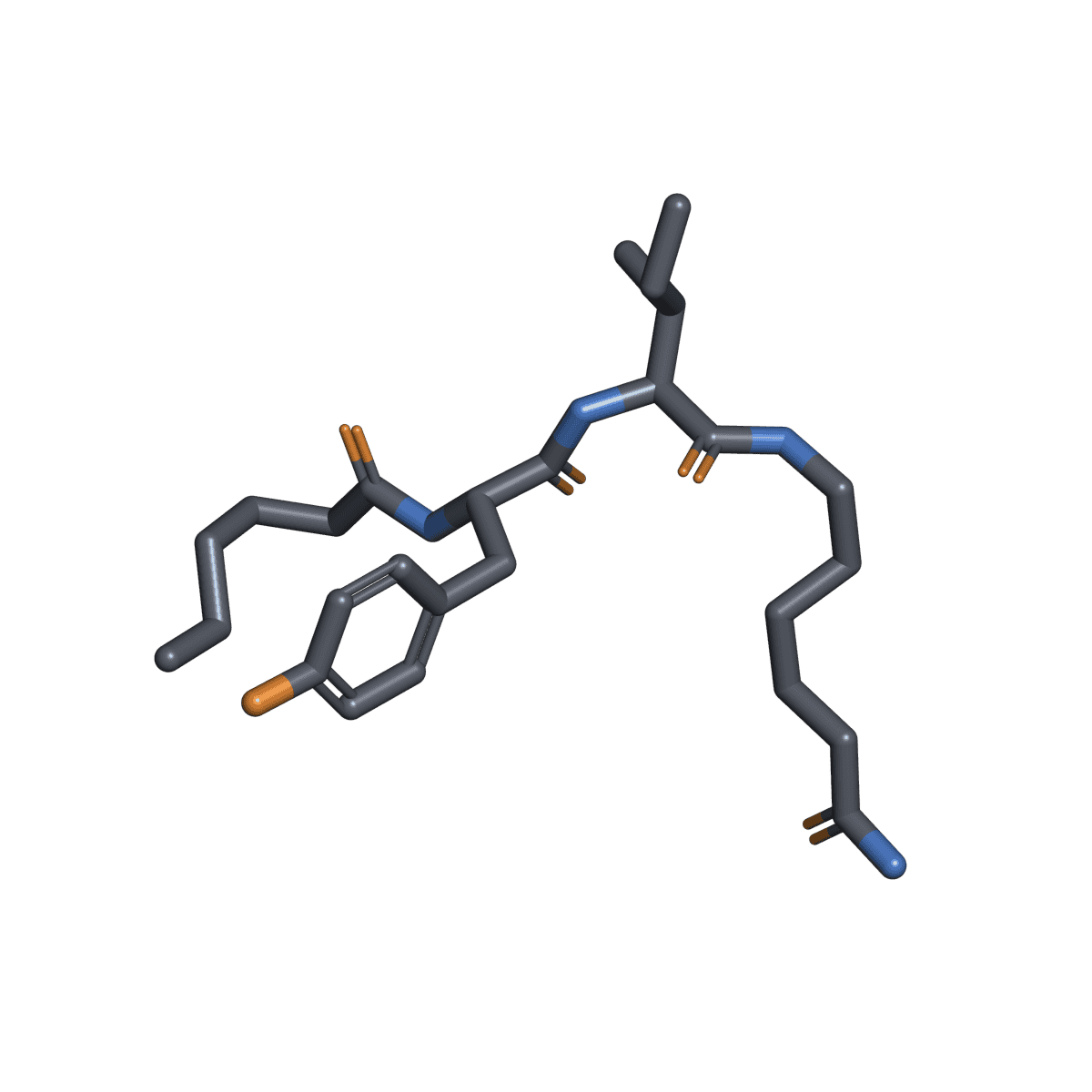
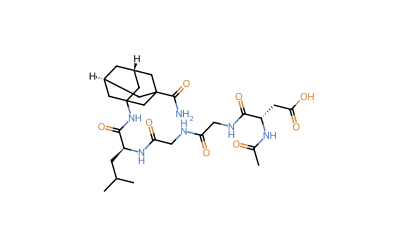
"P21" is a highly ambiguous name. The dominant entity in the research-peptide context is P021 — a synthetic pentapeptide (Ac-DGGL-[adamantylated Gly]-NH₂) with an adamantyl-glycine C-terminal cap, designed from epitope mapping of ciliary neurotrophic factor (CNTF). It is completely unrelated to the cell-cycle protein p21^Waf1/Cip1 (CDKN1A). Despite a decade of rodent studies from a single lab showing hippocampal BDNF upregulation and cognitive improvement, no human trial was identified in the registries reviewed. Public sources do not establish whether a confidential IND has been filed.
Identity and composition
| Field | Verified information |
|---|---|
| Preferred name | P21 (P021) |
| Key aliases | Peptide 021, PB021, Ac-DGGL-[adamantylated Gly]-NH₂, CNTF-derived peptide |
| Molecular/sequence identity | Ac-DGGL-[adamantylated Gly]-NH₂; CNTF-derived tetrapeptide (Ac-Asp-Gly-Gly-Leu) with one C-terminal adamantylated glycine; pentapeptide (not six residues — the adamantyl cap modifies the C-terminal Gly, not a separate Ala) |
| Modifications/form | N-terminal acetyl cap; C-terminal adamantylated glycine amide; 5 backbone residues (4 natural amino acids + adamantyl-glycine) |
| Stable identifiers | CAS 1246751-68-7; The record number of a compound in PubChem, the atlas's primary structure-asset source. A registry record or depiction does not authenticate a commercial sample. Sumber definisi: Identity and structure assets methodology · Glosarium 56589645; InChIKey LUJZBZPLIRWWGJ-NBONATBJSA-N |
| Identity caveats | The name 'P21' is ambiguous — it also refers to p21^Waf1/Cip1 (CDKN1A), a completely unrelated 165-aa cell-cycle regulatory protein. The CNTF-derived P021 described here is chemically distinct (MW ~578). P21 is NOT a fragment of cerebrolysin (common misconception), not a dynorphin A fragment, and not related to J147. |
Development and approval status
| Jurisdiction | Status and indication | Product/source | As of |
|---|---|---|---|
| Registers reviewed | No FDA-approved product or EMA-authorized medicine identified; public sources do not establish whether a confidential IND was filed | — | 2026-08 |
- UNITED STATES
- No UNITED STATES row is present in the source status table
- EU/EEA
- No EU/EEA row is present in the source status table
- UNITED KINGDOM
- No UNITED KINGDOM row is present in the source status table
- OTHER DOCUMENTED
- Registers reviewed: No FDA-approved product or EMA-authorized medicine identified; public sources do not establish whether a confidential IND was filed
Sport status: WADA: not specifically listed; may be prohibited under S0 — athletes should verify
Mechanism and pharmacology
P21 has dual-action neurotrophic activity:
LIF antagonism — competitively inhibits leukaemia inhibitory factor binding at the LIFRβ-gp130 complex, removing a brake on adult hippocampal neurogenesis; reduces LIF-induced STAT3 phosphorylation.
BDNF upregulation — increases hippocampal BDNF expression and secretion, activating TrkB → PI3K/Akt → phospho-GSK3β (Ser9), promoting neuronal survival and synaptogenesis while inhibiting primary tau kinases.
Despite its CNTF origin, P21 (MW ~578) is too small to directly bind CNTFRα; its effects are mediated through LIF antagonism and BDNF amplification, not direct CNTF receptor agonism.
Evidence by claim
| Claim/indication | Stage | Grade | Best human evidence | Main result | Important limitations |
|---|---|---|---|---|---|
| Hippocampal BDNF upregulation (rodent) | Evidence from in vitro or animal studies with no adequate human efficacy evidence — the atlas Grade D lane. Sumber definisi: Evidence grading methodology · Glosarium [1] | D | Li et al. 2010 | Increased BDNF in wild-type mice | Single lab; PMID 20600002 |
| Hippocampal neurogenesis (rodent) | Preclinical [1] | D | Kazim et al. 2014 | 30–50% increase in BrdU/DCX/NeuN | Single lab; PMID 25046994 |
| Cognitive improvement in AD model (rodent) | Preclinical [1] | D | Bolognin et al. 2014 | Prevention of AD-like pathology | Single lab; PMID 24702821 |
| Human cognition | None | E | — | No human data | No trials registered |
- AKelas A: Mapan untuk penggunaan berlabel tertentu
- BKelas B: Bukti manusia moderat
- CKelas C: Bukti manusia awal
- DKelas D: Hanya praklinis
- EKelas E: Klaim anekdot/pemasaran
- XKelas X: Bukti bertentangan atau tidak mendukung klaim
Text alternative for the claim-evidence diagram. Each grade is defined below:
- A — Established for a specific labeled use
- 0 claims
- B — Moderate human evidence
- 0 claims
- C — Preliminary human evidence
- 0 claims
- D — Preclinical only
- 3 claims: Hippocampal BDNF upregulation (rodent); Hippocampal neurogenesis (rodent); Cognitive improvement in AD model (rodent)
- E — Anecdotal/marketing claim
- 1 claim: Human cognition
- X — Evidence contradicts or does not support the claim
- 0 claims
Key studies
| Study | Design/population | Exposure studied | Endpoints and result | Limitations |
|---|---|---|---|---|
| Li et al. 2010 | Wt mice; discovery and design [1] | ~60 nmol/g in diet | Increased BDNF and neurogenesis | Single lab; PMID 20600002 |
| Kazim et al. 2014 | 3xTg-AD mice; chronic oral P021 [1] | Oral in diet | Reduced tau pathology; improved Morris water maze | Single lab; PMID 25046994 |
| Bolognin et al. 2014 | 3xTg-AD mice; lifelong P021 [1] | Oral in diet | Prevention of AD-like pathology | Single lab; PMID 24702821 |
| Baazaoui & Iqbal 2017 | Transgenic AD mice | Oral | Rescued dendritic/synaptic deficits | Single lab; PMID 28655344 |
| Wei et al. 2021 | Rat PK study [1] | Oral and Administered into a vein. Sumber definisi: Neutral gloss; usage context: Routes, devices, and absorption primer · Glosarium | BBB permeability confirmed; CSF biomarkers | Single lab; PMID 34057082 |
Dose and administration evidence
No approved labeled regimen
No established or recommended human dose.
Studied regimens (not recommendations)
Rodent studies used approximately 60 nmol/g in diet (oral). Vendor-advertised human regimens are not clinical evidence and are intentionally not reproduced here; there are no human How a substance is absorbed, distributed, metabolized, and eliminated by the body; atlas pages report pharmacokinetic data such as half-life, metabolism, and clearance. Sumber definisi: Neutral gloss; usage context: Routes, devices, and absorption primer · Glosarium or dose-ranging data.
What is not established
Any safe or effective human dose
Human pharmacokinetics
The fraction of an administered amount that reaches systemic circulation; for the intravenous route the atlas notes bioavailability is defined as complete. Sumber definisi: Neutral gloss; usage context: Routes, devices, and absorption primer · Glosarium by any route
Correlation between rodent diet concentration and human-equivalent dosing
Safety
Established label risks
No regulatory safety assessment exists.
Human-study signals
No human data available. Rodent studies (up to 18 months continuous dosing) report no adverse effects.
Unknowns and product-quality risks
All standard toxicology dimensions absent in human context
Theoretical concern: increased neurogenesis could lower seizure threshold (no evidence in animal studies)
BDNF/TrkB pathway activation carries theoretical oncogenic risk (not assessed)
No mutagenicity, carcinogenicity, or reproductive toxicity studies
Products sold as research chemicals lack identity, purity, sterility, and batch consistency assurance
Interactions and special populations
No data exist. All dimensions are unknown.
Regulatory, compounding, and sport notes
The World Anti-Doping Agency; its Prohibited List classifies many peptides as prohibited substances in sport. Sumber definisi: WADA and sport regulation brief · Glosarium: not specifically listed; may be prohibited under WADA Prohibited List class S0 (non-approved substances): pharmacological substances not addressed elsewhere in the list and with no current approval by any governmental regulatory health authority for human therapeutic use. Sumber definisi: WADA and sport regulation brief · Glosarium — athletes should verify
US DEA: not scheduled
Not on FDA Sections of the US Food, Drug, and Cosmetic Act covering traditional compounding exemptions (503A) and outsourcing-facility compounding (503B). Under 503A, qualification conditions include a patient-specific prescription requirement; under 503B, conditions cover facility registration and bulk-substance eligibility. Sumber definisi: United States regulation brief · Glosarium bulks list
Developer (Phanes Biotech) targeted a 2025–2026 Phase 1 IND but no trial has been registered as of mid-2026
Evidence gaps
Zero human clinical trials
Entire evidence base from a single laboratory group (Iqbal / NYS IBR)
No independent replication in peer-reviewed literature
No human PK, The fraction of an administered amount that reaches systemic circulation; for the intravenous route the atlas notes bioavailability is defined as complete. Sumber definisi: Neutral gloss; usage context: Routes, devices, and absorption primer · Glosarium, or dose-ranging data
No publicly available IND-enabling toxicology package was identified
No GMP manufactured material for human use
Long-term oncogenic risk from BDNF/TrkB pathway activation not assessed
Search notes
Databases and registries: PubMed, PubChem, CAS, ClinicalTrials.gov
Search terms: P21 peptide, P021, 1246751-68-7, ciliary neurotrophic factor peptide, Iqbal
Last searched: 2026-08-06
Inclusion emphasis: identity databases, human trials registry, peer-reviewed rodent studies
Sources
PubChem CID 56589645. https://pubchem.ncbi.nlm.nih.gov/compound/56589645
Li Y et al. (2010) J Alzheimers Dis. https://pubmed.ncbi.nlm.nih.gov/20600002/
Kazim SF et al. (2014) J Alzheimers Dis. https://pubmed.ncbi.nlm.nih.gov/25046994/
Bolognin S et al. (2014) PLoS One. https://pubmed.ncbi.nlm.nih.gov/24702821/
Baazaoui N, Iqbal K (2017) J Alzheimers Dis. https://pubmed.ncbi.nlm.nih.gov/28655344/
Wei Z et al. (2021) J Alzheimers Dis. https://pubmed.ncbi.nlm.nih.gov/34057082/