Bottom line
Noopept (GVS-111, omberacetam) is a small synthetic molecule (MW 318.37) — N-phenylacetyl-L-prolylglycine ethyl ester — classified as a dipeptide analogue or cyclic-prolylglycine (CPG) prodrug. It was developed at the Zakusov Institute of Pharmacology in Moscow and registered as an over-the-counter nootropic in Russia in the early 2000s. It is not a true peptide by strict biochemical definition. Noopept has not been evaluated by the FDA, EMA, or MHRA. The Western-indexed human evidence base is extremely limited: a PubMed search for "noopept" returns fewer than 20 indexed publications, almost entirely Evidence from in vitro or animal studies with no adequate human efficacy evidence — the atlas Grade D lane. Source de la définition: Evidence grading methodology · Glossaire or Russian-language studies. No completed or registered interventional trials appear on ClinicalTrials.gov.
Identity and composition
| Field | Verified information |
|---|---|
| Preferred name | Noopept |
| Key aliases | GVS-111, N-phenylacetyl-L-prolylglycine ethyl ester, omberacetam, CPG ethyl ester |
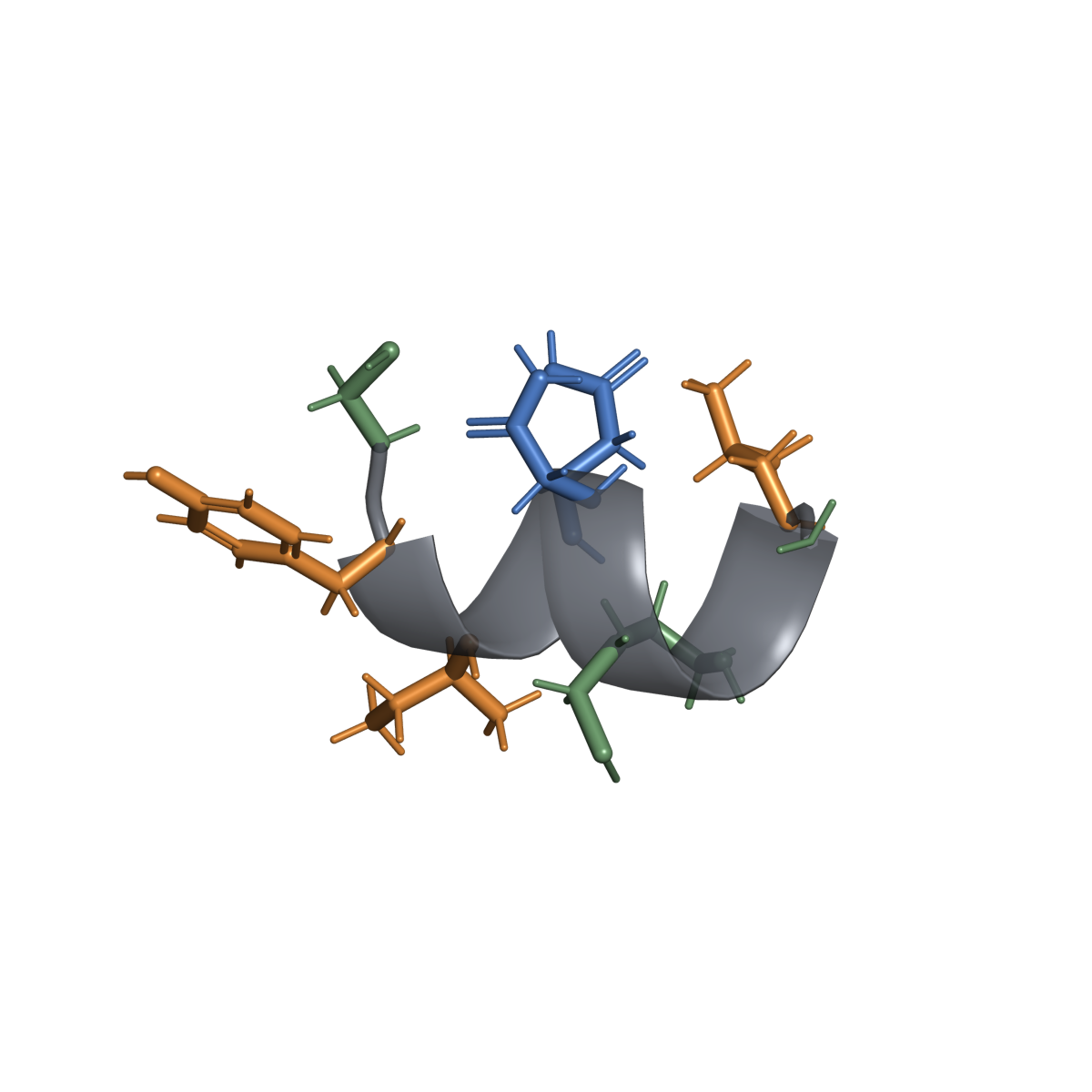
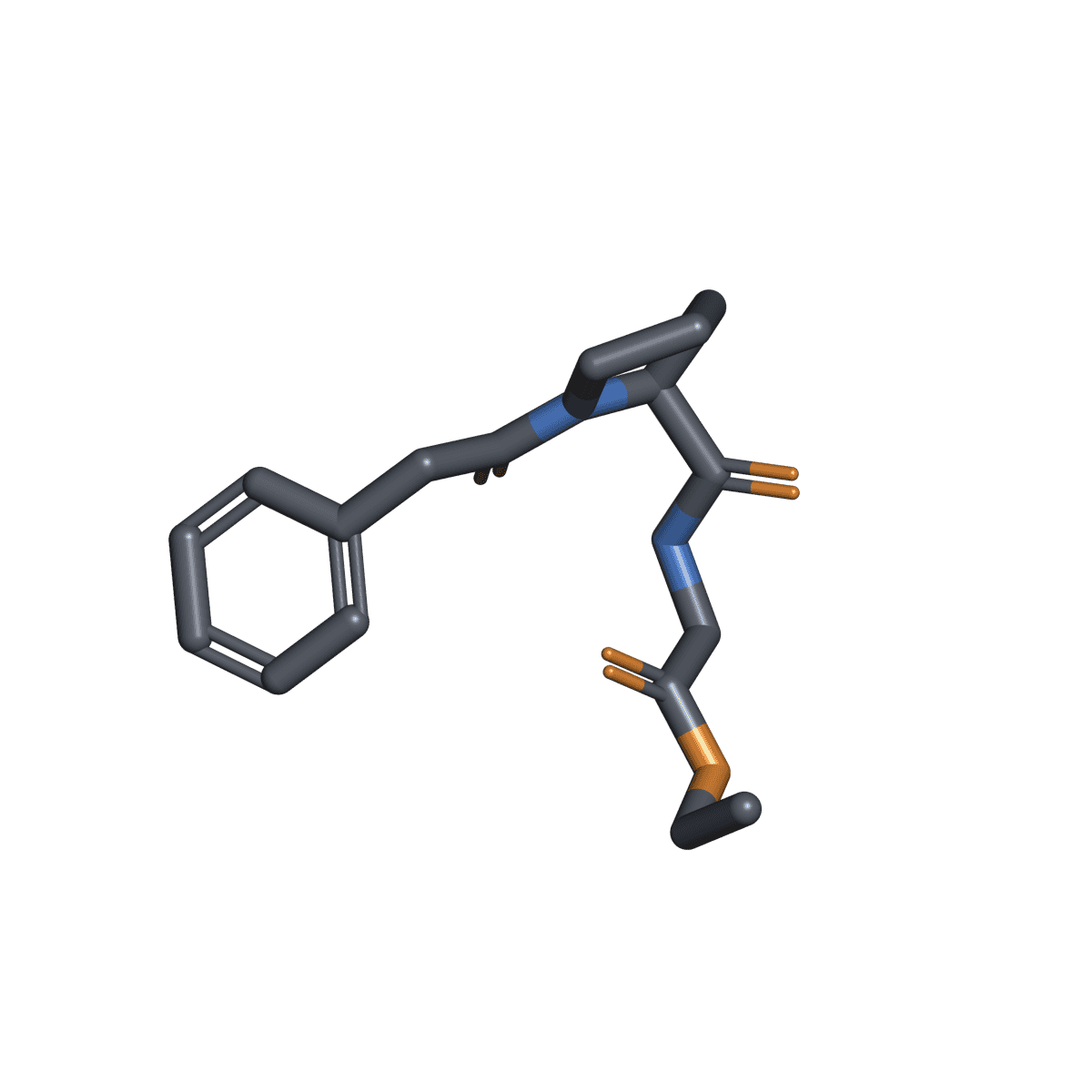
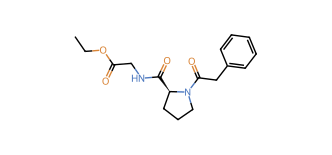
| Molecular/sequence identity | C₁₇H₂₂N₂O₄; MW 318.37; IUPAC: ethyl (2S)-1-(2-phenylacetyl)pyrrolidine-2-carbonyl]amino]acetate |
| Modifications/form | Ethyl ester prodrug of N-phenylacetyl-L-prolylglycine; metabolised to cycloprolylglycine (CPG) and phenylacetic acid |
| Stable identifiers | CAS 157115-85-0; The record number of a compound in PubChem, the atlas's primary structure-asset source. A registry record or depiction does not authenticate a commercial sample. Source de la définition: Identity and structure assets methodology · Glossaire 180496; UNII PPV1N20H5B; Russian FS-2004/093 |
| Identity caveats | NOT a true peptide — classified as a boundary case (acyclic dipeptide analogue / small-molecule prodrug); often miscategorised as a peptide in commercial catalogs; the 'acecarbrom' / 'oxiracetam-like' structure relates to the ethyl ester moiety; marketed as a 'dipeptide' in peer-reviewed literature per its own authors |
Development and approval status
| Jurisdiction | Status and indication | Product/source | As of |
|---|---|---|---|
| Russia | Approved, OTC — nootropic for cognitive impairment, asthenia, organic brain disorders | Noopept (PEPTEK, various) | ~2006–2012 |
| FDA (US) | No approved product identified; public sources do not establish whether a confidential IND was filed | — | 2026-08 |
| EMA (EU) | Not approved | — | 2026-08 |
| MHRA (UK) | Not approved | — | 2026-08 |
| Other jurisdictions | Status requires a current national-register check | — | 2026-08 |
- UNITED STATES
- FDA (US): No approved product identified; public sources do not establish whether a confidential IND was filed
- EU/EEA
- EMA (EU): Not approved
- UNITED KINGDOM
- MHRA (UK): Not approved
- OTHER DOCUMENTED
- Russia: Approved, OTC — nootropic for cognitive impairment, asthenia, organic brain disorders; Other jurisdictions: Status requires a current national-register check
Sport status: WADA: not identified by exact name in the 2026 List. This page records a current Russian governmental approval, so S0 cannot be inferred merely from lack of FDA/EMA approval. Athletes should obtain a current case-specific classification.
Mechanism and pharmacology
Noopept is a prodrug that is hydrolysed in vivo to cycloprolylglycine (CPG) and phenylacetic acid. CPG acts as a positive allosteric modulator of AMPA-type glutamate receptors. Additional reported effects include: increase in BDNF and NGF expression (animal studies), modulation of acetylcholinergic transmission, antioxidant activity, and anti-amnesic effects in rodent models. The AMPA modulation is considered the primary cognitive mechanism, analogous to drugs in the racetam family, but the exact receptor pharmacology is less well characterised than for piracetam or aniracetam. The dipeptide character means it is sometimes — misleadingly — grouped with peptide therapeutics, but its How a substance is absorbed, distributed, metabolized, and eliminated by the body; atlas pages report pharmacokinetic data such as half-life, metabolism, and clearance. Source de la définition: Neutral gloss; usage context: Routes, devices, and absorption primer · Glossaire, regulatory pathway, and safety profile follow small-molecule drug standards.
Evidence by claim
| Claim/indication | Stage | Grade | Best human evidence | Main result | Important limitations |
|---|---|---|---|---|---|
| Nootropic / cognitive enhancement | Approved (Russia, OTC) | C | Russian clinical data (limited English publications) | Subjective improvement in asthenia, memory, attention | Small samples; few English-indexed A study in which participants are assigned to the study material or a comparator by chance. Source de la définition: Neutral gloss; usage context: Evidence grading methodology · Glossaire |
| Organic brain disorders | Approved (Russia, OTC) | E | — | No adequate published evidence in English | Marketing claim |
| Alzheimer's disease | A clinical-stage candidate with scientific or public relevance. Investigation is not approval, and a studied exposure is not a recommendation. Source de la définition: Scope and selection methodology · Glossaire (Evidence from in vitro or animal studies with no adequate human efficacy evidence — the atlas Grade D lane. Source de la définition: Evidence grading methodology · Glossaire) | D | None | Only animal data | No human trials |
| Anxiety / mood | Unapproved off-label | E | — | Inadequate human evidence | — |
- AGrade A: Établi pour une utilisation indiquée spécifique
- BGrade B: Preuve humaine modérée
- CGrade C: Preuve humaine préliminaire
- DGrade D: Préclinique uniquement
- EGrade E: Affirmation anecdotique/commerciale
- XGrade X: Les preuves contredisent ou ne soutiennent pas l'affirmation
Text alternative for the claim-evidence diagram. Each grade is defined below:
- A — Established for a specific labeled use
- 0 claims
- B — Moderate human evidence
- 0 claims
- C — Preliminary human evidence
- 1 claim: Nootropic / cognitive enhancement
- D — Preclinical only
- 1 claim: Alzheimer's disease
- E — Anecdotal/marketing claim
- 2 claims: Organic brain disorders; Anxiety / mood
- X — Evidence contradicts or does not support the claim
- 0 claims
Key studies
| Study | Design/population | Exposure studied | Endpoints and result | Limitations |
|---|---|---|---|---|
| Ostrovskaya et al. 2001 | Rodent models | 0.5–1 mg/kg oral | Anti-amnesic effects in multiple rodent models | Evidence from in vitro or animal studies with no adequate human efficacy evidence — the atlas Grade D lane. Source de la définition: Evidence grading methodology · Glossaire; Russian-language source |
| Neznamov et al. 2002 | Human pilot (n=30–60, Russian) | 5–20 mg/day × 28 days | Reduction in asthenia, improved memory | Small; Russian-language; limited English index |
| Firstova et al. 2011 | Rat EEG study with AMPA-receptor antagonists [1] | Noopept 0.5–1 mg/kg i.p. | EEG effects blocked by NBQX confirming AMPA-receptor involvement | Russian-language; Eksp Klin Farmakol; PMID 21476267 |
| Gudasheva et al. 2001 | Preclinical pharmacology review | NA | Original synthesis and dipeptide prodrug concept | Russian-language; limited detail in English |
Dose and administration evidence
Approved labeled regimen
The label summary below is product-, indication-, and jurisdiction-specific; consult the full current label and a licensed clinician/pharmacist.
Russian OTC regimen: 10 mg orally, 2–3 times daily (20–30 mg/day). Typical course 1.5–3 months.
Studied regimens (not recommendations)
Clinical studies used 5–20 mg/day orally for 28–90 days. No parenteral studies in humans.
No established or recommended human dose.
What is not established
Efficacy for any specific disease indication (AD, TBI, stroke)
Long-term safety beyond 3 months
Comparative effectiveness vs other nootropics
Dose-response relationship
Safety and efficacy of chronic use
Safety
Established label risks
Registered OTC in Russia; no boxed warnings. Reported mild side effects: headache, dizziness, irritability, sleep disturbance, gastrointestinal discomfort.
Human-study signals
No serious adverse events reported in published Russian studies. Low total published human n limits signal detection.
Unknowns and product-quality risks
No Western regulatory safety review
GHS classification: acute oral toxicity Category 4 (harmful if swallowed) in some MSDS listings
No long-term human safety data
No drug interaction studies with antidepressants, antipsychotics, or stimulants
Research chemical products lack regulatory quality assurance
Drug is often sold as a "peptide" despite not being one, creating confusion about identity and purity standards
No systematic human data on withdrawal, tolerance, or dependence
Interactions and special populations
May potentiate effects of caffeine or stimulants (anecdotal)
No dedicated studies in hepatic or renal impairment
Pregnancy and lactation: no adequate data
No paediatric safety data
Interaction with warfarin, anticonvulsants, or antipsychotics not studied
Regulatory, compounding, and sport notes
The World Anti-Doping Agency; its Prohibited List classifies many peptides as prohibited substances in sport. Source de la définition: WADA and sport regulation brief · Glossaire: not identified by exact name in the 2026 List. This page records a current Russian governmental approval, so WADA Prohibited List class S0 (non-approved substances): pharmacological substances not addressed elsewhere in the list and with no current approval by any governmental regulatory health authority for human therapeutic use. Source de la définition: WADA and sport regulation brief · Glossaire cannot be inferred merely from lack of FDA/EMA approval. Athletes should obtain a current case-specific classification.
US DEA: not scheduled
CAS 157115-85-0; registered OTC in Russia, imported as dietary supplement in some non-EU markets
Not on FDA Sections of the US Food, Drug, and Cosmetic Act covering traditional compounding exemptions (503A) and outsourcing-facility compounding (503B). Under 503A, qualification conditions include a patient-specific prescription requirement; under 503B, conditions cover facility registration and bulk-substance eligibility. Source de la définition: United States regulation brief · Glossaire bulks list
Not classified as a peptide by the European Pharmacopoeia
Evidence gaps
No FDA- or EMA-standard A study in which participants are assigned to the study material or a comparator by chance. Source de la définition: Neutral gloss; usage context: Evidence grading methodology · Glossaire demonstrating efficacy in any condition
Western-indexed English-language human evidence is very limited
No long-term safety data meeting modern regulatory standards
Mechanism at AMPA receptors is inferred from Evidence from in vitro or animal studies with no adequate human efficacy evidence — the atlas Grade D lane. Source de la définition: Evidence grading methodology · Glossaire CPG studies; direct human receptor pharmacology not confirmed
Dose range, optimal regimen, and PK/PD relationship for clinical use not validated
Most original data in Russian with limited English methodological reporting
Boundary-case classification (dipeptide analogue) creates confusion in peptide-vs-small-molecule regulatory frameworks
Search notes
Databases and registries: PubMed, PubChem, CAS, ClinicalTrials.gov, Russian State Register of Medicines
Search terms: Noopept, GVS-111, omberacetam, 157115-85-0, neznamov, ostrovskaya
Last searched: 2026-08-06
Inclusion emphasis: human clinical data, regulatory records, identity databases, safety information
PubMed search 2026-08-06: fewer than 20 total results; no registered interventional trials on ClinicalTrials.gov
Sources
PubChem CID 180496. https://pubchem.ncbi.nlm.nih.gov/compound/180496
Russian State Register of Medicines: Noopept (omberacetam) registration entry. https://grls.rosminzdrav.ru/
Ostrovskaya RU et al. (2001) Eksp Klin Farmakol. Russian preclinical data.
Neznamov GG et al. (2002) Zh Nevrol Psikhiatr Im S S Korsakova. Clinical pilot.
Firstova YY et al. (2011) Effects of nootropic drugs on glutamate receptors in rat brain. Eksp Klin Farmakol. PMID 21476267. https://pubmed.ncbi.nlm.nih.gov/21476267/
Gudasheva TA et al. (2001) Vopr Biol Med Farm Khim. Original dipeptide prodrug design.
ClinicalTrials.gov search for Noopept/GVS-111. https://clinicaltrials.gov/search?intr=Noopept (zero interventional trials as of 2026-08-06)
UNII PPV1N20H5B. https://precision.fda.gov/uniisearch/srs/unii/PPV1N20H5B
GHS Classification records — Noopept MSDS (various suppliers)