Bottom line
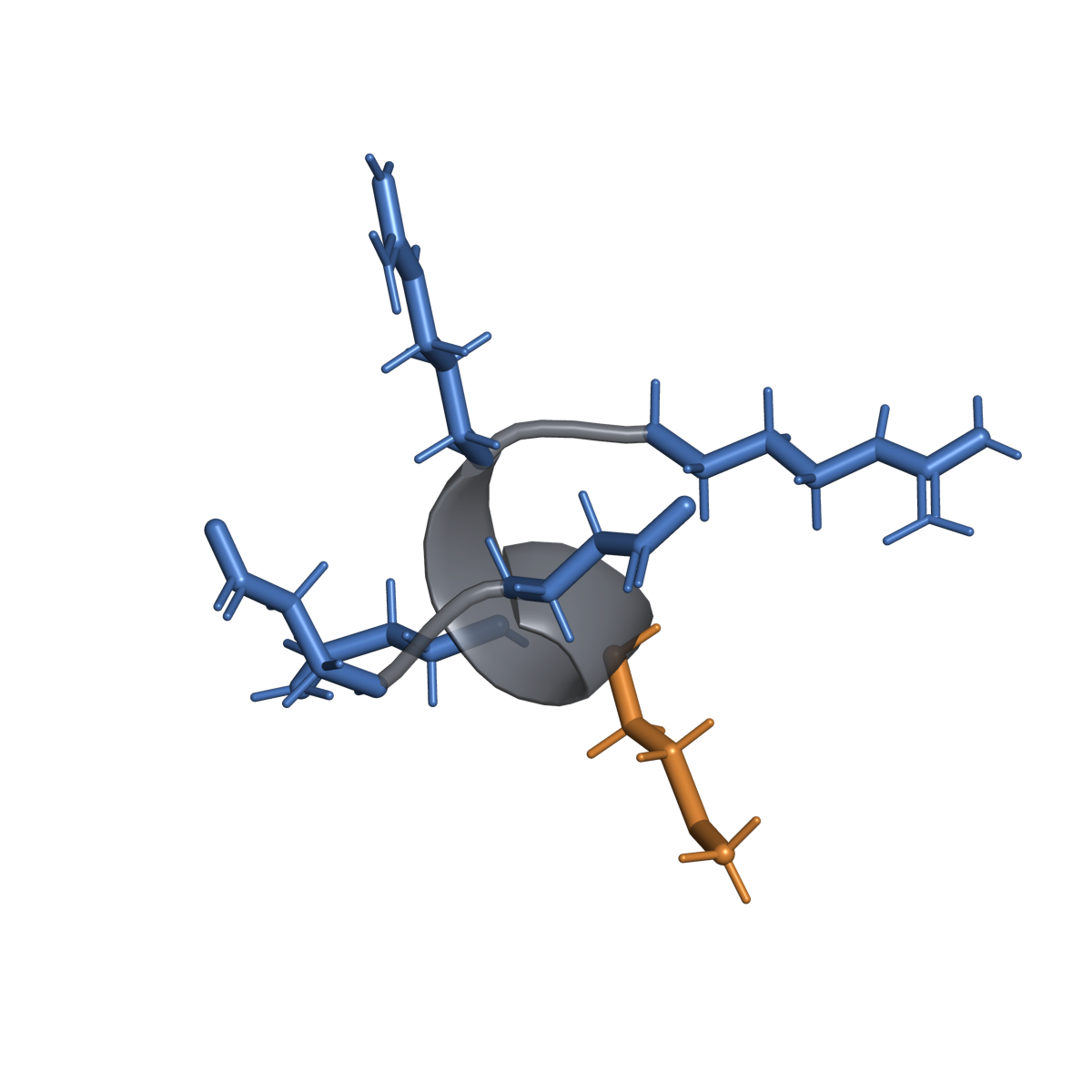
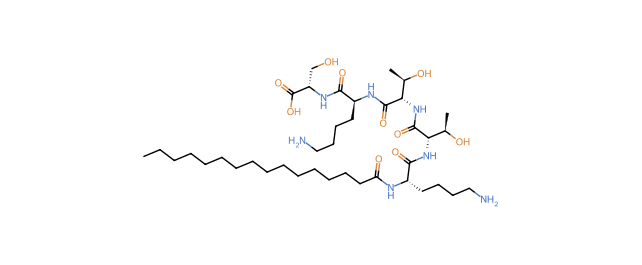
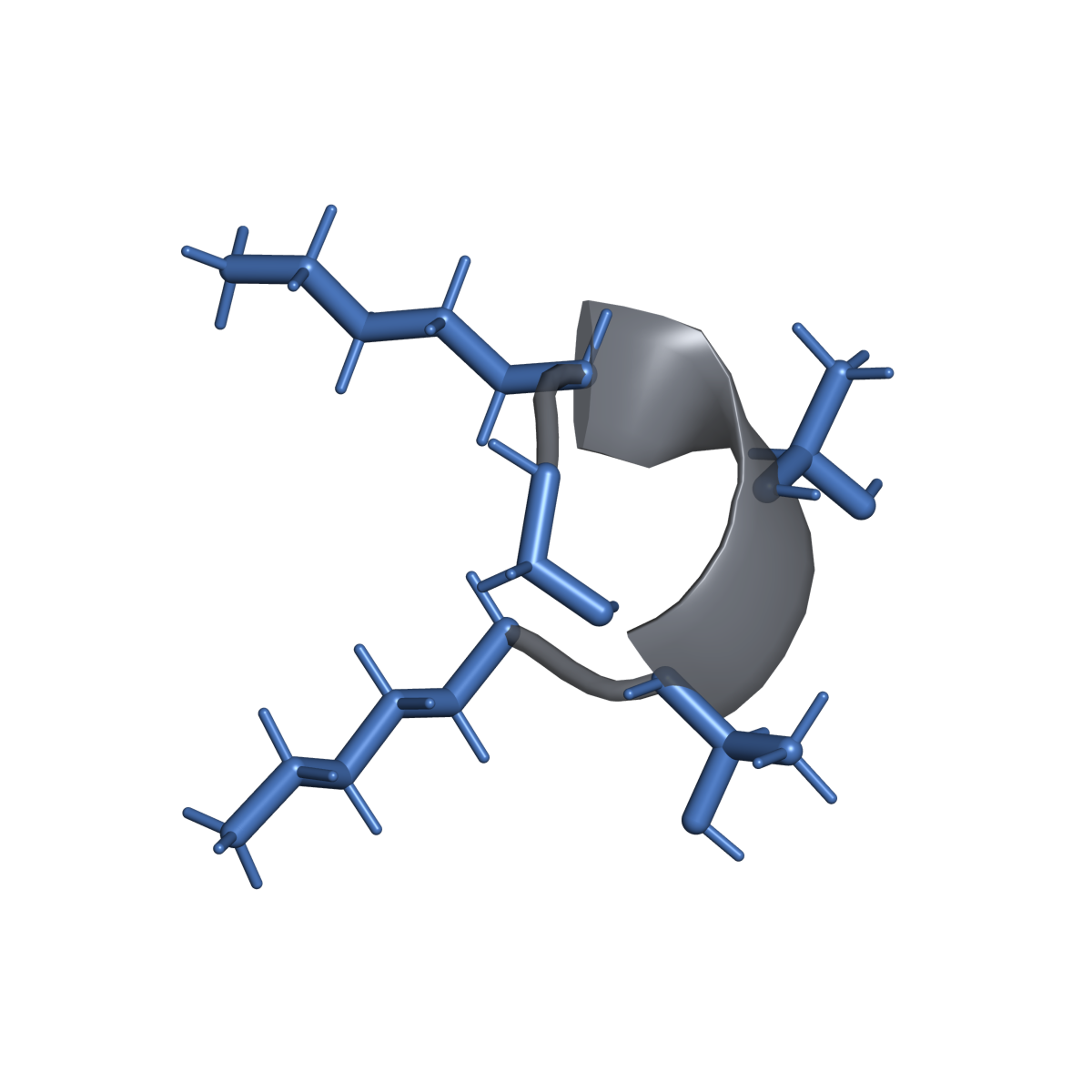
Palmitoyl pentapeptide-4 (INCI name, Matrixyl) is a synthetic lipopeptide consisting of a pentapeptide (Lys-Thr-Thr-Lys-Ser) conjugated to palmitic acid. Developed by Lipotec in the early 2000s, it is widely used in topical cosmetic formulations as a skin-conditioning agent. In vitro studies show stimulation of collagen and fibronectin synthesis in human fibroblasts. Modest improvements in wrinkle appearance have been reported in manufacturer-sponsored cosmetic trials. It is classified as a cosmetic ingredient, not a drug, and has no pharmaceutical approval. Evidence consists primarily of small, industry-sponsored studies; independent peer-reviewed clinical data are limited.
Identity and composition
| Field | Verified information |
|---|---|
| Preferred name | Palmitoyl pentapeptide-4 |
| Key aliases | Matrixyl, Pal-KTTKS, Pentapeptide-4 |
| Molecular/sequence identity | Palmitoyl-Lys-Thr-Thr-Lys-Ser-OH (Pal-KTTKS) |
| Modifications/form | N-terminal palmitoylation of a synthetic pentapeptide; the fatty-acyl moiety facilitates skin penetration |
| Stable identifiers | CAS 214047-00-4; INCI: Palmitoyl Pentapeptide-4; CosIng ref 56917; The record number of a compound in PubChem, the atlas's primary structure-asset source. A registry record or depiction does not authenticate a commercial sample. Quelle der Definition: Identity and structure assets methodology · Glossar: 9897237 |
| Identity caveats | The retired INCI name "Palmitoyl Oligopeptide" previously covered this material and others; current INCI nomenclature assigns distinct names by peptide length |
Development and approval status
| Jurisdiction | Status and indication | Product/source | As of |
|---|---|---|---|
| EU (CosIng) | Listed in the CosIng inventory; an INCI listing is an inventory entry, not a regulatory authorisation or safety approval | INCI name: Palmitoyl Pentapeptide-4; skin conditioning function | 2026-08-06 |
| US (FDA) | Regulated as a cosmetic ingredient under the FD&C Act; not approved as a drug | FD&C Act | 2026-08-06 |
| US (CIR Expert Panel) | Safe as used in cosmetics at concentrations ≤0.002% palmitoyl pentapeptide-4 in leave-on products | Final safety assessment (Int J Toxicol. 2024;43(3_suppl):5S-36S) | 2024 |
- UNITED STATES
- US (FDA): Regulated as a cosmetic ingredient under the FD&C Act; not approved as a drug; US (CIR Expert Panel): Safe as used in cosmetics at concentrations ≤0.002% palmitoyl pentapeptide-4 in leave-on products
- EU/EEA
- EU (CosIng): Listed in the CosIng inventory; an INCI listing is an inventory entry, not a regulatory authorisation or safety approval
- UNITED KINGDOM
- No UNITED KINGDOM row is present in the source status table
- OTHER DOCUMENTED
- No OTHER DOCUMENTED row is present in the source status table
Sport status: Not prohibited by WADA (topical cosmetic ingredient does not raise anti-doping concern).
Mechanism and pharmacology
Palmitoyl pentapeptide-4 is proposed to act as a matrikine mimetic, binding to fibroblast growth factor receptors and upregulating transcription of type I and III collagen, fibronectin, and glycosaminoglycans. The palmitoyl group increases lipophilicity, enhancing penetration through the stratum corneum. Evidence for this mechanism derives from in vitro studies in human dermal fibroblast cultures. Direct in vivo confirmation of receptor engagement in human skin is lacking.
Evidence by claim
| Claim/indication | Stage | Grade | Best human evidence | Main result | Important limitations |
|---|---|---|---|---|---|
| Anti-aging, wrinkle reduction | Cosmetic | C | Manufacturer-sponsored vehicle-controlled trial (N ~ 90, 2–4 months, topical) | Modest reduction in wrinkle depth and improved skin firmness | Small sample, short duration, industry sponsorship, no independent replication |
| Collagen stimulation | Cosmetic | D | In vitro only | Increased collagen I and III and fibronectin mRNA in fibroblast cultures | No adequate human skin biopsy confirmation |
- AKlasse A: Für eine bestimmte gekennzeichnete Anwendung nachgewiesen
- BKlasse B: Mäßige Humanstudien
- CKlasse C: Vorläufige Humanstudien
- DKlasse D: Nur präklinisch
- EKlasse E: Anekdotisch/Vermarktungsbehauptung
- XKlasse X: Die Evidenz widerspricht der Behauptung oder stützt sie nicht
Text alternative for the claim-evidence diagram. Each grade is defined below:
- A — Established for a specific labeled use
- 0 claims
- B — Moderate human evidence
- 0 claims
- C — Preliminary human evidence
- 1 claim: Anti-aging, wrinkle reduction
- D — Preclinical only
- 1 claim: Collagen stimulation
- E — Anecdotal/marketing claim
- 0 claims
- X — Evidence contradicts or does not support the claim
- 0 claims
Key studies
| Study | Design/population | Exposure studied | Endpoints and result | Limitations |
|---|---|---|---|---|
| Lintner et al. (2000s, manufacturer data) | Vehicle-controlled, N ≈ 90 women, 4 months | 2–5% Pal-KTTKS in topical formulation | Wrinkle depth, profilometry; modest improvement over vehicle | Industry sponsorship; limited detail on randomization and blinding; no independent replication |
Dose and administration evidence
Approved labeled regimen
Palmitoyl pentapeptide-4 is a cosmetic ingredient, not an approved drug. No established or recommended human dose.
Studied regimens (not recommendations)
Cosmetic formulations typically incorporate the ingredient at 2–5% of a peptide solution (containing low-ppm active peptide). Application is once or twice daily to clean facial skin.
What is not established
No established or recommended human dose.
Safety
Established label risks
Not applicable; no approved drug label exists.
Human-study signals
Transient mild irritation reported in a small proportion of users. No serious adverse events in manufacturer-conducted studies.
Unknowns and product-quality risks
Long-term safety beyond cosmetic use not established. Products sold as "research use only" may be non-sterile, mislabeled, or adulterated.
Interactions and special populations
No known interactions from topical cosmetic use. Not studied in pregnancy or lactation. Avoid application to broken skin.
Regulatory, compounding, and sport notes
EU CosIng: listed in the cosmetic ingredient inventory (INCI entry; does not constitute regulatory approval).
US: regulated as a cosmetic ingredient; no FDA drug approval.
Not prohibited by The World Anti-Doping Agency; its Prohibited List classifies many peptides as prohibited substances in sport. Quelle der Definition: WADA and sport regulation brief · Glossar (topical cosmetic ingredient does not raise anti-doping concern).
Not available as an FDA-approved injectable product.
Evidence gaps
No large, independent, An inactive comparator used in a controlled study. Quelle der Definition: Neutral gloss; usage context: Evidence grading methodology · Glossar-controlled trials.
No comparative studies against established anti-aging interventions (retinoids, antioxidants).
No peer-reviewed safety data for intra-dermal or injection use.
Penetration and The fraction of an administered amount that reaches systemic circulation; for the intravenous route the atlas notes bioavailability is defined as complete. Quelle der Definition: Neutral gloss; usage context: Routes, devices, and absorption primer · Glossar in real-world formulations vary widely.
Search notes
Databases and registries: PubMed, CosIng, CIR, FDA
Search terms: "Palmitoyl pentapeptide-4", "Matrixyl", "Pal-KTTKS", "pentapeptide-4"
Last searched: 2026-08-06
Inclusion emphasis: primary sources, regulatory assessments
Sources
Cosmetic Ingredient Review. Safety assessment of myristoyl pentapeptide-4, palmitoyl pentapeptide-4, and pentapeptide-4 as used in cosmetics. Final report. Int J Toxicol. 2024;43(3_suppl):5S-36S. https://www.cir-safety.org/
EU CosIng database. Palmitoyl pentapeptide-4. https://ec.europa.eu/growth/tools-databases/cosing/
Choi YL, et al. Dermal stability and in vitro skin permeation of collagen pentapeptides (KTTKS and palmitoyl-KTTKS). Biomol Ther (Seoul). 2014;22(4):321-327.
PubChem. Palmitoyl pentapeptide-4 (CID 9897237). https://pubchem.ncbi.nlm.nih.gov/compound/9897237