Bottom line
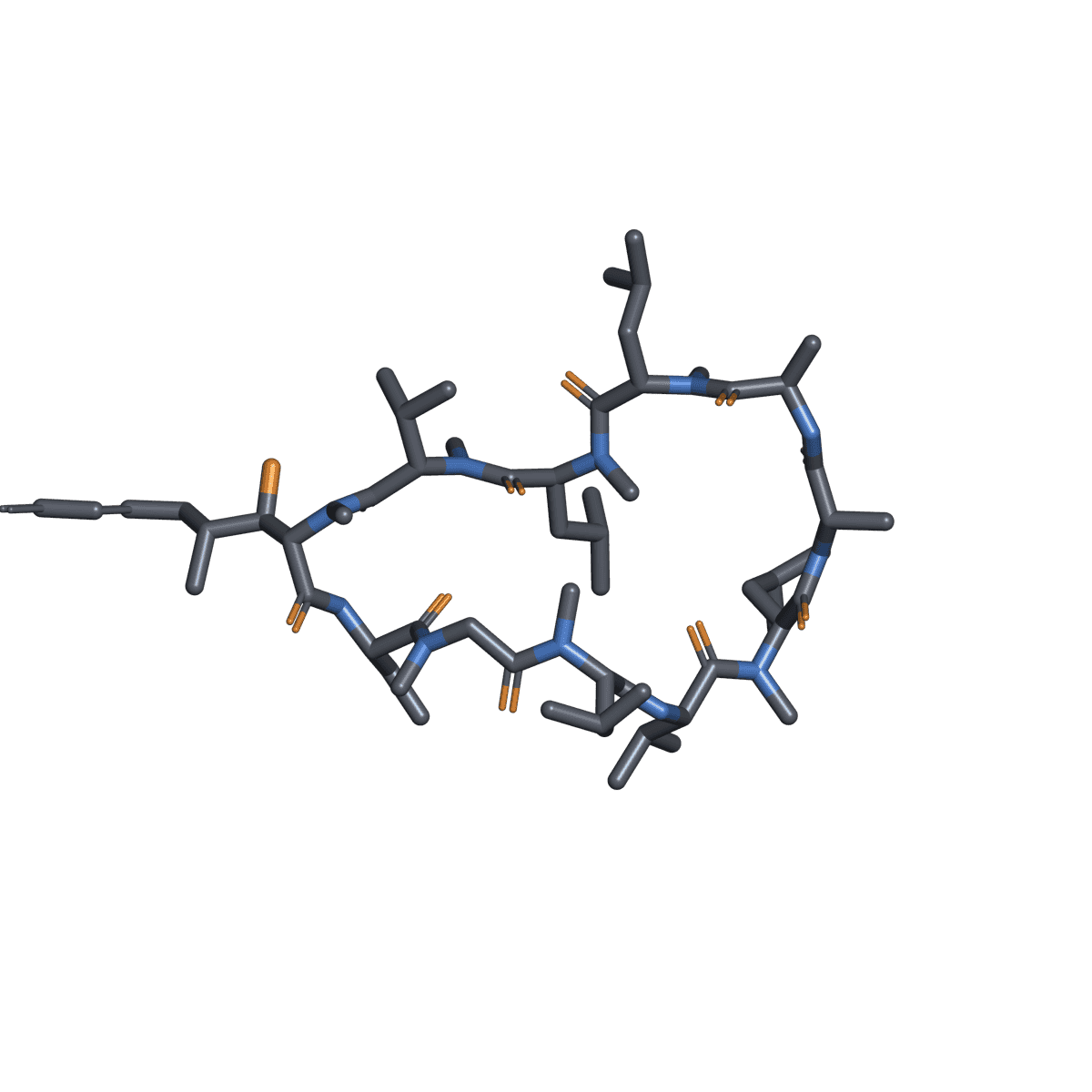
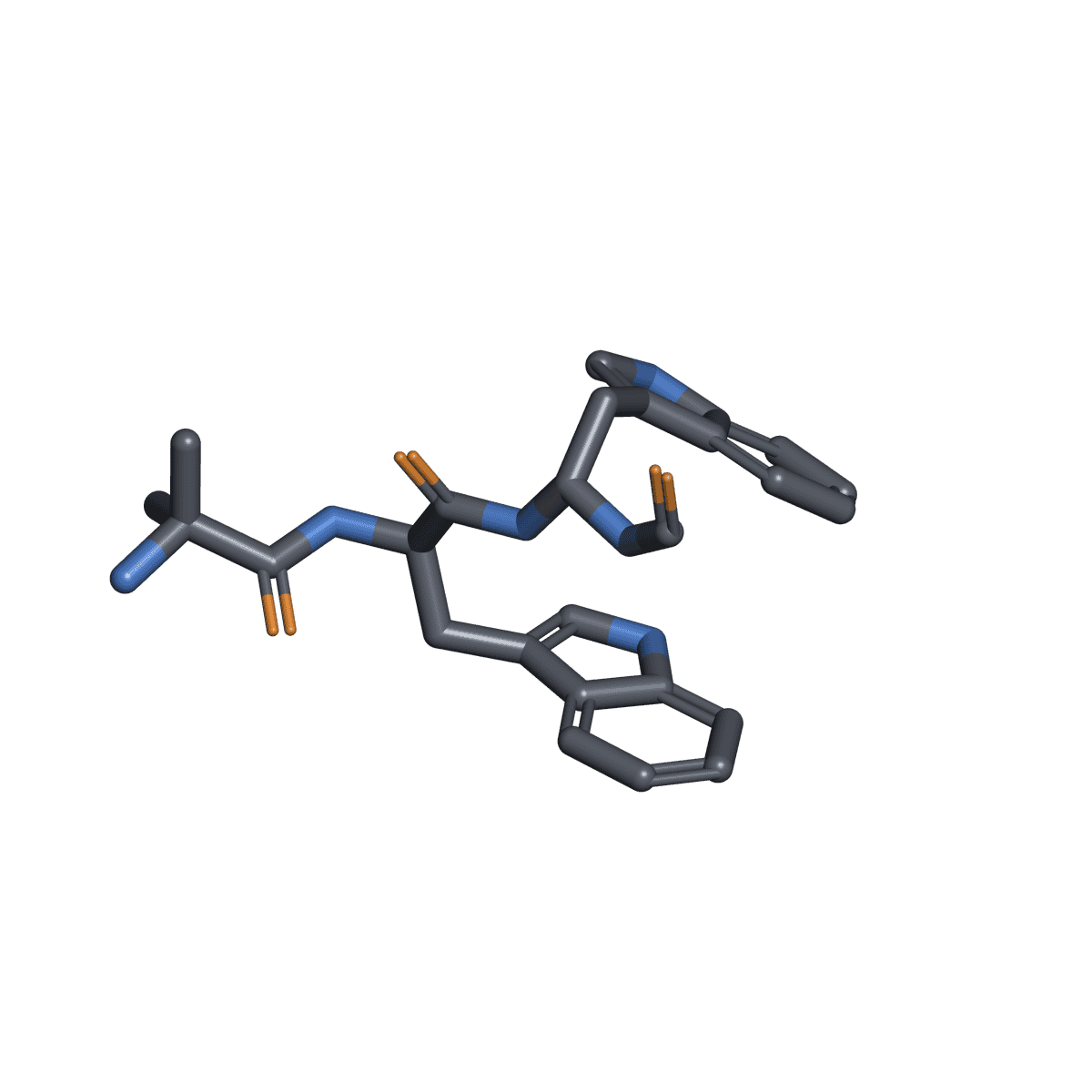
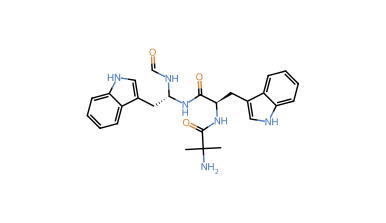
Macimorelin (Macrilen) is a synthetic peptidomimetic agonist of the growth hormone secretagogue receptor 1a (GHSR1a, the ghrelin receptor). It is classified as a peptidomimetic rather than a peptide: its molecular structure mimics the peptide ghrelin but is not itself a conventional peptide (free-base molecular formula C26H30N6O3; molecular weight 474.6 g/mol). FDA-approved in December 2017 as a single-oral-dose diagnostic test for adult growth hormone deficiency (AGHD). It replaced the insulin tolerance test (ITT) as a simpler, safer alternative.
Identity and composition
| Field | Verified information |
|---|---|
| Preferred name | Macimorelin |
| Key aliases | Macrilen, AEZS-130, ARD-07 |
| Molecular/sequence identity | Macimorelin free base is a small-molecule peptidomimetic containing two indole groups and a terminal formamide. PubChem's systematic name is 2-amino-N-[(2R)-1-[[(1R)-1-formamido-2-(1H-indol-3-yl)ethyl]amino]-3-(1H-indol-3-yl)-1-oxopropan-2-yl]-2-methylpropanamide. The FDA label describes the marketed acetate as “D-Tryptophanamide, 2-methylalanyl-N-[(1R)-1-(formylamino)-2-(1H-indol-3-yl)ethyl]-, acetate.” |
| Modifications/form | Marketed as the 1:1 acetate salt in oral granules for The product-specific pharmaceutical process by which a lyophilized (freeze-dried) solid returns to a liquid dispersion. It is not evidence that the resulting material is suitable for administration. Quelle der Definition: What reconstitution means primer · Glossar. Free base: C26H30N6O3, MW 474.6 g/mol. Acetate salt: C28H34N6O5, MW 534.6 g/mol. |
| Stable identifiers | Free base: CAS 381231-18-1; The record number of a compound in PubChem, the atlas's primary structure-asset source. A registry record or depiction does not authenticate a commercial sample. Quelle der Definition: Identity and structure assets methodology · Glossar 9804938; DrugBank DB13074; UNII 8680B21W73. Acetate salt: CAS 945212-59-9; PubChem CID 71526737; UNII AQZ1003RMG. |
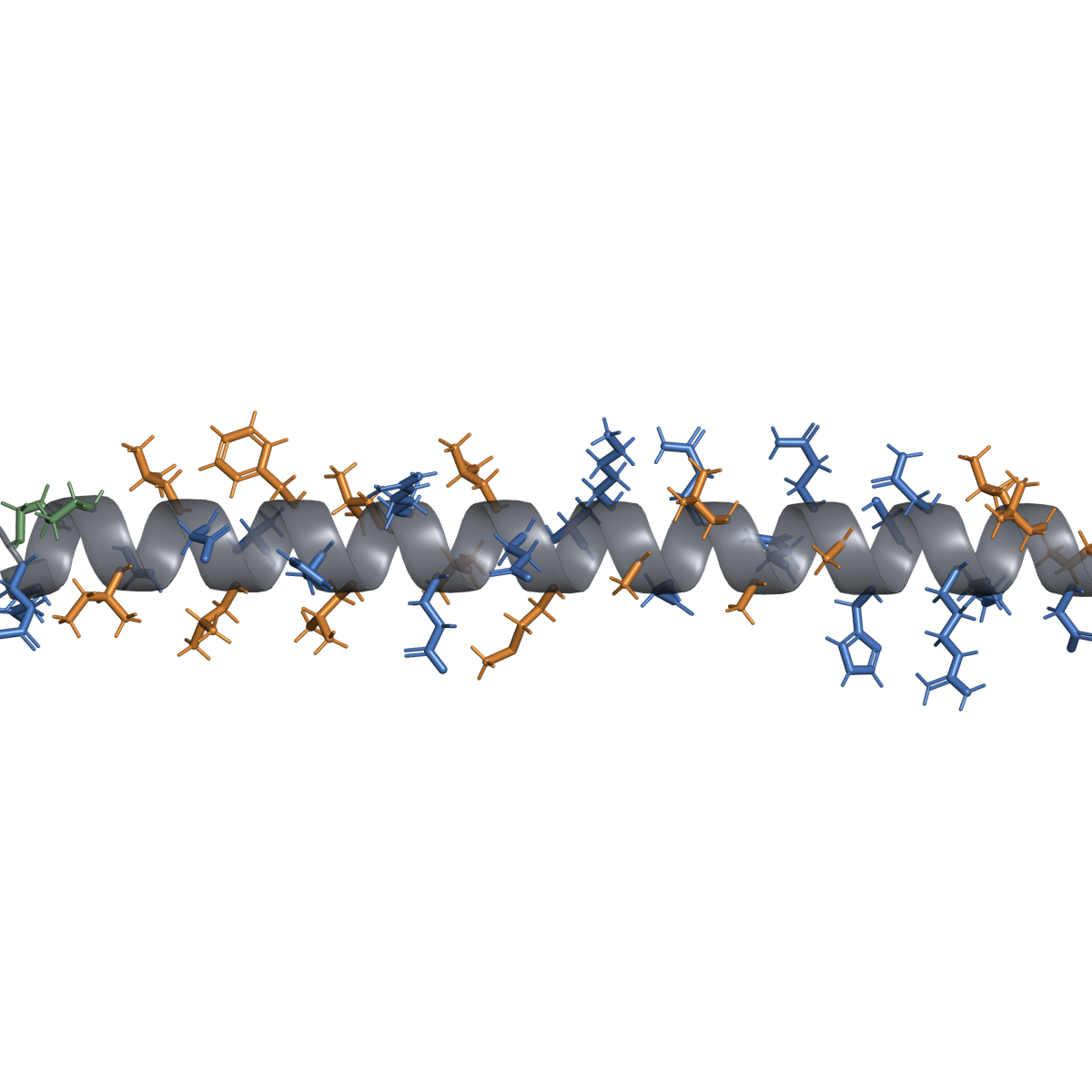
| Identity caveats | Macimorelin is a peptidomimetic (small molecule GHSR1a agonist), not a peptide. It is included in this atlas as a boundary case because it occupies the ghrelin peptide receptor and is listed alongside peptides in prescribing contexts. |
Development and approval status
| Jurisdiction | Status and indication | Product/source | As of |
|---|---|---|---|
| US (FDA) | Diagnosis of adult growth hormone deficiency (AGHD) | Macrilen (0.5 mg/mL oral solution after The product-specific pharmaceutical process by which a lyophilized (freeze-dried) solid returns to a liquid dispersion. It is not evidence that the resulting material is suitable for administration. Quelle der Definition: What reconstitution means primer · Glossar) | Dec 2017 |
| EU (EMA) | Diagnosis of adult growth hormone deficiency (GHD) | Ghryvelin (macimorelin granules for oral solution) | 11 Jan 2019 |
- UNITED STATES
- US (FDA): Diagnosis of adult growth hormone deficiency (AGHD)
- EU/EEA
- EU (EMA): Diagnosis of adult growth hormone deficiency (GHD)
- UNITED KINGDOM
- No UNITED KINGDOM row is present in the source status table
- OTHER DOCUMENTED
- No OTHER DOCUMENTED row is present in the source status table
Sport status: WADA: S2.2.4 — growth hormone secretagogues (GHS) and their releasing factors. Macimorelin is explicitly named and is prohibited at all times. This page does not predict TUE eligibility or outcome; athletes need a case-specific determination under the current anti-doping rules before use.
Mechanism and pharmacology
Macimorelin is an orally available, non-peptide agonist at the GHSR1a receptor. It stimulates GH secretion from the anterior pituitary after oral administration, allowing GH measurement in serial blood samples over 90 minutes. Compared to the insulin tolerance test (ITT), macimorelin avoids the risk of severe hypoglycemia.
Evidence by claim
| Claim/indication | Stage | Grade | Best human evidence | Main result | Important limitations |
|---|---|---|---|---|---|
| Diagnosis of AGHD | Approved | A | Pivotal phase 3 trial (N=157): A study in which participants and investigators know what is administered. Quelle der Definition: Neutral gloss; usage context: Evidence grading methodology · Glossar, cross-over vs ITT | Negative agreement (vs ITT) ~96%; positive agreement ~74%; overall diagnostic accuracy ~85% | ITT reference standard imperfect; not validated for BMI >40 |
- AKlasse A: Für eine bestimmte gekennzeichnete Anwendung nachgewiesen
- BKlasse B: Mäßige Humanstudien
- CKlasse C: Vorläufige Humanstudien
- DKlasse D: Nur präklinisch
- EKlasse E: Anekdotisch/Vermarktungsbehauptung
- XKlasse X: Die Evidenz widerspricht der Behauptung oder stützt sie nicht
Text alternative for the claim-evidence diagram. Each grade is defined below:
- A — Established for a specific labeled use
- 1 claim: Diagnosis of AGHD
- B — Moderate human evidence
- 0 claims
- C — Preliminary human evidence
- 0 claims
- D — Preclinical only
- 0 claims
- E — Anecdotal/marketing claim
- 0 claims
- X — Evidence contradicts or does not support the claim
- 0 claims
Key studies
| Study | Design/population | Exposure studied | Endpoints and result | Limitations |
|---|---|---|---|---|
| NCT02558829 (pivotal phase 3) | A study in which participants and investigators know what is administered. Quelle der Definition: Neutral gloss; usage context: Evidence grading methodology · Glossar, randomized, single-dose, 2-way crossover vs ITT; N=157 (115 suspected AGHD + 42 healthy) | Macimorelin 0.5 mg/kg single oral dose vs ITT | Negative percent agreement vs ITT: 95.7%; positive percent agreement: 74.3% | Open-label; ITT imperfect gold standard |
Dose and administration evidence
Approved labeled regimen
The label summary below is product-, indication-, and jurisdiction-specific; consult the full current label and a licensed clinician/pharmacist.
0.5 mg/kg (of the macimorelin active moiety) administered as a single oral solution.
The product-specific pharmaceutical process by which a lyophilized (freeze-dried) solid returns to a liquid dispersion. It is not evidence that the resulting material is suitable for administration. Quelle der Definition: What reconstitution means primer · Glossar granules in water; administered by a healthcare professional.
GH measured in 4 blood samples over 90 minutes after dosing.
Not for BMI >40 kg/m2 (insufficient validation).
Studied regimens (not recommendations)
A clinical-stage candidate with scientific or public relevance. Investigation is not approval, and a studied exposure is not a recommendation. Quelle der Definition: Scope and selection methodology · Glossar use for cachexia has been studied (phase 2); no approved therapeutic indication.
What is not established
The label establishes a single diagnostic exposure, not a treatment regimen. No therapeutic regimen is established or recommended for cachexia or GH-deficiency treatment.
Safety
Established label risks
Most common adverse reactions: dysgeusia (metallic taste), dizziness, headache, nausea, fatigue, diarrhea.
QT prolongation: macimorelin causes an increase in the QTc interval of ~9.6 ms at the diagnostic dose. Avoid in patients with congenital long QT syndromes or in combination with other drugs that prolong the QT interval. Torsades de pointes has been reported.
Hypersensitivity reactions including anaphylaxis.
False-positive results: strong CYP3A4 inducers (e.g., rifampin, carbamazepine, phenytoin, St. John's wort) reduce macimorelin exposure and GH stimulation, potentially causing a false-positive diagnosis of GHD. Discontinue strong CYP3A4 inducers and observe a washout period sufficient to allow recovery of enzyme activity before testing.
False-negative results: recent onset of hypothalamic disease (within 12 months) can cause a falsely normal GH response. Consider this in the diagnostic assessment.
Not recommended in patients with severe hepatic impairment or renal impairment (eGFR <30 mL/min/1.73 m²).
Human-study signals
No serious safety signals in the diagnostic context. Therapeutic doses for cachexia studied but not approved.
Unknowns and product-quality risks
Products sold as "research peptide macimorelin" are likely misrepresented; the material is a small-molecule peptidomimetic.
Interactions and special populations
Strong CYP3A4 inducers (rifampin, carbamazepine, phenytoin, St. John's wort): discontinue and allow adequate washout before testing to avoid false-positive GHD diagnosis (reduced GH response).
Drugs affecting GH secretion (somatostatin, somatropin, glucocorticoids, pegvisomant) may interfere with test results.
Concomitant QT-prolonging drugs increase risk of arrhythmia.
Growth hormone replacement therapy: discontinue at least one week before testing.
Pregnancy: no adequate human data.
Pediatric use not established.
Regulatory, compounding, and sport notes
FDA and EMA approved for diagnostic use only.
The World Anti-Doping Agency; its Prohibited List classifies many peptides as prohibited substances in sport. Quelle der Definition: WADA and sport regulation brief · Glossar: S2.2.4 — growth hormone secretagogues (GHS) and their releasing factors. Macimorelin is explicitly named and is prohibited at all times. This page does not predict A Therapeutic Use Exemption can authorize qualifying use of a prohibited substance; it does not change the prohibited classification. Quelle der Definition: WADA and sport regulation brief · Glossar eligibility or outcome; athletes need a case-specific determination under the current anti-doping rules before use.
No US federal CSA scheduling was identified as of 2026-08-06; state law and other jurisdictions were not assessed.
Evidence gaps
Utility in patients with BMI >40.
Head-to-head comparison with newer GH stimulation tests.
Long-term safety at therapeutic doses for cachexia not adequately studied.
Search notes
Databases and registries: FDA label, PubMed, ClinicalTrials.gov, DrugBank
Search terms: "macimorelin", "Macrilen", "AEZS-130", "ghrelin agonist"
Last searched: 2026-08-06
Inclusion emphasis: FDA label, pivotal phase 3 trial
Sources
FDA. Macrilen (macimorelin) prescribing information. https://www.accessdata.fda.gov/drugsatfda_docs/label/2017/205598s000lbl.pdf
EMA. Ghryvelin (macimorelin) EPAR. https://www.ema.europa.eu/en/medicines/human/EPAR/ghryvelin
Garcia JM, et al. Phase 3 trial of macimorelin for AGHD diagnosis. J Clin Endocrinol Metab. 2018;103(7):2565-2573.
PubChem. Macimorelin free base (CID 9804938). https://pubchem.ncbi.nlm.nih.gov/compound/9804938
DrugBank. Macimorelin (DB13074). https://go.drugbank.com/drugs/DB13074
World Anti-Doping Agency. 2026 Prohibited List, S2.2.4. https://www.wada-ama.org/sites/default/files/2025-09/2026list_en_final_clean_september_2025.pdf
PubChem PUG REST. Macimorelin acetate (CID 71526737), molecular formula and weight record. https://pubchem.ncbi.nlm.nih.gov/rest/pug/compound/cid/71526737/property/MolecularFormula,MolecularWeight/JSON
FDA. Macrilen product-quality review (macimorelin acetate identity and CAS). https://www.accessdata.fda.gov/drugsatfda_docs/nda/2017/205598Orig1s000ChemR.pdf