Bottom line
Lepirudin was a recombinant hirudin (desulfated on Tyr-63, plus Leu1-Thr2 substitutions) approved for anticoagulation in HIT with associated thromboembolic disease. It was the first direct thrombin inhibitor approved for HIT. Bayer ceased production in 2012 for commercial reasons; supply was depleted by mid-2013. Bivalirudin and argatroban are the current standard-of-care alternatives.
Identity and composition
| Field | Verified information |
|---|---|
| Preferred name | Lepirudin |
| Key aliases | Refludan, [Leu¹, Thr²]-63-desulfohirudin, recombinant hirudin (rHV2 variant) |
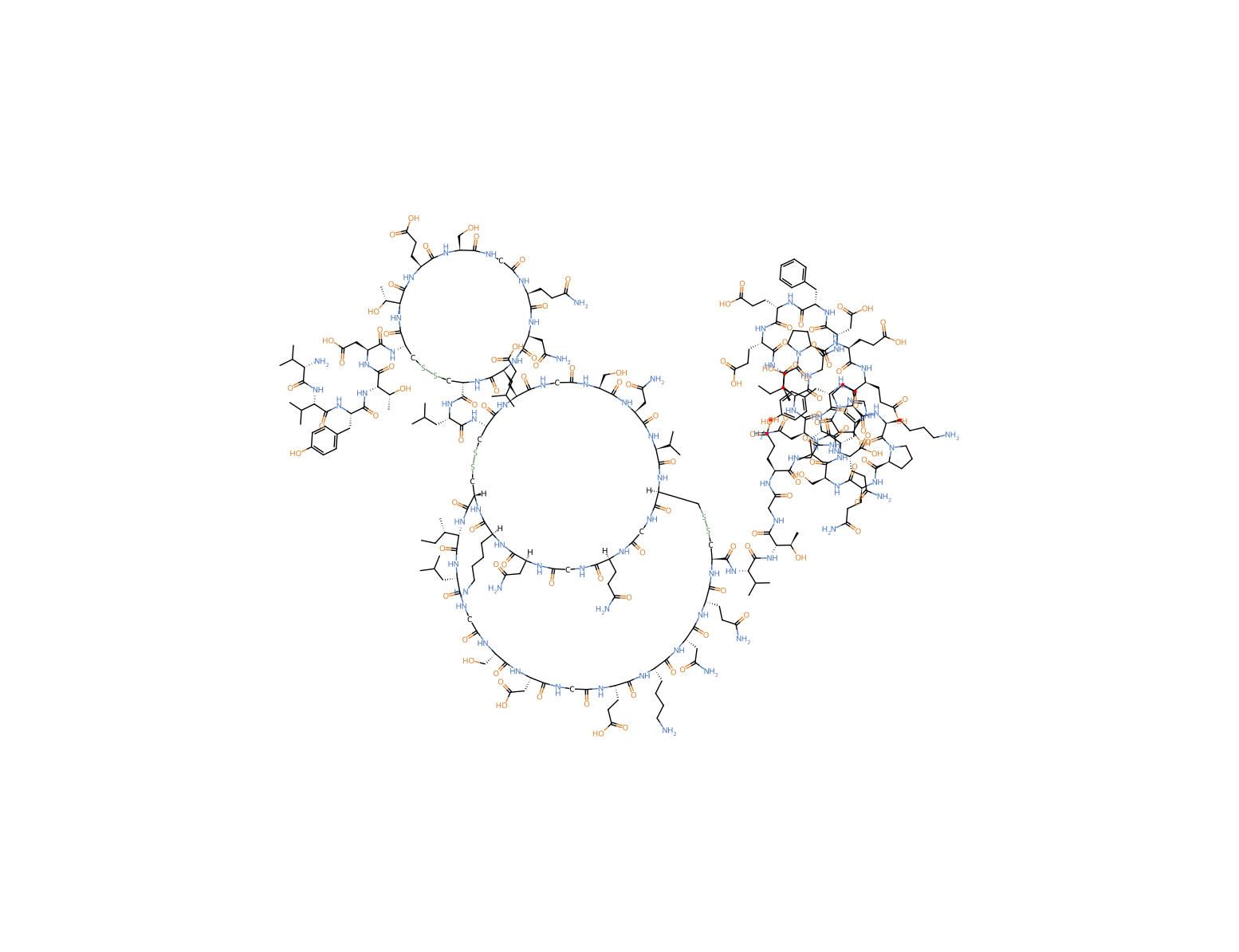
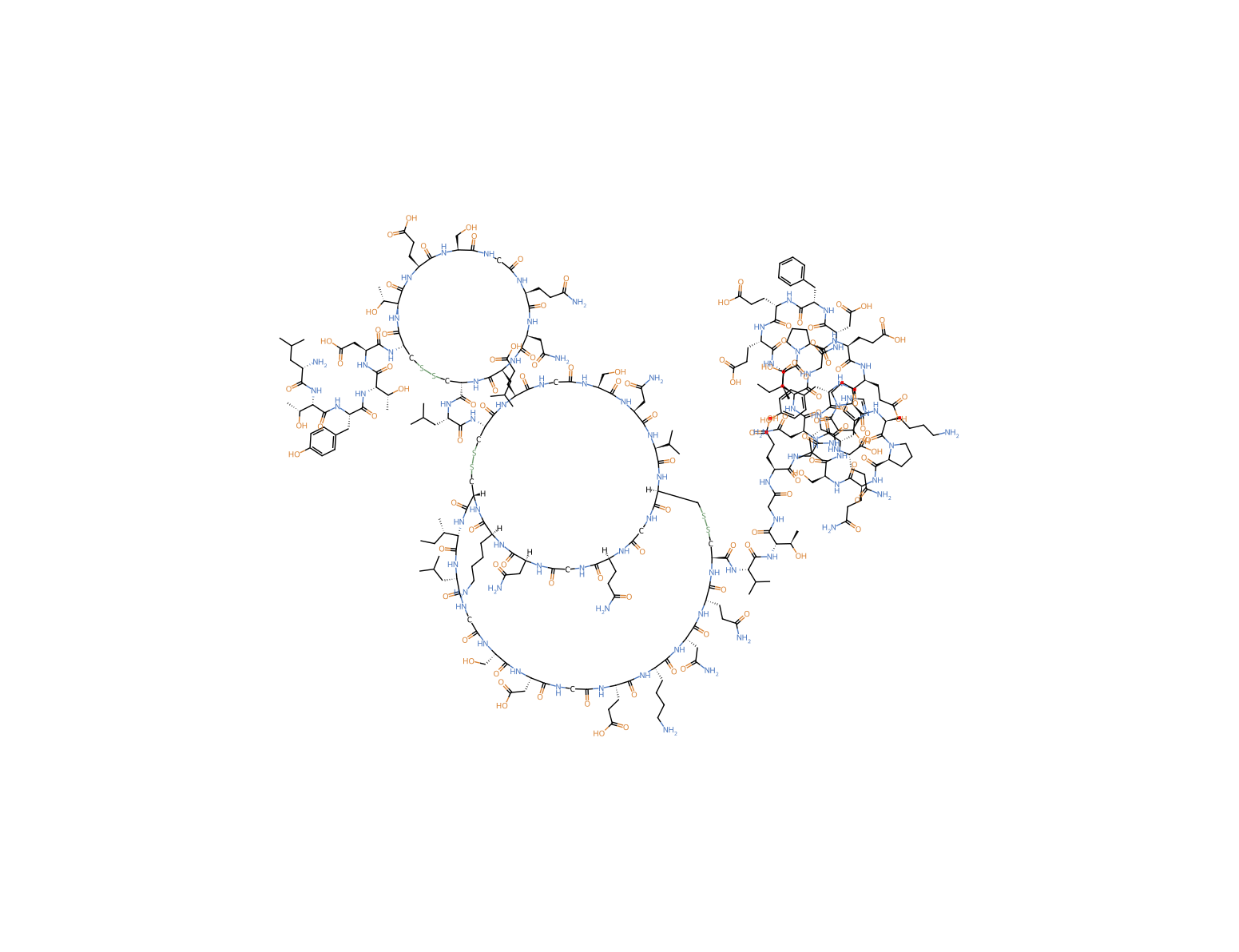
| Molecular/sequence identity | 65-amino-acid recombinant [Leu1, Thr2]-63-desulfohirudin. Its N-terminus is Leu-Thr-Tyr-Thr-Asp; it lacks the sulfate group on Tyr-63 and contains three disulfide bridges (Cys6-Cys14, Cys16-Cys28, Cys22-Cys39). |
| Modifications/form | Recombinant, expressed in Saccharomyces cerevisiae; Freeze-drying: water is removed by sublimation under reduced pressure, which can improve the stability of peptides and yield a porous dry matrix. Water removal does not sterilize a product, prove its quality, or define how it should later be handled. Quelle der Definition: Lyophilization, formulation, and stability primer · Glossar powder for Administered into a vein. Quelle der Definition: Neutral gloss; usage context: Routes, devices, and absorption primer · Glossar injection after The product-specific pharmaceutical process by which a lyophilized (freeze-dried) solid returns to a liquid dispersion. It is not evidence that the resulting material is suitable for administration. Quelle der Definition: What reconstitution means primer · Glossar |
| Stable identifiers | The record number of a compound in PubChem, the atlas's primary structure-asset source. A registry record or depiction does not authenticate a commercial sample. Quelle der Definition: Identity and structure assets methodology · Glossar: 118856773; DrugBank: DB00001; ChEBI: CHEBI:142437; CAS: 138068-37-8 |
| Identity caveats | Market withdrawal means the product is no longer accessible; all information refers to the historical approved product. Desirudin/desulfatohirudin HV1 begins Val-Val, whereas lepirudin begins Leu-Thr; the remainder of their 65-residue sequences is the same, and both lack Tyr-63 sulfation. |
Development and approval status
| Jurisdiction | Status and indication | Product/source | As of |
|---|---|---|---|
| USA (FDA) | Approved (1998) — anticoagulation in HIT with thromboembolic disease; WITHDRAWN (2012, commercial) | Refludan (Bayer) | Withdrawn |
| EU (EMA) | Approved (1997) — same indication; WITHDRAWN (2012, commercial) | Refludan (Celgene Europe) | Withdrawn 2012 |
| Current status in the reviewed US/EU records: Named products withdrawn; historical data apply only to those approved products. Status elsewhere requires a current national-register check. |
- UNITED STATES
- USA (FDA): Approved (1998) — anticoagulation in HIT with thromboembolic disease; WITHDRAWN (2012, commercial)
- EU/EEA
- EU (EMA): Approved (1997) — same indication; WITHDRAWN (2012, commercial)
- UNITED KINGDOM
- No UNITED KINGDOM row is present in the source status table
- OTHER DOCUMENTED
- :
Sport status: WADA status: lepirudin was not identified by exact name in the 2026 Prohibited List. Its discontinued/withdrawn status is not "moot": S0 turns on whether the substance has a current governmental approval for human therapeutic use, which this page has not established in any jurisdiction. Athletes need a current, case-specific classification, and grey-market hirudin cannot be assumed equivalent to historical REFLUDAN.
Mechanism and pharmacology
Lepirudin is a highly specific, irreversible direct thrombin inhibitor that forms a 1:1 stoichiometric complex with thrombin, blocking both the catalytic active site and the substrate-recognition exosite. Unlike heparin, it does not require antithrombin III and is active against clot-bound thrombin. It does not cause HIT (no platelet factor 4 interaction).
How a substance is absorbed, distributed, metabolized, and eliminated by the body; atlas pages report pharmacokinetic data such as half-life, metabolism, and clearance. Quelle der Definition: Neutral gloss; usage context: Routes, devices, and absorption primer · Glossar: Administered into a vein. Quelle der Definition: Neutral gloss; usage context: Routes, devices, and absorption primer · Glossar administration; The time for the amount of a substance in the body to fall by half. Quelle der Definition: Neutral gloss; usage context: Routes, devices, and absorption primer · Glossar ~1.3 h (prolonged to >50 h in renal failure); primarily renal excretion (>90% unchanged); dose adjustment mandatory in renal impairment.
Evidence by claim
| Claim/indication | Stage | Grade | Best human evidence | Main result | Important limitations |
|---|---|---|---|---|---|
| HIT with thromboembolic disease | Approved (withdrawn) | B | HAT-1 and HAT-2 (prospective, historically controlled; N=198 combined) | Composite endpoint (death, amputation, new TEC): 30% (lepirudin) vs 55% (historical control); new thromboembolic complications: 10% vs 27% | No A study in which participants are assigned to the study material or a comparator by chance. Quelle der Definition: Neutral gloss; usage context: Evidence grading methodology · Glossar; historical controls; small sample |
- AKlasse A: Für eine bestimmte gekennzeichnete Anwendung nachgewiesen
- BKlasse B: Mäßige Humanstudien
- CKlasse C: Vorläufige Humanstudien
- DKlasse D: Nur präklinisch
- EKlasse E: Anekdotisch/Vermarktungsbehauptung
- XKlasse X: Die Evidenz widerspricht der Behauptung oder stützt sie nicht
Text alternative for the claim-evidence diagram. Each grade is defined below:
- A — Established for a specific labeled use
- 0 claims
- B — Moderate human evidence
- 1 claim: HIT with thromboembolic disease
- C — Preliminary human evidence
- 0 claims
- D — Preclinical only
- 0 claims
- E — Anecdotal/marketing claim
- 0 claims
- X — Evidence contradicts or does not support the claim
- 0 claims
Key studies
| Study | Design/population | Exposure studied | Endpoints and result | Limitations |
|---|---|---|---|---|
| HAT-1 (Greinacher et al., 1999) | Prospective, historically controlled; N=82 HIT patients with TEC | Lepirudin Administered into a vein. Quelle der Definition: Neutral gloss; usage context: Routes, devices, and absorption primer · Glossar bolus 0.4 mg/kg + infusion 0.15 mg/kg/h (aPTT-adjusted) | Death, amputation, new TEC: 25.4% combined endpoint | Uncontrolled design; historical comparator (2:1 matching) |
| HAT-2 (Greinacher et al., 2001) | Prospective, historically controlled; N=112 HIT/TEC patients (pooled with HAT-1) | Same regimen | Composite lower with lepirudin than historical control; new TEC 10% vs 27%; major bleeding 13% | Same uncontrolled limitations; bleeding rate higher than expected |
| Lubenow et al. (retrospective, 2005) | Pooled analysis of HAT studies and expanded-access program; N=403 HIT patients | Variable (aPTT-adjusted dosing) | Clinical outcomes consistent with reduced thrombotic events vs historical data | No comparator; heterogeneity in dose and population |
Dose and administration evidence
Approved labeled regimen (historical)
The label summary below is product-, indication-, and jurisdiction-specific; consult the full current label and a licensed clinician/pharmacist.
This documents the historical US Refludan regimen; the product is no longer marketed. Never extrapolate this information to "research" material labeled as hirudin.
Adults: Administered into a vein. Quelle der Definition: Neutral gloss; usage context: Routes, devices, and absorption primer · Glossar bolus 0.4 mg/kg (max 44 mg) over 15-20 sec, followed by IV infusion 0.15 mg/kg/h (max 16.5 mg/h). Adjusted to maintain aPTT ratio 1.5-2.5x baseline. Renal impairment: dose adjustment required. Duration: 2-10 days depending on clinical need.
Studied regimens (not recommendations)
Lower starting doses (0.1-0.2 mg/kg/h) studied in renal impairment. Variable dosing across centers based on aPTT monitoring.
What is not established
Optimal target aPTT range not validated in an A study in which participants are assigned to the study material or a comparator by chance. Quelle der Definition: Neutral gloss; usage context: Evidence grading methodology · Glossar.
Pediatric population: only case reports (two pediatric patients in HAT-2).
No comparative trial against argatroban or danaparoid (the other HIT treatments at the time).
Safety
Established label risks (historical)
Bleeding (most common/important): major bleeding 13-21% across studies; intracranial, retroperitoneal, and gastrointestinal reported.
Anaphylaxis (especially with re-exposure within 3 months): antihirudin antibodies can cause severe allergic reactions.
Anti-hirudin antibodies: developed in ~40-70% of patients; generally not associated with loss of efficacy but may increase anticoagulant effect (due to delayed renal clearance of antibody-bound drug), requiring close aPTT monitoring.
Contraindicated in hypersensitivity to hirudins and active bleeding/irreversible coagulation disorders.
Human-study signals
No A study in which participants are assigned to the study material or a comparator by chance. Quelle der Definition: Neutral gloss; usage context: Evidence grading methodology · Glossar-level data; evidence relied on comparison to historical cohorts.
Unknowns and product-quality risks
Marketing withdrawal means the product is not available. There is no approved "lepirudin" on the market. Any material sold as "lepirudin" or "Refludan" is either counterfeit, expired, or unapproved.
Interactions and special populations
Synergistic bleeding risk with antiplatelet agents and other anticoagulants. No CYP interactions. Exclusively renally eliminated; severe renal impairment (CrCl <15 mL/min or dialysis) requires extreme dose reduction or contraindication.
Regulatory, compounding, and sport notes
The World Anti-Doping Agency; its Prohibited List classifies many peptides as prohibited substances in sport. Quelle der Definition: WADA and sport regulation brief · Glossar status: lepirudin was not identified by exact name in the 2026 Prohibited List. Its discontinued/withdrawn status is not "moot": WADA Prohibited List class S0 (non-approved substances): pharmacological substances not addressed elsewhere in the list and with no current approval by any governmental regulatory health authority for human therapeutic use. Quelle der Definition: WADA and sport regulation brief · Glossar turns on whether the substance has a current governmental approval for human therapeutic use, which this page has not established in any jurisdiction. Athletes need a current, case-specific classification, and grey-market hirudin cannot be assumed equivalent to historical REFLUDAN.
Evidence gaps
No A study in which participants are assigned to the study material or a comparator by chance. Quelle der Definition: Neutral gloss; usage context: Evidence grading methodology · Glossar ever conducted in HIT (the indication was approved based on historically controlled studies, which would not meet modern regulatory standards).
Optimal aPTT target (1.5-2.5 or other) was established empirically.
Long-term safety beyond acute treatment period is not documented (by design — only acute use was intended).
Search notes
Databases and registries: FDA label (accessdata.fda.gov), DailyMed, EMA (withdrawn), PubMed, ClinicalTrials.gov
Search terms: lepirudin, Refludan, HIT, heparin-induced thrombocytopenia, hirudin, marketed withdrawal
Last searched: 2026-08-06
Inclusion emphasis: FDA/EMA labels (historical), pivotal studies, regulatory withdrawal documentation
Sources
FDA prescribing information: REFLUDAN (lepirudin rDNA) for injection. Available at: https://www.accessdata.fda.gov/drugsatfda_docs/label/2006/020807s011lbl.pdf (accessed 2026-08-06). Product discontinued — label provided for historical reference only.
Greinacher A, et al. Recombinant hirudin (lepirudin) provides safe and effective anticoagulation in patients with heparin-induced thrombocytopenia: a prospective study. Circulation. 1999;99(1):73-80. DOI: 10.1161/01.CIR.99.1.73.
Greinacher A, et al. Lepirudin for the treatment of heparin-induced thrombocytopenia — final results of the HAT-2 study. Blood. 2001;98(11):274a.
EMA: Refludan — withdrawal of marketing authorisation. Available at: https://www.ema.europa.eu/en/medicines/human/EPAR/refludan (accessed 2026-08-06).
BfArM: Dear Doctor Letter — permanent discontinuation of Refludan. Available at: https://www.bfarm.de/SharedDocs/Risikoinformationen/Pharmakovigilanz/EN/RHB/2011/rhb-refludan.html (accessed 2026-08-06).
World Anti-Doping Agency. 2026 Prohibited List. https://www.wada-ama.org/sites/default/files/2025-09/2026list_en_final_clean_september_2025.pdf
PubChem. Lepirudin, CID 118856773. https://pubchem.ncbi.nlm.nih.gov/compound/118856773 (accessed 2026-08-06).