Bottom line
GLP-2 analog approved for short bowel syndrome (SBS) with parenteral support dependence in adults and children (≥1 yr). Reduces parenteral nutrition volume by enhancing intestinal absorption. Requires colonoscopic surveillance due to acceleration of neoplastic growth risk. The FDA label reduces the dosage by half for both adults and children with eGFR below 60 mL/min/1.73 m², which includes moderate and severe renal impairment and end-stage renal disease (ESRD).
Identity and composition
| Field | Verified information |
|---|---|
| Preferred name | Teduglutide |
| Key aliases | Gattex (US), Revestive (EU), ALX-0600 |
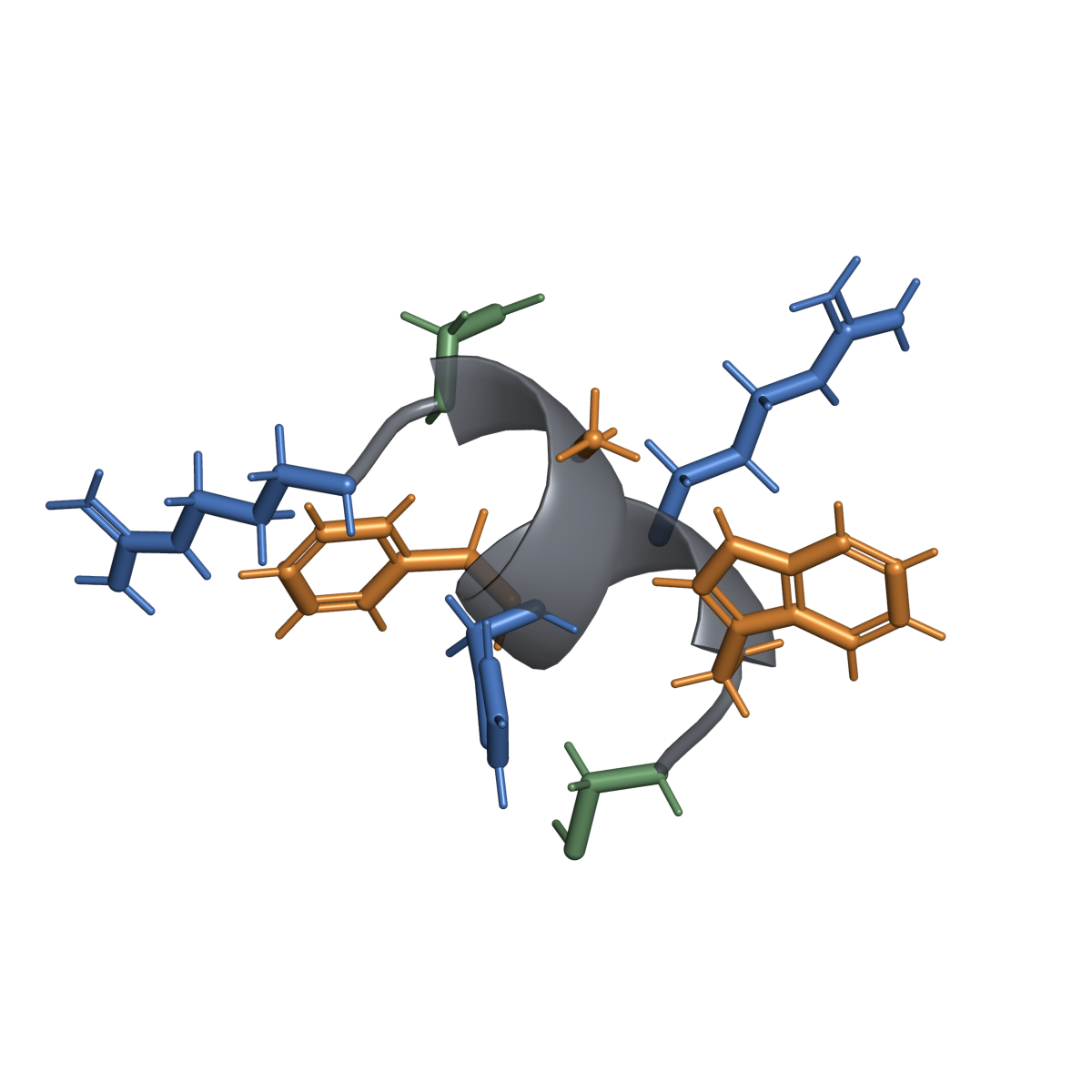
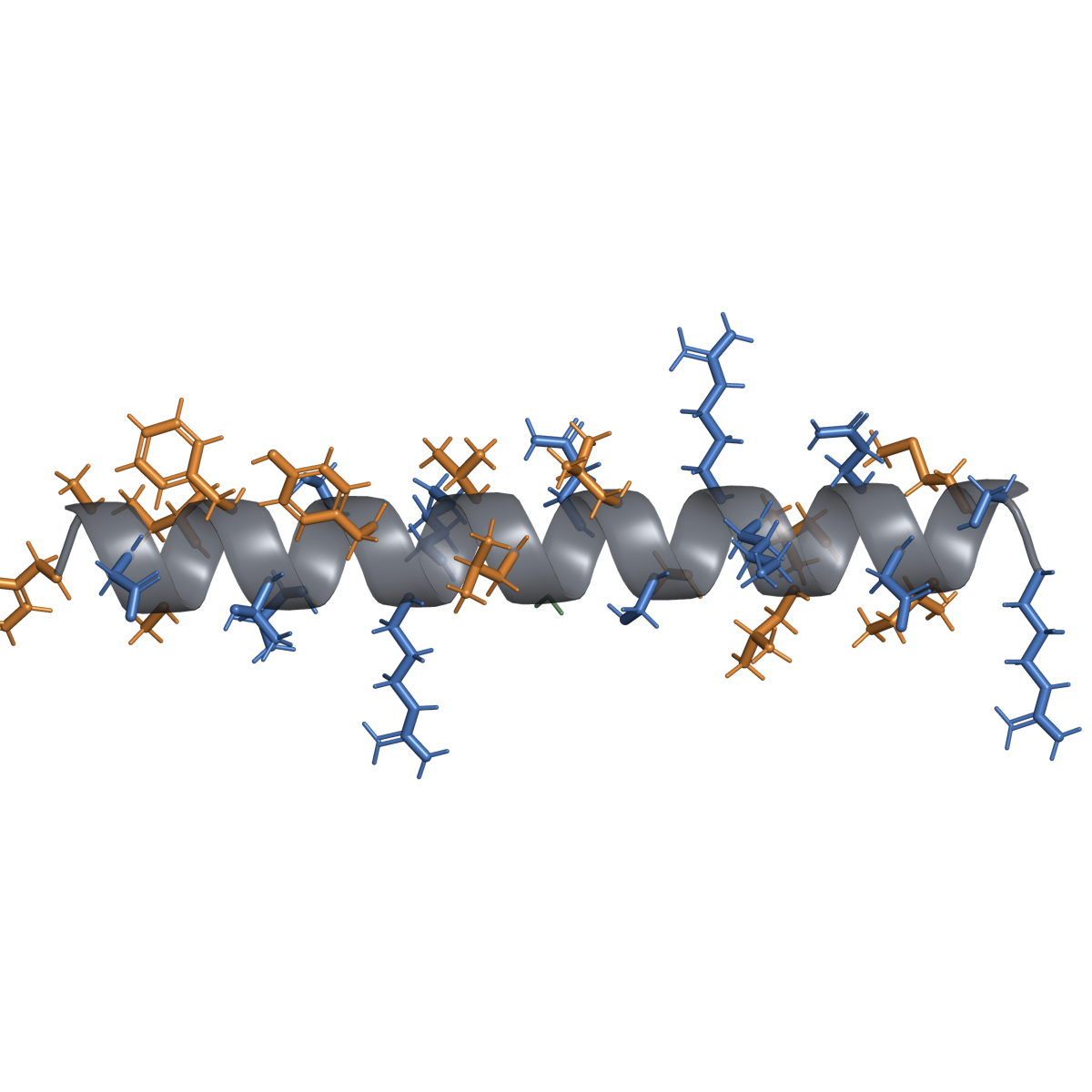
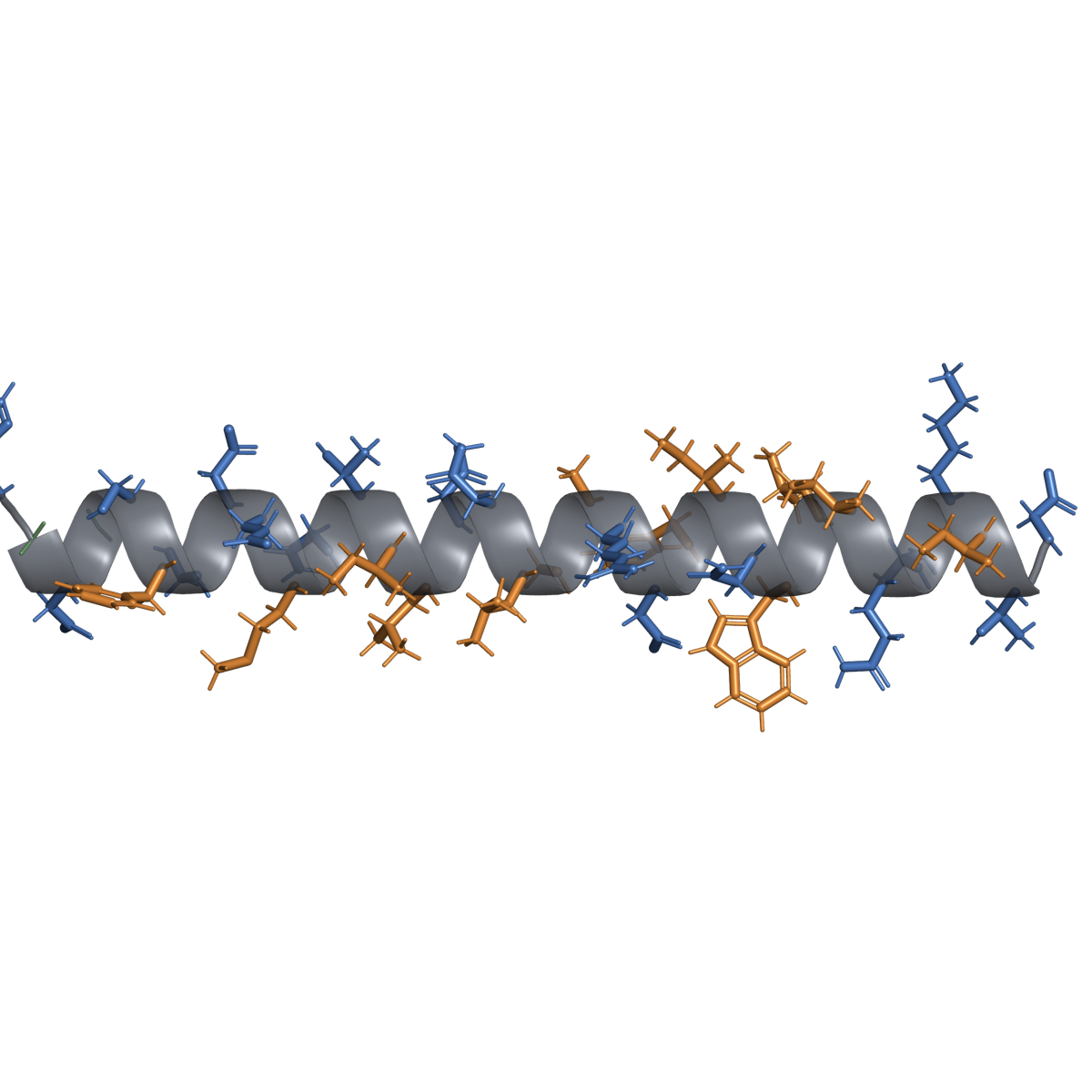
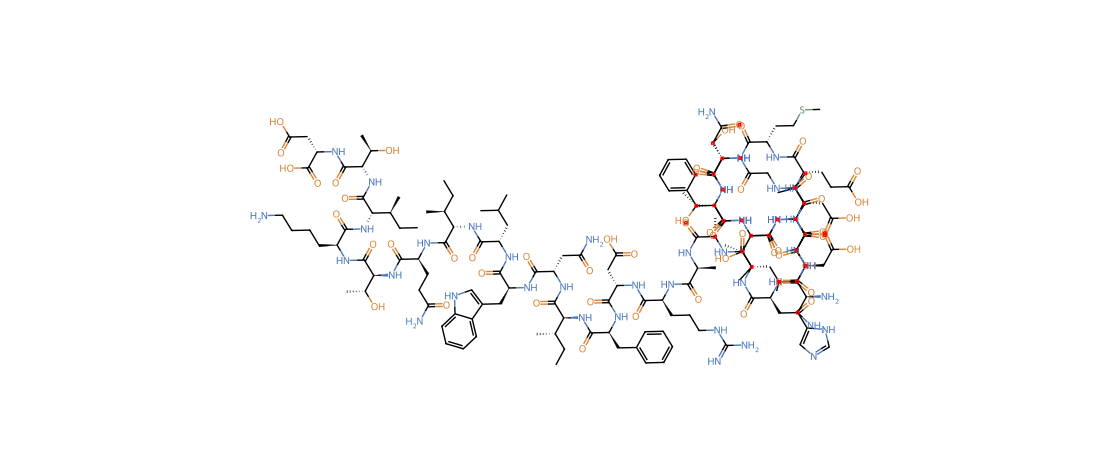
| Molecular/sequence identity | HGDGSFSDEMNTILDNLAARDFINWLIQTKITD-C(O)OH (33 amino acids; human GLP-2 with Gly substituted for Ala at position 2) |
| Modifications/form | Full-length linear peptide; Gly2 substitution confers DPP-IV resistance; supplied as Freeze-drying: water is removed by sublimation under reduced pressure, which can improve the stability of peptides and yield a porous dry matrix. Water removal does not sterilize a product, prove its quality, or define how it should later be handled. مصدر التعريف: Lyophilization, formulation, and stability primer · المسرد powder for Administered into the tissue layer under the skin. مصدر التعريف: Neutral gloss; usage context: Routes, devices, and absorption primer · المسرد injection |
| Stable identifiers | The record number of a compound in PubChem, the atlas's primary structure-asset source. A registry record or depiction does not authenticate a commercial sample. مصدر التعريف: Identity and structure assets methodology · المسرد: 16139605; CAS 197922-42-2; WHO ATC A16AA07; DrugBank DB01369; FDA NDA 203441 |
| Identity caveats | Native GLP-2 has Ala2 and a The time for the amount of a substance in the body to fall by half. مصدر التعريف: Neutral gloss; usage context: Routes, devices, and absorption primer · المسرد of ~7 minutes. The Gly2 substitution extends half-life to ~2 hours. Not a GLP-1 analog; does not affect glucose homeostasis. |
Development and approval status
| Jurisdiction | Status and indication | Product/source | As of |
|---|---|---|---|
| US (FDA) | Approved Dec 2012 — SBS dependent on parenteral support (adults); Jul 2019 — pediatric ≥1 yr | Gattex (Takeda / NPS Pharma) | Aug 2026 |
| EU (EMA) | Approved — same indications | Revestive (Takeda) | Aug 2026 |
| Canada, Australia, Switzerland, Israel | Approved (market-specific) | Revestive / Gattex | Aug 2026 |
- UNITED STATES
- US (FDA): Approved Dec 2012 — SBS dependent on parenteral support (adults); Jul 2019 — pediatric ≥1 yr
- EU/EEA
- EU (EMA): Approved — same indications
- UNITED KINGDOM
- No UNITED KINGDOM row is present in the source status table
- OTHER DOCUMENTED
- Canada, Australia, Switzerland, Israel: Approved (market-specific)
Sport status: WADA status: not prohibited.
Mechanism and pharmacology
Teduglutide is a dipeptidyl peptidase IV-resistant analog of An entry with substantial scientific visibility or identity value. Biological rationale and non-human evidence do not establish patient benefit. مصدر التعريف: Scope and selection methodology · المسرد glucagon-like peptide-2 (GLP-2). It binds the GLP-2 receptor expressed on intestinal enteroendocrine cells, subepithelial myofibroblasts, and enteric neurons, leading to release of insulin-like growth factor 1 and other growth factors. This promotes villus height growth, crypt cell proliferation, and increased intestinal absorptive surface area. Teduglutide also delays gastric emptying and reduces gastric acid secretion.
Evidence by claim
| Claim/indication | Stage | Grade | Best human evidence | Main result | Important limitations |
|---|---|---|---|---|---|
| Reduction in parenteral support in SBS (adults) | Approved | A | STEPS trial (24-wk A study in which participants are assigned to the study material or a comparator by chance. مصدر التعريف: Neutral gloss; usage context: Evidence grading methodology · المسرد, n=86) | 63% teduglutide vs 30% An inactive comparator used in a controlled study. مصدر التعريف: Neutral gloss; usage context: Evidence grading methodology · المسرد achieved ≥20% PN volume reduction at wk 24 | Small; short; PN reduction not full independence |
| Sustained PN reduction (adults) — long-term | A study in which participants and investigators know what is administered. مصدر التعريف: Neutral gloss; usage context: Evidence grading methodology · المسرد extension | B | STEPS-2 (2-yr open-label, n=65) | 93% of responders maintained PN reduction; 30% achieved enteral independence | Open-label; no comparator; attrition results may differ from published peer-reviewed data |
| Reduction in PN in pediatric SBS (≥1 yr) | Approved | A | Pivotal pediatric trial (24-wk RCT, n=59) | 69.2% (0.05 mg/kg) achieved ≥20% PN reduction vs 11.1% standard of care; increased intestinal adaptation markers | Small; pediatric-specific safety limited; nonblinded SOC arm |
- Aالدرجة A: مثبت لاستخدام محدد مصرح به
- Bالدرجة B: أدلة بشرية معتدلة
- Cالدرجة C: أدلة بشرية أولية
- Dالدرجة D: ما قبل السريرية فقط
- Eالدرجة E: ادعاء قصصي/تسويقي
- Xالدرجة X: الأدلة تتعارض مع الادعاء أو لا تدعمه
Text alternative for the claim-evidence diagram. Each grade is defined below:
- A — Established for a specific labeled use
- 2 claims: Reduction in parenteral support in SBS (adults); Reduction in PN in pediatric SBS (≥1 yr)
- B — Moderate human evidence
- 1 claim: Sustained PN reduction (adults) — long-term
- C — Preliminary human evidence
- 0 claims
- D — Preclinical only
- 0 claims
- E — Anecdotal/marketing claim
- 0 claims
- X — Evidence contradicts or does not support the claim
- 0 claims
Key studies
| Study | Design/population | Exposure studied | Endpoints and result | Limitations |
|---|---|---|---|---|
| STEPS trial — Jeppesen PB, et al. (Gastroenterology 2012) | 24-wk A study in which participants are assigned to the study material or a comparator by chance. مصدر التعريف: Neutral gloss; usage context: Evidence grading methodology · المسرد, SBS adults on PN (n=86) | Teduglutide 0.05 mg/kg Administered into the tissue layer under the skin. مصدر التعريف: Neutral gloss; usage context: Routes, devices, and absorption primer · المسرد qd vs An inactive comparator used in a controlled study. مصدر التعريف: Neutral gloss; usage context: Evidence grading methodology · المسرد | 63% vs 30% achieved ≥20% PN reduction (p=0.002) | Small; short; highly selected |
| STEPS-2 — O'Keefe SJ, et al. (Clin Transl Gastroenterol 2016) | 2-yr A study in which participants and investigators know what is administered. مصدر التعريف: Neutral gloss; usage context: Evidence grading methodology · المسرد extension (n=65) | Teduglutide 0.05 mg/kg SC qd | 93% maintained PN reduction; bowel length/absorptive capacity increased | Open-label; no control; attrition |
| STEPS-3 — Jeppesen PB, et al. (JPEN 2020) | Additional extension; factors associated with response | Teduglutide 0.05 mg/kg SC qd | 30% of long-term treated achieved full enteral autonomy | Very selected population |
| Pediatric study — Kocoshis SA, et al. (JPEN 2020) | 24-wk RCT, pediatric SBS age 1–17 (n=59) | Teduglutide 0.025 or 0.05 mg/kg SC qd | Greater PN reduction vs SOC; 69.2% (0.05 mg/kg) achieved ≥20% PN reduction | Small; pediatric sample size limits safety characterization |
Dose and administration evidence
Approved labeled regimen
The label summary below is product-, indication-, and jurisdiction-specific; consult the full current label and a licensed clinician/pharmacist.
The entries summarize the cited US FDA Gattex label for short bowel syndrome.
Adults: 0.05 mg/kg Administered into the tissue layer under the skin. مصدر التعريف: Neutral gloss; usage context: Routes, devices, and absorption primer · المسرد once daily.
Pediatric (≥1 yr): 0.05 mg/kg SC once daily.
Moderate and severe renal impairment and ESRD (eGFR below 60 mL/min/1.73 m²): 0.025 mg/kg SC once daily.
Rotate injection sites (abdomen, thigh, arm).
Adjust dose or discontinue if colonoscopic findings require.
Studied regimens (not recommendations)
0.10 mg/kg and 0.20 mg/kg studied in Phase 2 but not superior to 0.05 mg/kg.
Twice-weekly GLP-2 analog (apraglutide) is in development for SBS.
What is not established
Not indicated for Crohn's disease, ulcerative colitis, or other non-SBS intestinal disorders (studied but not approved).
Effect on mortality or long-term survival not established.
Available human pregnancy data are insufficient to evaluate a drug-associated risk; the current label describes animal data rather than an FDA pregnancy letter category.
Safety
Established label risks
Warning and precaution (not a boxed warning): Potential acceleration of neoplastic growth. The label specifies age-appropriate GI screening and surveillance before and during treatment.
Fluid overload (most common in patients reducing PN too rapidly — edema, dyspnea).
GI: abdominal pain, nausea, stomal complications, flatulence.
Pancreatitis, cholecystitis, biliary tract disease.
Human-study signals
Fluid and electrolyte imbalances during PN weaning (require monitoring).
Antibody formation (low titer, non-neutralizing).
Unknowns and product-quality risks
Carcinogenicity risk with cumulative decades-long use unknown.
No data on use in patients with active GI malignancy.
Interactions and special populations
No drug interaction studies reported.
Lanreotide or octreotide: may antagonize teduglutide's intestinal growth effects (theoretical).
Moderate or severe renal impairment and ESRD (eGFR below 60 mL/min/1.73 m²): the FDA-labeled dosage is reduced by 50% in both adults and pediatric patients.
No dosage adjustment is recommended for mild or moderate hepatic impairment; severe hepatic impairment has not been studied.
Regulatory, compounding, and sport notes
Orphan drug designation in US and EU.
FDA REMS program not required but colonoscopy surveillance is standard-of-care as per label.
The World Anti-Doping Agency; its Prohibited List classifies many peptides as prohibited substances in sport. مصدر التعريف: WADA and sport regulation brief · المسرد status: not prohibited.
Evidence gaps
Very long-term (exceeding 5 yr) safety with respect to GI malignancy.
Predictive biomarkers for response (who will achieve enteral independence).
Data in neonatal SBS (age younger than 1 year).
Comparative effectiveness vs other GLP-2 analogs (glepaglutide, apraglutide).
Cost-effectiveness relative to PN alone.
Search notes
Databases and registries: DailyMed (Gattex label), ClinicalTrials.gov, PubMed, EMA (Revestive EPAR).
Search terms: "teduglutide" OR "Gattex" OR "Revestive" OR "ALX-0600" OR "GLP-2 analog".
Last searched: 2026-08-06.
Inclusion emphasis: FDA and EMA labels, pivotal trials (STEPS program), long-term extensions.
Sources
DailyMed. Gattex (teduglutide) prescribing information. NDA 203441, revised September 2025. https://dailymed.nlm.nih.gov/dailymed/drugInfo.cfm?setid=66b69c1e-b25c-44d3-b5ff-1c1de9a516fa
Jeppesen PB, et al. Teduglutide reduces need for parenteral support in patients with short bowel syndrome: results of STEPS trial. Gastroenterology. 2012;143(6):1473–1481. https://doi.org/10.1053/j.gastro.2012.09.007
O'Keefe SJ, et al. Long-term teduglutide for the treatment of patients with intestinal failure associated with short bowel syndrome. Clin Transl Gastroenterol. 2016;7:e142. DOI: 10.1038/ctg.2015.69. PMID: 26844839. https://doi.org/10.1038/ctg.2015.69
Jeppesen PB, et al. Factors associated with response to teduglutide in patients with short bowel syndrome. JPEN J Parenter Enteral Nutr. 2020;44(3):487–495. DOI: 10.1002/jpen.1687. PMID: 31423614. https://doi.org/10.1002/jpen.1687
Kocoshis SA, Merritt RJ, Hill S, et al. Safety and efficacy of teduglutide in pediatric patients with intestinal failure due to short bowel syndrome: a 24-week, Phase III study. JPEN J Parenter Enteral Nutr. 2020;44(4):621–631. DOI: 10.1002/jpen.1690. PMID: 31495952. https://doi.org/10.1002/jpen.1690
Revestive (teduglutide) European Public Assessment Report. EMA/CHMP/76574/2024.
DrugBank DB01369 — Teduglutide. https://go.drugbank.com/drugs/DB01369. Accessed 2026-08-06.