Bottom line
Eptifibatide is a synthetic cyclic heptapeptide derived from the venom of the pygmy rattlesnake (Sistrurus miliarius). It reversibly inhibits the platelet glycoprotein IIb/IIIa receptor, preventing fibrinogen cross-linking and platelet aggregation. Approved for acute coronary syndrome (UA/NSTEMI) and PCI. Administered Administered into a vein. مصدر التعريف: Neutral gloss; usage context: Routes, devices, and absorption primer · المسرد as a bolus followed by infusion; dose is reduced in renal impairment.
Identity and composition
| Field | Verified information |
|---|---|
| Preferred name | Eptifibatide |
| Key aliases | Integrilin |
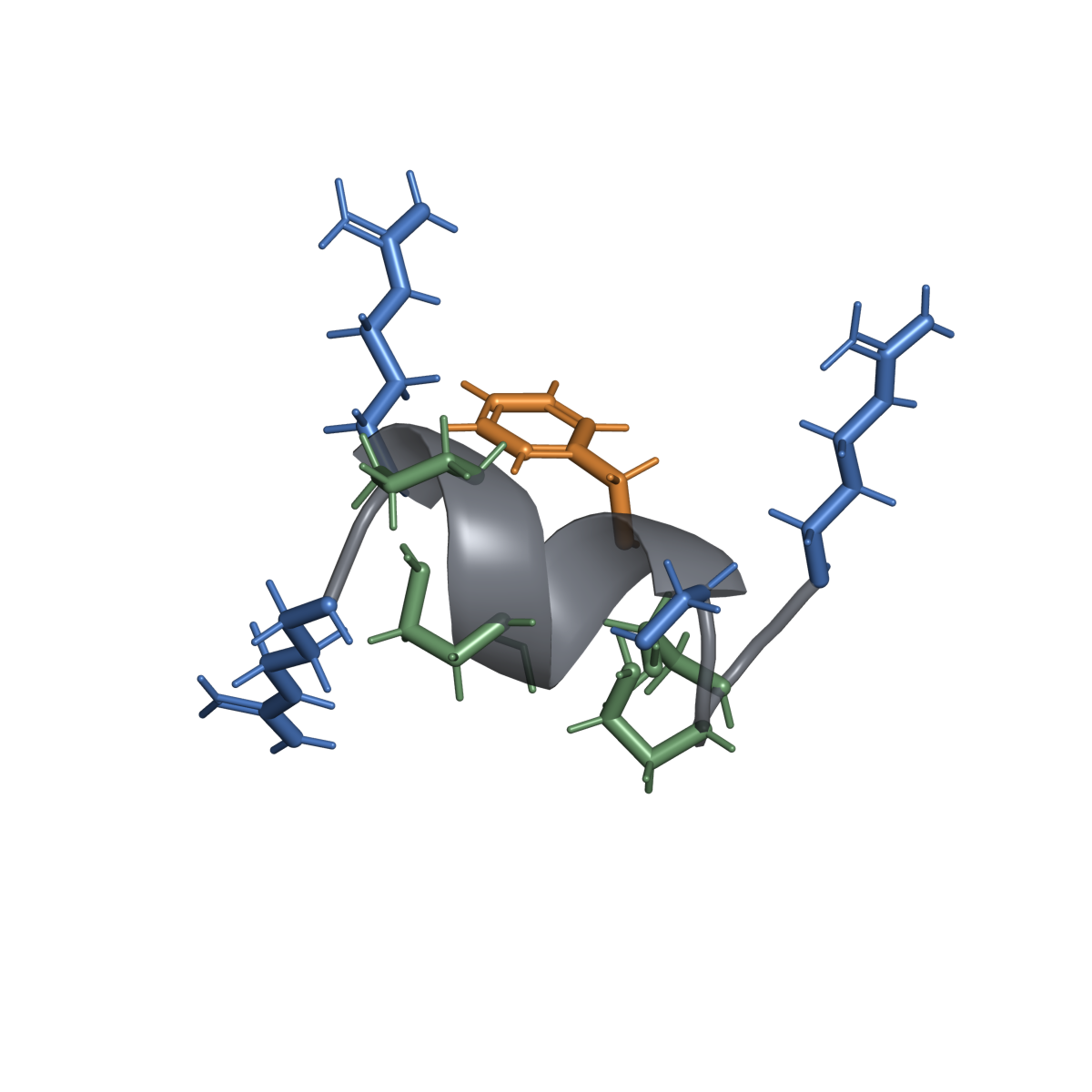
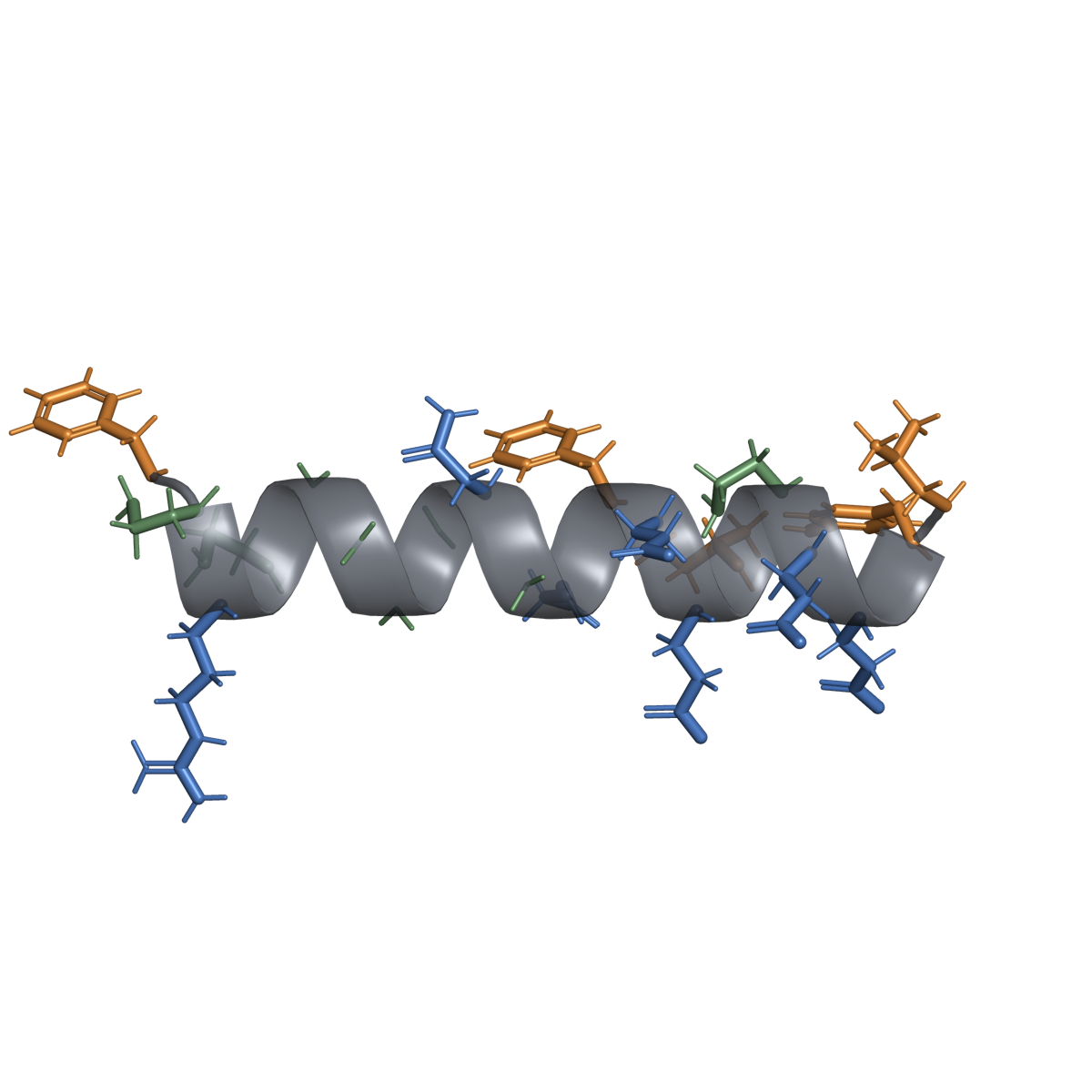
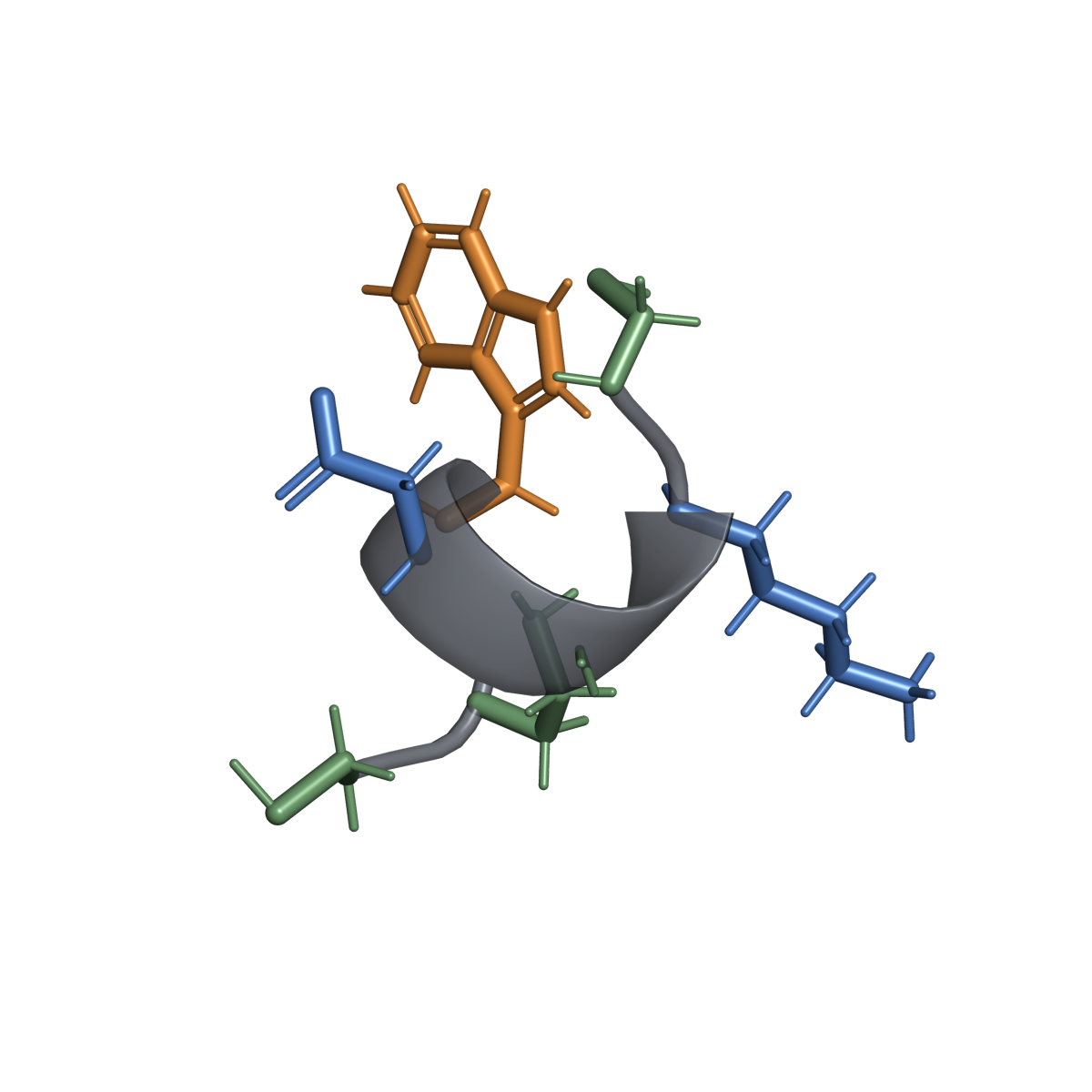
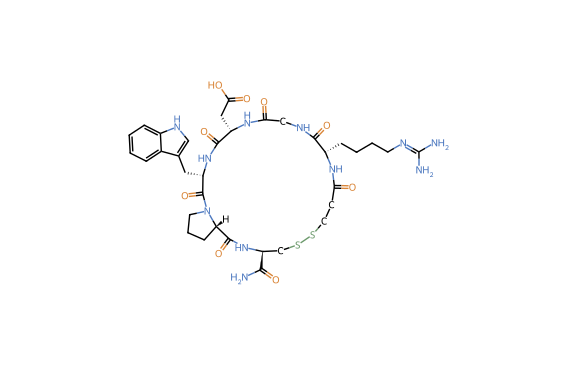
| Molecular/sequence identity | Cyclic heptapeptide containing 6 amino acids + mercaptopropionyl (des-amino-cysteinyl) residue. Sequence: Mpa-Lys-Gly-Asp-Trp-Pro-Cys-NH2, cyclic (1→6)-disulfide. The Lys-Gly-Asp (KGD) motif confers receptor specificity. |
| Modifications/form | Cyclic disulfide; C-terminal amide; acetate salt; solution for Administered into a vein. مصدر التعريف: Neutral gloss; usage context: Routes, devices, and absorption primer · المسرد injection |
| Stable identifiers | The record number of a compound in PubChem, the atlas's primary structure-asset source. A registry record or depiction does not authenticate a commercial sample. مصدر التعريف: Identity and structure assets methodology · المسرد: 448812; DrugBank: DB00063; ChEBI: CHEBI:134975; CAS: 148031-34-9 |
| Identity caveats | Not a standard linear peptide; KGD-containing disintegrin mimetic |
Development and approval status
| Jurisdiction | Status and indication | Product/source | As of |
|---|---|---|---|
| USA (FDA) | Approved — ACS (UA/NSTEMI) and PCI (including stenting) | Integrilin (Merck/Schering-Plough) | 1998 |
| EU (EMA) | Approved 1999; central marketing authorization withdrawn 2026 | Integrilin (GlaxoSmithKline) | 1999–2026 |
- UNITED STATES
- USA (FDA): Approved — ACS (UA/NSTEMI) and PCI (including stenting)
- EU/EEA
- EU (EMA): Approved 1999; central marketing authorization withdrawn 2026
- UNITED KINGDOM
- No UNITED KINGDOM row is present in the source status table
- OTHER DOCUMENTED
- No OTHER DOCUMENTED row is present in the source status table
Sport status: WADA status: not prohibited. No US federal CSA scheduling was identified as of 2026-08-06; state law and other jurisdictions were not assessed. The reviewed product is for supervised clinical use; access classifications elsewhere are product- and jurisdiction-specific.
Mechanism and pharmacology
Eptifibatide reversibly inhibits platelet aggregation by blocking fibrinogen, von Willebrand factor, and other adhesive ligands from binding to the GP IIb/IIIa receptor on activated platelets. The KGD sequence mimics the receptor-binding domain of fibrinogen. Inhibition of platelet aggregation is dose- and concentration-dependent; >80% inhibition of ADP-induced aggregation is achieved at the approved dosing regimen.
How a substance is absorbed, distributed, metabolized, and eliminated by the body; atlas pages report pharmacokinetic data such as half-life, metabolism, and clearance. مصدر التعريف: Neutral gloss; usage context: Routes, devices, and absorption primer · المسرد: Administered into a vein. مصدر التعريف: Neutral gloss; usage context: Routes, devices, and absorption primer · المسرد bolus onset immediate; The time for the amount of a substance in the body to fall by half. مصدر التعريف: Neutral gloss; usage context: Routes, devices, and absorption primer · المسرد ~2.5 h; ~25% protein-bound; primarily renal excretion (both filtration and secretion). Clearance reduced in renal impairment.
Evidence by claim
| Claim/indication | Stage | Grade | Best human evidence | Main result | Important limitations |
|---|---|---|---|---|---|
| ACS (UA/NSTEMI) | Approved | A | PURSUIT (N=10,948; phase 3, A study in which participants are assigned to the study material or a comparator by chance. مصدر التعريف: Neutral gloss; usage context: Evidence grading methodology · المسرد, Neither participants nor investigators know who receives the study material or the comparator. مصدر التعريف: Neutral gloss; usage context: Evidence grading methodology · المسرد, An inactive comparator used in a controlled study. مصدر التعريف: Neutral gloss; usage context: Evidence grading methodology · المسرد-controlled) | 30-day death/MI: 15.7% (placebo) vs 14.2% (eptifibatide 180/2.0); absolute difference 1.5% (p=0.042) | Benefit concentrated in patients undergoing early PCI; women without planned PCI had less benefit |
| PCI (including stenting) | Approved | A | ESPRIT (N=2,064; RCT) | 48-h death/MI/UTVR/TBO: 10.5% (placebo) vs 6.6% (eptifibatide 180/2/180); 37% RRR | 30-day and 6-month benefit persisted; A study in which participants and investigators know what is administered. مصدر التعريف: Neutral gloss; usage context: Evidence grading methodology · المسرد bailout GPI use in placebo arm may have diluted effect |
- Aالدرجة A: مثبت لاستخدام محدد مصرح به
- Bالدرجة B: أدلة بشرية معتدلة
- Cالدرجة C: أدلة بشرية أولية
- Dالدرجة D: ما قبل السريرية فقط
- Eالدرجة E: ادعاء قصصي/تسويقي
- Xالدرجة X: الأدلة تتعارض مع الادعاء أو لا تدعمه
Text alternative for the claim-evidence diagram. Each grade is defined below:
- A — Established for a specific labeled use
- 2 claims: ACS (UA/NSTEMI); PCI (including stenting)
- B — Moderate human evidence
- 0 claims
- C — Preliminary human evidence
- 0 claims
- D — Preclinical only
- 0 claims
- E — Anecdotal/marketing claim
- 0 claims
- X — Evidence contradicts or does not support the claim
- 0 claims
Key studies
| Study | Design/population | Exposure studied | Endpoints and result | Limitations |
|---|---|---|---|---|
| PURSUIT | 726-center, 27-country, DB, A study in which participants are assigned to the study material or a comparator by chance. مصدر التعريف: Neutral gloss; usage context: Evidence grading methodology · المسرد; N=10,948; UA/NSTEMI | Eptifibatide 180 mcg/kg bolus + 2.0 mcg/kg/min infusion (72-96 h) vs An inactive comparator used in a controlled study. مصدر التعريف: Neutral gloss; usage context: Evidence grading methodology · المسرد | Death or MI at 30 days: 15.7% (placebo) vs 14.2% (eptifibatide), p=0.042; 7-day death/MI: 11.6% vs 10.1% | 180/1.3 arm stopped early; sex-based heterogeneity |
| ESPRIT | Multicenter, DB, RCT; N=2,064; elective/urgent PCI with stent | Eptifibatide 180 mcg/kg bolus + 2.0 mcg/kg/min + second bolus 180 mcg/kg at 10 min vs placebo | Primary composite (48 h): 10.5% → 6.6% (p=0.0015) | A study in which participants and investigators know what is administered. مصدر التعريف: Neutral gloss; usage context: Evidence grading methodology · المسرد GPI rescue in 0.5% of eptifibatide vs 2.4% of placebo |
| IMPACT II | Multicenter, DB, RCT; N=4,010; PCI | Eptifibatide 135/0.5 or 135/0.75 vs placebo | 30-day death/MI/urgent revascularization: 11.6% (placebo) vs 9.1% (135/0.5, p=0.035) | Lower doses vs PURSUIT; only the low-dose arm reached significance |
Dose and administration evidence
Approved labeled regimen
The label summary below is product-, indication-, and jurisdiction-specific; consult the full current label and a licensed clinician/pharmacist.
ACS: 180 mcg/kg Administered into a vein. مصدر التعريف: Neutral gloss; usage context: Routes, devices, and absorption primer · المسرد bolus as soon as possible after diagnosis, followed by 2.0 mcg/kg/min IV infusion. PCI: add second 180 mcg/kg bolus at 10 min. Infusion continues until discharge or up to 72-96 h (ACS) or 18-24 h post-PCI. Renal impairment (CrCl less than 50 mL/min): reduce infusion to 1 mcg/kg/min.
Studied regimens (not recommendations)
IMPACT II used 135 mcg/kg bolus + 0.5-0.75 mcg/kg/min (lower than current approved dose). Higher doses were required to achieve >80% receptor occupancy, supporting the 180/2/180 regimen.
What is not established
STEMI: not an independent FDA-approved indication (studied in TITAN-TIMI 34, IMPACT-AMI but not labeled).
Dialysis-dependent patients: contraindicated in the US per current label.
Safety
Established label risks
Bleeding (most common): major bleeding 4.4-10.8% across trials (variable by comparator and dose).
Thrombocytopenia (including acute profound thrombocytopenia): immune-mediated; rare but reported post-marketing. Can occur on first exposure.
Hypotension.
Contraindicated: active bleeding, bleeding diathesis, major surgery within 6 wks, stroke within 30 d, hemorrhagic stroke history, severe hypertension, dialysis dependence (US), platelet count <100,000/mm³.
Human-study signals
PURSUIT: intracranial hemorrhage 0.7% (An inactive comparator used in a controlled study. مصدر التعريف: Neutral gloss; usage context: Evidence grading methodology · المسرد 0.6%) — not statistically different.
Increased bleeding with concurrent heparin; ACT monitoring used in trials.
Unknowns and product-quality risks
Immunogenicity risk with repeated exposure (antibodies to GP IIb/IIIa).
Not studied in patients receiving oral anticoagulants concurrently.
Interactions and special populations
Concomitant heparin, aspirin, clopidogrel increase bleeding risk. Enoxaparin and other LMWH studied. Clopidogrel loading was permitted in ESPRIT. Renal impairment requires dose reduction (CrCl <50 mL/min). No pediatric indication.
Regulatory, compounding, and sport notes
The World Anti-Doping Agency; its Prohibited List classifies many peptides as prohibited substances in sport. مصدر التعريف: WADA and sport regulation brief · المسرد status: not prohibited. No US federal CSA scheduling was identified as of 2026-08-06; state law and other jurisdictions were not assessed. The reviewed product is for supervised clinical use; access classifications elsewhere are product- and jurisdiction-specific.
Evidence gaps
No direct comparison of eptifibatide with ticagrelor/prasugrel loading in contemporary ACS.
Optimal duration of infusion in NSTEMI patients managed conservatively (no early PCI) is Angio based on PURSUIT (up to 96 h) but rarely used currently.
Thrombocytopenia mechanisms (pre-existing antibodies vs de novo).
Search notes
Databases and registries: FDA label (accessdata.fda.gov), DailyMed, EMA EPAR, PubMed, ClinicalTrials.gov
Search terms: eptifibatide, Integrilin, PURSUIT, ESPRIT, IMPACT II, GP IIb/IIIa inhibitor
Last searched: 2026-08-06
Inclusion emphasis: FDA/EMA labels, phase 3 A study in which participants are assigned to the study material or a comparator by chance. مصدر التعريف: Neutral gloss; usage context: Evidence grading methodology · المسرد
Sources
FDA prescribing information: INTEGRILIN (eptifibatide) injection. Available at: https://www.accessdata.fda.gov/drugsatfda_docs/label/2021/020718s039lbl.pdf (accessed 2026-08-06).
PURSUIT Trial Investigators. Inhibition of platelet glycoprotein IIb/IIIa with eptifibatide in patients with acute coronary syndromes. N Engl J Med. 1998;339(7):436-43. DOI: 10.1056/NEJM199808133390704.
ESPRIT Investigators. Novel dosing regimen of eptifibatide in planned coronary stent implantation (ESPRIT). Lancet. 2000;356(9247):2037-44. DOI: 10.1016/S0140-6736(00)03400-0.
IMPACT-II Investigators. Randomised placebo-controlled trial of eptifibatide on complications of PCI. Lancet. 1997;349(9063):1422-8. DOI: 10.1016/S0140-6736(96)10172-0.
EMA: Integrilin EPAR (product information). Available at: https://www.ema.europa.eu/en/medicines/human/EPAR/integrilin (accessed 2026-08-06).