Bottom line
Corticorelin ovine triflutate (Acthrel) is a synthetic 41-amino-acid peptide identical to ovine corticotropin-releasing hormone (oCRH). It was approved by the FDA in 1996 as a diagnostic agent for differentiating pituitary from ectopic ACTH production in ACTH-dependent Cushing syndrome. It is administered as a single Administered into a vein. 定义来源: Neutral gloss; usage context: Routes, devices, and absorption primer · 术语表 dose of 1 mcg/kg. Acthrel was withdrawn from the US market as of 2021 for business reasons, not safety or efficacy. The peptide itself remains a diagnostic tool of historical and methodological interest.
Identity and composition
| Field | Verified information |
|---|---|
| Preferred name | Corticorelin (ovine) |
| Key aliases | Acthrel, oCRH, Ovine corticotropin-releasing hormone, corticorelin ovine triflutate |
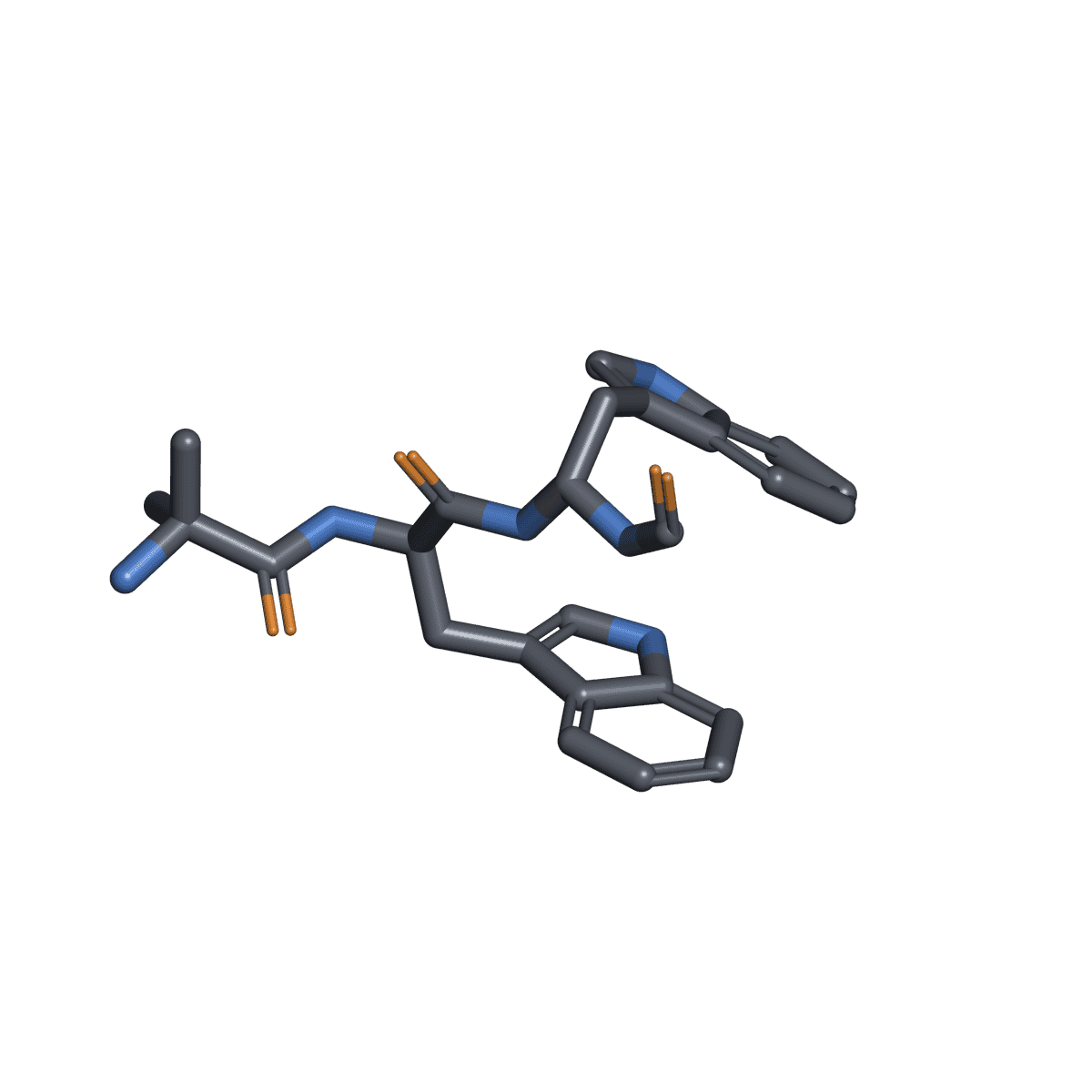
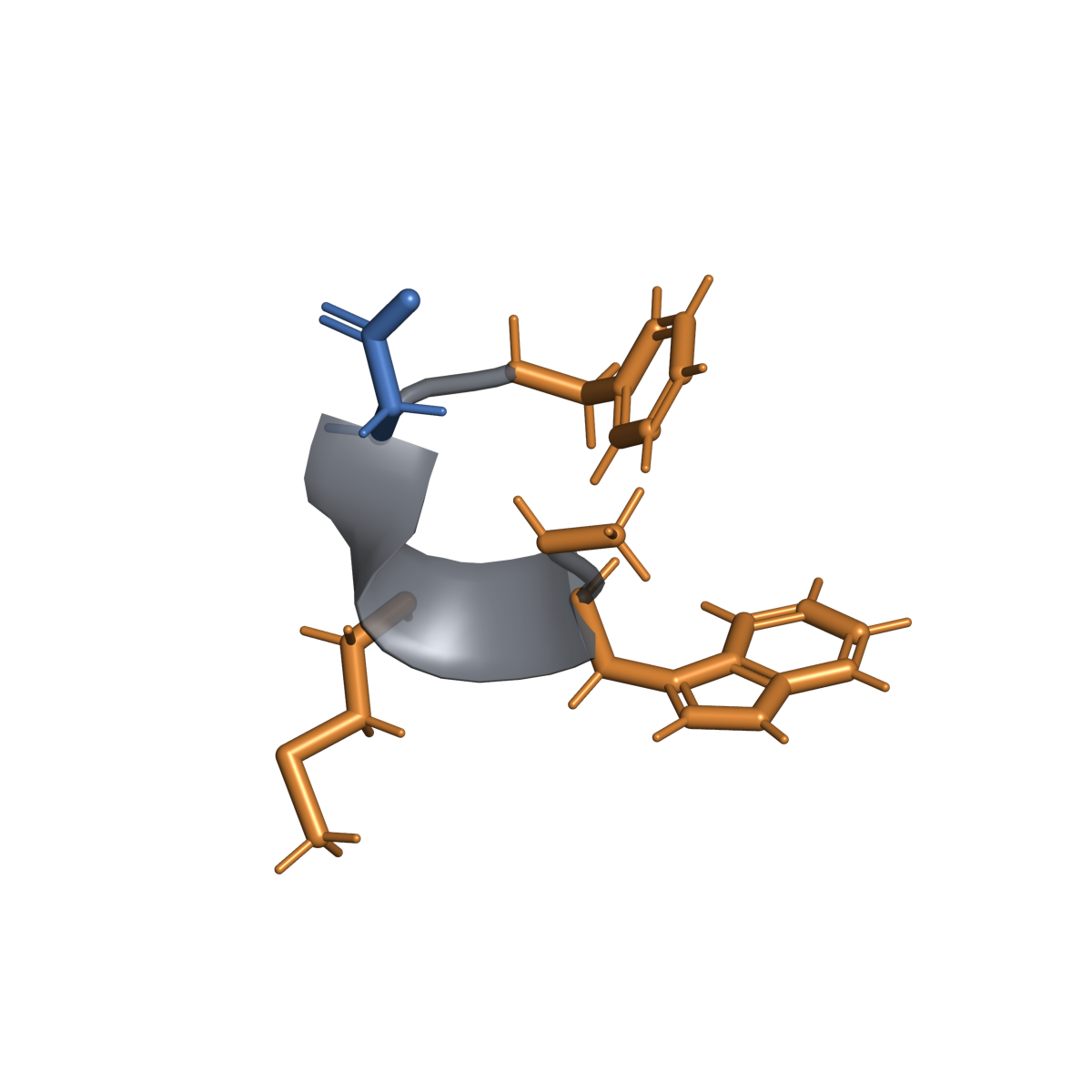
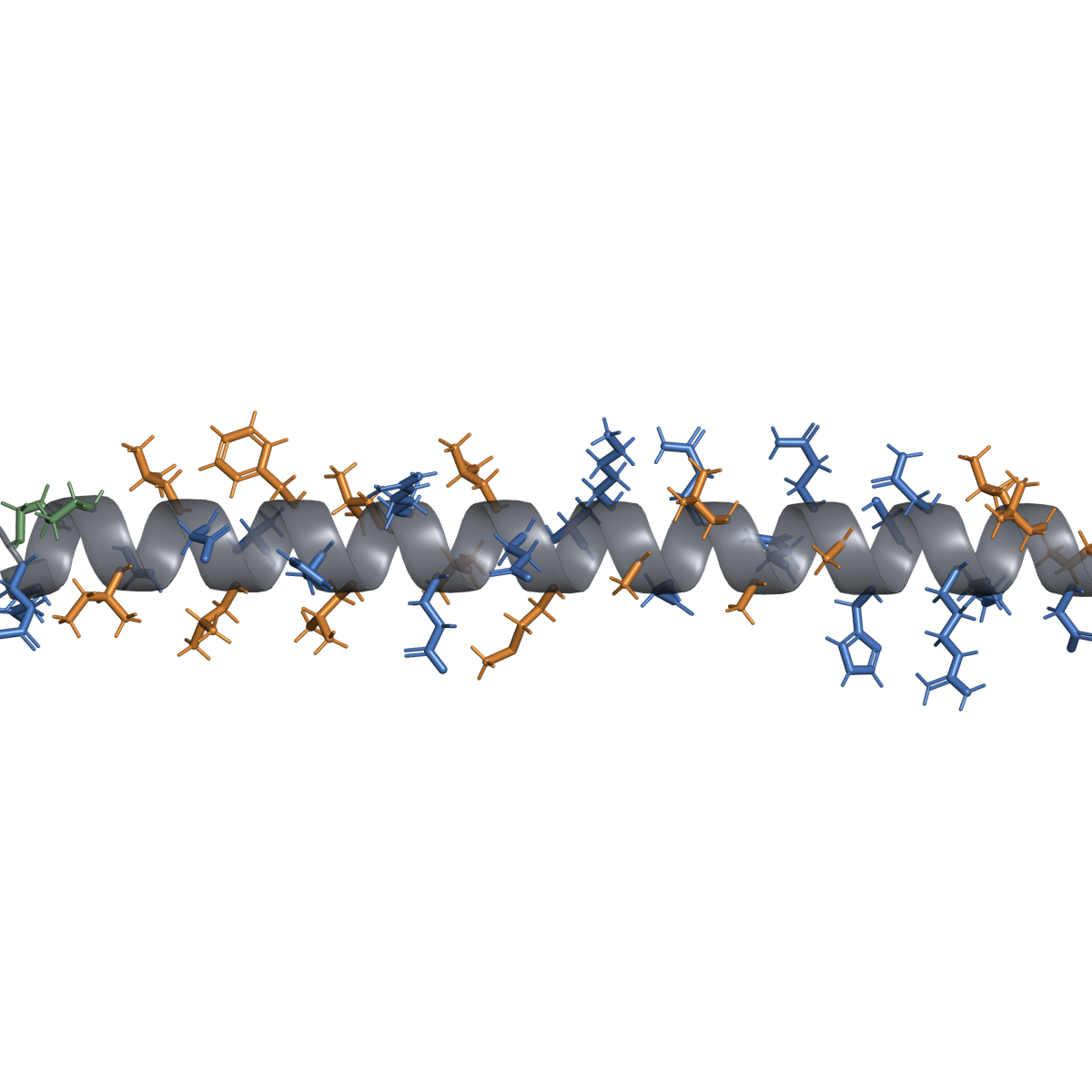
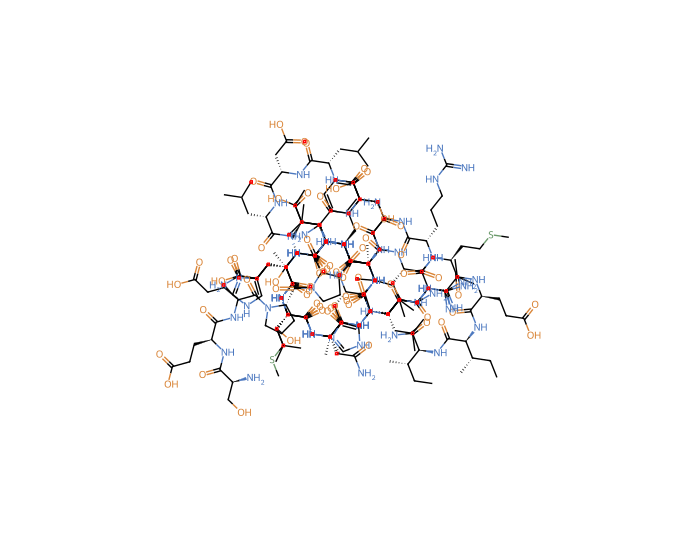
| Molecular/sequence identity | 41-amino-acid peptide: Ser-Gln-Glu-Pro-Pro-Ile-Ser-Leu-Asp-Leu-Thr-Phe-His-Leu-Leu-Arg-Glu-Val-Leu-Glu-Met-Thr-Lys-Ala-Asp-Gln-Leu-Ala-Gln-Gln-Ala-His-Ser-Asn-Arg-Lys-Leu-Leu-Asp-Ile-Ala-NH2 |
| Modifications/form | C-terminal amidation; trifluoroacetate salt; Freeze-drying: water is removed by sublimation under reduced pressure, which can improve the stability of peptides and yield a porous dry matrix. Water removal does not sterilize a product, prove its quality, or define how it should later be handled. 定义来源: Lyophilization, formulation, and stability primer · 术语表 for Administered into a vein. 定义来源: Neutral gloss; usage context: Routes, devices, and absorption primer · 术语表 injection |
| Stable identifiers | CAS 121249-14-7 (triflutate); The record number of a compound in PubChem, the atlas's primary structure-asset source. A registry record or depiction does not authenticate a commercial sample. 定义来源: Identity and structure assets methodology · 术语表 16186200 (exact-name corticorelin record); DrugBank DB09067; UNII Y124TZ0513 |
| Identity caveats | Ovine CRH differs from human CRH by 7 amino acids; the ovine form has a longer The time for the amount of a substance in the body to fall by half. 定义来源: Neutral gloss; usage context: Routes, devices, and absorption primer · 术语表 and is more potent as a diagnostic stimulator of ACTH release. |
Development and approval status
| Jurisdiction | Status and indication | Product/source | As of |
|---|---|---|---|
| US (FDA) | Diagnosis of ACTH-dependent Cushing syndrome (differentiate pituitary vs ectopic) | Acthrel (100 mcg/vial) | Approved 1996; marketing discontinued 2021 |
| US (FDA) | Orphan Drug designation for Cushing syndrome diagnosis | Acthrel | 1996 |
- UNITED STATES
- US (FDA): Diagnosis of ACTH-dependent Cushing syndrome (differentiate pituitary vs ectopic); US (FDA): Orphan Drug designation for Cushing syndrome diagnosis
- EU/EEA
- No EU/EEA row is present in the source status table
- UNITED KINGDOM
- No UNITED KINGDOM row is present in the source status table
- OTHER DOCUMENTED
- No OTHER DOCUMENTED row is present in the source status table
Sport status: WADA: prohibited at all times under S2.2.2; the 2026 List explicitly names corticorelin among corticotrophins and their releasing factors. Glucocorticoids are regulated separately under S9.
Mechanism and pharmacology
Corticorelin (oCRH) binds to corticotropin-releasing factor receptor 1 (CRFR1) on anterior pituitary corticotrophs, stimulating ACTH release. ACTH then stimulates cortisol release from the adrenal cortex. In Cushing disease (pituitary ACTH excess), patients typically show an exaggerated ACTH response to CRH stimulation. In ectopic ACTH syndrome, the response is blunted.
Evidence by claim
| Claim/indication | Stage | Grade | Best human evidence | Main result | Important limitations |
|---|---|---|---|---|---|
| Differential diagnosis of ACTH-dependent Cushing syndrome | Approved (now off-market) | A | A study in which participants and investigators know what is administered. 定义来源: Neutral gloss; usage context: Evidence grading methodology · 术语表 diagnostic accuracy study: ~300 patients with Cushing disease, ~31 with ectopic ACTH | Mean ACTH increase +227% (Cushing disease) vs +15% (ectopic); ~5-10% false negative rate | Marketing discontinued; no longer commercially available in US |
Text alternative for the claim-evidence diagram. Each grade is defined below:
- A — Established for a specific labeled use
- 1 claim: Differential diagnosis of ACTH-dependent Cushing syndrome
- B — Moderate human evidence
- 0 claims
- C — Preliminary human evidence
- 0 claims
- D — Preclinical only
- 0 claims
- E — Anecdotal/marketing claim
- 0 claims
- X — Evidence contradicts or does not support the claim
- 0 claims
Key studies
| Study | Design/population | Exposure studied | Endpoints and result | Limitations |
|---|---|---|---|---|
| FDA label data (1996) | A study in which participants and investigators know what is administered. 定义来源: Neutral gloss; usage context: Evidence grading methodology · 术语表, ~300 Cushing disease patients, ~31 ectopic ACTH | 1 mcg/kg Administered into a vein. 定义来源: Neutral gloss; usage context: Routes, devices, and absorption primer · 术语表 corticorelin | ACTH response as reported above | Open-label, no An inactive comparator used in a controlled study. 定义来源: Neutral gloss; usage context: Evidence grading methodology · 术语表; convenience sampling |
Dose and administration evidence
Approved labeled regimen
The label summary below is product-, indication-, and jurisdiction-specific; consult the full current label and a licensed clinician/pharmacist.
1 mcg/kg administered as a single Administered into a vein. 定义来源: Neutral gloss; usage context: Routes, devices, and absorption primer · 术语表 dose (30-second infusion, not bolus).
ACTH and cortisol measured at -15, 0, 15, 30, 45, 60, 90, and 120 minutes.
Studied regimens (not recommendations)
Doses up to 200 mcg studied but not recommended; higher doses associated with hypotension and asystole.
What is not established
No established or recommended human dose outside the approved diagnostic indication.
Safety
Established label risks
Mild transient flushing (most common).
Transient tachycardia and hypotension (dose-dependent; minimized by 30-second infusion).
Rare: severe hypotension, loss of consciousness, asystole (at doses >1 mcg/kg).
Hypersensitivity (contraindicated).
Human-study signals
Seizure reported in one patient with pre-existing seizure diathesis. Absence-like loss of consciousness in 3 patients.
Unknowns and product-quality risks
Market withdrawal due to business reasons; no safety issues identified.
Interactions and special populations
Corticosteroids suppress ACTH response.
Estrogen-containing medications may increase baseline ACTH/cortisol.
Pregnancy: Category C.
Not studied in pediatric population.
Regulatory, compounding, and sport notes
FDA approved (BLA 020162); marketing discontinued.
The World Anti-Doping Agency; its Prohibited List classifies many peptides as prohibited substances in sport. 定义来源: WADA and sport regulation brief · 术语表: prohibited at all times under S2.2.2; the 2026 List explicitly names corticorelin among corticotrophins and their releasing factors. Glucocorticoids are regulated separately under S9.
Any compounded preparation would not be FDA-approved; current US compounding eligibility and market availability were not established by this review.
Evidence gaps
No active FDA-marketed product in the US as of 2026.
Data from the 1990s may not reflect current diagnostic accuracy with modern ACTH assays.
No A study in which participants are assigned to the study material or a comparator by chance. 定义来源: Neutral gloss; usage context: Evidence grading methodology · 术语表 comparing diagnostic accuracy to desmopressin stimulation.
Search notes
Databases and registries: FDA label, PubMed, DrugBank, PubChem
Search terms: "corticorelin", "Acthrel", "ovine CRH", "Cushing syndrome diagnosis"
Last searched: 2026-08-06
Inclusion emphasis: FDA label, NCATS Inxight
Sources
FDA. Acthrel (corticorelin ovine triflutate) prescribing information. 2015 revision. https://www.accessdata.fda.gov/drugsatfda_docs/label/2015/020162s010lbl.pdf
FDA Substance Registration System. Corticorelin ovine, UNII Y124TZ0513. https://precision.fda.gov/uniisearch/srs/unii/Y124TZ0513
PubChem. Corticorelin exact-name record (CID 16186200). https://pubchem.ncbi.nlm.nih.gov/compound/16186200
DrugBank. Corticorelin ovine triflutate (DB09067). https://go.drugbank.com/
WADA. 2026 Prohibited List. https://www.wada-ama.org/en/resources/world-anti-doping-program/prohibited-list