Bottom line
Bacitracin is a polypeptide antibiotic mixture produced by Bacillus subtilis and Bacillus licheniformis. It inhibits bacterial cell wall synthesis by interfering with dephosphorylation of the lipid carrier C55-isoprenyl pyrophosphate. Currently limited to topical/ophthalmic use due to dose-limiting nephrotoxicity with systemic administration. Widely available OTC in combination antibiotic ointments.
Identity and composition
| Field | Verified information |
|---|---|
| Preferred name | Bacitracin |
| Key aliases | Bacitracin zinc, bacitracin ophthalmic ointment, Baciguent |
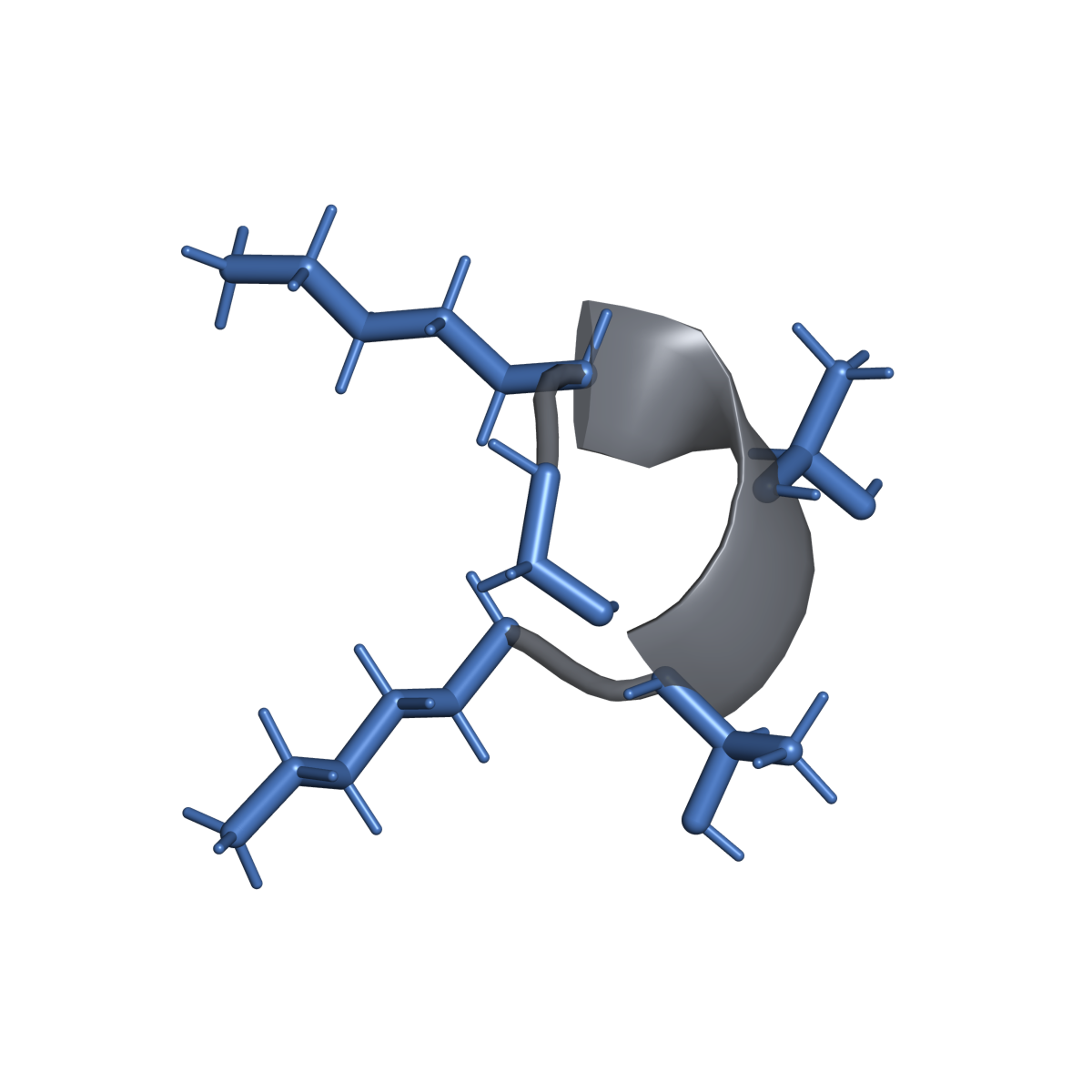
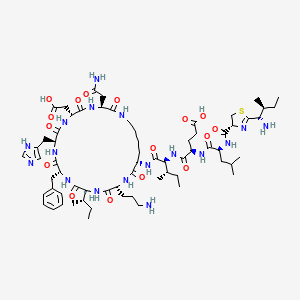
| Molecular/sequence identity | A mixture of polypeptides (bacitracin A, B1, B2, B3); bacitracin A is the major active component. Structure: a cyclic dodecapeptide with a thiazoline ring formed between the N-terminal Cys and the C-terminal Asn. Contains D-amino acids and unusual linkages. |
| Modifications/form | Available as bacitracin (ophthalmic ointment 500 U/g) and bacitracin zinc (topical ointment; same potency). Zinc salt may prolong cutaneous activity. |
| Stable identifiers | The record number of a compound in PubChem, the atlas's primary structure-asset source. A registry record or depiction does not authenticate a commercial sample. Sumber definisi: Identity and structure assets methodology · Glosarium: 10909430 (PubChem's exact-name bacitracin record); DrugBank: DB00626; ChEBI: CHEBI:29892; CAS: 1405-87-4 |
| Identity caveats | Bacitracin is a mixture of cyclic polypeptides — not a single well-defined molecule. Distinguish bacitracin (topical/ophthalmic) from the parenteral product that was withdrawn for nephrotoxicity. |
Development and approval status
| Jurisdiction | Status and indication | Product/source | As of |
|---|---|---|---|
| USA (FDA) | Approved — ophthalmic: superficial ocular infections (conjunctiva/cornea) caused by susceptible organisms | Bacitracin ophthalmic ointment USP (500 U/g) | Approved (original NDA 1950s) |
| USA (FDA) | Topical (OTC) — wound infection prophylaxis in combination products | Neomycin/bacitracin/polymyxin B ointment (Neosporin, generic) | OTC |
| USA (FDA) | Parenteral product withdrawn (severe nephrotoxicity) | Bacitracin for Injection | No longer marketed |
- UNITED STATES
- USA (FDA): Approved — ophthalmic: superficial ocular infections (conjunctiva/cornea) caused by susceptible organisms; USA (FDA): Topical (OTC) — wound infection prophylaxis in combination products; USA (FDA): Parenteral product withdrawn (severe nephrotoxicity)
- EU/EEA
- No EU/EEA row is present in the source status table
- UNITED KINGDOM
- No UNITED KINGDOM row is present in the source status table
- OTHER DOCUMENTED
- No OTHER DOCUMENTED row is present in the source status table
Sport status: WADA status: not prohibited. No US federal CSA scheduling was identified as of 2026-08-06; state law and other jurisdictions were not assessed. Parenteral bacitracin is not marketed in the US; US ophthalmic and topical marketing categories are product- and formulation-specific.
Mechanism and pharmacology
Bacitracin inhibits bacterial cell wall synthesis by binding to the undecaprenyl pyrophosphate (C55-isoprenyl pyrophosphate) carrier, blocking its dephosphorylation to the monophosphate form. This prevents recycling of the lipid carrier needed for peptidoglycan subunit transport across the cytoplasmic membrane. Bacitracin is bactericidal.
Spectrum: Active against Gram-positive bacteria (Staphylococcus spp., Streptococcus spp.) and some Gram-negative organisms (Neisseria, Haemophilus influenzae). Ineffective against fungi.
Topical application: negligible systemic absorption when applied to intact skin or mucous membranes. Systemic absorption can occur from large denuded areas — and was the source of nephrotoxicity with parenteral use.
Evidence by claim
| Claim/indication | Stage | Grade | Best human evidence | Main result | Important limitations |
|---|---|---|---|---|---|
| Superficial ocular infections | Approved | C | Label indication based on in vitro susceptibility and clinical experience from the 1950s; no modern A study in which participants are assigned to the study material or a comparator by chance. Sumber definisi: Neutral gloss; usage context: Evidence grading methodology · Glosarium | Effective against susceptible Gram-positive ocular pathogens | No contemporary An inactive comparator used in a controlled study. Sumber definisi: Neutral gloss; usage context: Evidence grading methodology · Glosarium-controlled or active-comparator trials for monotherapy |
| Wound infection prophylaxis (topical) | OTC | C | Meta-analyses of triple-antibiotic ointment (neomycin/bacitracin/polymyxin B) vs single agents | Triple-antibiotic ointment reduces wound infection vs placebo; marginal additive benefit of bacitracin over iodine-containing preparations | Contamination across OTC products; contact dermatitis risk |
- AKelas A: Mapan untuk penggunaan berlabel tertentu
- BKelas B: Bukti manusia moderat
- CKelas C: Bukti manusia awal
- DKelas D: Hanya praklinis
- EKelas E: Klaim anekdot/pemasaran
- XKelas X: Bukti bertentangan atau tidak mendukung klaim
Text alternative for the claim-evidence diagram. Each grade is defined below:
- A — Established for a specific labeled use
- 0 claims
- B — Moderate human evidence
- 0 claims
- C — Preliminary human evidence
- 2 claims: Superficial ocular infections; Wound infection prophylaxis (topical)
- D — Preclinical only
- 0 claims
- E — Anecdotal/marketing claim
- 0 claims
- X — Evidence contradicts or does not support the claim
- 0 claims
Key studies
| Study | Design/population | Exposure studied | Endpoints and result | Limitations |
|---|---|---|---|---|
| Leyden & Bartelt (1985) — topical AB vs An inactive comparator used in a controlled study. Sumber definisi: Neutral gloss; usage context: Evidence grading methodology · Glosarium for wound infection | A study in which participants are assigned to the study material or a comparator by chance. Sumber definisi: Neutral gloss; usage context: Evidence grading methodology · Glosarium; N=45; abrasions inoculated with S. aureus | Bacitracin vs neomycin/bacitracin/polymyxin B vs placebo | Infection: 2% (triple AB) vs 10% (bacitracin alone) vs 100% (placebo) | Small; artificial inoculation; does not represent community wound care |
Dose and administration evidence
Approved labeled regimen
The label summary below is product-, indication-, and jurisdiction-specific; consult the full current label and a licensed clinician/pharmacist.
Ophthalmic (Rx): Apply ½-inch ribbon into conjunctival sac 1-3 times daily. In blepharitis, spread uniformly over lid margins after removing scales/crusts.
Topical (OTC): Apply to minor cuts, scrapes, burns 1-3 times daily; may be covered with sterile bandage.
What is not established
Systemic use (parenteral product withdrawn — do not use Administered into a vein. Sumber definisi: Neutral gloss; usage context: Routes, devices, and absorption primer · Glosarium/Administered into a muscle. Sumber definisi: Neutral gloss; usage context: Routes, devices, and absorption primer · Glosarium).
Deep-seated ocular infections (not indicated).
Efficacy as a single agent for wound care (usually combined with neomycin and polymyxin B in triple-antibiotic ointment).
Use in MRSA wound colonization (mupirocin is the evidence-based agent).
Safety
Established label risks
Contact dermatitis (allergic reactions, especially with prolonged use; bacitracin is among the most common topical antibiotic sensitizers).
Anaphylaxis (rare but reported with topical application on denuded skin or mucosal surfaces).
Ophthalmic: temporary blurred vision after application; superinfection with prolonged use (including fungi).
Human-study signals
Parenteral bacitracin was highly nephrotoxic (tubular necrosis) and was withdrawn from systemic use.
Cross-sensitivity with other polypeptide antibiotics is not well characterized.
Unknowns and product-quality risks
OTC products are not sterile (do not use on deep wounds, burns, or eyes — ophthalmic ointment is sterile; topical ointment is not).
Bacitracin zinc and bacitracin base are not bioequivalent for all topical indications.
Stored at room temperature; protect from heat and moisture.
Interactions and special populations
No significant systemic drug interactions (topical use → negligible absorption). Avoid concurrent topical application of other antibiotics unless directed. No specific precautions in renal impairment (topical). Pregnancy: negligible systemic exposure is expected with topical use.
Regulatory, compounding, and sport notes
The World Anti-Doping Agency; its Prohibited List classifies many peptides as prohibited substances in sport. Sumber definisi: WADA and sport regulation brief · Glosarium status: not prohibited. No US federal CSA scheduling was identified as of 2026-08-06; state law and other jurisdictions were not assessed. Parenteral bacitracin is not marketed in the US; US ophthalmic and topical marketing categories are product- and formulation-specific.
Evidence gaps
Comparative effectiveness of bacitracin-containing vs non-bacitracin topical products (e.g., mupirocin, retapamulin).
Clinical relevance of bacitracin susceptibility testing (not routinely performed in clinical microbiology).
Prevalence of allergic contact dermatitis in the general population.
Search notes
Databases and registries: FDA label (accessdata.fda.gov), DailyMed, PubMed, US Pharmacopeia
Search terms: bacitracin, bacitracin zinc, topical antibiotic, ophthalmic antibiotic, cell wall synthesis
Last searched: 2026-08-06
Inclusion emphasis: FDA labels, clinical practice guidelines, safety reviews
Sources
DailyMed: Bacitracin ophthalmic ointment USP. Available at: https://dailymed.nlm.nih.gov/dailymed/fda/fdaDrugXsl.cfm?setid=6ed2f2bd-9d2f-46af-a44c-95a02ca034de (accessed 2026-08-06).
DailyMed: Baciguent (bacitracin ophthalmic ointment). Available at: https://dailymed.nlm.nih.gov/dailymed/fda/fdaDrugXsl.cfm?setid=d0155eb8-3d05-4e02-9b05-584ee629e7a7 (accessed 2026-08-06).
Leyden JJ, Bartelt NM. Comparison of topical antibiotic ointments, a wound protectant, and antiseptics for the treatment of human blister wounds contaminated with Staphylococcus aureus. J Am Acad Dermatol. 1987;16(3 Pt 1):554-9. PMID: 3585263. https://pubmed.ncbi.nlm.nih.gov/3585263/
Merck Manual Professional Edition: Polypeptide antibiotics (bacitracin, colistin, polymyxin B). Available at: https://www.merckmanuals.com/professional/infectious-diseases/bacteria-and-antibacterial-medications/polypeptide-antibiotics-bacitracin-colistin-polymyxin-b (accessed 2026-08-06).
Drugs.com: Bacitracin monograph. Available at: https://www.drugs.com/monograph/bacitracin-bacitracin-zinc-eent.html (accessed 2026-08-06).