Bottom line
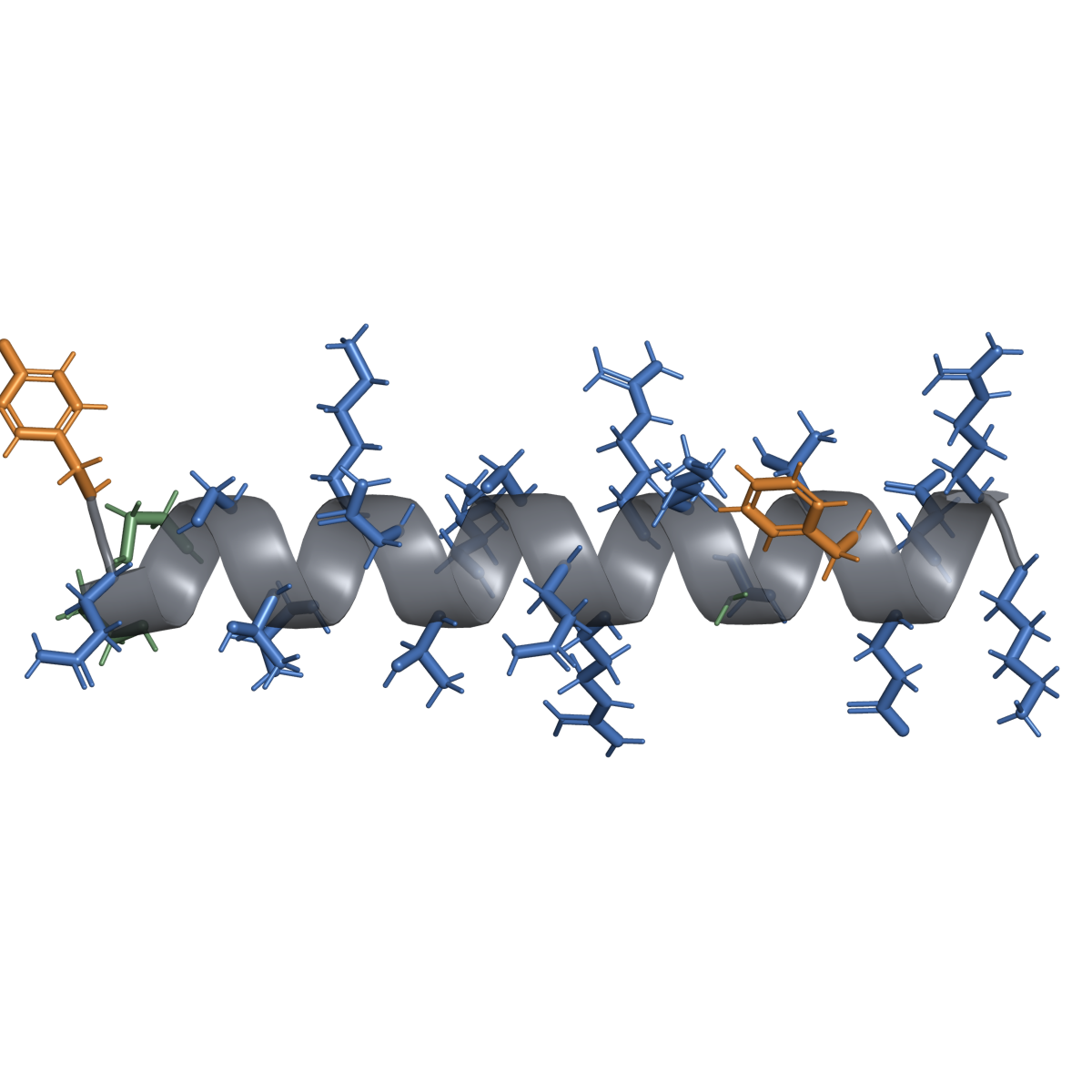
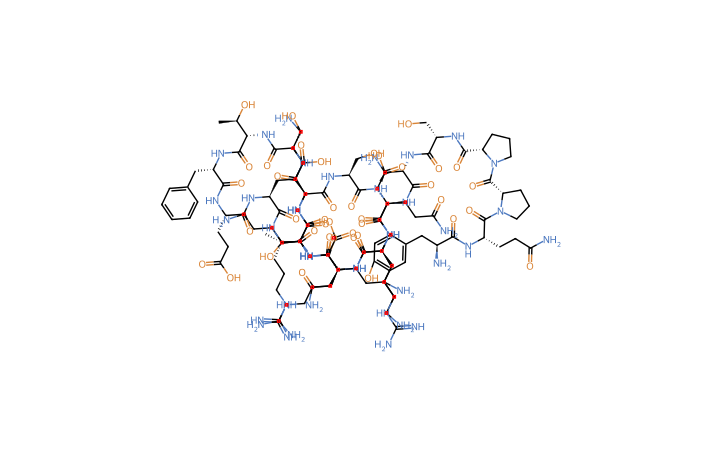
PEG-MGF is a polyethylene glycol-conjugated synthetic form of the IGF-1Ec splice variant E-domain peptide (mechano growth factor, MGF). Native MGF is a 24-amino-acid C-terminal peptide produced locally in mechanically loaded or injured muscle, with a The time for the amount of a substance in the body to fall by half. परिभाषा का स्रोत: Neutral gloss; usage context: Routes, devices, and absorption primer · शब्दावली of approximately 5–7 minutes. PEGylation extends the half-life to days by reducing renal clearance. The Evidence from in vitro or animal studies with no adequate human efficacy evidence — the atlas Grade D lane. परिभाषा का स्रोत: Evidence grading methodology · शब्दावली literature describes MGF-mediated satellite cell activation and muscle repair, but no controlled human trials of PEG-MGF exist. It is a PEGylated recombinant protein fragment (MW ~12–15 kDa total), not a classical small peptide. No FDA-approved product or EMA-authorized medicine was identified as of 2026-08-06, and no human safety profile has been established.
Identity and composition
| Field | Verified information |
|---|---|
| Preferred name | PEG-MGF |
| Key aliases | PEGylated Mechano Growth Factor, PEG-IGF-1Ec, Pegylated MGF |
| Molecular/sequence identity | 24-amino-acid C-terminal E-domain peptide of human IGF-1Ec (MGF): Tyr-Gln-Pro-Pro-Ser-Thr-Asn-Lys-Asn-Thr-Lys-Ser-Gln-Arg-Arg-Lys-Gly-Ser-Thr-Phe-Glu-Glu-Arg-Lys, conjugated to polyethylene glycol (PEG) |
| Modifications/form | N-terminal PEG conjugation (PEG chain typically 5–20 kDa); parent peptide core ~2.9 kDa |
| Stable identifiers | Core peptide CAS: 108174-48-7; total MW varies with PEG chain length |
| Identity caveats | Boundary case. PEG-MGF is a PEGylated protein fragment (total MW >12 kDa), not a classical peptide. It should not be confused with full-length IGF-1, IGF-1 LR3, or mecasermin. The "MGF" refers specifically to the C-terminal E-domain splice variant (IGF-1Ec), not full-length IGF-1. Native MGF has never been characterized as a circulating hormone — it acts locally. The biological rationale for systemic PEGylated dosing is speculative. |
Development and approval status
| Jurisdiction | Status and indication | Product/source | As of |
|---|---|---|---|
| US (FDA) | No regulatory status; research use only | — | 2026-08-06 |
| Registers reviewed | No FDA-approved product or EMA-authorized medicine identified; status elsewhere requires a current national-register check | — | 2026-08-06 |
- UNITED STATES
- US (FDA): No regulatory status; research use only
- EU/EEA
- No EU/EEA row is present in the source status table
- UNITED KINGDOM
- No UNITED KINGDOM row is present in the source status table
- OTHER DOCUMENTED
- Registers reviewed: No FDA-approved product or EMA-authorized medicine identified; status elsewhere requires a current national-register check
Sport status: PEG-MGF falls within WADA S2 prohibition (growth factors and related substances). It is detectable by LC-MS/MS methods targeting the MGF E-domain peptide.
Mechanism and pharmacology
MGF is produced locally in skeletal muscle in response to mechanical loading and injury via alternative splicing of the IGF-1 gene. It activates satellite cells and promotes myoblast proliferation. The 24-amino-acid C-terminal E-domain retains satellite-cell activation activity independent of the IGF-1 mature sequence (Mills et al., FEBS Lett 2007). PEGylation extends the plasma The time for the amount of a substance in the body to fall by half. परिभाषा का स्रोत: Neutral gloss; usage context: Routes, devices, and absorption primer · शब्दावली from minutes to approximately 48–72 hours, enabling systemic rather than local delivery. PEG-MGF has been reported to activate both IGF-1R and possibly a distinct MGF receptor, though the latter remains uncharacterized.
Evidence by claim
| Claim/indication | Stage | Grade | Best human evidence | Main result | Important limitations |
|---|---|---|---|---|---|
| Muscle hypertrophy / satellite cell activation | Evidence from in vitro or animal studies with no adequate human efficacy evidence — the atlas Grade D lane. परिभाषा का स्रोत: Evidence grading methodology · शब्दावली | D | Goldspink lab, rodent models; MGF cDNA or recombinant MGF injection | +25% increase in muscle fiber cross-section; satellite cell proliferation in injected rodent muscle | Animal data only; PEG-MGF-specific data limited; locally injected vs systemic route |
| Muscle repair after injury | Preclinical | D | Rodent injury models | Improved muscle regeneration | Animal models; heterogeneity in dosing and PEG variants |
| Human therapeutic use | None | X | No clinical trials of PEG-MGF | No evidence | No human safety or efficacy data |
- Aग्रेड A: विशिष्ट लेबल वाले उपयोग के लिए स्थापित
- Bग्रेड B: मध्यम मानव साक्ष्य
- Cग्रेड C: प्रारंभिक मानव साक्ष्य
- Dग्रेड D: केवल प्रीक्लिनिकल
- Eग्रेड E: उपाख्यानात्मक/विपणन दावा
- Xग्रेड X: साक्ष्य दावे का खंडन करता है या समर्थन नहीं करता
Text alternative for the claim-evidence diagram. Each grade is defined below:
- A — Established for a specific labeled use
- 0 claims
- B — Moderate human evidence
- 0 claims
- C — Preliminary human evidence
- 0 claims
- D — Preclinical only
- 2 claims: Muscle hypertrophy / satellite cell activation; Muscle repair after injury
- E — Anecdotal/marketing claim
- 0 claims
- X — Evidence contradicts or does not support the claim
- 1 claim: Human therapeutic use
Key studies
| Study | Design/population | Exposure studied | Endpoints and result | Limitations |
|---|---|---|---|---|
| Goldspink G, Cell Tissue Res 2010 (review) | Review of MGF biology | MGF expression and activity | MGF activates satellite cells; promotes myoblast proliferation | Review; mostly animal and cell data |
| Mills et al., FEBS Lett 2007; PMID: 17408679 | Cell-based [1] | E-domain peptide alone | E-domain retains satellite cell activation independent of IGF-1 mature domain | In vitro; focused on E-domain peptide, not PEG-MGF |
| Yang SY, Goldspink G, J Anat 2002 | Rodent; MGF cDNA injection | MGF overexpression | Increased muscle fiber size; satellite cell activation | Animal; gene delivery, not peptide administration |
Dose and administration evidence
Approved labeled regimen
Not applicable.
Studied regimens (not recommendations)
No established or recommended human dose. No human study has published a dose for PEG-MGF.
What is not established
No human PK, safety, or efficacy data
The concept that systemic PEGylated MGF recapitulates local MGF activity is unproven
Dose, frequency, and duration entirely unknown in humans
The biological plausibility of a systemic MGF analog is debated
Safety
No human safety data exist. Theoretical concerns: IGF-1R activation (though the E-domain is reported to be independent); mitogenic potential; unknown effects of sustained CD36 or other receptor signaling. PEGylated products carry theoretical risk of anti-PEG antibody formation. Gray-market PEG-MGF may have inconsistent PEGylation quality.
Unknowns and product-quality risks
All safety parameters in humans are unknown. PEGylation quality, molecular weight distribution, and bioactivity are not standardized across gray-market suppliers.
Interactions and special populations
No data exist.
Regulatory, compounding, and sport notes
PEG-MGF falls within The World Anti-Doping Agency; its Prohibited List classifies many peptides as prohibited substances in sport. परिभाषा का स्रोत: WADA and sport regulation brief · शब्दावली WADA Prohibited List class S2 (peptide hormones, growth factors, related substances and mimetics): prohibited at all times, with subsections of materially different scope. परिभाषा का स्रोत: WADA and sport regulation brief · शब्दावली prohibition (growth factors and related substances). It is detectable by LC-MS/MS methods targeting the MGF E-domain peptide.
Evidence gaps
No human study of MGF or PEG-MGF for any indication
No How a substance is absorbed, distributed, metabolized, and eliminated by the body; atlas pages report pharmacokinetic data such as half-life, metabolism, and clearance. परिभाषा का स्रोत: Neutral gloss; usage context: Routes, devices, and absorption primer · शब्दावली data in humans
No toxicology or safety pharmacology
The mechanistic rationale for systemic PEGylated delivery of a locally acting splice variant is unvalidated
Clinical data for the marketed "PEG-MGF" product is absent
Search notes
Databases and registries: PubMed, ClinicalTrials.gov, FDA Drugs@FDA
Search terms: "PEG-MGF", "mechano growth factor", "IGF-1Ec", "PEGylated MGF"
Last searched: 2026-08-06
Inclusion emphasis: Primary peer-reviewed data on MGF biology and PEG-MGF characterization
Sources
Goldspink G. Mechano growth factor and skeletal muscle repair. Cell Tissue Res. 2010;340(2):339-348. https://pubmed.ncbi.nlm.nih.gov/20204797/
Mills P et al. The E-domain peptide of MGF is active independent of the IGF-1 mature sequence. FEBS Lett. 2007;581(20):3895-3900. https://pubmed.ncbi.nlm.nih.gov/17408679/
Yang SY, Goldspink G. MGF induces satellite cell activation. J Anat. 2002;201(3):241-248.
Zabłocka B et al. Mechano-growth factor: an important cog in IGF-1 signaling. Front Endocrinol. 2012;3:126. https://pubmed.ncbi.nlm.nih.gov/23267348/
WADA Prohibited List 2026. https://www.wada-ama.org/en/prohibited-list