Bottom line
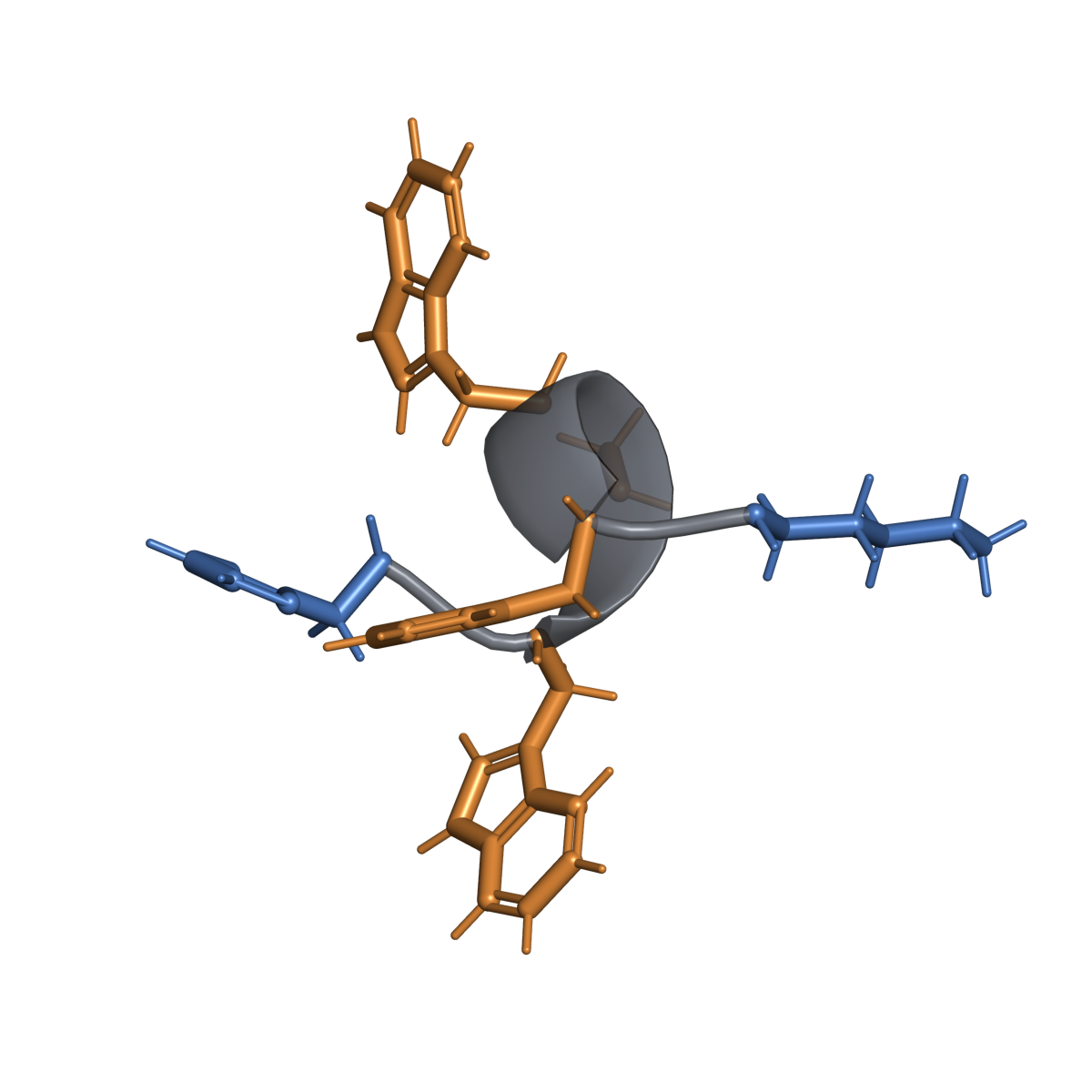
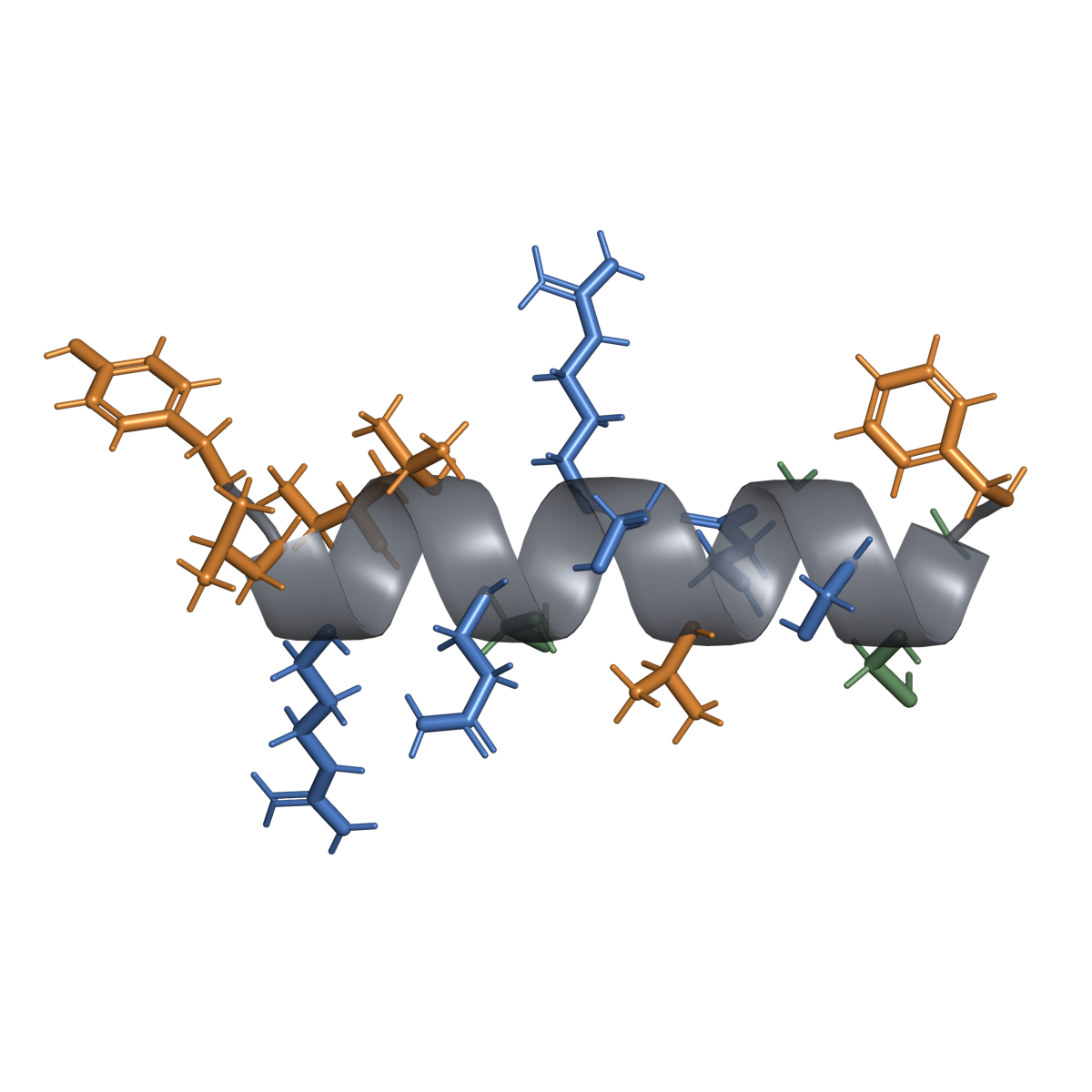
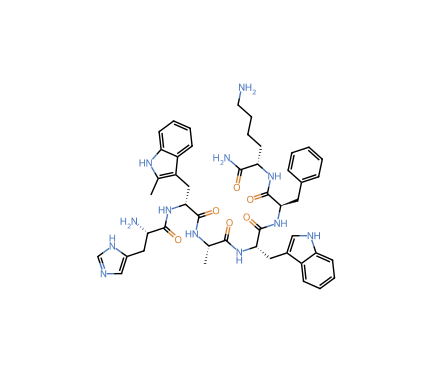
Hexarelin (INN: examorelin) is a synthetic hexapeptide GH secretagogue developed as a more potent and metabolically stable analog of GHRP-6, distinguished by a D-2-methyltryptophan substitution at position 2. It advanced to Phase II trials for GH deficiency and heart failure but was discontinued before Phase III. Hexarelin activates both GHS-R1a and CD36, giving it a unique dual-receptor pharmacology among GHRPs. It also stimulates ACTH, cortisol, and prolactin more than GHRP-2 or ipamorelin. The published human evidence base consists of small endocrine pharmacology studies (each n < 30) and no efficacy trial.
Identity and composition
| Field | Verified information |
|---|---|
| Preferred name | Hexarelin |
| Key aliases | Examorelin (INN), MF-6003 |
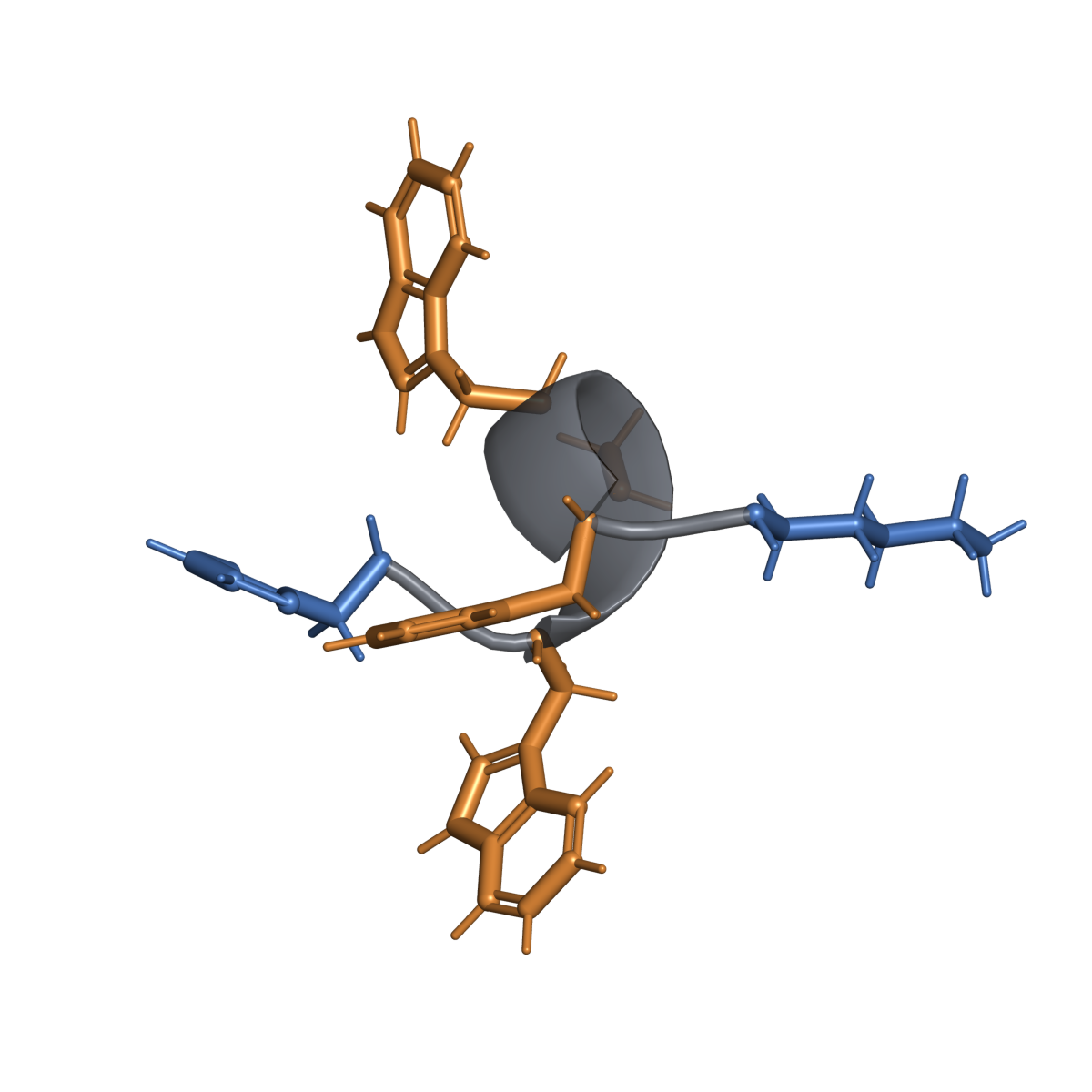
| Molecular/sequence identity | Hexapeptide: His-D-2-Me-Trp-Ala-Trp-D-Phe-Lys-NH2 (where D-2-Me-Trp = D-2-methyltryptophan) |
| Modifications/form | D-2-methyltryptophan at position 2 (vs D-Trp in GHRP-6); D-Phe at position 5; C-terminal amidation |
| Stable identifiers | The record number of a compound in PubChem, the atlas's primary structure-asset source. A registry record or depiction does not authenticate a commercial sample. परिभाषा का स्रोत: Identity and structure assets methodology · शब्दावली: 6918297; CAS: 140703-51-1; MW ~887 Da |
| Identity caveats | Distinguished from GHRP-6 (His-D-Trp-Ala-Trp-D-Phe-Lys-NH2) by the 2-methyl substitution on D-Trp². Hexarelin is not interchangeable with GHRP-6 or GHRP-2. The INN examorelin is rarely used in the research chemical market. |
Development and approval status
| Jurisdiction | Status and indication | Product/source | As of |
|---|---|---|---|
| US (FDA) | No approved indication; development discontinued | — | 2026-08-06 |
| EU (EMA) | No marketing authorization | — | 2026-08-06 |
| Registers reviewed | No FDA-approved product or EMA-authorized medicine identified; status elsewhere requires a current national-register check | — | 2026-08-06 |
- UNITED STATES
- US (FDA): No approved indication; development discontinued
- EU/EEA
- EU (EMA): No marketing authorization
- UNITED KINGDOM
- No UNITED KINGDOM row is present in the source status table
- OTHER DOCUMENTED
- Registers reviewed: No FDA-approved product or EMA-authorized medicine identified; status elsewhere requires a current national-register check
Sport status: Hexarelin (examorelin) is prohibited by WADA under S2.2.4. No FDA-approved product was identified as of 2026-08-06. US compounding eligibility or legality cannot be inferred from market listings and requires a current substance-, facility-, prescription-, and product-specific assessment under sections 503A/503B.
Mechanism and pharmacology
Hexarelin is a potent GHS-R1a (ghrelin receptor) agonist, stimulating GH release from pituitary somatotrophs. Unlike ipamorelin, hexarelin also binds CD36, a scavenger receptor expressed on cardiomyocytes, macrophages, and vascular endothelium, mediating GH-independent cardiac effects. The D-2-Me-Trp substitution confers enhanced metabolic stability relative to GHRP-6. Hexarelin significantly elevates ACTH, cortisol, and prolactin.
Evidence by claim
| Claim/indication | Stage | Grade | Best human evidence | Main result | Important limitations |
|---|---|---|---|---|---|
| GH release (acute pharmacology) | Phase I [1] | C | Imbimbo et al., Eur J Clin Pharmacol 1994; multiple small human studies | Dose-dependent GH elevation | Pharmacology only; each n < 30 |
| GH deficiency diagnosis | Phase II | D | Laron et al., 1995; intranasal hexarelin in short children | GH secretion measurable | Small N; diagnostic only |
| Congestive heart failure | Phase II (discontinued) | D | Evidence from in vitro or animal studies with no adequate human efficacy evidence — the atlas Grade D lane. परिभाषा का स्रोत: Evidence grading methodology · शब्दावली cardiac data; no published human efficacy trial | CD36 binding shown in animal models | No human efficacy data published |
| Body composition | Marketing | E | No controlled human trials | No adequate evidence | Marketing extrapolation only |
- Aग्रेड A: विशिष्ट लेबल वाले उपयोग के लिए स्थापित
- Bग्रेड B: मध्यम मानव साक्ष्य
- Cग्रेड C: प्रारंभिक मानव साक्ष्य
- Dग्रेड D: केवल प्रीक्लिनिकल
- Eग्रेड E: उपाख्यानात्मक/विपणन दावा
- Xग्रेड X: साक्ष्य दावे का खंडन करता है या समर्थन नहीं करता
Text alternative for the claim-evidence diagram. Each grade is defined below:
- A — Established for a specific labeled use
- 0 claims
- B — Moderate human evidence
- 0 claims
- C — Preliminary human evidence
- 1 claim: GH release (acute pharmacology)
- D — Preclinical only
- 2 claims: GH deficiency diagnosis; Congestive heart failure
- E — Anecdotal/marketing claim
- 1 claim: Body composition
- X — Evidence contradicts or does not support the claim
- 0 claims
Key studies
| Study | Design/population | Exposure studied | Endpoints and result | Limitations |
|---|---|---|---|---|
| Imbimbo et al., Eur J Clin Pharmacol 1994; PMID: 7957536 | PK/PD study; healthy adults [1] | Administered into the tissue layer under the skin. परिभाषा का स्रोत: Neutral gloss; usage context: Routes, devices, and absorption primer · शब्दावली, Administered into a vein. परिभाषा का स्रोत: Neutral gloss; usage context: Routes, devices, and absorption primer · शब्दावली, intranasal hexarelin | Dose-dependent GH release; The fraction of an administered amount that reaches systemic circulation; for the intravenous route the atlas notes bioavailability is defined as complete. परिभाषा का स्रोत: Neutral gloss; usage context: Routes, devices, and absorption primer · शब्दावली ~77% SC; The time for the amount of a substance in the body to fall by half. परिभाषा का स्रोत: Neutral gloss; usage context: Routes, devices, and absorption primer · शब्दावली ~55 min | Small N; pharmacology only |
| Arvat et al., J Clin Endocrinol Metab 1995 | Crossover; healthy adults | IV hexarelin vs GHRH | GH, ACTH, cortisol, prolactin responses characterized | Small; acute only |
| Laron Z et al., 1995 | Children with short stature | Intranasal hexarelin | GH secretion measurable | Small; not confirmatory efficacy |
Dose and administration evidence
Approved labeled regimen
Not applicable.
Studied regimens (not recommendations)
No established or recommended human dose. In published human studies: Administered into the tissue layer under the skin. परिभाषा का स्रोत: Neutral gloss; usage context: Routes, devices, and absorption primer · शब्दावली doses of approximately 1.5–2.0 mcg/kg; Administered into a vein. परिभाषा का स्रोत: Neutral gloss; usage context: Routes, devices, and absorption primer · शब्दावली 1–2 mcg/kg.
What is not established
Effective therapeutic dose for any indication
Long-term dosing safety or efficacy
Any dosing protocol validated beyond acute administration
Appropriate frequency of administration
Safety
Established label risks
No approved label exists.
Human-study signals
Hexarelin elevates cortisol and prolactin more than most other GHRPs. GH response attenuates within days of daily dosing (receptor desensitization). In small Phase I/II studies (total published N < 100), acute tolerability was acceptable.
Unknowns and product-quality risks
No long-term safety data. Receptor desensitization suggests chronic use would have diminishing efficacy. CD36-mediated cardiac effects have not been evaluated for safety in humans. Research-grade material is unregulated; DAC-like modifications are often falsely claimed by vendors.
Interactions and special populations
No human drug-interaction data exist. Contraindications theoretically include active malignancy, cardiovascular disease, uncontrolled hypertension, diabetes, pregnancy, and lactation.
Regulatory, compounding, and sport notes
Hexarelin (examorelin) is prohibited by The World Anti-Doping Agency; its Prohibited List classifies many peptides as prohibited substances in sport. परिभाषा का स्रोत: WADA and sport regulation brief · शब्दावली under S2.2.4. No FDA-approved product was identified as of 2026-08-06. US compounding eligibility or legality cannot be inferred from market listings and requires a current substance-, facility-, prescription-, and product-specific assessment under sections Sections of the US Food, Drug, and Cosmetic Act covering traditional compounding exemptions (503A) and outsourcing-facility compounding (503B). Under 503A, qualification conditions include a patient-specific prescription requirement; under 503B, conditions cover facility registration and bulk-substance eligibility. परिभाषा का स्रोत: United States regulation brief · शब्दावली/503B.
Evidence gaps
No completed Phase II efficacy trial with published results
No Phase III program
No long-term safety data in any population
No human cardiovascular efficacy trial
No dose-ranging for chronic use
No How a substance is absorbed, distributed, metabolized, and eliminated by the body; atlas pages report pharmacokinetic data such as half-life, metabolism, and clearance. परिभाषा का स्रोत: Neutral gloss; usage context: Routes, devices, and absorption primer · शब्दावली data in women, elderly, or disease states
Search notes
Databases and registries: PubMed, ClinicalTrials.gov, FDA Drugs@FDA, PubChem
Search terms: "hexarelin", "examorelin", "MF-6003", "GHRP hexarelin"
Last searched: 2026-08-06
Inclusion emphasis: Primary human data; peer-reviewed endocrine studies; regulatory documents
Sources
Imbimbo BP et al. Growth hormone-releasing activity of hexarelin in humans. Eur J Clin Pharmacol. 1994;46(5):421-425. https://pubmed.ncbi.nlm.nih.gov/7957536/
Arvat E et al. Comparison of hexarelin and GHRH on GH, ACTH, cortisol and prolactin. J Clin Endocrinol Metab. 1995. https://pubmed.ncbi.nlm.nih.gov/7714095/
Bodart V et al. CD36 is a binding site for hexarelin. Circ Res. 2002;90(8). https://pubmed.ncbi.nlm.nih.gov/11988492/
WADA Prohibited List 2026. https://www.wada-ama.org/en/prohibited-list
PubChem CID 6918297. Hexarelin. https://pubchem.ncbi.nlm.nih.gov/compound/6918297
FDA. Drugs@FDA. No listing for hexarelin. https://www.accessdata.fda.gov/scripts/cder/daf/