Bottom line
Epitalon (Ala-Glu-Asp-Gly) is a synthetic tetrapeptide modeled on the bovine pineal extract Epithalamin. Nearly all clinical evidence originates from the St. Petersburg Institute of Bioregulation and Gerontology (Khavinson group) and has not been independently replicated. FDA granted orphan drug designation for retinitis pigmentosa in 2010, but that designation was withdrawn or revoked in 2016 and was never marketing approval. FDA's Pharmacy Compounding Advisory Committee discussed Epitalon-related bulk drug substances for insomnia on July 24, 2026; committee advice is non-binding, and this atlas does not represent that discussion as FDA approval or a final Sections of the US Food, Drug, and Cosmetic Act covering traditional compounding exemptions (503A) and outsourcing-facility compounding (503B). Under 503A, qualification conditions include a patient-specific prescription requirement; under 503B, conditions cover facility registration and bulk-substance eligibility. परिभाषा का स्रोत: United States regulation brief · शब्दावली determination.
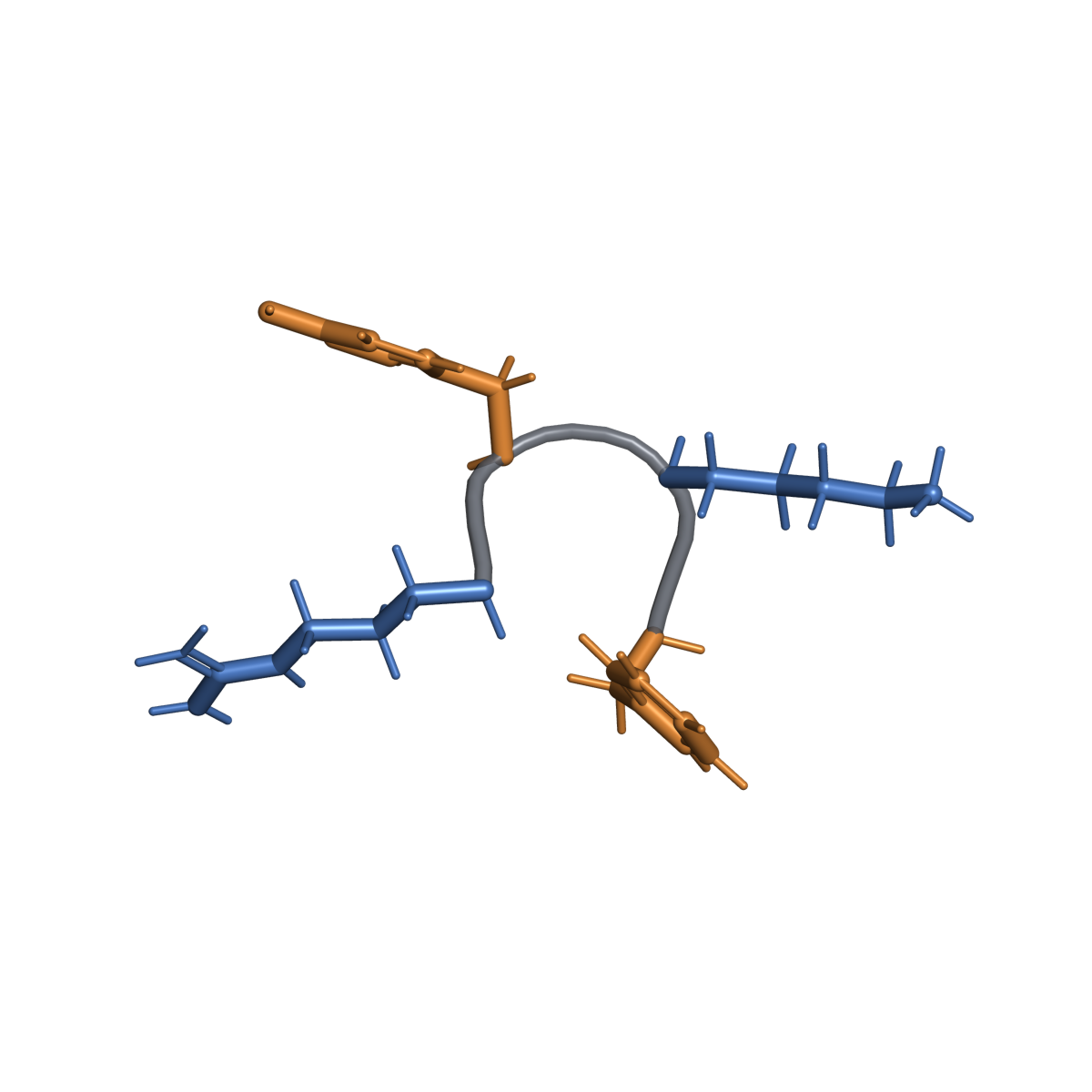
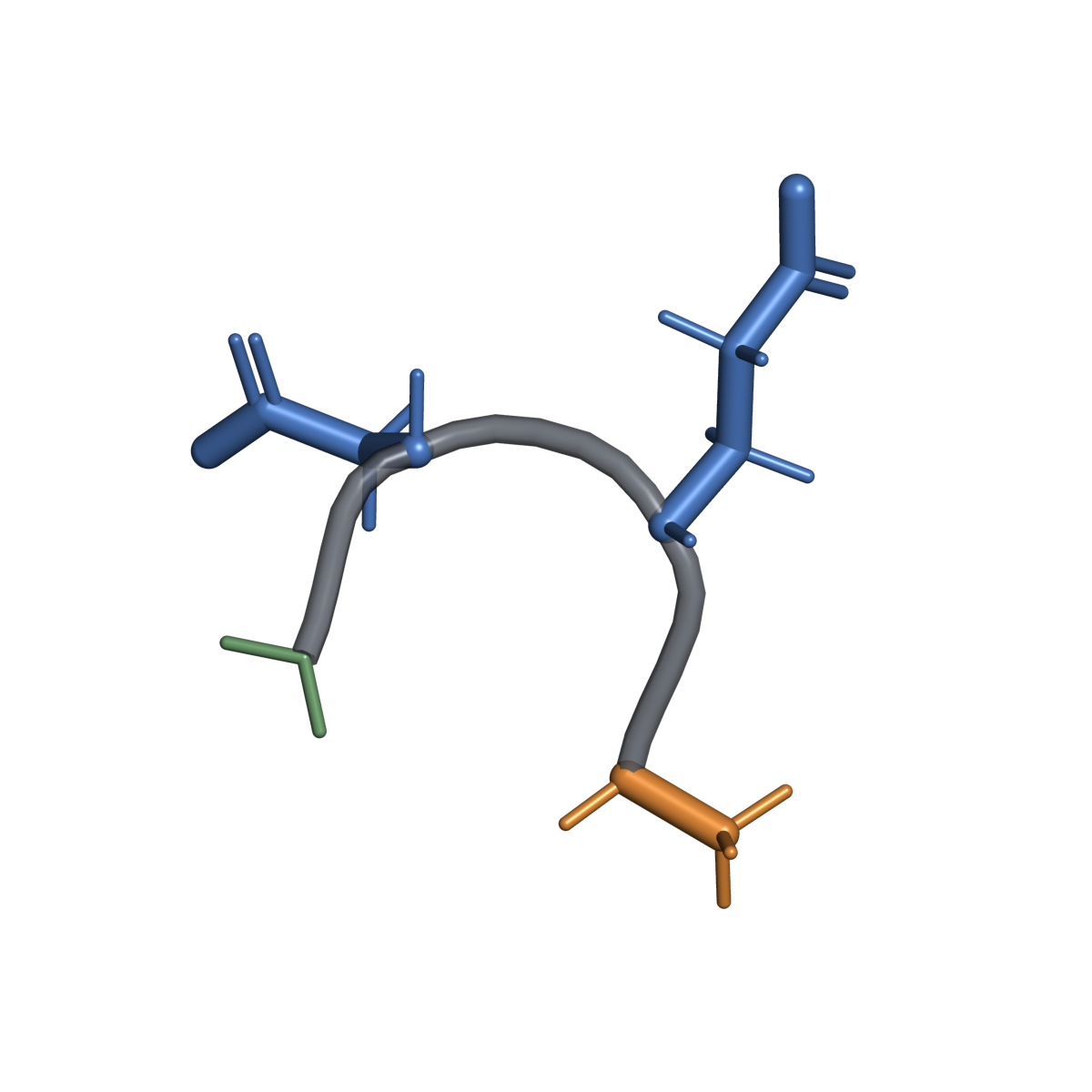
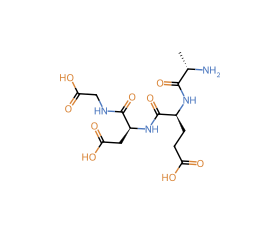
Identity and composition
| Field | Verified information |
|---|---|
| Preferred name | Epitalon |
| Key aliases | Epithalon, Epithalone, AEDG, Ala-Glu-Asp-Gly |
| Molecular/sequence identity | Tetrapeptide: Ala-Glu-Asp-Gly (AEDG); usually α-peptide bonds |
| Modifications/form | Linear tetrapeptide; MW ~404 Da |
| Stable identifiers | FDA UNII O65P17785G; The record number of a compound in PubChem, the atlas's primary structure-asset source. A registry record or depiction does not authenticate a commercial sample. परिभाषा का स्रोत: Identity and structure assets methodology · शब्दावली 219042; FDA orphan-designation record 312010 (designated 2010; withdrawn or revoked 2016; not approved) |
| Identity caveats | Synthetic version of the An entry with substantial scientific visibility or identity value. Biological rationale and non-human evidence do not establish patient benefit. परिभाषा का स्रोत: Scope and selection methodology · शब्दावली pineal tetrapeptide (detected in pineal extract in 2017). Not the same as Epithalamin (crude pineal extract). Ambiguity in bond structure exists in one publication (α vs γ bonds). The tetrapeptide Glu-Asp-Pro (Crystagen) is a different entity. |
Development and approval status
| Jurisdiction | Status and indication | Product/source | As of |
|---|---|---|---|
| United States (FDA) | Not approved. Retinitis-pigmentosa orphan designation granted September 2, 2010 and withdrawn or revoked January 6, 2016. PCAC discussed Epitalon-related bulk substances for insomnia on July 24, 2026; advisory review is not approval or a final FDA determination. | FDA OOPD and PCAC records | 2026-08-06 |
| European Union (EMA) | No marketing authorization | N/A | 2026-08-06 |
| Russia | Historical Russian research and use are reported, but no current primary regulator label was independently retrieved for this review | Current authorization not established | 2026-08-06 |
| Other jurisdictions | No authorization inferred from the US designation, PCAC discussion, patents, or Russian research reports | Country-specific register review required | 2026-08-06 |
- UNITED STATES
- United States (FDA): Not approved. Retinitis-pigmentosa orphan designation granted September 2, 2010 and withdrawn or revoked January 6, 2016. PCAC discussed Epitalon-related bulk substances for insomnia on July 24, 2026; advisory review is not approval or a final FDA determination.
- EU/EEA
- European Union (EMA): No marketing authorization
- UNITED KINGDOM
- No UNITED KINGDOM row is present in the source status table
- OTHER DOCUMENTED
- Russia: Historical Russian research and use are reported, but no current primary regulator label was independently retrieved for this review; Other jurisdictions: No authorization inferred from the US designation, PCAC discussion, patents, or Russian research reports
Sport status: WADA: Epitalon was not identified by exact name in the 2026 Prohibited List. Exact-name absence does not resolve S0: this review did not identify a current governmental approval for human therapeutic use, so athletes need a current, case-specific classification of the material and intended use.
Mechanism and pharmacology
Epitalon has been reported by the Khavinson group to induce activation of ribosomal genes, decondensation of pericentromeric heterochromatin, and release of genes repressed during aging. It reportedly increases melatonin synthesis, modulates interleukin-2 mRNA levels, and enhances telomerase activity in human fibroblast cultures (hTERT activation, extended replicative lifespan by ~10 passages). The mechanism involves direct interaction with DNA and histone proteins, though the specific molecular target is not fully characterized. These findings have not been independently replicated in Western laboratories.
Evidence by claim
| Claim/indication | Stage | Grade | Best human evidence | Main result | Important limitations |
|---|---|---|---|---|---|
| Retinitis pigmentosa | Controlled clinical report (Russia) [1] | C | Khavinson et al. 2002, PMID 12195242; n=162 total; parabulbar Epitalon 5 µg/eye for 10 days | Authors reported mean visual-acuity gain of 0.15–0.20 and 90–120° visual-field widening in 64.8% | Allocation, masking, analysis, and control-care reporting are insufficient by modern standards; single research lineage; no independent replication |
| Telomerase activation | Evidence from in vitro or animal studies with no adequate human efficacy evidence — the atlas Grade D lane. परिभाषा का स्रोत: Evidence grading methodology · शब्दावली | D | In vitro human fibroblast cultures | Extended Hayflick limit by 10 passages | Not independently replicated; cell culture |
| Melatonin regulation | Preclinical | D | Animal models | Increased pineal melatonin synthesis | No human data for Epitalon specifically |
- Aग्रेड A: विशिष्ट लेबल वाले उपयोग के लिए स्थापित
- Bग्रेड B: मध्यम मानव साक्ष्य
- Cग्रेड C: प्रारंभिक मानव साक्ष्य
- Dग्रेड D: केवल प्रीक्लिनिकल
- Eग्रेड E: उपाख्यानात्मक/विपणन दावा
- Xग्रेड X: साक्ष्य दावे का खंडन करता है या समर्थन नहीं करता
Text alternative for the claim-evidence diagram. Each grade is defined below:
- A — Established for a specific labeled use
- 0 claims
- B — Moderate human evidence
- 0 claims
- C — Preliminary human evidence
- 1 claim: Retinitis pigmentosa
- D — Preclinical only
- 2 claims: Telomerase activation; Melatonin regulation
- E — Anecdotal/marketing claim
- 0 claims
- X — Evidence contradicts or does not support the claim
- 0 claims
Key studies
| Study | Design/population | Exposure studied | Endpoints and result | Limitations |
|---|---|---|---|---|
| Khavinson et al. 2002; PMID 12195242 | Controlled clinical report; 162 patients aged 18–72 [1] | Epitalon 5 µg/eye parabulbar for 10 days | Authors reported a 90% positive clinical response, mean visual-acuity gain of 0.15–0.20, and visual-field widening | Sparse methods; comparator received then-conventional care; unclear allocation and masking; single-center research lineage |
| Telomerase study (Khavinson) | In vitro, human fibroblasts | Epitalon in culture | hTERT activation; extended replicative lifespan | Not independently replicated |
Dose and administration evidence
Approved labeled regimen
None identified in the United States or European Union. No current Russian primary regulator label was independently retrieved for this review.
Studied regimens (not recommendations)
The 2002 retinitis-pigmentosa report used 5 µg per eye by the parabulbar route for 10 days. This is historical study exposure, not a recommendation.
What is not established
No established or recommended human dose. Country-specific registration or historical study exposure does not establish a general regimen.
Safety
Established label risks
None — no FDA-approved label.
Human-study signals
The 2002 retinitis-pigmentosa report stated that no side effects were observed in its 162-patient cohort. Sparse reporting and a single research lineage make that inadequate to establish safety; the study did not provide the kind of systematic adverse-event characterization expected under current standards.
Unknowns and product-quality risks
No formal Phase 1 Western safety trial.
Basic toxicology (genotoxicity, carcinogenicity, drug interaction) data are insufficient by current regulatory standards.
Research-grade products sold online are unregulated.
TSE/BSE risk if extracted from bovine pineal (Epitalon is synthetic, mitigating this concern).
Interactions and special populations
No data available.
Regulatory, compounding, and sport notes
FDA: the retinitis-pigmentosa orphan designation was granted in 2010, withdrawn or revoked in 2016, and was not approval. PCAC discussed Epitalon-related bulk substances for insomnia on July 24, 2026; the committee advises FDA, and its discussion is not a final FDA determination.
The World Anti-Doping Agency; its Prohibited List classifies many peptides as prohibited substances in sport. परिभाषा का स्रोत: WADA and sport regulation brief · शब्दावली: Epitalon was not identified by exact name in the 2026 Prohibited List. Exact-name absence does not resolve WADA Prohibited List class S0 (non-approved substances): pharmacological substances not addressed elsewhere in the list and with no current approval by any governmental regulatory health authority for human therapeutic use. परिभाषा का स्रोत: WADA and sport regulation brief · शब्दावली: this review did not identify a current governmental approval for human therapeutic use, so athletes need a current, case-specific classification of the material and intended use.
No final FDA Sections of the US Food, Drug, and Cosmetic Act covering traditional compounding exemptions (503A) and outsourcing-facility compounding (503B). Under 503A, qualification conditions include a patient-specific prescription requirement; under 503B, conditions cover facility registration and bulk-substance eligibility. परिभाषा का स्रोत: United States regulation brief · शब्दावली inclusion determination is represented by the cited meeting page or briefing document as of August 6, 2026.
Epitalon is distinct from Epithalamin (crude bovine pineal extract).
Evidence gaps
No independent Western replication of any Khavinson-group finding.
No Western clinical trial (Phase 1, 2, or 3) has been conducted.
Telomerase activation in human cell culture has not been independently confirmed.
The retinitis pigmentosa trial lacked a proper concurrent control group.
Epitalon-specific human data (as distinct from Epithalamin) are very limited.
Mechanism of action at the molecular level remains unclear.
Search notes
Databases and registries: PubMed, FDA Orphan Drug database, FDA PCAC, PubChem, NCATS Inxight
Search terms: Epitalon, Epithalon, AEDG, Ala-Glu-Asp-Gly, Khavinson, pineal peptide
Last searched: 2026-08-06
Inclusion emphasis: Human clinical data; distinction from Epithalamin extract
Sources
Khavinson V, Razumovsky M, Trofimova S, Grigorian R, Razumovskaya A. Pineal-regulating tetrapeptide epitalon improves eye retina condition in retinitis pigmentosa. Neuro Endocrinol Lett. 2002;23(4):365-368. PMID 12195242. https://pubmed.ncbi.nlm.nih.gov/12195242/
Araj S, et al. Overview of Epitalon—Highly Bioactive Pineal Tetrapeptide with Promising Properties. Int J Mol Sci. 2025;26(6):2691. https://pmc.ncbi.nlm.nih.gov/articles/PMC11943447/
FDA. Briefing Document for Epitalon-Related Bulk Drug Substances, Pharmacy Compounding Advisory Committee, July 23-24, 2026. https://www.fda.gov/media/193345/download
FDA. July 23-24, 2026 Meeting of the Pharmacy Compounding Advisory Committee. https://www.fda.gov/advisory-committees/advisory-committee-calendar/july-23-24-2026-meeting-pharmacy-compounding-advisory-committee-07232026
FDA Orphan Drug Designations and Approvals. Epitalon, record 312010. https://www.accessdata.fda.gov/scripts/opdlisting/oopd/detailedIndex.cfm?cfgridkey=312010
FDA Substance Registration System. UNII O65P17785G. https://precision.fda.gov/uniisearch/srs/unii/O65P17785G
US Patent 7,189,701. https://patents.google.com/patent/US7189701B1/en
World Anti-Doping Agency. 2026 Prohibited List. https://www.wada-ama.org/sites/default/files/2025-09/2026list_en_final_clean_september_2025.pdf