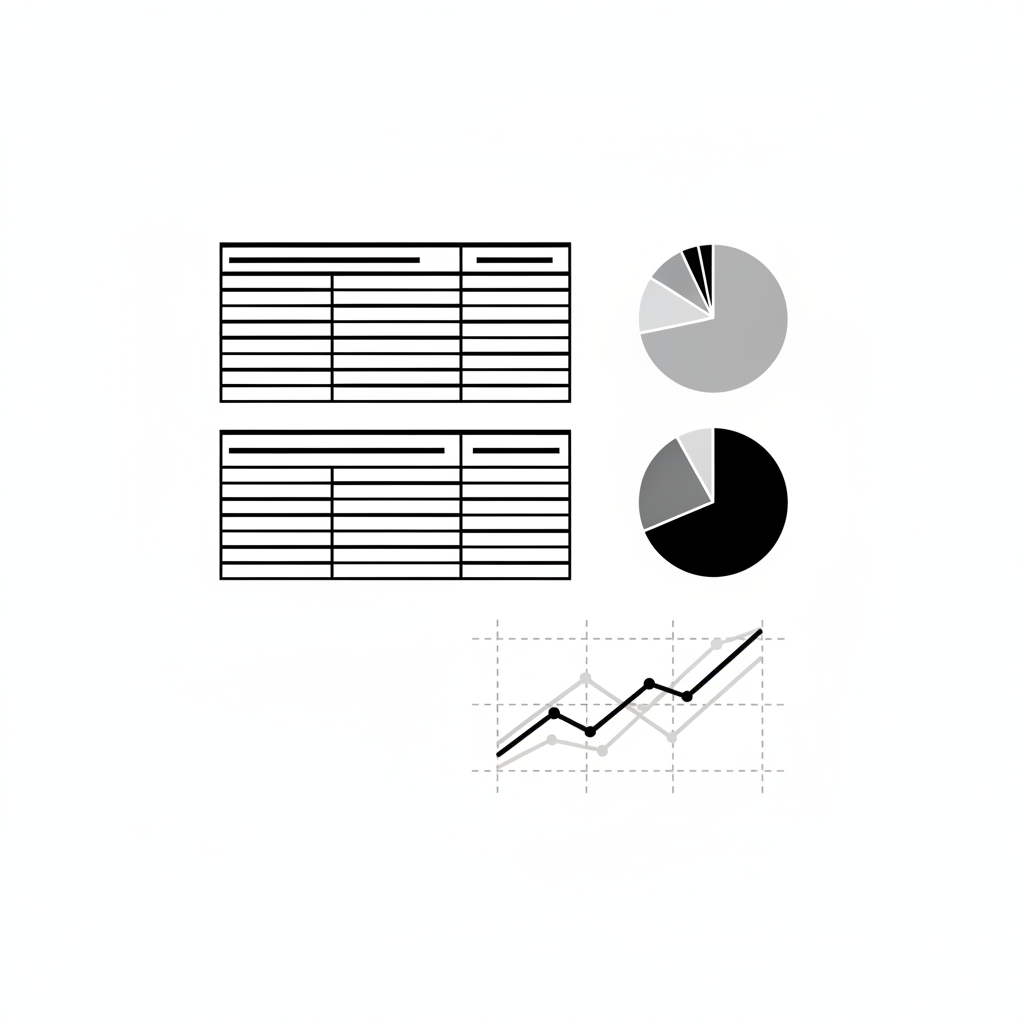
Research synthesis only; not medical advice. This guide teaches you how to read the monographs in this atlas. Nothing here — or in any monograph — is a recommendation to use, purchase, or self-administer any substance.
Every peptide in the catalog has a monograph, and every monograph follows the same structure. Once you can read one, you can read all 100.
This guide walks through each table in order, then applies the skill to a real entry: BPC-157.
Start with the bottom line
Each monograph opens with a Bottom line section: two or three paragraphs that answer "what is this, and what is the strongest fact about it?" It names the entry type (approved drug, A clinical-stage candidate with scientific or public relevance. Investigation is not approval, and a studied exposure is not a recommendation. Source de la définition: Scope and selection methodology · Glossaire, An entry with substantial scientific visibility or identity value. Biological rationale and non-human evidence do not establish patient benefit. Source de la définition: Scope and selection methodology · Glossaire, An entry with frequent visibility in the research-peptide ecosystem. Visibility is not endorsement, and marketed material is not assumed safe, sterile, authentic, or suitable for humans. Source de la définition: Scope and selection methodology · Glossaire, or boundary case), the approval situation, and any sport-prohibition flag.
If you read nothing else, read this. It is written to stand alone.
The identity and composition table
This table answers a deceptively simple question: what molecule are we talking about?
The key rows:
Preferred name and aliases — every name the substance is known by. Aliases matter because research papers, vendors, and regulators often use different names for the same molecule.
Molecular/sequence identity — the amino-acid sequence, when verified. A
sequence_verified: trueflag in the page metadata means an authoritative source confirmed it.Modifications/form — salts, lipid attachments, disulfide bonds, and other features that change how the molecule behaves.
Stable identifiers — database records: The record number of a compound in PubChem, the atlas's primary structure-asset source. A registry record or depiction does not authenticate a commercial sample. Source de la définition: Identity and structure assets methodology · Glossaire, CAS number, FDA UNII, DrugBank ID.
Identity caveats — the honest list of what is ambiguous or unresolved.
One warning applies to every monograph: a database identifier is a registry pointer, not proof that a vial you can buy contains that molecule. Identity on paper and authenticity of a physical sample are different questions. The full verification workflow is documented in How Peptide Identity and Structure Assets Are Verified, and the companion guide Peptide Identity and Product Quality goes deeper.
The development and approval status table
This table has one row per jurisdiction — typically FDA (United States), EMA (European Union), MHRA (United Kingdom) where relevant, The World Anti-Doping Agency; its Prohibited List classifies many peptides as prohibited substances in sport. Source de la définition: WADA and sport regulation brief · Glossaire for sport status, and an "other jurisdictions" row.
Three reading rules:
Approval is product-specific. A brand-name product was reviewed, not the molecule in the abstract. A different seller's vial of the "same" peptide is not the approved product.
Approval is indication-specific. A drug approved for one disease is not approved for another use just because the molecule is the same.
Approval is jurisdiction-specific. Each row stands alone. Carperitide, for example, is approved in Japan for acute heart failure and not approved in the US, EU, or UK — all four facts appear in its status table.
Every row carries an as-of date. Status can change; the date tells you when the row was last checked. For the bigger picture, see the regulation guide and the global regulatory framework.
The evidence-by-claim table
This is the heart of the monograph. Each row is one claim — not the molecule as a whole — with a development stage and an evidence grade:
| Grade | Meaning |
|---|---|
| A | Established for a specific labeled use (approved drug) |
| B | Moderate human evidence (controlled studies, no current approval for that claim) |
| C | Preliminary human evidence (small, early-phase, or uncontrolled studies) |
| D | Evidence from in vitro or animal studies with no adequate human efficacy evidence — the atlas Grade D lane. Source de la définition: Evidence grading methodology · Glossaire only (in vitro or animal evidence) |
| E | Anecdotal or marketing claim |
| X | Evidence contradicts or does not support the claim |
- AGrade A: Établi pour une utilisation indiquée spécifique
- BGrade B: Preuve humaine modérée
- CGrade C: Preuve humaine préliminaire
- DGrade D: Préclinique uniquement
- EGrade E: Affirmation anecdotique/commerciale
- XGrade X: Les preuves contredisent ou ne soutiennent pas l'affirmation
Grades are claim-specific. The same peptide can hold grade A for one indication and grade D for another. Grade X: Evidence contradicts or does not support the claim — adequate negative evidence, failed program, or claim inconsistent with the studied material. Source de la définition: Evidence grading methodology · Glossaire is a separate outcome — evidence against the claim — not a position "below E."
Each row also lists the best human evidence, the main result, and the important limitations. Read the limitations column as carefully as the result column: "no control group" and "n=12" change what a positive-sounding result actually means.
The full grading method is on the evidence grading methodology page, with a plainer explainer in Evidence Grades A to E Explained.
The key studies table
Below the claim rows, the Key studies table lists the individual studies behind them: design and population, the exposure studied, endpoints and results, and limitations.
Two identifiers let you find the original papers yourself:
PMID — a PubMed identifier. Search the number at PubMed to see the abstract and full citation.
NCT number — a ClinicalTrials.gov registry identifier. The registry record shows the protocol, status, and whether results were ever posted.
A study can be registered and never publish results — the registry row will show that too, and monographs flag it (for example, a discontinued trial with results never submitted).
Dose and administration evidence
This section is deliberately split into two parts, and the split matters:
Approved labeled regimen — dosing reproduced from the current official label of an approved product, for that product, indication, route, and population only.
Studied regimens (not recommendations) — descriptive reporting of exposures used in research. A studied exposure describes an experiment; it may have failed or caused harm.
What "no established human dose" means
For every unapproved compound, the monograph states: No established or recommended human dose.
This is not a missing data point waiting to be filled in by a forum. It means no regulator has reviewed and authorized a dosing regimen, and the published human evidence is too limited to support one. The atlas does not convert animal doses into human doses, does not average vendor suggestions, and does not publish cycles, stacks, or titration schedules.
The full policy — including the exact required wording — is on the dose language methodology page.
Safety, regulatory notes, and evidence gaps
Safety separates established label risks (from approved-product labeling) from human-study signals (adverse events seen in trials) and unknowns and product-quality risks (what cannot be known about unregulated material). The safety fundamentals guide explains this two-layer model.
Regulatory, compounding, and sport notes summarize jurisdiction and anti-doping status, with links to the relevant regulation briefs.
Evidence gaps is the most honest section on the page: an explicit list of what is not known. A long gap list is information, not an oversight.
Search notes record which databases were searched, the terms used, and the search date — so you can re-run or extend the search.
Worked example: BPC-157
Apply the reading order to the real BPC-157 monograph:
Bottom line: a synthetic 15-amino-acid peptide derived from a gastric-juice protein; An entry with frequent visibility in the research-peptide ecosystem. Visibility is not endorsement, and marketed material is not assumed safe, sterile, authentic, or suitable for humans. Source de la définition: Scope and selection methodology · Glossaire entry type; no approval anywhere; The World Anti-Doping Agency; its Prohibited List classifies many peptides as prohibited substances in sport. Source de la définition: WADA and sport regulation brief · Glossaire-prohibited under class WADA Prohibited List class S0 (non-approved substances): pharmacological substances not addressed elsewhere in the list and with no current approval by any governmental regulatory health authority for human therapeutic use. Source de la définition: WADA and sport regulation brief · Glossaire on the 2026 Prohibited List.
Identity table: sequence Gly-Glu-Pro-Pro-Pro-Gly-Lys-Pro-Ala-Asp-Asp-Ala-Gly-Leu-Val; The record number of a compound in PubChem, the atlas's primary structure-asset source. A registry record or depiction does not authenticate a commercial sample. Source de la définition: Identity and structure assets methodology · Glossaire 9941957; CAS 137525-51-0; UNII 8ED8NXK95P; DrugBank DB11882. These records define the molecule on paper — they say nothing about any vial sold online.
Status table: no approved product identified at FDA, no EU marketing authorization, WADA S0 listing, and an "other jurisdictions" row that requires a current national-register check. Each row is dated.
Evidence by claim: musculoskeletal healing is grade D (the best human evidence is a retrospective chart review with no control group); interstitial cystitis is grade C (a A study without a separate comparison group. Source de la définition: Neutral gloss; usage context: Evidence grading methodology · Glossaire pilot, n=12); safety/How a substance is absorbed, distributed, metabolized, and eliminated by the body; atlas pages report pharmacokinetic data such as half-life, metabolism, and clearance. Source de la définition: Neutral gloss; usage context: Routes, devices, and absorption primer · Glossaire is grade C (an Administered into a vein. Source de la définition: Neutral gloss; usage context: Routes, devices, and absorption primer · Glossaire study in two healthy adults). Claims that circulate widely online — gut healing, wound healing — sit at grade D with animal data only.
Key studies: each row carries a PMID or NCT number. One formal Phase 1 trial (NCT02637284, n=42) was discontinued without results; a Phase 2 hamstring-strain trial (NCT07437547) is recruiting as of 2026.
Dose section: no approved regimen; studied exposures are listed descriptively; the section closes with "No established or recommended human dose."
Evidence gaps: no adequately powered A study in which participants are assigned to the study material or a comparator by chance. Source de la définition: Neutral gloss; usage context: Evidence grading methodology · Glossaire for any indication, and a flagged publication-bias concern — every published human study reports positive results.
Reading those seven fields takes a few minutes and tells you more than any vendor page: the molecule is defined, the human evidence is thin, small, and mostly uncontrolled, and no authorized product exists anywhere.
Where to go next
Peptides 0-to-1: A Beginner's Guide — the five entry types and how the atlas classifies them
Peptide Safety Fundamentals — the two-layer safety model used in every monograph
Understanding Peptide Regulation — how to read jurisdictional status
Peptide Identity and Product Quality — why the name is not the molecule
Evidence grading methodology — the full A–E and X definitions
How to Read a Peptide Clinical Trial — study-design literacy for the key-studies table
Sources
Peptides Community — Evidence grading methodology
Peptides Community — Identity and structure verification
Peptides Community — Dose language and safety boundaries
Peptides Community — BPC-157 monograph
Peptides Community — Carperitide monograph